
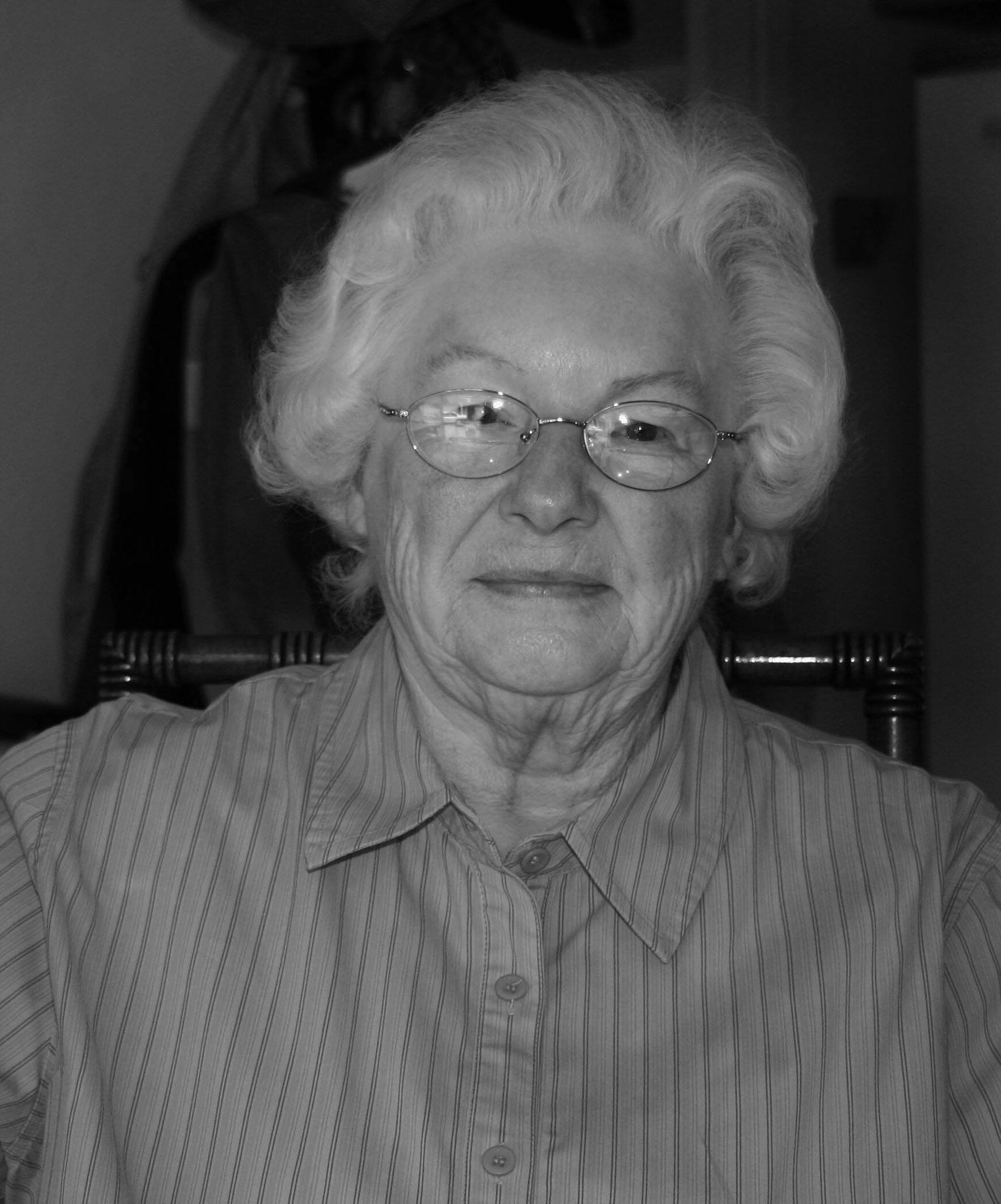
AUTHOR’S NOTE: Kenai Peninsula citizens had voted to create a second-class governing entity called the Kenai Peninsula Borough, which was incorporated at the beginning of 1964. By the end of the year, they had also selected Soldotna as the seat of government power. Meanwhile, government was expanding.
Doing the borough’s business
In early 1964, in a 10×10-foot room in the Farnsworth Building, located near the Y in Soldotna, the Kenai Peninsula Borough’s first executive, Chairman Harold Pomeroy, kept regular business hours: 8 a.m. until 5 p.m., five days a week.
Because the borough’s first full fiscal year was set to begin on July 1, Pomeroy worked initially under a six-month contract, paying him $5,500 (about $39,000 in today’s money) and handled all the work himself until Aug. 3, when he hired Frances Brymer to be the borough’s first non-elected employee. As borough clerk, Brymer shared the tiny headquarters with Pomeroy, but neither complained much because the rent was free and the situation, they assumed, temporary.
Meanwhile, the school district functions for the borough were being carried out 11 miles away, in the basement offices of the Kenai School (current home of Aurora Borealis Charter School). To the surprise of officials in both locations, this inconvenient separation of the two halves of borough government would continue for nearly seven more years.
The Farnsworth Building was the property of Jack and Dolly Farnsworth, and Dolly ran her Soldotna Bookkeeping business in the much larger portion of the building, where she had a nice desk and several other women working with her in the office. Because Jack was a member of the borough assembly, it was an easy thing for him to offer free lodging to the borough administration. But the free space was limited, and accommodations on the borough side were spartan.
According to a narrative written by Brymer in January 1974 — 10 years after the borough incorporated — when she came on the job she had to supply her own carbon paper and onionskin paper, and her own pens, pencils, and notebooks. She also had to bring a typewriter and stand from home and use cardboard boxes for filing.
The borough telephone was actually the Soldotna Bookkeeping telephone, which could be passed back and forth through a small cutout in the wall.
“There wasn’t any money to buy anything,” Brymer said in 2012. The entire borough operating budget for the first six months was about $13,000, paid for by a “transitional grant” from the state. After that time, Brymer was hired, followed by the first borough assessor, Gerald D. Heier, and three appraisers, who immediately got busy assessing borough properties for the purpose of taxation.
The pace of the clerk’s job quickly became frantic, Brymer said. “But it was so exciting. It was so challenging. You had all these people wanting all these services, and you had to keep trying to find a way to provide them. People were mad, though. They were all upset because they were having to pay taxes they’d never had to pay before. They come to Alaska to get away from taxation, and look what’s happening to them!”
Brymer’s duties in the early days included working with the assembly, helping to prepare budgets and subdivision plats, assisting the assessing department, doing payroll, working on elections, assisting on planning problems, handling all the public correspondence of the chairman, registering residents for sales taxes, and taking care of all accounts receivable and payable.
The bookkeeping aspects of the job were particularly difficult for her at first. “I had some help through the little window from Dolly at her bookkeeping service because I didn’t have knowledge of bookkeeping, and I’d have to keep asking all kinds of questions,” she said.
By April 1965, the borough was beginning to take over the Farnsworth Building, occupying 818 square feet, for which the owners were now charging a monthly rate of 22 cents a square foot (including utilities). In mid-May, Chairman Pomeroy predicted that by July the borough would require about 1,600 square feet of space to perform its duties, including tax collection and running a counter for the public, while providing storage space for files and maps and other records, and work space for the chairman and clerk.
Meanwhile, although the school board was meeting fairly regularly in Kenai, the assembly shuffled its meeting sites. The assembly met for the first time on Jan. 4, 1964, in the Elks Hall (now the VFW), on land donated by the Farnsworths in Soldotna. A special meeting, held two weeks later, convened in the Kenai School, followed by a second regular meeting in March in the Homer Electric Association building in Soldotna, a special meeting in a theater in Homer, and another special meeting in the HEA building.
Before the new assembly chambers opened in the Borough Administration Building in 1971, special meetings would be held in a number of locations around the peninsula, and regular meetings, depending upon the year, would be held in the HEA building, the Soldotna Community Hall, and Thompson’s Log (a filling station and gift store with a large meeting room).
The site of the first meeting on sales taxes was the basement of the Village Inn shopping center (on another piece of Farnsworth land, across from the current location of Fred Meyer) in Soldotna. According to Dolly Farnsworth, the basement was “pretty big and all cement.” For the sales tax meeting, “it was full of people — had to be at least a hundred people — and there was room for everybody.”
By 1967, the borough’s need for space intensified as official departments were formed — assessing, legal, finance, planning, etc. Eventually, Farnsworth moved her bookkeeping business into her own home, and the borough assumed control of the entire building. But soon even that was not enough. A portable structure was hauled in and placed adjacent to the Farnsworth Building.
On Feb. 3, 1967, Chairman George Navarre, who defeated had Pomeroy in the 1966 election by 87 votes, announced that the borough could get by for another year in its present quarters, but added that “there will be problems” because of the lack of space.
With no specific blueprints in his hand, and with no specific piece of property on which to construct a permanent building that would jointly house the borough and school district administrations, Navarre began trying to convince the assembly to help him fund the project.
As the population had burgeoned all around the borough, its schools were bursting at the seams. More money was needed for expansion and new construction, and Navarre hoped to include a borough administration building among the many school projects. On Aug. 2, the assembly crafted Resolution 67-34, which provided that at the next general election, to be held Oct. 3, borough voters would decide whether to support bond propositions for up to $10 million for school construction and up to $300,000 for an administration building.
On election day, the voters resoundingly defeated both propositions. The borough administration building proposition failed by a 981-419 vote.
Three days after the election, Cheechako News publisher Loren Stewart wrote a biting editorial about the public’s decision: “The borough asked for a ‘blank check’ to build schools, over an indeterminate period. The voters refused to go along … This is one more instance in a long line of problems where the borough administration failed to offer proper planning, guidance and information to enable the assembly to make decisions on adequate information rather than in the dark.
“The borough proposition went down to defeat for the same reason, no specific program. This building is also badly needed and would result in a savings to the taxpayers, if properly planned and constructed. Every month that passes sees a decrease in available desirable sites and an increase in the costs of building.”
The minutes for the Nov. 7 assembly meeting stated that borough office space was “becoming a critical item now, and we must make some plans for additional space.”
Without waiting for a parcel of land to come through as a permanent site for the new borough building, Navarre hired an architect to begin developing preliminary plans for the structure. He called the borough building “an urgent need” and continued to press for funding.
At the July 2, 1968, meeting, assembly members unanimously approved accepting the 15.11-acre Soldotna Gravel Pit parcel from the state, giving them the land onto which they could build.
Later in the same meeting, they approved a $200 expenditure for an additional partition to create another room in the portable adjacent to the Farnsworth Building. By November 1968, Navarre was considering the purchase of trailers to house the employees of the overcrowded school district.
Space was tight everywhere, but more hurdles were still impeding progress, and KPB and KPBSD employees would not move into the new Borough Building for more than two years.
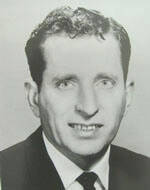
George Navarre won a narrow election victory over Harold Pomeroy to become the second chairman of the Kenai Peninsula Borough. Navarre, for whom the borough administration building is named, helped direct the construction and funding of that building project.
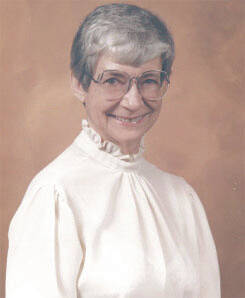
Frances Brymer became the first non-elected personnel for the new Kenai Peninsula Borough.
