
One of my son’s favorite bedtime stories is one about a little girl who goes with her mother to blueberry hill to pick berries.
He loves the sounds the berries make when they drop into her little tin pail — kaplink, kaplank, kaplunk — and he giggles when the baby bear eats a “tremendous mouthful” out of her mother’s pail.
Inside the front cover of our copy is a handwritten note from his grandmother, who takes us picking often this time of year. Our secret spot has a rutted road with loads of puddles for a little biker to splash through while the grownups get to work, old yogurt tubs in hand.
Berry picking is cherished time for our family, and just like the little girl in the story, my little one eats every single berry he picks (plus plenty out of his mother’s pail).
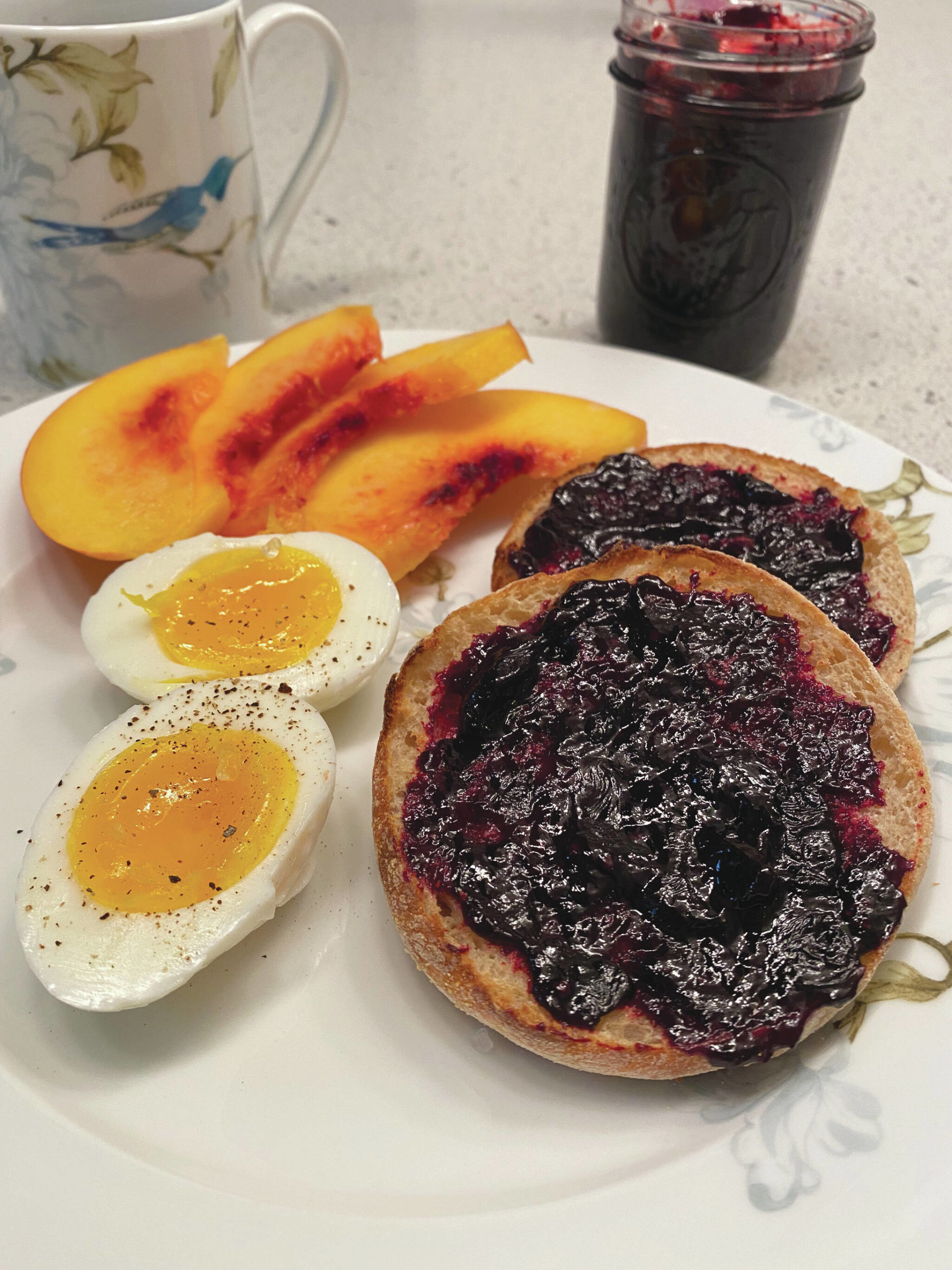
We did some picking this weekend at O’Brien’s Garden and Trees and came back with a tremendous pailful of honeyberries. We had too many to eat fresh, and we will pick more blueberries to freeze, so these sweet giants were best preserved as jam.
My sister-in-law keeps us well stocked with jams and jellies, so I don’t make jam often (I even needed to borrow some pectin from grandma), and I had to blow some dust off my recipe.
Ingredients:
4 cups fresh honeyberries (or blueberries)
1 cup sugar
2 tablespoons lemon juice
2 tablespoons powdered fruit pectin
½ teaspoon clove (optional, but highly recommended)
Directions:
Sanitize your canning equipment in boiling water, remove the jars and stage on a clean towel, open end up. Leave the lids and rings in the hot water until ready to lid.
Put your berries into a heavy bottomed saucepan and crush gently with a potato masher. Its best to leave some whole, so don’t go overboard.
Pour on the sugar and pectin and stir to dissolve.
Add the lemon juice and turn on the heat.
Bring the mixture to a simmer and cook for 30 minutes. If it gets too dry add a couple tablespoons of water. The jam will look a little loose when it’s hot, but don’t worry, it will set.
Turn off the heat and stir in the clove, if using.
Ladle the hot jam into your prepared jars. This can get messy so use a funnel. This batch makes about 24 ounces of jam. (I used 8-ounce jars because we will eat it quickly, but if you don’t eat jam often, I would suggest using 4-ounce jars.)
Run a clean chopstick around the interior edge of the jars. This will release any air bubbles that might be trapped in your jam.
Wipe the rims of the jars clean with a wet towel.
Pull the lids and rings out of the hot water and cover the jars. Screw the lids on most of the way but don’t tighten down completely.
Return the jars to the hot water using canning tongs. Make sure the jars are fully submerged by at least 1 inch of water and be careful to keep the jars vertical the whole time or it might ruin the seal.
Bring the water back up to a boil and allow to process for 10 minutes.
Using canning tongs and keeping the jars vertical, remove the jars from the water bath and return to your clean towel.
Allow to cool completely. You should hear the lids ping as the seal is formed.
When they are completely cooled, check for a seal by removing the rings and trying to pick the jars up by just the lid. A properly sealed lid will be firmly attached to the jar. Any jars that aren’t sealed can be reprocessed or just eaten first.
