Refuge Notebook: Exploring agriculture of the Kenai, 1897-1898

Refuge Notebook: Exploring agriculture of the Kenai, 1897-1898

On June 8, 1897, Dr. Walter H. Evans of the U.S. Department of Agriculture and Benton Killin, a retired lawyer and regent of the Oregon State Agricultural College, set out from Tacoma, Washington, on a steamer bound for Alaska.

Over the next three months they would explore the southern coast of Alaska under orders from U.S. Secretary of Agriculture James Wilson to assess the prospects for agriculture in the territory.

They were to answer 20 questions, beginning with, “What are the most characteristic plants? What edible fruits and roots abound, and how are they utilized? What grasses and forage plants are found in any abundance?”

Evans and Killin steamed along southeast and southern Alaska, stopping at communities along the way. After Prince William Sound they visited Kodiak and Cook Inlet, touching shore on the Kenai Peninsula at Homer, Anchor Point and the mining community of Sunrise City.

In the Cook Inlet region they found only small gardens and livestock endeavors. These were cultivated mainly to provide fresh vegetables and farm products to local villages and mining camps.

At Sunrise City the two parted ways, Killin taking the Portage to Prince William Sound while Evans steamed on as far as Unalaska before returning to the Lower 48.

In the summer of 1898, in the middle of the Spanish-American War, Evans again traveled to Alaska. This time he focused on the native plants.

He spent weeks in the vicinity of the cannery on the north shore of the Kasilof River in July and August, where he collected many plant specimens. Evans described the topography and plant communities of the dunes, bluffs and lowlands around Kasilof.

Of all the plants that Walter Evans collected while in Alaska, he took a special interest in a birch that was “very common” around Cook Inlet.

“This birch has apparently not been reported before,” he wrote. “Whether it proves an undescribed species or an Asiatic form remains to be determined.”

To this day, the origin and identity of the birch that Evans later described as the Kenai birch, Betula kenaica, remains enigmatic.

In their 1898 and 1899 reports to Congress, Evans, Killin and others remarked that many vegetables, including peas, beans, cabbage, carrots, turnips, rutabagas, radishes, lettuce, celery, beets and potatoes, grew well in the Cook Inlet region.

They also reported that many wild berries could be harvested and even cultivated. Other than berries and potherbs, they found the only native plants harvested for human consumption were chocolate lilies and beach peas.

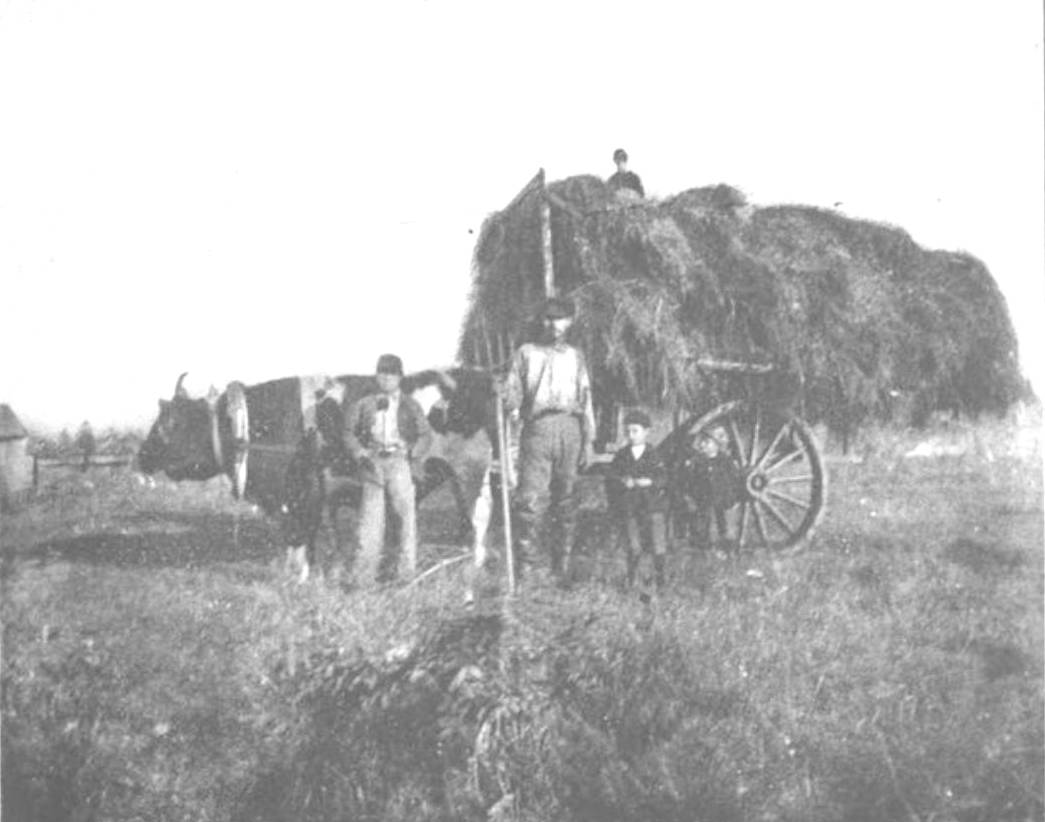
At that time haymaking was already taking place annually in Cook Inlet. Canada bluejoint grass was found to be abundant at Homer and Sunrise City, where it was apparently used as hay.

Timothy, alfalfa and oats were grown in Kenai. White clover, red clover and alfalfa had been established as livestock forage in Kasilof.

We tend to think of weeds as having been introduced recently, but Evans noted that non-native plants were already spreading from settlements in Alaska as early as 1897.

Killins wrote, “White clover and Kentucky blue grass do well all over the region visited and have become thoroughly established. Whenever the native growths are killed out, these come in.”

Chickweeds, sheep’s sorrel, pineapple weed and corn spurry were listed as problems in gardens. Non-native dandelions and annual bluegrass were also documented.

The key finding of these agricultural investigations was that southern Alaska did have potential for food production from both wild plants and agriculture. The authors of the 1898 and 1899 reports reiterated a desire to establish agricultural experiment stations in Alaska, leading to the construction of a research dairy farm in Kenai in the following years.

The Kenai Peninsula has changed much since the 1890s, becoming far, far less of a wild frontier. This is why I find it fascinating that some of the same concerns addressed by Evans and Killin in the late 1800s remain relevant.

They discussed what today we would call food security, sustainability, locally grown food, non-native plants and conservation of game animals. Even down to the types of vegetables grown and problems with hay storage, I am amazed at the similarities between farming in 1897 and my own family’s experiences with gardening and haymaking in Kasilof.

Looking back over 100 years into the landscape and communities of the Kenai Peninsula in 1897–1898 makes me wonder how much will remain the same and what may change in the future.

What will be harvested from the wild and what will be grown here? What will be the ramifications of actions that we take now? How much of the Kenai Peninsula and Kenai National Wildlife Refuge that are wild now will become less so?

Matt Bowser serves as Entomologist at Kenai National Wildlife Refuge. Find more Refuge Notebook articles (1999–present) at https://www.fws.gov/refuge/Kenai/community/refuge_notebook.html.


By Matt Bowser

For the Clarion


More in Sports

tease
Homer boys, Soldotna girls place 1st in ski invitational

Soldotna’s Tania Boonstra took first place for the girls’ division, leading her team to victory at the meet. The Homer girls’ varsity team placed second overall.

Senior Mason Bock exclaims after winning the state title during the ASAA Division I state championships in Anchorage, Alaska on Dec. 20, 2025. Bock beat No. 2 seed Isaiah Schultz of Colony High School in the final, securing his victory in the 135-pound title as the No. 4 seed. Bock said standing on the podium was the best moment of his life, telling the Clarion that since he had lost to Schultz once earlier in the season, he was “focused and determined to have a different outcome” during the final match. Photo courtesy of Andie Bock/Andie’s Alaskan Adventures Photography
SoHi girls 3-peat at state wrestling championships

The boys team placed second and saw five wrestlers win state titles in the Division I tournament.

Seward’s Atlin Ryan wrestles against a Mountain City Christian Academy athlete during the regional Kachemak Conference Wrestling Championships on Saturday, Dec. 13, 2025, at Homer High School in Homer, Alaska. (Delcenia Cosman/Homer News)
Homer girls wrestling team named regional champions

Kenai boys, girls both placed third overall in the Kachemak Conference Wrestling Championships on Saturday.

The Soldotna High School wrestling team is pictured after the Northern Lights regional conference in Wasilla, Alaska, on Saturday, Dec. 13, 2025. SoHi sent 33 boys and 11 girls to regionals. 22 boys and nine girls will compete in the state tournament at the Alaska Airlines Center this weekend. Photo courtesy of Soldotna High School Athletics
SoHi wrestling wins regional title; 31 wrestlers advance to state

22 boys and nine girls will compete in the state tournament this weekend.

Homer and Soldotna hockey players battle for the puck during the Carlin Cup home varsity game on Saturday, Dec. 13, 2025, at the Kevin Bell Arena in Homer, Alaska. (Delcenia Cosman/Homer News)
SoHi hockey claims 3rd Carlin Cup victory

The Soldotna varsity hockey team defeated Homer 9-1 Saturday at Kevin Bell Arena.

Sophie Tapley is photographed with her parents, Josh and Whitney Tapley, during Sophie’s signing ceremony at Kenai Central High School on Nov. 26, 2025. Tapley committed to playing volleyball at the University of Alaska Anchorage during the 2026-2027 school year. Photo courtesy of Jesse Settlemyer, Kenai Central Athletics
Kenai Central’s Sophie Tapley signs with UAA volleyball

Tapley will trade her Kardinals jersey for a Seawolf one during the 2026-2027 academic year.

Photo courtesy Pete Dickinson
The SoHi junior varsity and varsity wrestling teams compete in the Battle for the Bird at Soldotna High School on Wednesday, Nov. 26. The Kenai Peninsula Athletics Sapphire dance team performed the halftime show.
SoHi, Nikiski wrestling teams compete for Thanksgiving dinner

The Stars and Bulldogs faced off during the Battle for the Bird duals last Wednesday.

Runners of all ages gather for a photo in the Homer High School Commons after the annual Thanksgiving Turkey Trot on Thursday, Nov. 27, 2025, in Homer, Alaska. Due to icy outdoor conditions, the official run was moved to the high school halls. Photo courtesy Matthew Smith
55 turn out for Homer Turkey Trot

Each Thanksgiving morning, the Kachemak Bay Running Club and the City of… Continue reading

The varsity wrestling team is pictured after the Robin Hervey individual tournament in Kodiak on Nov. 22, 2025. Photo courtesy of Pete Dickinson
Sports briefs: Soldotna hockey, wrestling teams secure wins at weekend tournaments

SoHi hockey won the End of the Road tournament in Homer and the wrestling team gained 20 individual wins.

The Kenai Central High School varsity volleyball team is named the 2025 3A Volleyball State Championship Tournament, held Nov. 13-15, 2025, at the Alaska Airlines Center in Anchorage, Alaska. The Kardinals defeated the Nikiski Bulldogs 3-2 in a "rematch" championship game on Saturday, Nov. 15, securing their third state title in the last four years. Photo courtesy of the Kenai Volleyball Booster Club
Kenai Central takes home 3rd volleyball state title

The Kards defeated Nikiski in a rematch championship game on Saturday during the state tournament in Anchorage.

Soldotna High School wrestlers won six individual championships during the Lancer Smith Memorial wrestling tournament in Wasilla Nov. 14-15. Photo courtesy of SoHi Stars Wrestling on Facebook
SoHi wrestling sweeps Lancer Smith tourney, eyes state title

SoHi girls and boys took first and second place as teams, respectively.

Soldotna’s Gracelyn Altobelli attacks against Nikiski’s Addison Perkins on Tuesday, Sept. 16, 2025, at Soldotna High School in Soldotna, Alaska. (Photo by Jeff Helminiak/Peninsula Clarion)
Sports briefs: Soldotna volleyball claims third Northern Lights Region III title

The SoHi Stars will compete at the state tournament this weekend.