
Not many think of Alaska when they think of World War II. Instead, images that come more typically to mind might be bombed-out cities, soldiers marching across Europe, D-Day on Normandy, the atrocities of concentration camps, and a mushroom cloud rising above Hiroshima.
But in the Aleutian Islands, the war brought thousands of soldiers and enormous quantities of equipment and supplies to a remote area. The islands are rich in wildlife and settled by people who have called the islands home for millennia. So, after Japanese forces seized Attu and Kiska islands and took the local inhabitants hostage, the U.S. prepared for a heavy military response. In an incredibly short time, airstrips, docks and town-like camps appeared, along with electrical systems, pipelines, ammunition bunkers and landfills. But when the military pulled out of the Aleutians in 1947, much of the infrastructure and material stayed behind.
Only five years earlier, the U.S. Navy began construction of the Sand Bay Naval Station on Great Sitkin Island. Designed to accommodate 680 personnel, it was an important fueling station for ships and seaplanes. It was also a depot for storing ammunitions and nets specially designed to foil enemy submarines. They installed 28 large fuel storage tanks along the length of one small valley, connected by a series of pump stations and underground pipelines leading to the fueling pier. Much of this fuel was used for the naval fleet of destroyers, cruisers and other military marine vessels that plied the North Pacific.
Another 12 large fuel tanks containing aviation fuel were constructed on the hill overlooking the valley, refueling the seaplanes that soared the Aleutian skies. The combined fuel capacity of the facility was estimated at nearly 15 million gallons of “bunker” diesel and aviation fuel (not including the thousands of 55-gallon drums of motor gasoline).
Up a second valley, Navy Seabees constructed a host of facilities, including a gymnasium, a theater, a library, munitions storage magazines, and other buildings and infrastructure to support and entertain the soldiers. In addition, electrical utilities lines, a variety of pipelines and roads crisscrossed the two valleys.
But when the war ended, the need for the base evaporated. It was closed in 1949 after the military removed all the munitions from the storage magazines. Munitions were either consolidated at another storage facility or dumped into the ocean. Around 10 men remained behind to operate the fuel station into the 1950s. By 1957, a large tsunami destroyed much of what was nearest the beach and the Navy officially abandoned the entire facility in 1963. It wasn’t until 1970 that the Navy returned to tackle the problems associated with the fuel that remained in the abandoned tanks and pipelines.
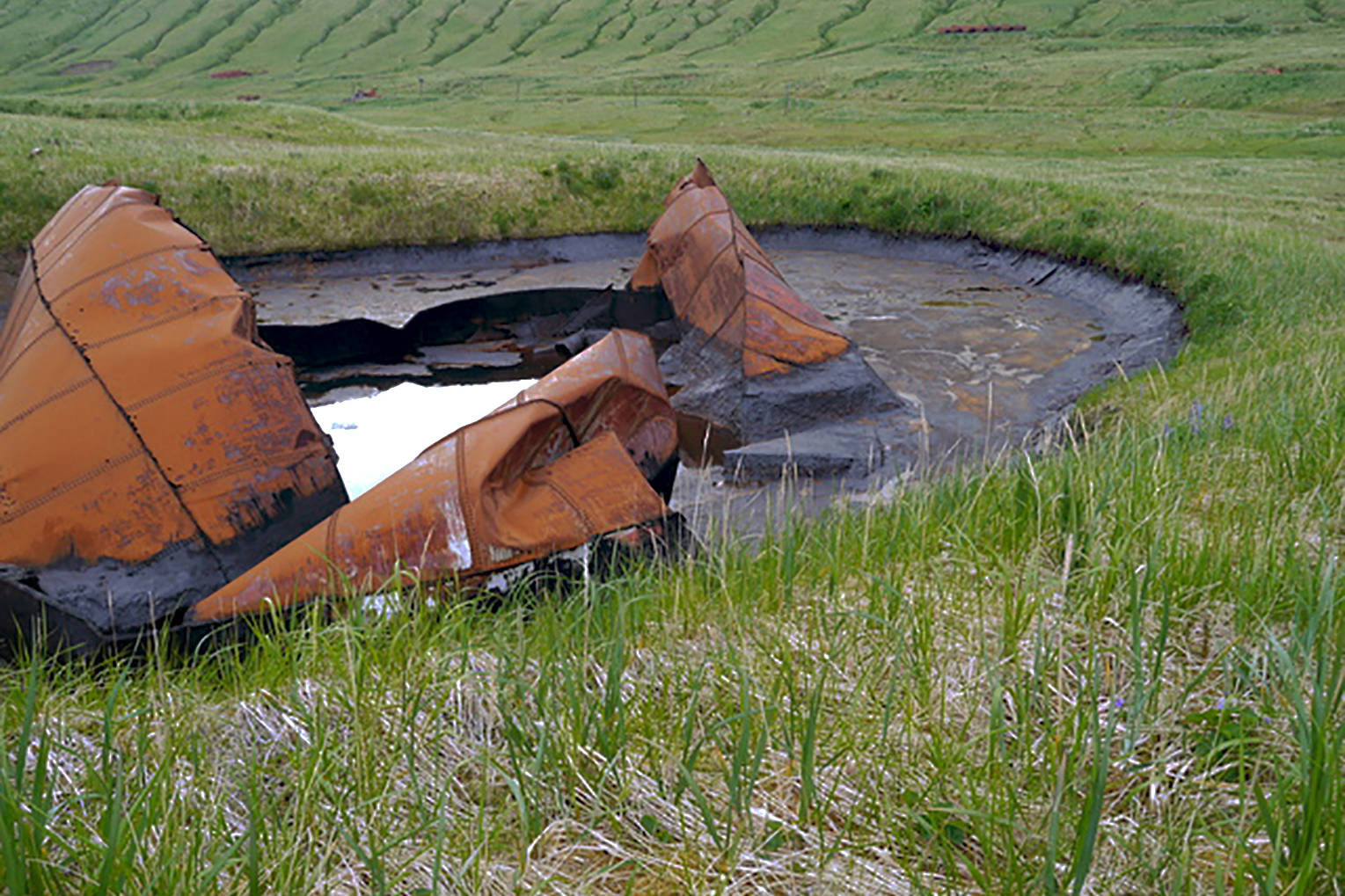
Reports from that time indicated the tanks still contained thousands of gallons each. And what is one way to remove fuel? Burn it, of course! Approximately half a million gallons of fuel were incinerated, in some cases by breaching the sides of the storage tanks with explosives and lighting the pool of fuel with incendiary grenades. Other tanks were directly burned with fuel inside. Unfortunately, much of the fuel failed to burn completely, smoldering instead. The end result was widespread fuel contamination in the soil and nearby surface water, which ultimately posed a serious threat to birds, fish and plants.
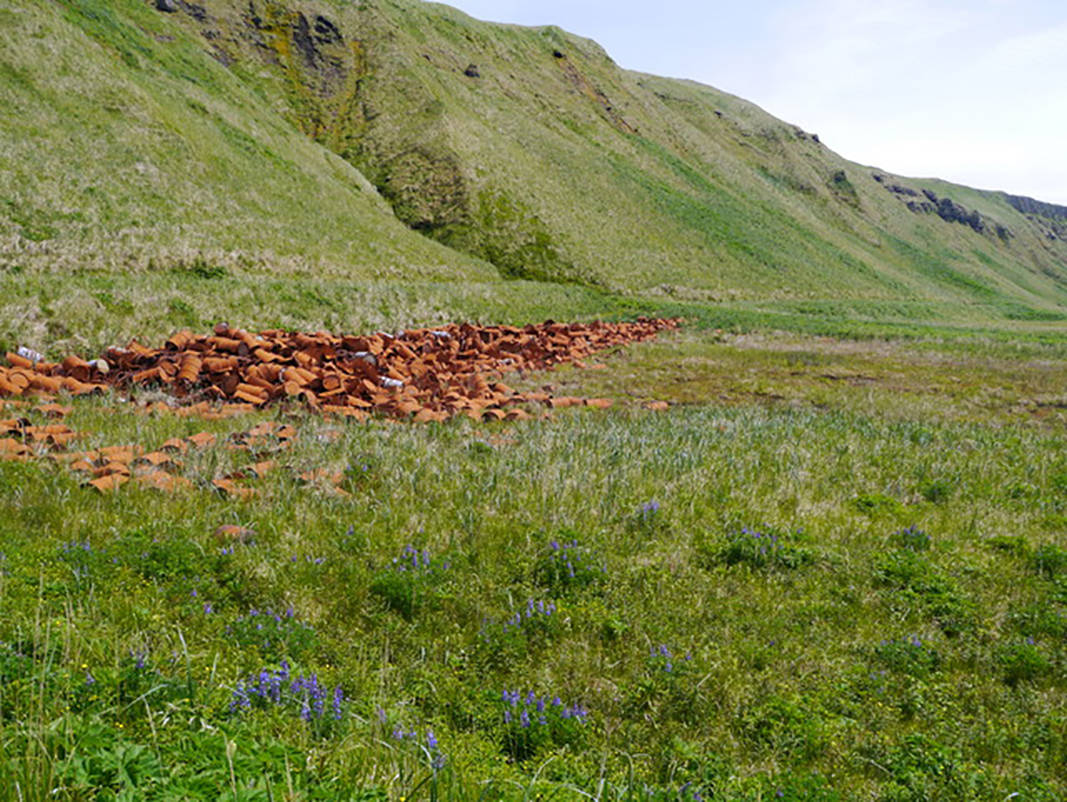
Sources of other contaminants were also left behind including lead batteries, the landfill, piles of old metal fuel barrels, leaking underground pipes and associated pump stations, bunkers, the extensive electrical grid containing polychlorinated biphenyls (PCBs), and creosoted utility poles.
And there it all sat for decades, slowly decaying and transforming, seeping into the soil and water. Now and then, a crew came out and documented what they saw. But in the spring of 2021, the first serious effort to clean up the contaminants got underway, and some of what was left behind more than 60 years ago are, at last, being cleaned up.
The Army Corps of Engineers is the lead agency responsible for cleaning up legacy contamination associated with WWII military activities. They oversee the project and hire contractors. They coordinate the investigations and cleanup projects with the Alaska Department of Conservation, the Alaska State Historic Preservation Office, and the U.S. Fish and Wildlife Service (FWS). As the land manager, the FWS is responsible for ensuring the protection of human health and the cultural, historical and natural resources found on refuge-managed land.
Work at the Sand Bay Naval Facility on Great Sitkin Island started this May with a team of archaeologists and technicians. They did surface and ground-penetrating radar surveys, pinpointing the locations of pre-war human occupation and the underground grid of pipes, and documenting historic artifacts. A field camp was set up in June, reminiscent of the old Navy encampment, with earth-moving equipment, barracks, showers and a canteen. Armed with a variety of tools and techniques to investigate contaminated sites, the 26-person camp likely formed the largest community on the island since the base shut down in 1947, pointed out Timothy Plucinski, environmental contaminants biologist for Alaska’s national wildlife refuges.
Batteries and pieces of lead plates, as well as PCB-filled transformers, were collected for removal. Soil core samples evaluated the concentrations and extent of contaminants. Sediment and surface water samples were collected, and groundwater-monitoring wells were installed to see if remnant materials had contaminated more than just the surface soil. Pipes associated with the large fuel tank farms were exposed and breached to see what’s inside; this will help determine how to handle the pipelines (and the potential remaining fuel) during future cleanup projects.
Initial reports from the field indicate that the spilled fuel related to the pipelines and large fuel tanks has not penetrated deeply into the soil. In some cases, the tarry, asphalt-like material the fuel has become has tundra vegetation growing on top of it. The hope is that the material can be rolled up almost like a carpet, then disposed of off-site.
While there is much more to be done, this year’s efforts leave the island far cleaner than it was. In addition, they should provide a road map for cleaning up legacy contamination from WWII on Great Sitkin Island. Future work and time will tell how local wildlife was impacted and, we hope, how an ecosystem recovered.
Julia Pinnix is the temporary visitor services manager at Alaska Maritime National Wildlife Refuge and helps the U.S. Fish and Wildlife Service fulfill its mission — working with others to conserve, protect and enhance fish, wildlife, plants, and their habitats for the continuing benefit of the American people. We are both a leader and trusted partner in fish and wildlife conservation, known for our scientific excellence, stewardship of lands and natural resources, dedicated professionals, and commitment to public service. For more information on our work and the people who make it happen, visit www.fws.gov.
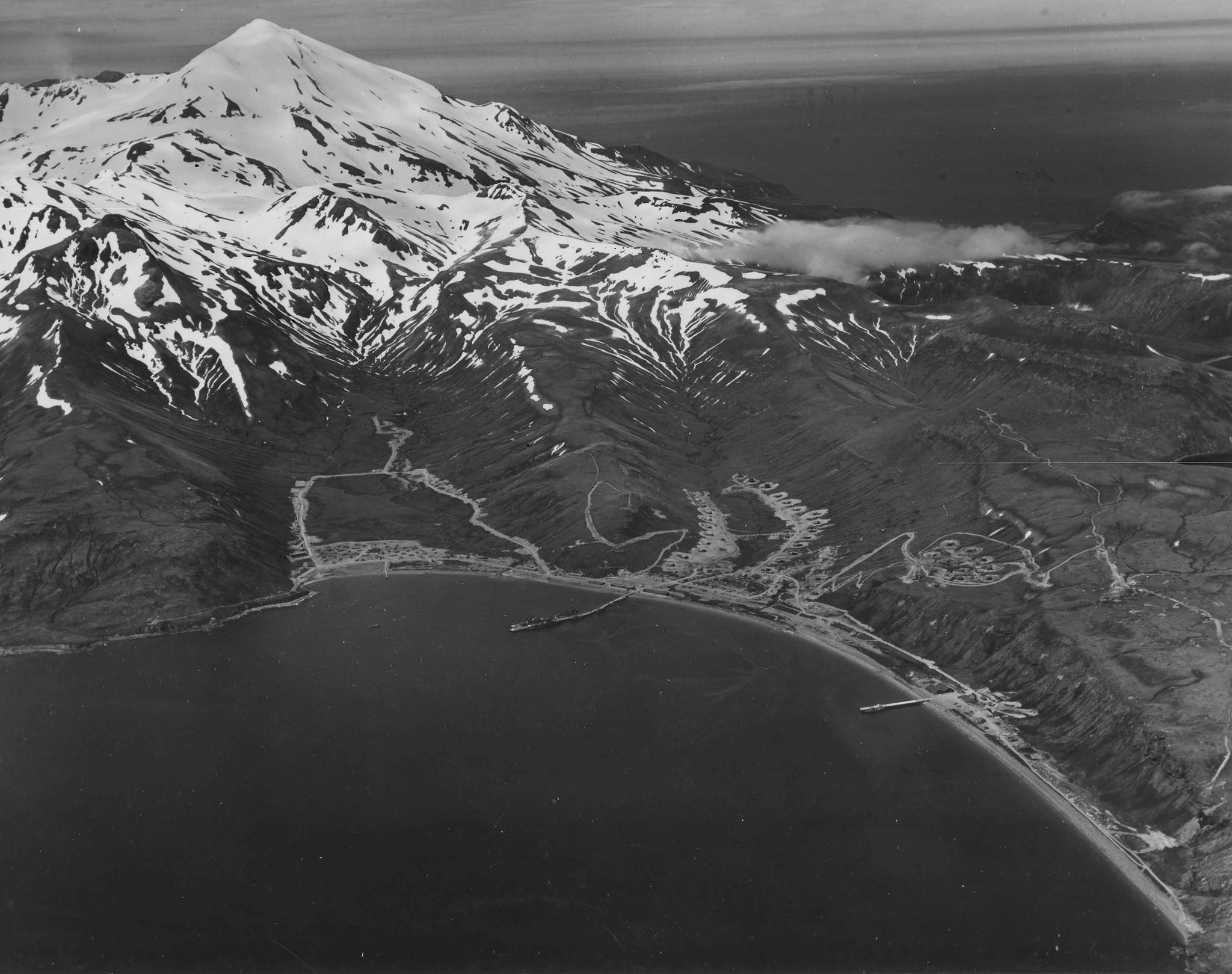
Sand Bay Naval Station on Great Sitkin Island was a hub for Navy vessels and aircraft during World War II. (U.S. Army Corps of Engineers)
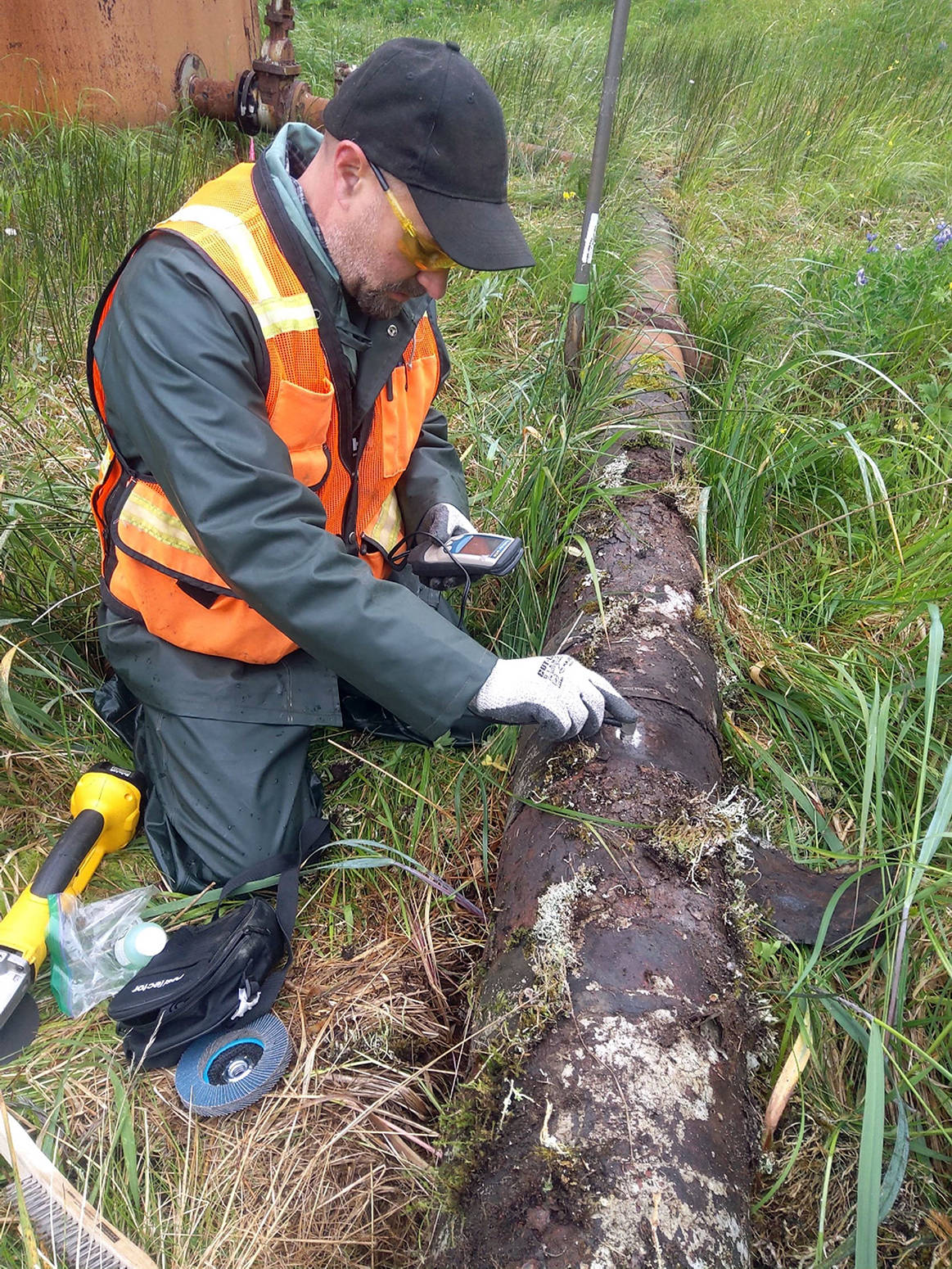
A network of underground pipes transported diesel fuel from storage tanks to the fueling pier. Inspectors carefully drilled in to see what contaminants may still be inside. (USFWS)
A network of underground pipes transported diesel fuel from storage tanks to the fueling pier. Inspectors carefully drilled in to see what contaminants may still be inside. (USFWS)
