
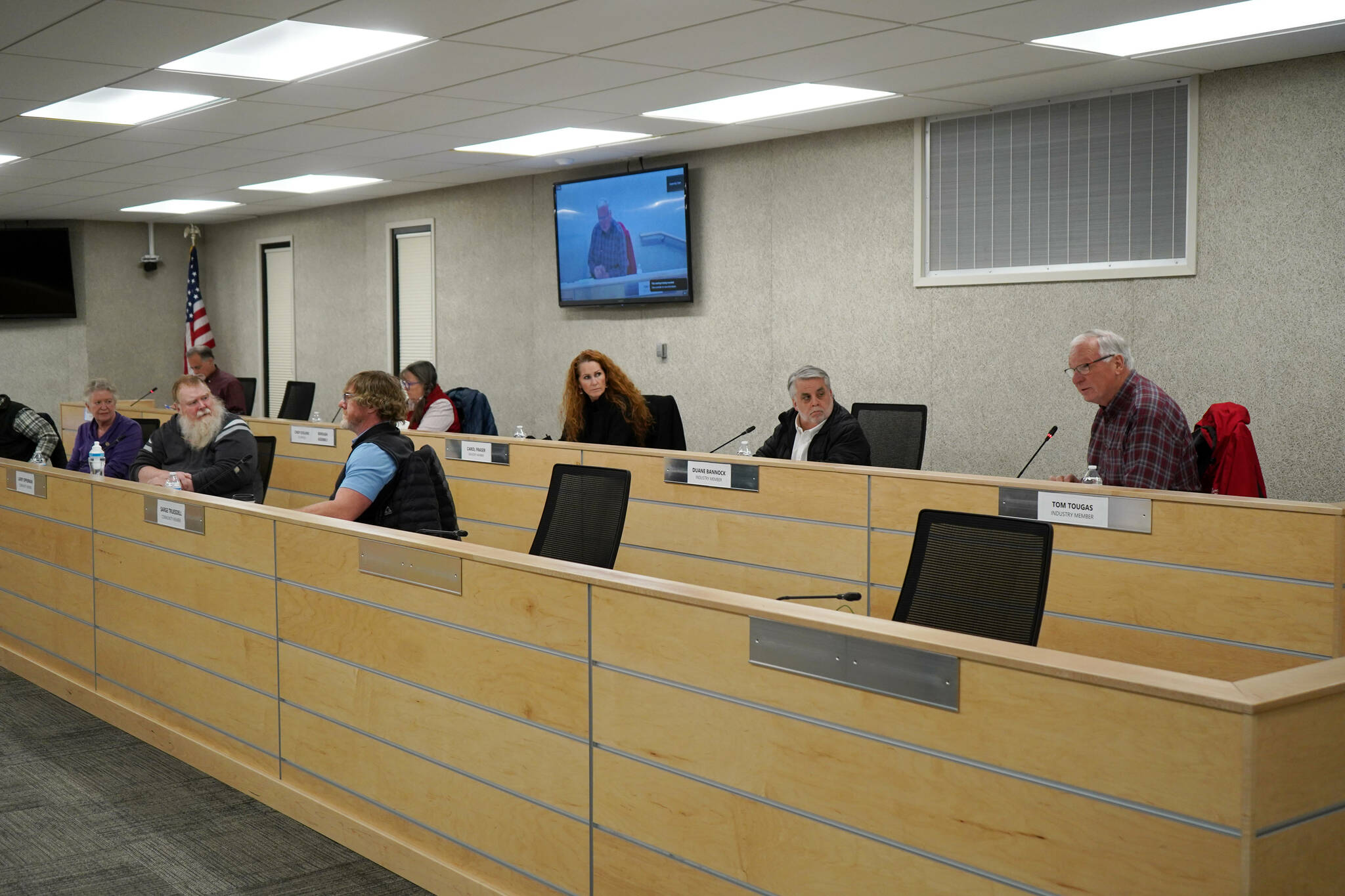
The Kenai Peninsula Borough’s Tourism Industry Working Group wrapped up on Thursday, voting unanimously to send a final report to the borough assembly that says they don’t recommend establishing a lodging tax but do support creating a new seasonal sales tax structure.
More than five months after the working group formed — seven voting seats made up of four general community members and three representatives of the tourism industry — the group has now completed its task of assessing the benefits and impacts of tourism on borough revenue and services. The working group also included Kenai Peninsula Borough Mayor Peter Micciche and two members of the borough assembly in non-voting seats.
The sales tax structure championed by members of the group and in the report would change the borough’s 3% sales tax to a new seasonal model — 2% from October through March and 4% in April through September. Micciche said the change would “redistribute how revenue works” and provide property tax relief to property-owning borough residents.
“The Tourism Industry Working Group recommends that the KPB Assembly evaluate adoption of a seasonal sales tax as a practical solution to boost revenue, ease the tax burden on residents, and support KPB’s economic growth, and send it to the people for a vote in the Fall of 2025,” the document reads.
Per the report, the borough generates significantly more sales tax revenue during the summer months, and the change is projected to generate around $4.5 million in additional borough revenue.
Member Duane Bannock, in a tourism industry seat, said he supports the change to the seasonal sales tax because the borough would generate more sales tax revenue during the summer months when more people are in town who don’t live in the borough.
“I do support a tax that affects not just everyone but everything,” he said. I’m going to pay more for fuel tax in the summertime, when I’m going to burn less fuel, I’m going to pay a lower tax on fuel in the wintertime, when I burn more fuel.”
The group originally faced an April deadline to compile their report and provide it to the assembly. That deadline was extended after the group on April 10 failed to adopt a draft of the document on a 3-3 vote. The failed document, which had been penned by the borough administration, was essentially the same as the one adopted this week.
The only modification was a successful motion, with only Bannock opposed, to include a section that says the borough could leave its tax structure exactly as it is because tourism was found to already be paying its fair share for borough services.
Multiple members of the group said that they were satisfied, based on information presented by the borough and other entities during their meetings, that the tourism industry is paying “its fair share.” Data in the report says that tourism brings revenue and jobs to the borough to a magnitude that “significantly exceeds” the increased seasonal costs of borough services.
The working group’s report is a recommendation to the borough. Micciche said it doesn’t bind them to any action, and it would be the responsibility of an assembly member to introduce legislation if they were interested in pursuing the recommendation to modify the sales tax.
The possibility of a bed tax has been raised many times, he said. Even if the assembly ultimately takes no action on the working group’s recommendation, they’ve still compiled data and explored tourism in the borough in “a document that will be useful to the assembly and the public.”
“We learned what it really means, what tourism does for our budget.”
Full recordings of the meetings of the Tourism Industry Working Group can be accessed at kpb.us under “Local Governance & Permitting,” then “Leadership & Governance,” then “Working Groups & Initiatives.” To listen to the recordings, the file downloaded from the borough website has to be opened as a text document, then fed into an application that can accept network streams like VLC Media Player.
The draft document can be found in the meeting packet for the May 16 meeting, but it doesn’t have the newly approved section about leaving taxes as is.
Reach reporter Jake Dye at jacob.dye@peninsulaclarion.com
