
By Becky Bohrer
Associated Press
JUNEAU — Alaska lawmakers are running out of time this session to pass legislation aimed at resolving the annual debate over what size dividend should be paid to residents from the state’s oil wealth fund.
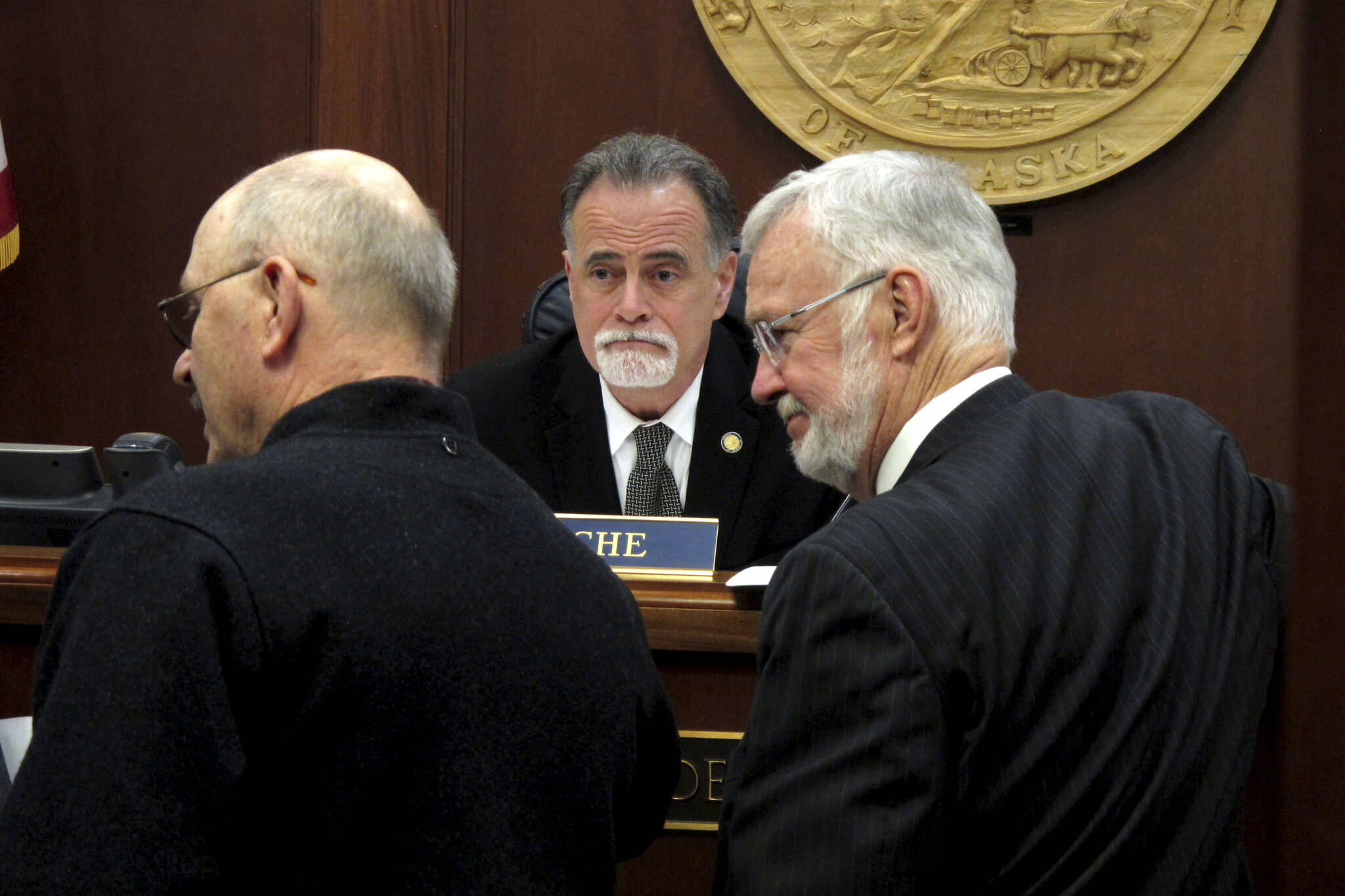
Legislative leaders have said they see resolving the divisive debate as critical. But lawmakers have yet to agree on what a new formula should look like or on what other elements should accompany it, such as taxes. A dividend bill in the Senate was bumped from the floor for further work Wednesday when it lacked the votes to pass, Senate President Peter Micciche said.
Recent high oil prices have prompted rosy revenue forecasts after years of deficits, complicating any talk of taxes as part of a long-range fiscal plan. A working group tasked with making fiscal policy recommendations last year included such things as a new dividend formula, constitutional certainty around a dividend, new revenues and revised spending limits as necessary parts of a comprehensive plan.
Senate Minority Leader Tom Begich, an Anchorage Democrat, said Thursday that he’s a “little less optimistic that we’ll get a plan or even an element of a plan this year … but I have not given up.”
Less than two weeks remain in the session that began in January. All but one of the Legislature’s 60 seats are up for election this year. Republican Gov. Mike Dunleavy is seeking reelection.
Micciche, a Soldotna Republican, said he will continue having discussions with colleagues to see if agreement can be reached on a dividend approach that could garner at least 11 votes, the minimum necessary for Senate passage.
Whether the bill resurfaces remains to be seen.
House Speaker Louise Stutes, a Kodiak Republican, told reporters last week that if a bill were to pass the Senate and be sent to the House, “we will address it to our best ability” in the time remaining in session.
Dividends traditionally have been paid using earnings from the oil wealth fund, the Alaska Permanent Fund. For years, the dividend was calculated using a formula based on an average of fund income. But in 2016, amid deficits, then-Gov. Bill Walker vetoed a portion of the amount available for checks. The next year, the Alaska Supreme Court ruled that absent a constitutional amendment, dividends must compete for annual funding like other state programs.
Lawmakers have been setting the amounts, which ranged from a low of $992 to a high of $1,606 between the years of 2017 and 2021.
In 2018, the Legislature began using fund earnings to help pay for government in a state that has long relied on oil revenues. Lawmakers sought to limit annual withdrawals for dividends and government, adding to tensions over how the money should be divided between the two. Withdrawal amounts are based on a percentage of the fund’s market value. The limit for the upcoming fiscal year is about $3.4 billion.
Because of the 2017 court decision, some lawmakers contend the only way to resolve the dividend debate is with a constitutional amendment. Not all lawmakers think a dividend belongs in the constitution.
But without tying the dividend to the Constitution, “you’re really not doing anything. You just aren’t,” said Senate Majority Leader Shelley Hughes, a Palmer Republican who was part of the working group.
Gov. Mike Dunleavy, who in 2018 ran in support of a dividend in line with the old formula, has urged splitting the yearly withdrawals 50/50 between dividends and government. That approach would mean checks of about $2,500 this year.
Dunleavy also has pushed for a supplemental divided of about $1,250 this year as a way to help Alaskans with high fuel and food costs.
The working group composed of members from along the political spectrum recommended lawmakers “work towards” a formula that dedicates half the draw to dividends as part of a broader plan.
The Senate is expected to begin debate next week on a budget package that proposes a roughly $2,500 dividend this year, in line with a 50/50 approach. The budget that passed the House called for a roughly $1,250 dividend plus $1,300 as an energy relief payment.
While the total proposed amounts are similar, Stutes said a concern is whether lawmakers want to set a precedent in paying a dividend at the 50/50 level.
Senate Finance Committee Co-chair Bert Stedman said while oil prices currently are high, prices are volatile and the state has a wide range of obligations it has to meet.
The dividend bill that sputtered Wednesday called for 25% of the draw going toward dividends starting next year. It called for transitioning to 50% of the draw toward dividends in 2027 if the state revenue commissioner and Legislative Finance Division director by mid-December 2026 agreed that measures expected to generate at least $800 million in new annually recurring revenue had been enacted.
