Cold-weather shelter still faces obstacles
Published 9:30 pm Sunday, January 12, 2020


The ongoing effort to develop an emergency cold-weather shelter on the Kenai Peninsula still has a few hurdles to overcome before getting up and running.
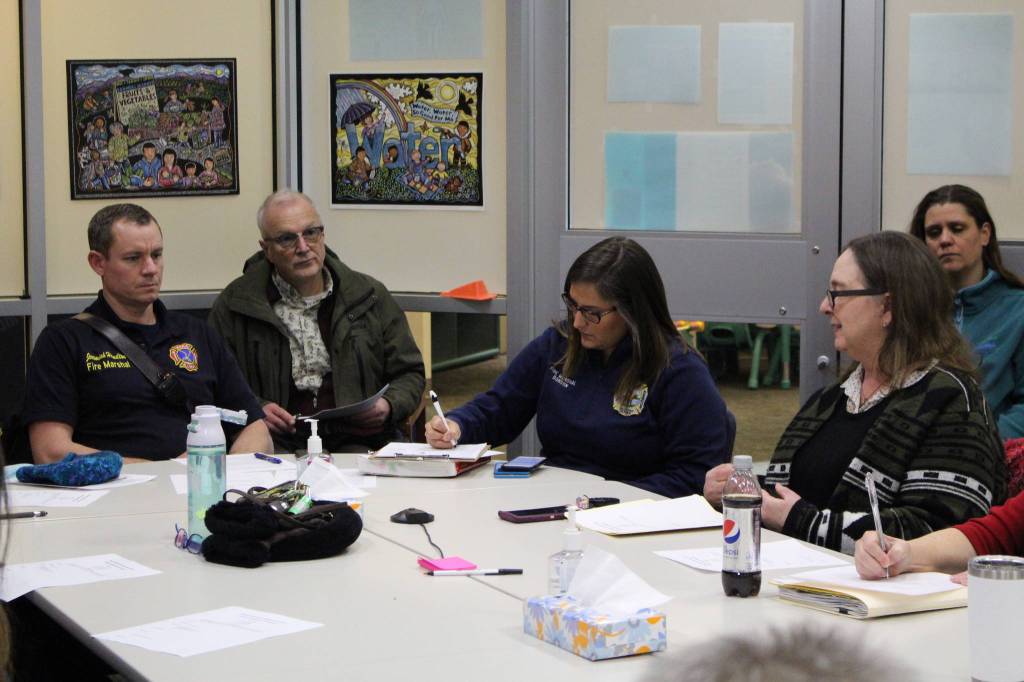
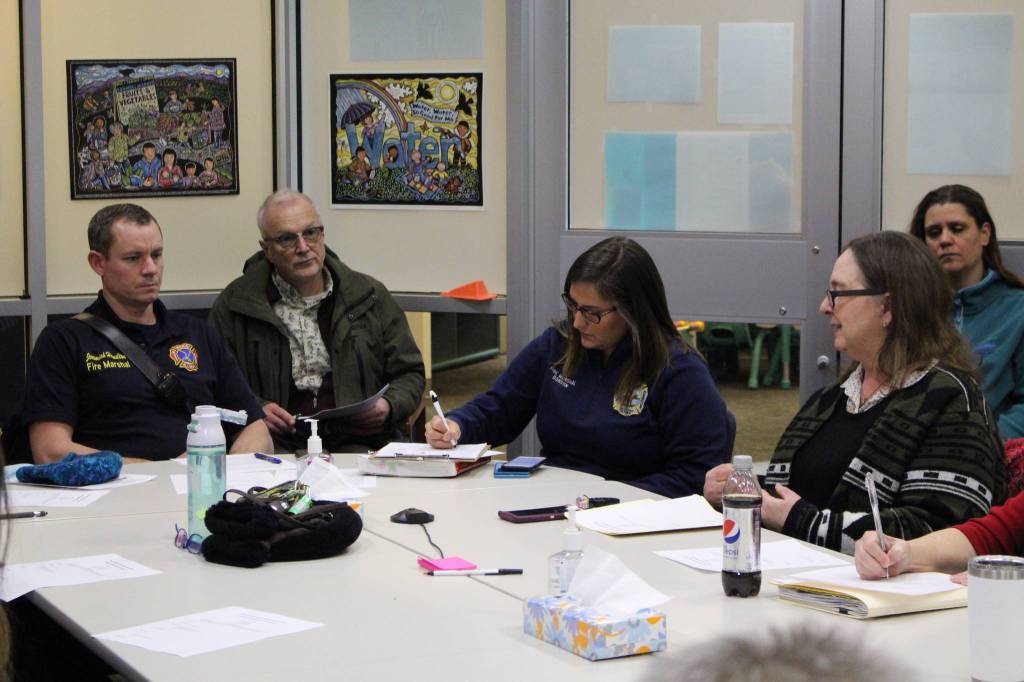
Members of the emergency cold-weather shelter work group met last Wednesday to discuss the latest developments and challenges with the project, including determining the target population and meeting the relevant building codes.
In attendance for the first time at Wednesday’s meeting were Jeremy Hamilton and Brooke Dobson, fire marshals for the cities of Kenai and Soldotna, respectively, who offered their advice on another obstacle for the shelter: ensuring that all of the churches would be in compliance with city building codes.
Hamilton said that any building that would function as an emergency shelter would have to meet certain general requirements. Sleeping areas would need two exits, including one that leads directly outside. Any building without sprinklers would have a maximum sleeping occupancy of 16 people, Hamilton said, and the size of each sleeping area may further limit the number of occupants.
Smoke detectors would be required inside and outside of sleeping areas, and a carbon monoxide detector would be required outside of sleeping areas. A fire safety and emergency evacuation plan would need to be onsite and posted publicly, and the evacuation plans would need to be separate from the church’s evacuation plan. Two staff members would also be required to act as a Fire Watch, responsible for monitoring the area for any hazards and calling 911 in case of an emergency.
Dobson said that any room to be used as a sleeping area would have to be examined by either her or Hamilton depending on the location in order to calculate maximum occupancy. Any building not within the city limits of Kenai or Soldotna would need to be approved by a state fire marshal, Dobson said.
Hamilton said that, to the extent a building would be able to function as a shelter, the group may want to consider looking at one location that meets all or most of the requirements he laid out rather than attempting to repurpose all of the churches that have signed up in order to bring them into compliance.
“Instead of saying ‘anybody in the room that wants to help, raise your hand,’ it should be, ‘anybody in the room that has these types of things, can you raise your hand,” Hamilton said.
Hamilton said that many of the churches in Kenai have a long way to go before being able to house occupants.
“A lot of our churches are older, and they were built before anybody thought about classrooms or sanctuaries,” Hamilton said. “But when you have people sleeping in unprotected buildings, this is the kind of stuff that we have to worry about.”
To that end, April Hall, pastor of Kenai and North Star United Methodist Churches, suggested that one or two churches “champion” the effort and take on the role of being the primary location, with the other churches providing the volunteers for each night.
The current plan for the cold-weather shelter involves using a list of churches that would function as the shelter on a rotating schedule, with each church being assigned a specific day of the week. The shelter would open on nights when the temperature in Kenai is 20 degrees Fahrenheit or below.
The shelter would prioritize housing homeless families, but discussions have been had to allow single males and females as well. That discussion is ongoing, and during Wednesday’s meeting a few of the members offered their perspective on the issue.
“While we don’t want anybody to be out in the cold, we especially don’t want young children exposed to elements,” Leslie Rohr, executive director of Love, INC., said.
Karen Martin-Tichenor, pastor of Soldotna United Methodist Church, said that while she agrees with that goal, her experience has been that there are more homeless individuals on the peninsula than there are families.
“I know what we deal with, which is a lot of single men, a few single women, and some families,” Martin-Tichenor said. “So they’re all a concern.”
The next Shelter Development Workgroup meeting will be on Jan. 22 at noon at the Kenai Public Health Center.