
By Becky Bohrer
and Matthew Brown
Associated Press
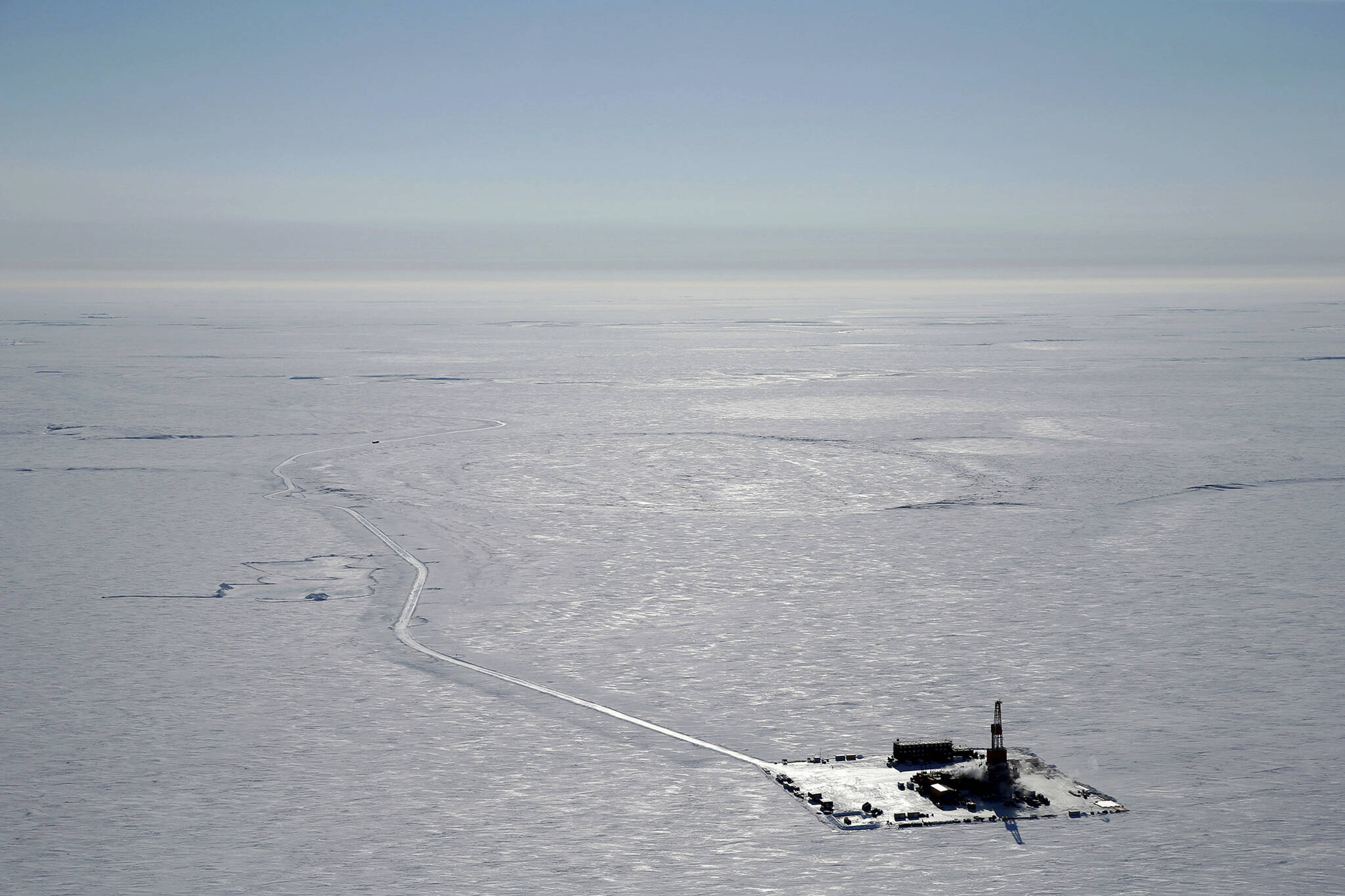
JUNEAU — The Biden administration is weighing approval of a major oil project on Alaska’s petroleum-rich North Slope that supporters say represents an economic lifeline for Indigenous communities in the region but environmentalists say is counter to President Joe Biden’s climate goals.
A decision on ConocoPhillips Alaska’s Willow project, in a federal oil reserve roughly the size of Indiana, could come by early March.
Q: What is the Willow project?
A: The project could produce up to 180,000 barrels of oil a day, according to the company — about 1.5% of total U.S. oil production. But in Alaska, Willow represents the biggest oil field in decades. Alaska Republican U.S. Sen. Dan Sullivan said the development could be “one of the biggest, most important resource development projects in our state’s history.”
On average, about 499,700 barrels of oil a day flow through the trans-Alaska pipeline, well below the late-1980s peak of 2.1 million barrels.
ConocoPhillips Alaska had proposed five drilling sites as part of the project. The U.S. Bureau of Land Management in early February identified up to three drill sites initially as a preferred alternative, which ConocoPhillips Alaska said it considered a viable option. But the U.S. Interior Department, which oversees the bureau, took the unusual step of issuing a separate statement expressing “substantial concerns” with the alternative and the project.
The alternative showed extracting and using the oil from Willow would produce the equivalent of more than 278 million tons of greenhouse gases over the project’s 30-year life, roughly equal to the combined emissions from 2 million passenger cars over the same time period. It would have a roughly 2% reduction in emissions compared to ConocoPhillips’ favored approach.
Q: Is there support for Willow?
A: There is widespread political support in Alaska, including from the bipartisan congressional delegation, Republican Gov. Mike Dunleavy and state lawmakers. There also is “majority consensus” in support in the North Slope region, said Nagruk Harcharek, president of the group Voice of the Arctic Iñupiat, whose members include leaders from across much of that region. Supporters have called the project balanced and say communities would benefit from taxes generated by Willow to invest in infrastructure and provide public services.
City of Nuiqsut Mayor Rosemary Ahtuangaruak, whose community of about 525 people is closest to the proposed development, is a prominent opponent who is worried about impacts on caribou and her residents’ subsistence lifestyles. But opposition there isn’t universal. The local Alaska Native village corporation has expressed support.
U.S. Rep. Mary Peltola, a Democrat who is Yup’ik, said there is “such consensus in the region and across Alaska that this project is a good project.” She hoped to make a case to Biden that the project would create well-paying union jobs.
Ahtuangaruak said she feels voices like hers are being drowned out.
Q. What are the politics of the decision?
A: Biden faces a dilemma that pits Alaska lawmakers against environmental groups and many Democrats in Congress who say the project is out of step with Biden’s goals to slash planet-warming carbon emissions in half by 2030 and move to clean energy. Approval of the project would represent a betrayal by Biden, who promised during the 2020 campaign to end new oil and gas drilling on federal lands, environmentalists say.
Biden has made fighting climate change a top priority and backed a landmark law to accelerate expansion of clean energy such as wind and solar power, and move the U.S. away from the oil, coal and gas.
He faces attacks from Republican lawmakers who blame Biden for gasoline price spikes that occurred after Russia’s invasion of Ukraine.
Q: Didn’t the Biden administration support Willow?
A: Justice Department attorneys in 2021 defended in court an environmental review conducted during the Trump administration that approved the project. But a federal judge later found flaws with the analysis, setting aside the approval and returning the matter to the land management agency for further work. That led to the review released in early February.
Alaska Republican U.S. Sen. Lisa Murkowski said she was concerned the Biden administration would “try to have it both ways” by issuing an approval but including so many restrictions it would render the project uneconomical.
Earthjustice, an environmental group, has encouraged project opponents to call the White House, urging Willow’s rejection.
Q: What about greenhouse gas emissions?
A: Federal officials under former President Donald Trump claimed increased domestic oil drilling would result in fewer net global emissions because it would decrease petroleum imports. U.S. companies adhere to stricter environmental standards than those in other countries, they argued.
After outside scientists rejected the claim and a federal judge agreed, the Interior Department changed how it calculates emissions.
The latest review, under the Biden administration, is getting pushback over its inclusion of a suggestion that 50% of Willow’s net emissions could be offset, including by planting more trees on national forests to capture and store carbon dioxide. Reforestation work on federal lands was something the administration already planned and needed to meet its broader climate goals, said Michael Lazarus, a senior scientist at the Stockholm Environment Institute.
“That doesn’t help you meet a reduction goal. It’s absurd,” said Lazarus, whose work was cited by the judge who overruled the Trump-era environmental review. “It doesn’t address the fact that we’re increasing global emissions by doing this project. … We’re locking in emissions for 30 years into the future when we should be on a reduction schedule.”
Q: What about Biden’s promises to curtail oil drilling?
A: Biden suspended oil and gas lease sales after taking office and promised to overhaul the government’s fossil fuels program.
Attorneys general from oil-producing states convinced a federal judge to lift the suspension — a ruling later overturned by an appeals court. The administration ultimately dropped its resistance to leasing in a compromise over last year’s climate law. The measure requires the Interior Department to offer for sale tens of millions of acres of onshore and offshore leases before it can approve any renewable energy leases.
The number of new drilling permits to companies with federal leases spiked in Biden’s first year as companies stockpiled drilling rights and officials said they were working through a backlog of applications from the Trump administration. Approvals dropped sharply in fiscal year 2022.
The Biden administration has offered less acreage for lease than previous administrations. But environmentalists say the administration hasn’t done enough.
U.S. Interior Secretary Deb Haaland in a recent interview declined direct comment on Willow but said that “public lands belong to every single American, not just one industry.”
