
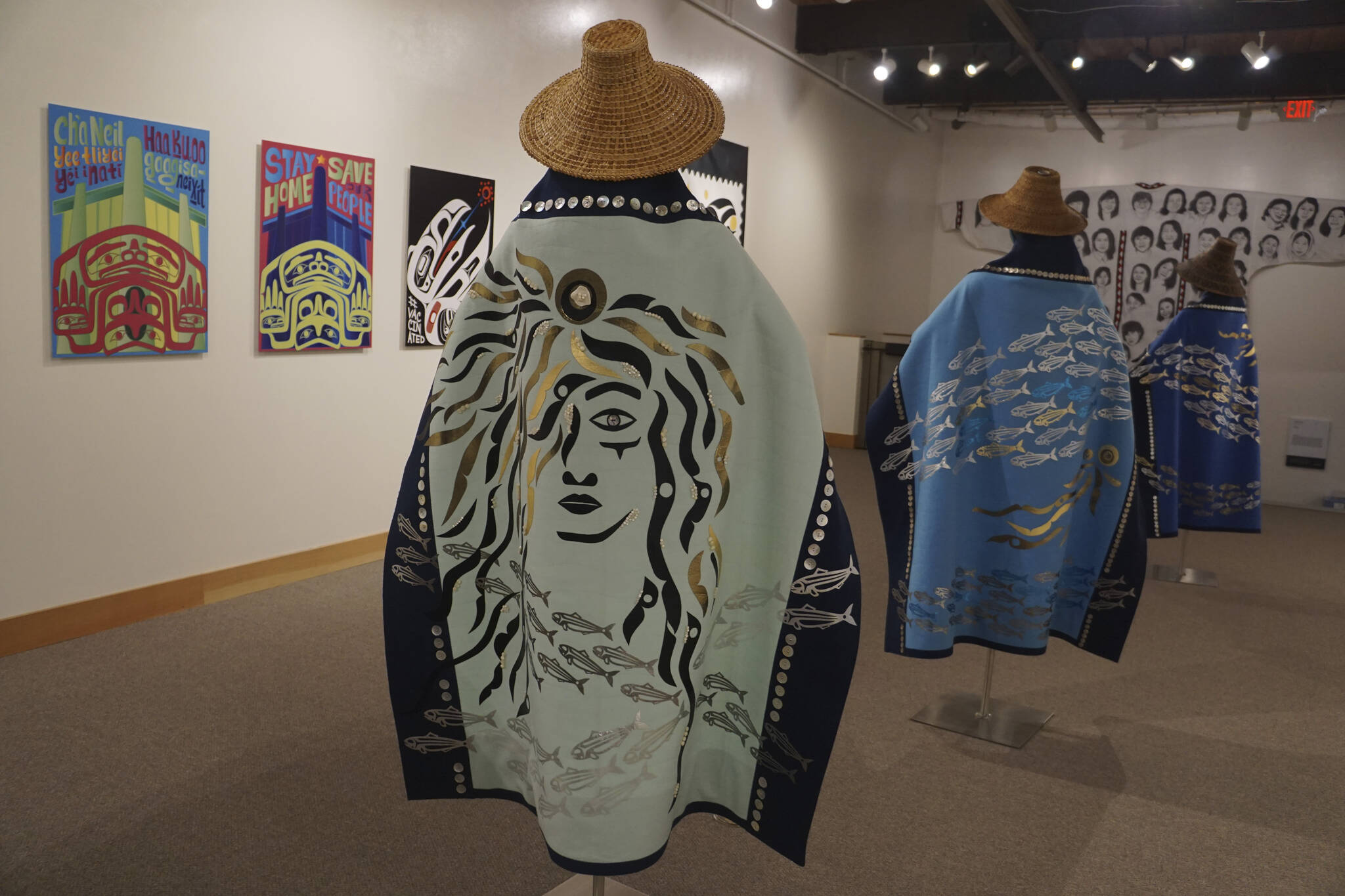
An early press release for “Protection: Adaptation and Resistance,” this summer’s exhibit at the Pratt Museum & Park, incorrectly called it “Protection and Resilience.” While the exhibit came out of the COVID-19 pandemic, when cultures worldwide had to be resilient in surviving, the Indigenous art that’s the focus of the show goes beyond the concept of “resilience.”
“Resilience” in reference to Alaska Native artists sometimes gets overused, said Asia Freeman, artistic director of Bunnell Street Arts Center and curator of the exhibit.
“It’s the implication that people keep putting up with and adapting to the harmful effects of colonization,” she said.
While resilience may be the willow tree that bends with strong winds, resistance becomes the cedar tree that grows strong and endures.
“It’s resisting assimilation. It’s resisting dying off. It’s resisting fading off,” Freeman said.
“Protection: Adaptation and Resistance” includes more than 50 artists, many of them collaborating in forms and media from traditional Lingit dance robes to ancient tattoos to modern graphic novels. Some works come from solo artists, like Lingit artist Crystal Rose Demientieff Worl’s prints of pandemic messages done using formline images. Others represent group efforts, many done in online workshops, like “Qulliq,” the Inupiaq word for seal oil lamps, taught by Inupiaq artist Kunaq Marjorie Tahbone of Nome.
Some works got their inspiration from the pandemic. Lingit and Sitka artist Naal xàk’w/Tommy Joseph’s carved wooden masks, “We’re Still Here,” fit over N-95 facemasks to promote mask-wearing. In a catalog of the exhibit, Naal xàk’w wrote, “We’re still here today. We haven’t gone away. So many times, as part of colonization, media talk about us in the past tense. My work is saying, hey, we’re in this pandemic together!”
In a similar approach, Northwest weavers made the “Chilkat Protector Masks” in a Zoom workshop taught by Lily Wooshkindein Da.áat Hope of Juneau.
“We wove together over miles, wove our yearnings for in-person connection,” Hope writes in the catalog. “Wove our collective resilience, together.”
That collaborative spirit also came together in the planning and curating of “Protection: Adaptation and Resistance.”
“Over the past few years, we’ve been really trying to reconnect with community after the renovation and, of course, the pandemic,” said Pratt Museum & Park Director Jennifer Gibbins. “And so part of what’s exciting about this exhibit is that we’re partnering with Bunnell in a new way.”
In the exhibit, Gibbins said, “I see a theme of community and possibility, and all of us going through the pandemic, which was a really difficult time for all of us. … Here we see people who out of a problem created not only possibility, but also future, and drawing upon their traditional past.”
That concept of modern Alaska Native art as rooted in tradition while being dynamic and modern comes from an aesthetic championed by the late Ron Senungetuk, founder of the University of Alaska Fairbanks Native Arts Center.
Freeman noted the vibrancy of many of the works in the show, such as the enlarged panels of “Chickaloonies,” a graphic novel by artists and writers Dimi Macheras and Casey Silver or the brilliant blue robes of “Herring Protectors.” It’s not all brown, gray, black and white, she said, but “blue jewel tones.”
“It’s vibrant and innovative expression across Alaska, and I think it’s just — it’s mind blowing, really beautiful to me,” Freeman said.
At a First Friday opening on July 1, several artists from the exhibit spoke. Dena’ina artists Joel Isaak and his mentor Helen McClean talked about their birch baskets, “Ghelch’ehi (one that is folded).” Isaak said the Sterling Highway Bypass project in Cooper Landing offered them a chance to collect large pieces of bark from birch trees to be cut to make way for the new section of highway.
“Helen and I were walking along with ladders and backpacks for about a week-and-a-half straight,” he said. “… It’s just a very different experience being on the highway on a ladder than like in the wood where we got the roots.”
The word for birch bark “is an action statement,” Isaak said. “It’s the thing that covers and protects us, so it’s just a different way of thinking about it and visualizing it and how we use language.”
Hope said she learned weaving from her mother, and when her mother died in 2016 while Hope was halfway through weaving her first Chilkat dancing blanket.
“So it’s a gift to be able to wake up every day and know what I’m supposed to be doing with my life. My goal is to not only perpetuate the Chilkat tradition here, but to find a weaver teacher to step into my shoes, because I’m literally wearing her shoes.”
“Protection: Adaptation and Resistance” covers not only the special exhibits gallery, but the smaller gallery in the main exhibit area. In that room, Ahtna/Paiute artist Melissa Shaginoff’ shows “How to be a Good Guest,” a drawing on moose hide and a zine that asks people to fill in the blanks and answer questions like “How do you relate to the land” and “Does it relate to you?”
“It’s sort of a ‘Mad Libs’ poster,” she said, referring to the game. “… You finish the sentences just like a ‘Mad Libs’ by trying to create sort of a language behind who you are, and I think that when you start to do these things, you start to sort of like really look inward.”
Next to Shaginoff’s work, a video runs, “Tupik Mi,” created by Holly Mititquq Nordlum with Michael Conti about Nordlum’s work as a tattoo artist. That portion of the exhibit includes large selfie photos taken by young woman of their facial tattoos.
Nordlum is part of a modern movement to revive Inuit woman’s tattoos, a tradition interrupted about 100 years ago.
“These are our protection, this connection to our ancestors,” Nordlum said. “… It’s kind of a scary thing actually to walk around the world with markings. You have to fortify, which then kind of protects you because you’re on the lookout, strengthened.”
The exhibit also touches on the issue of Missing and Murdered Indigenous Women, or MMIW. Amber Webb’s “Memoral Qaspeq,” a giant work with faces of MMIW, hangs above the staircase. “Healing Stitches,” red qaspeqs and atikluks made by women honoring lost family members. Three posters by Sarah Ayaqi Whalen-Lun, “Black Lives Matter,” “Solidarity” and “No More Stolen Sisters,” show the connection between Black and Indigenous women as well as the issue of MMIW.
The exhibit also features its own soundtrack, “Suqpiaq Songs” by Hanna Agasuuq Sholl of Kodiak.
Gibbins said the exhibit works as a powerful collection of Alaska Native art and more.
“You may come in here because you’re interested in seeing contemporary Alaska Native art, but the underlying themes of this exhibit, I think, are things that we can all think about right now,” Gibbins said. “Community, connecting and finding that possibility. Yeah, help us move forward.”
“Protection: Adaptation and Resistance” shows through Sept. 24 at the Pratt. After that, it moves to the Anchorage Museum, then the Portland, Oregon, Native Arts and Culture Foundation in May of 2023. Eventually the exhibit returns to Alaska for the Alaska State Museum in Juneau.
Reach Michael Armstrong at marmstrong@homernews.com.
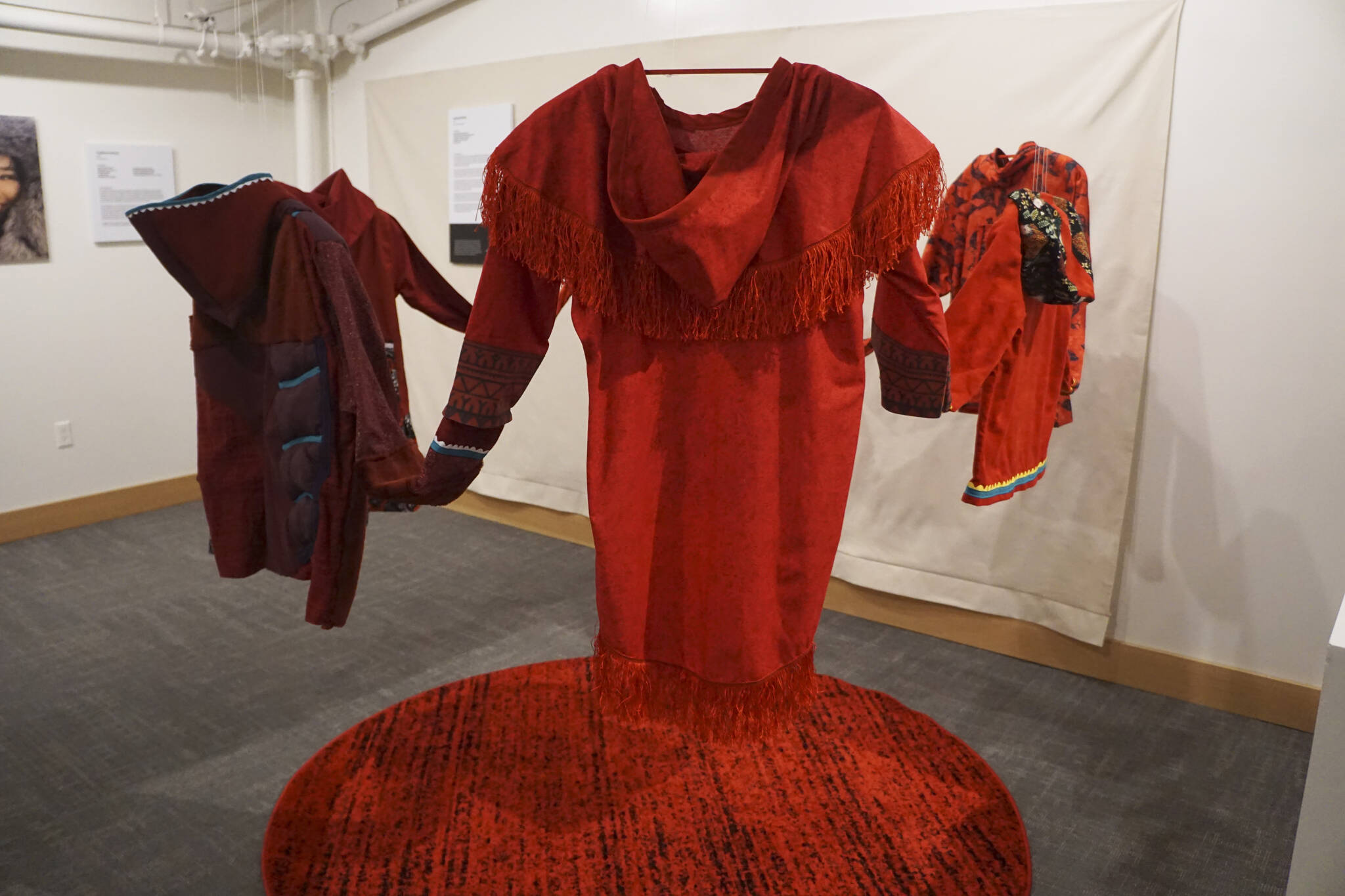
Bobby Qaluktaksraq Brower of Utqiagvik invited other Indigenous women to sew atikluks in memory of missing and murdered Indigenous women. The collection, “Healing Stitches,” includes works by Brower, Melissa Ahnroorik Ahlooruk Ingersoll of Nome, Cassandra Tikasuk Johnson of Unalakleet, Jackie QataliñaSchaeffer of Kotzebue and Beverly Tuck of St. Paul. The art is part of “Protection: Adaptation and Resistance,” on exhibit at the Pratt Museum & Park in Homer, Alaska, through Sept. 24, 2022. (Photo by Michael Armstrong/Homer News)
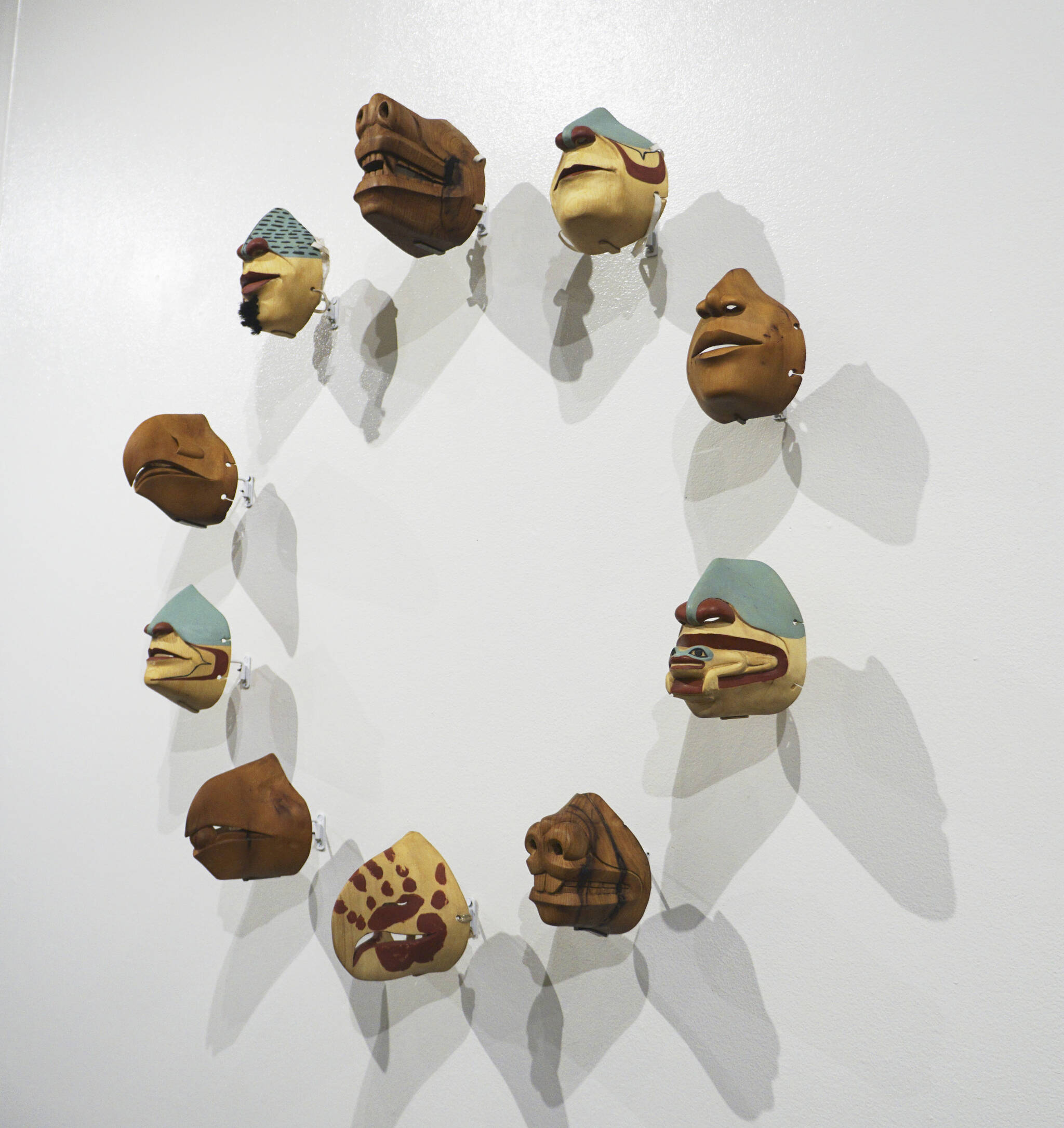
“We’re Still Here,” masks made by Naal xàk’w/Tommy Joseph, are in “Protection: Adaptation and Resistance,” on exhibit at the Pratt Museum & Park in Homer, Alaska, through Sept. 24, 2022. Naal xàk’w, of Sitka, made the masks to fit over N-95 facemasks to promote mask wearing. (Photo by Michael Armstrong/Homer News)
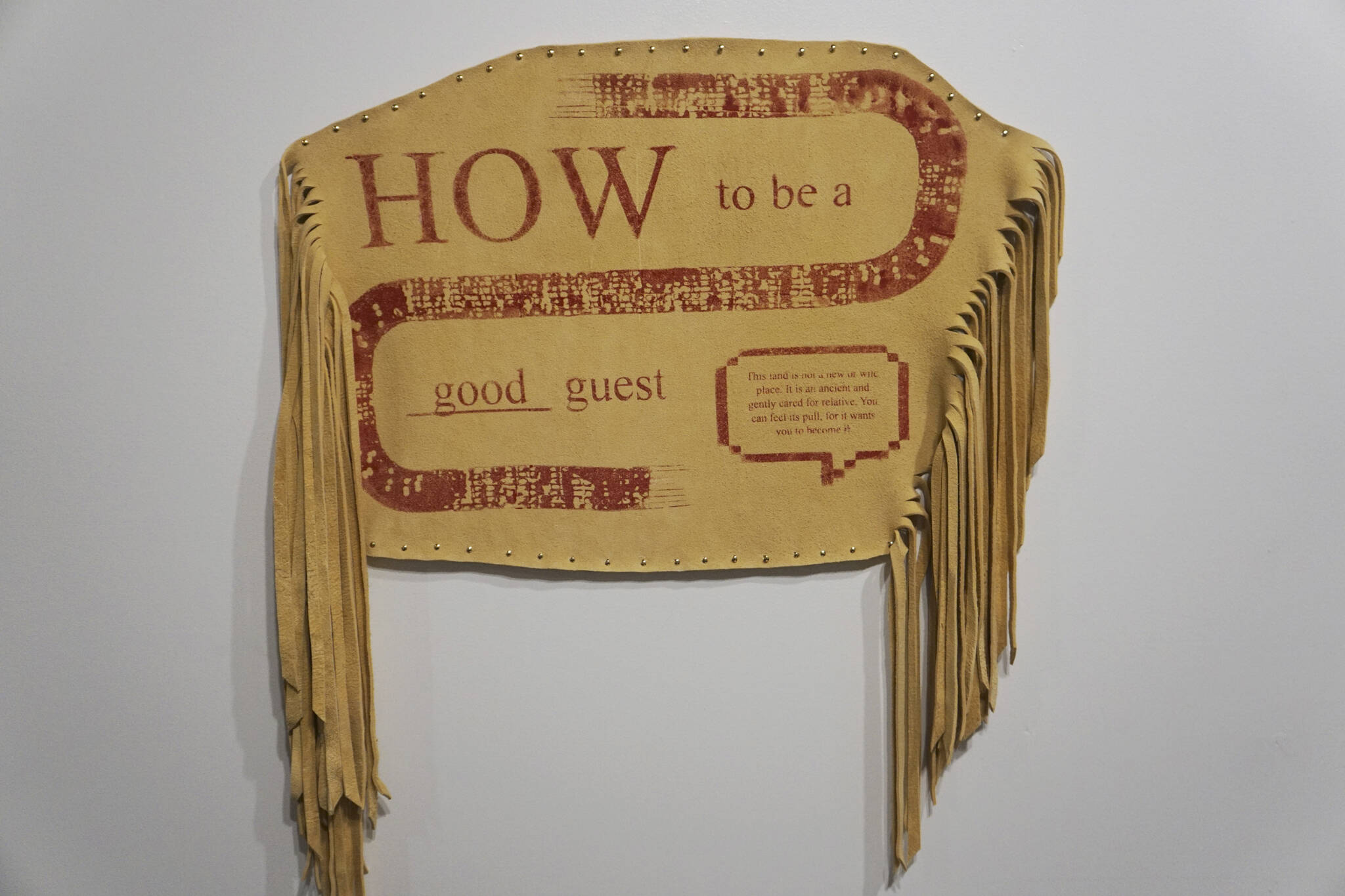
Melissa Shaginoff’s “How to be a Good Guest” is part of “Protection: Adaptation and Resistance,” on exhibit at the Pratt Museum & Park in Homer, Alaska, through Sept. 24, 2022. The screen print on hide work accompanies a pamphlet she created for a residency abroad that frames introductions in Indigenous protocols. (Photo by Michael Armstrong/Homer News)
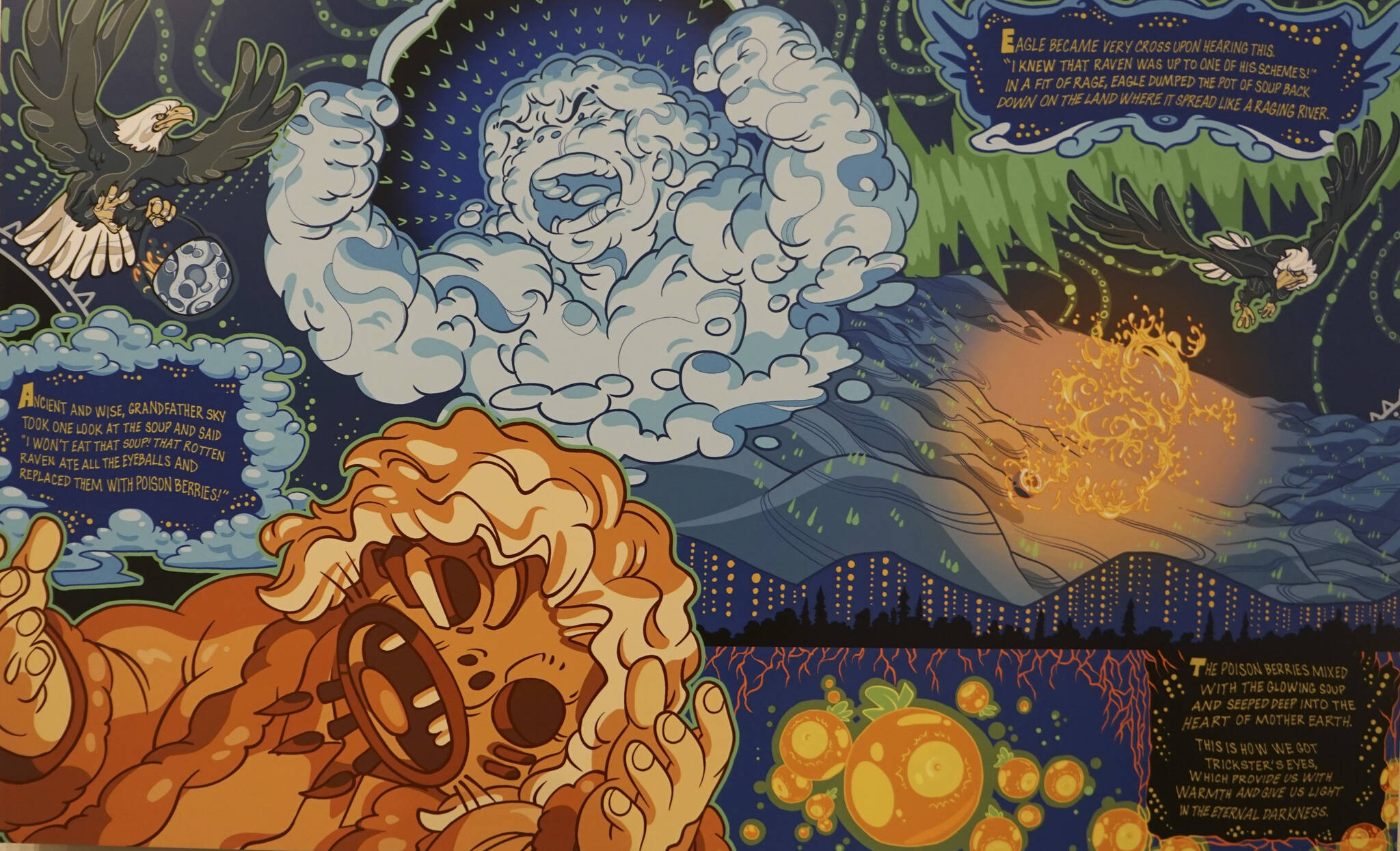
Michael Armstrong / Homer News Artists and writers Dimi Macheras and Casey Silver created “Chickaloonies,” a graphic novel that tells traditional Indigenous stories from Chickaloon. This large panel is from the book, and part of “Protection: Adaptation and Resistance,” on exhibit at the Pratt Museum & Park in Homer.
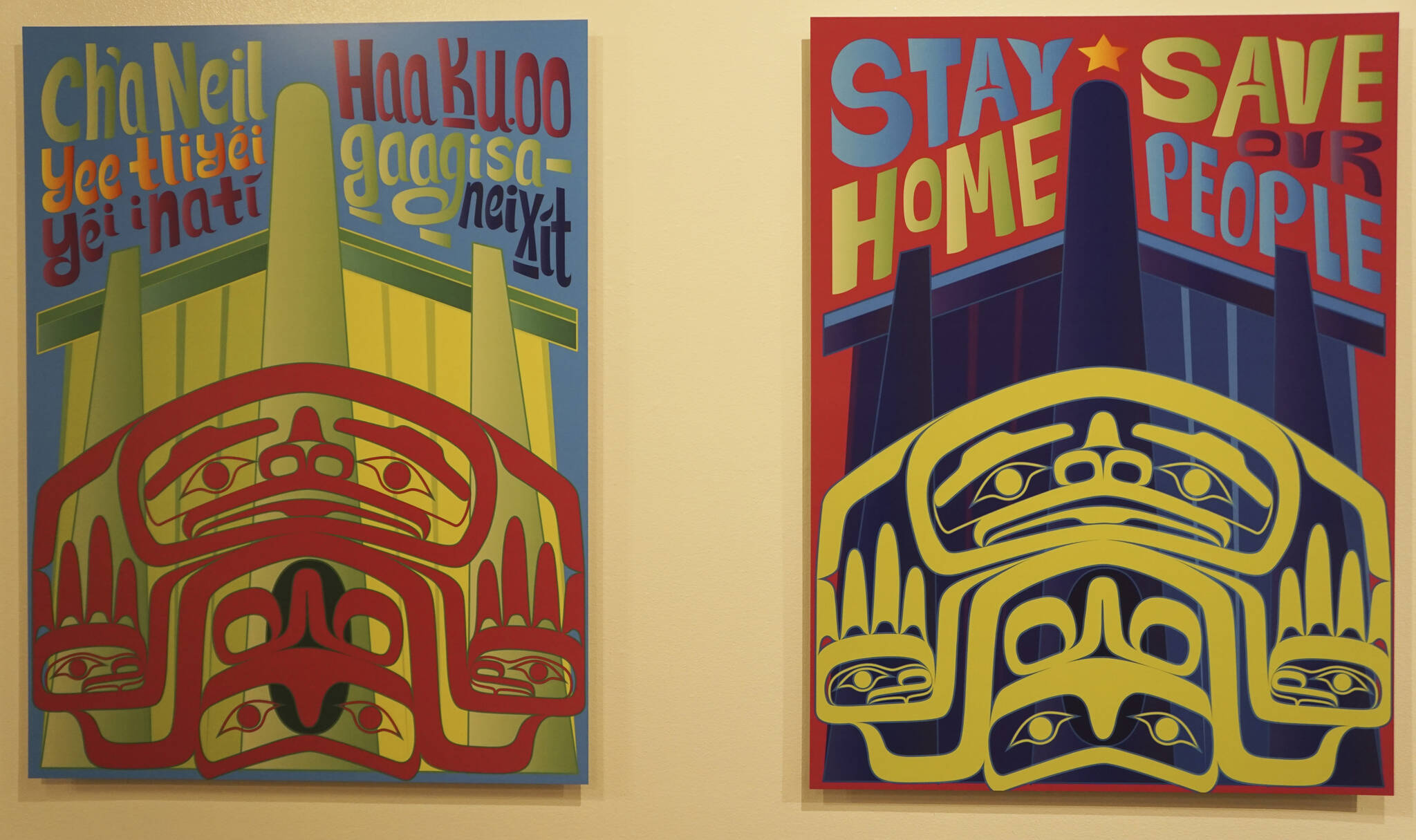
Lingit artist Crystal Rose Deminetieff Worl created “Haa Shagéinyaa: Our Protecting Power,” a series of prints, to support public health during the COVID-19 pandemic. The works are part of of “Protection: Adaptation and Resistance,” on exhibit at the Pratt Museum & Park in Homer, Alaska, through Sept. 24, 2022. (Photo by Michael Armstrong/Homer News)
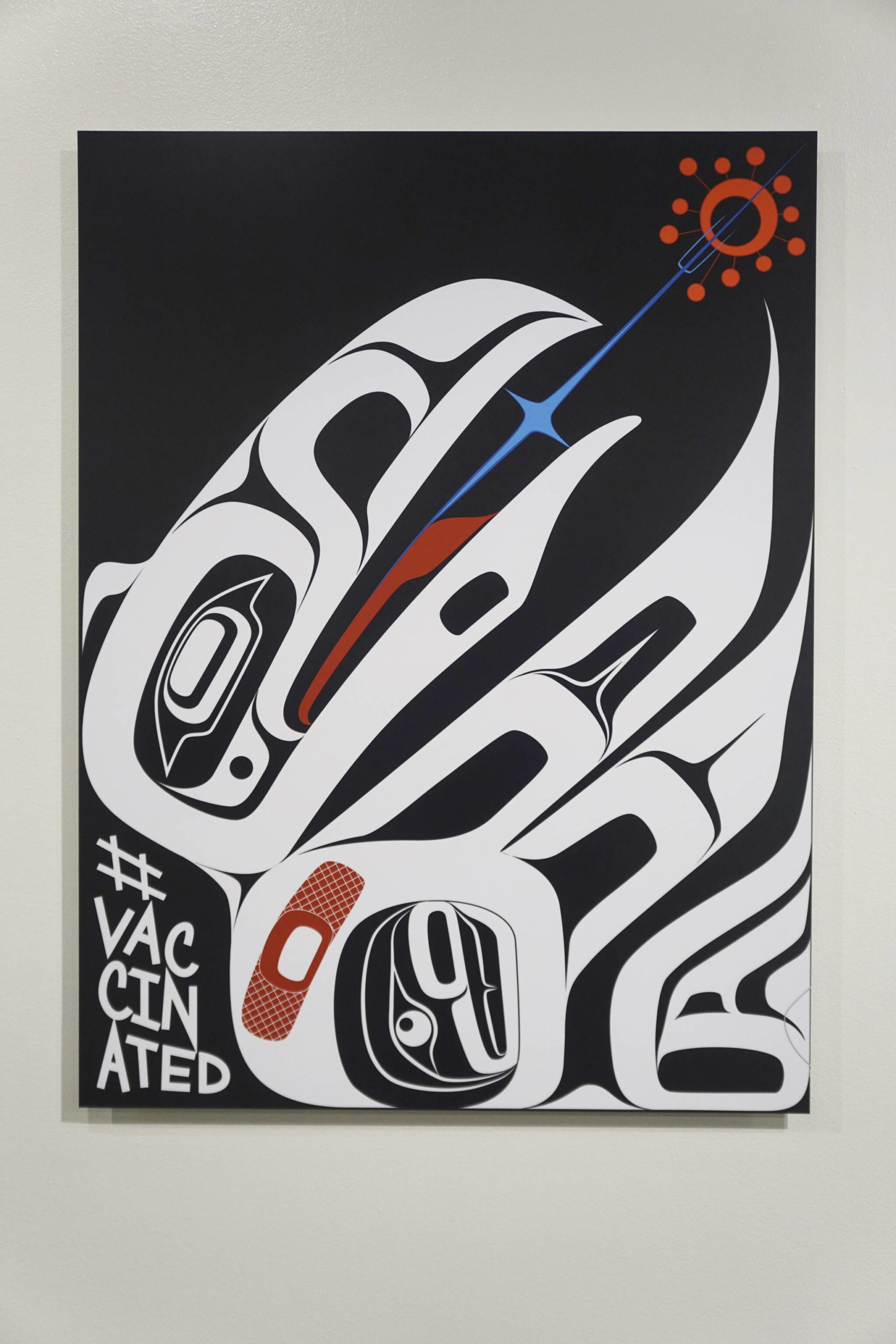
Crystal Rose Demeinetieff Worl’s digital illustrations on aluminum, “Haa Shagéinyaa: Our Protecting Power,” are in the “Protection: Adaptation and Resistance” show at the Pratt Museum & Park in Homer, Alaska. The show continues through Sept. 24, 2022. (Photo by Michael Armstrong/Homer News)
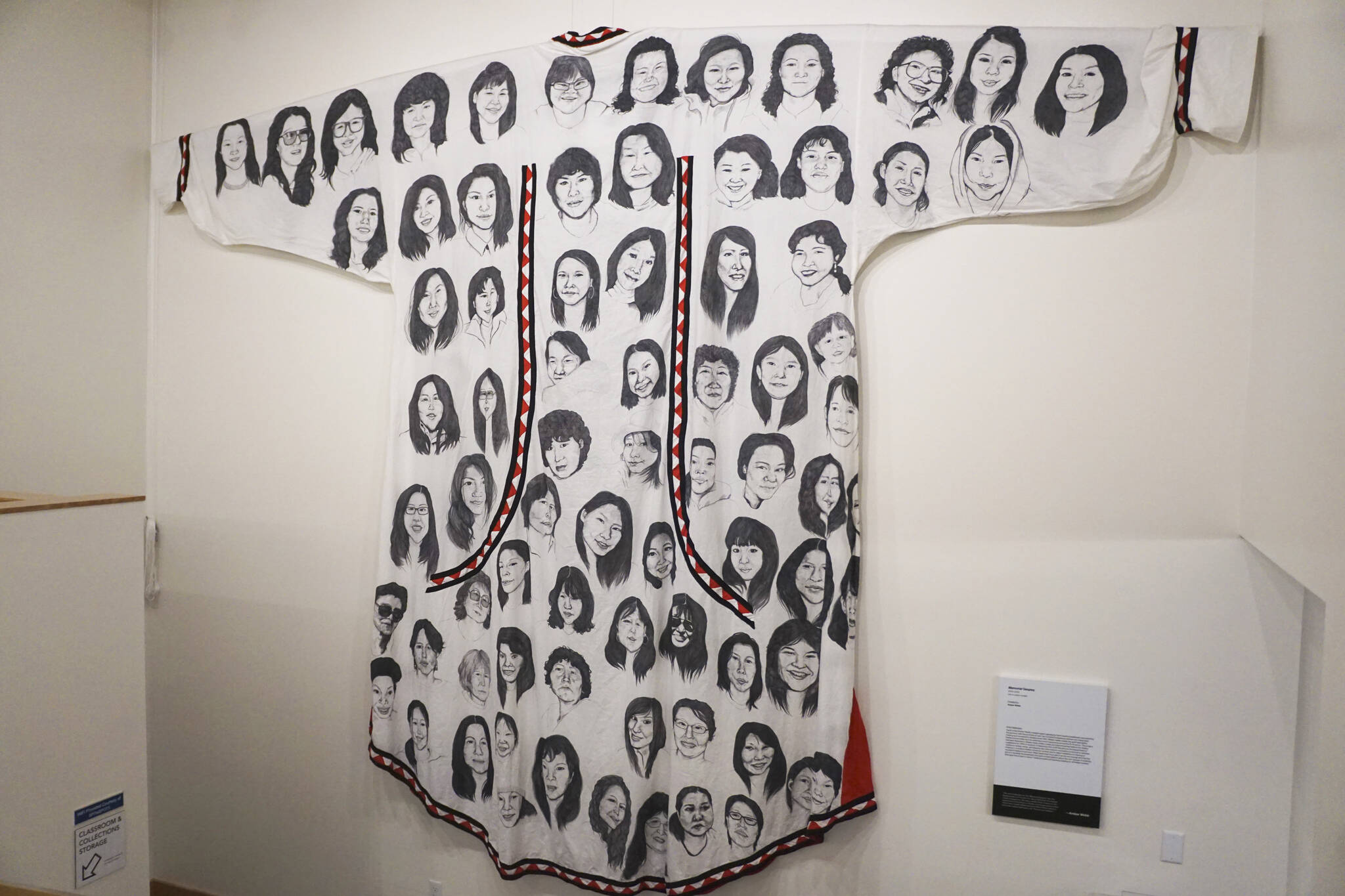
Amber Webb’s “Memorial Qaspeq” is in the “Protection: Adaptation and Resistance” show at the Pratt Museum & Park in Homer, Alaska. The wall-sized qaspeq contains images of Alaska Missing and Murdered Indigenous Women. The show continues through Sept. 24, 2022. (Photo by Michael Armstrong/Homer News)
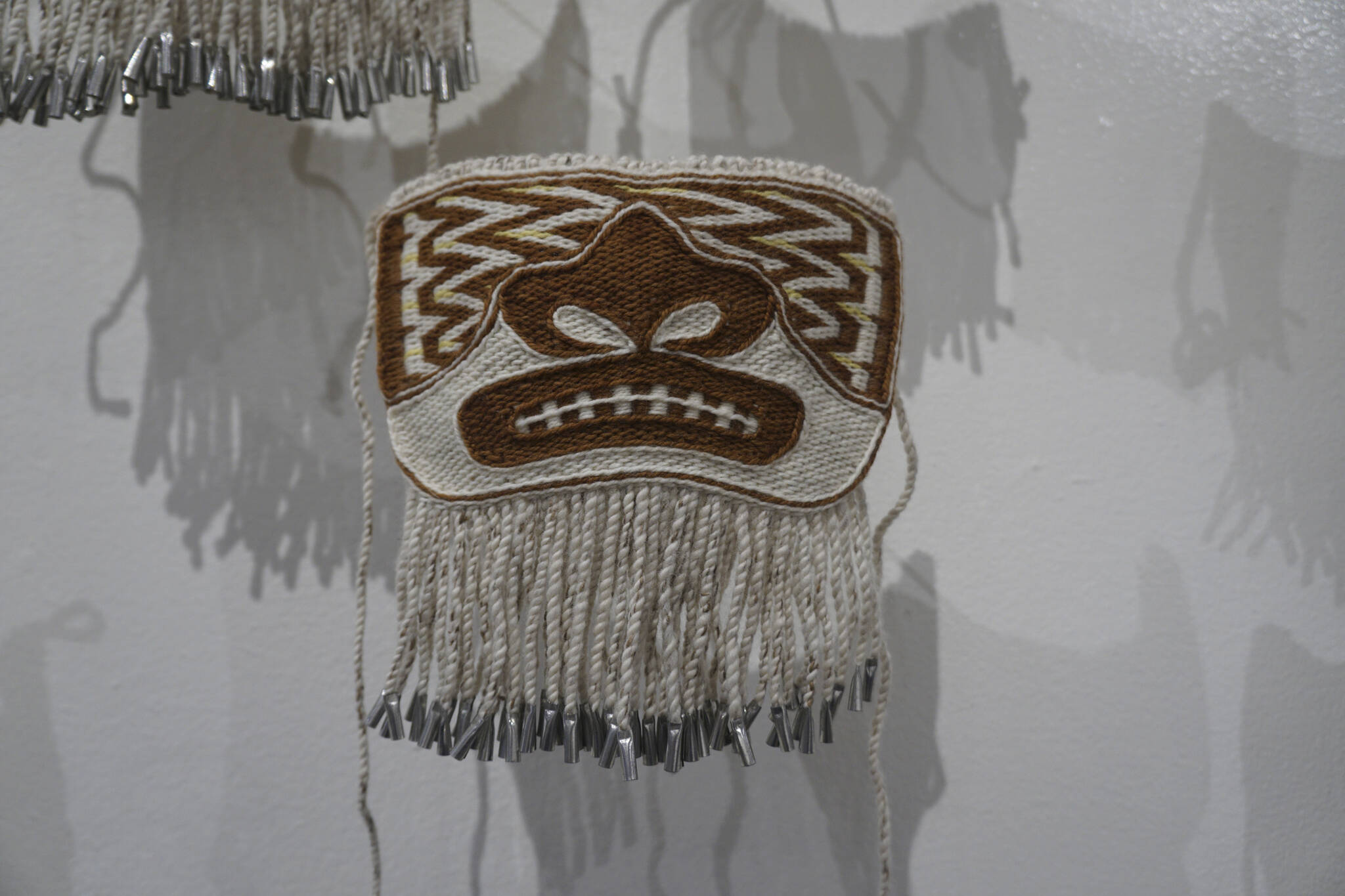
One of the Chilkat protector masks made in a Zoom workshop led by Lily Wooshkindein Da.áat Hope of Juneau and on display in the “Protection: Adaptation and Resistance” show at the Pratt Museum & Park in Homer, Alaska. The show continues through Sept. 24, 2022. (Photo by Michael Armstrong/Homer News)
