
AUTHOR’S NOTE: Stephan “Steve” Melchior parleyed a partially fabricated past into a respected life as a miner and a builder in Alaska. He arrived in the Territory in the mid-1890s and spent the remainder of his life on the Kenai Peninsula.
In October 1932, Steve Melchior returned to Seward from the final trip he would ever make to his placer-mining claims on Surprise Creek, a tributary of the Kenai River with its confluence in the canyon above Skilak Lake.
Four months later, on Feb. 21, 1933, the Seward Gateway noted: “Steve Melchoir [sic], who has been in ill health the greater portion of the winter, evidently has taken a turn for the better, friends reporting he is showing much improvement the past week.”
Within two weeks, however, Melchior was dead. Although his obituary would claim he had died at age 84 — information based on Melchior’s own testimony — he was actually 10 years younger. It was just one of the many Melchior mistruths that has complicated the determination of his legacy.
Stephan “Steve” Melchior had spent his final weeks in the home of his friends, Fred and Carrie Kielcheski, while being attended to medically by Dr. Arthur David Haverstock from Seward General Hospital and spiritually by Father Robert Dermot O’Flanagan of the local Catholic Church.
“Steve, as he was affectionately called by his many friends,” wrote the Gateway in Melchior’s lengthy page-one obituary, “had been in poor health for some years past, but not until about three years ago did it appear that the aged old-timer was on the downward path; Steve thought the trouble was his stomach, but it was his heart.”
According to Father O’Flanagan, the German-born Melchior had been in no pain at the end, and his final words had been “Ich gehe Heim zu Mutter,” meaning, “I’m going home to Mother.”
His well-attended funeral was held March 8 at the Sacred Heart Church, with Father O’Flanagan officiating. A graveside service, followed by interment, occurred afterward at the Seward Cemetery. A page-two newspaper article about the church ceremony waxed poetic: “The music and singing of the choir was beautiful, conveying a spirit of restfulness and tenderness throughout, while the ritual ceremony must have brought peace to the soul of he who has gone on to his reward.”
Legacy, for better or worse
What to make of the life of Stephan Melchior? Certainly, he was a complicated individual, as most humans are, and the difficulty of any real assessment is exacerbated by the myriad sides of himself that he revealed to the world around him.
It is too easy to dismiss him as simply a liar, or just a sourdough, a miner or a pioneer. Melchior was, no doubt, a man who crafted a persona by perpetuating falsehoods about himself. But he was also more than that.
Take the July 1928 story of “Rainy,” Seward’s pet deer. What happened to Rainy prompted Melchior to pen this brief letter to the editor of the Gateway: “‘Rainy,’ the deer, was lying in the gutter chewing his cud, when along came two fellows ‘celebrating,’ one Scotty and the other Jack, and like two hungry wolves (they) jumped on the deer, Jack holding him so roughly as to break one of his tender horns off. It made me so mad that if my old muscles had a little of their old-time strength, I would have wiped up the street with both of them, as such cruelty should be severely punished.”
Melchior also appeared to have numerous friends and acquaintances. The Gateway frequently reported on hunting trips he took into the mountains with partners or in groups. The newspaper once said he was “famed through the Northland because of his skilled craftsmanship and his knowledge of the Territory of Alaska.”
He was well known for his woodworking skills. His small cabin in what was then called “Home Brew Alley” (up against the mountainside in Seward) included his own workshop, featuring a foot-powered lathe. There, he built furniture (chairs, tables, cabinets, etc.) and crafted fancy walking sticks topped with sheep horns. But he received the most attention for his boats.
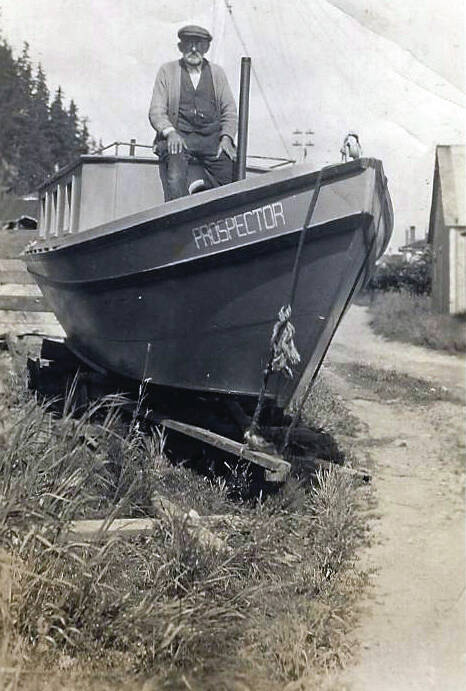
In April 1930, he completed a power dory, fitted with a two-cylinder Kermath engine and a Maxim silencer, for Louie Frandzen. In August 1931, while a crowd cheered him on, he christened and then launched what he called his “pleasure boat,” the Prospector, into Resurrection Bay. Two weeks later, he was already at work on a new skiff.
The newspaper also reported on his many comings and goings to his Surprise Creek mining claims, even after the big flood of 1923 had prompted him to abandon moose ranching and mining and move into town. It was a big change for a man who had worked so hard to carve out a place for himself in the mountains.
In March 1918, at the age of 60, he had filed his annual labor statement for his four placer claims. He called the four locations the “New Year Group,” consisting of “Discovery,” “No. 1,” “Teddy Bench” and “Murphy Bench,” all situated on Surprise Creek. His statement claimed that between Sept. 27 and Dec. 31 of 1917 he had built 3 miles of new roads, all 6 feet wide; he had also cut and trimmed 25 logs and moved them onto his property for later construction of sluice boxes.
But in the years before his death, Melchior was feeling his age. When his rheumatism flared up, working and walking were painful, and he knew he was clearly slowing down. His group of working dogs, which had grown from five in 1922, numbered a dozen only seven years later, and he was attempting to sell them.
He was still a tough, talented old man, but his body was wearing out. Despite the likelihood that he sensed the end approaching, he persisted in his own mythology, even inventing more chapters on occasion. For instance, Capt. Kircheiß, who visited him in 1932, said Melchior told him that during World War I, he had been “reported 72 times for pro-German sympathies. But the judges knew him as an honest man, and he was always acquitted.“
Family ties
It appears that Steve Melchior kept up an intermittent correspondence with his many siblings back in Germany after immigrating to the United States in the 1880s. Descendants of his younger brother Johann Melchior say that Steve began writing more frequently and including more photographs of his life after about 1916.
He did not, however, expend as much effort in keeping up with his own children. How much they knew about him is unknown. Younger sons Frank and William, according to one of Frank’s descendants, knew something of their Melchior heritage, even though their father had abandoned the family when the brothers were very young.
Frank Benjamin (Melchior) Stark, who worked as a chiropractor for many years in Allentown, Pennsylvania, married Esther Klein and raised a family. He died in his late 70s in 1968.
William Joseph (Melchior) Stark also married — to Eugenia “Jennie” Johnson, in Washington — but he divorced her only seven years later. They produced two daughters, and at least one of them took an interest in genealogy and helped to trace the Steve Melchior lineage.
But the person most responsible for helping Steve Melchior’s abandoned wife Katherine was her own daughter Marie, who also had a hand in tracking down a copy of her half-brother William’s Canadian birth certificate and confirming Melchior as his biological father.
What William did with that information is unclear, but his Social Security application in 1938 indicates that on at least in that one instance, he used Melchior as his surname and wrote in Steve Melchior as his father.
Some members of the family have speculated that, after it was revealed in 1928 that Steve Melchior was still alive, William may have traveled to Alaska to either meet or confront his father. No evidence of this meeting, if it occurred, has yet been discovered.
Curious, though, is the appearance of someone named William Joseph Stark signing his military-draft registration card in Cordova in May 1942. On the card, Stark stated that his place of residence was the Cedarburg Hotel in Seattle, but he was receiving mail via General Delivery in Cordova.
Also curious is the documented fact that William, at age 55, died in Anchorage on Sept. 8, 1948.
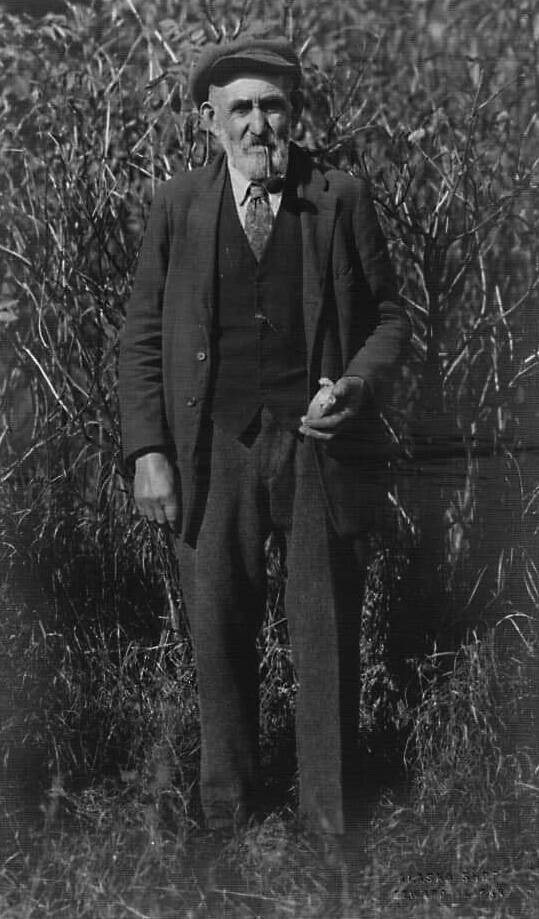
By the 1930s, rheumatism and heart trouble made it difficult for Steve Melchior to get around in the way he had been accustomed for so much of his life. (Photo courtesy of the Melchior Family Collection)
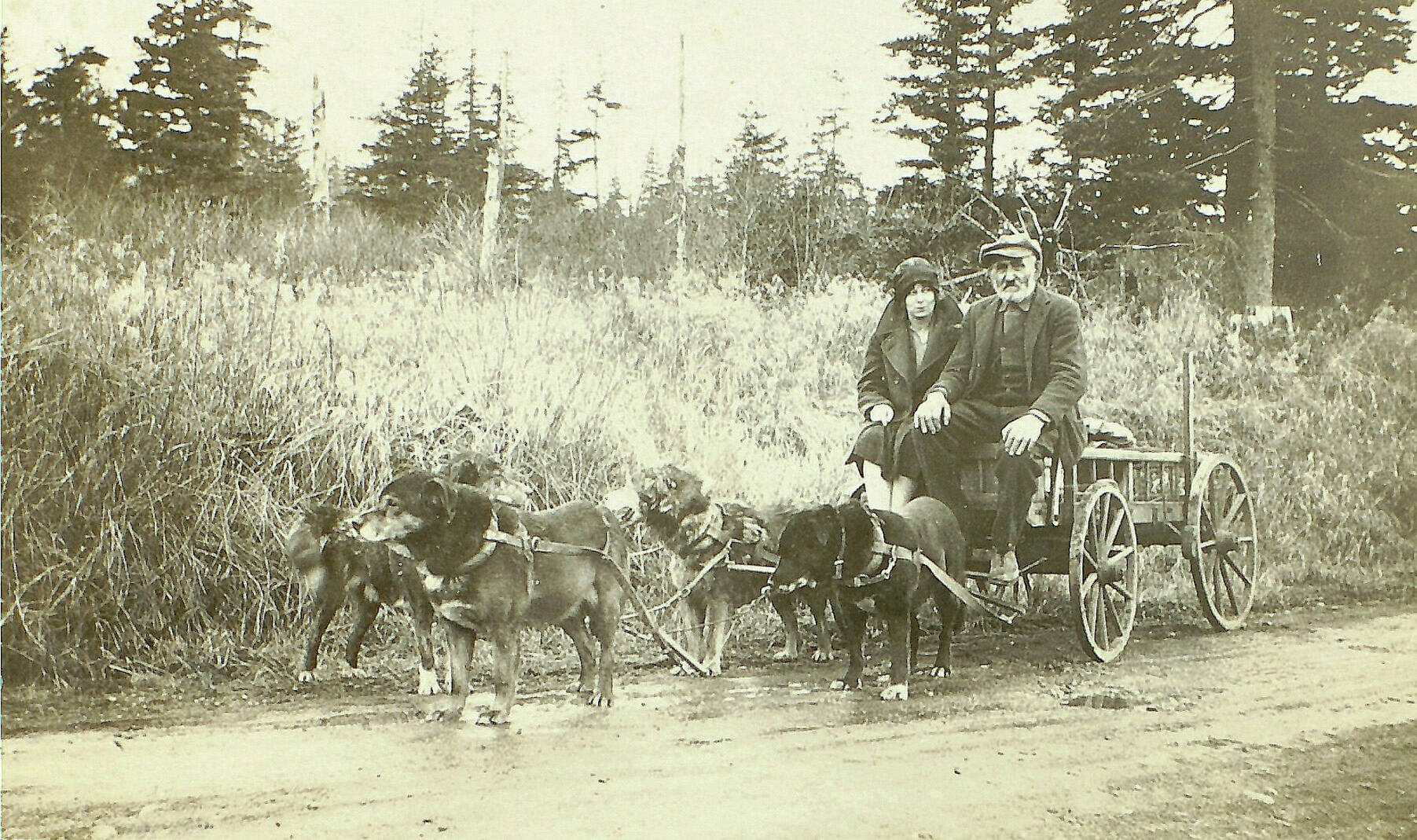
Having a ready team of work dogs made longer trips out of Seward more manageable for Steve Melchior. The woman accompanying him on the wagon is unidentified. (Photo courtesy of the Melchior Family Collection)
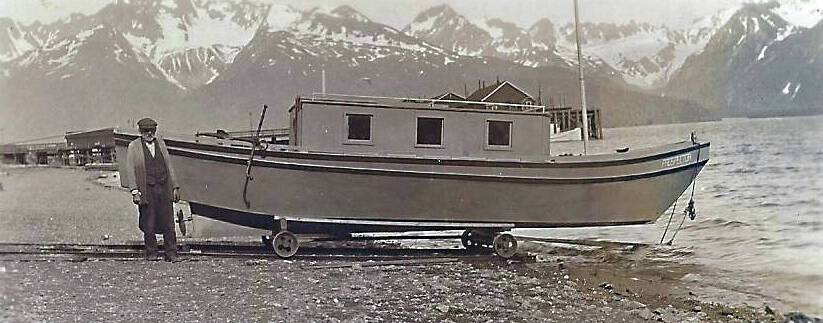
Steve Melchior with his pleasure boat, the Prospector, ready to launch into Resurrection Bay, August 1931. (Photo courtesy of the Melchior Family Collection)
