
By Tressa Dale
For the Peninsula Clarion
The otherworldly call of a peacock woke me on my first morning in Hawaii.
After nearly two years of study and training and grueling tests, my best friend in the universe and I had succeeded and finally arrived in paradise, and we were eager to taste salt water. We had just one day of freedom before we were expected to report in our stifling uniforms to the hole in the ground in which we would work for the next four years, so we skipped breakfast and sprinted to our rental car to find our beach.
Our sponsor told us that the north shore was the perfect first experience so we “hopped on the Kam” and headed north past the rolling pineapple fields, past the tourist towns, to an unmarked pull off to watch the turtles sunning themselves on the beach.
A few hours later we were exhausted, badly sunburned, and ready to indulge in something fruity and full of rum, so we went out to shop and eat.
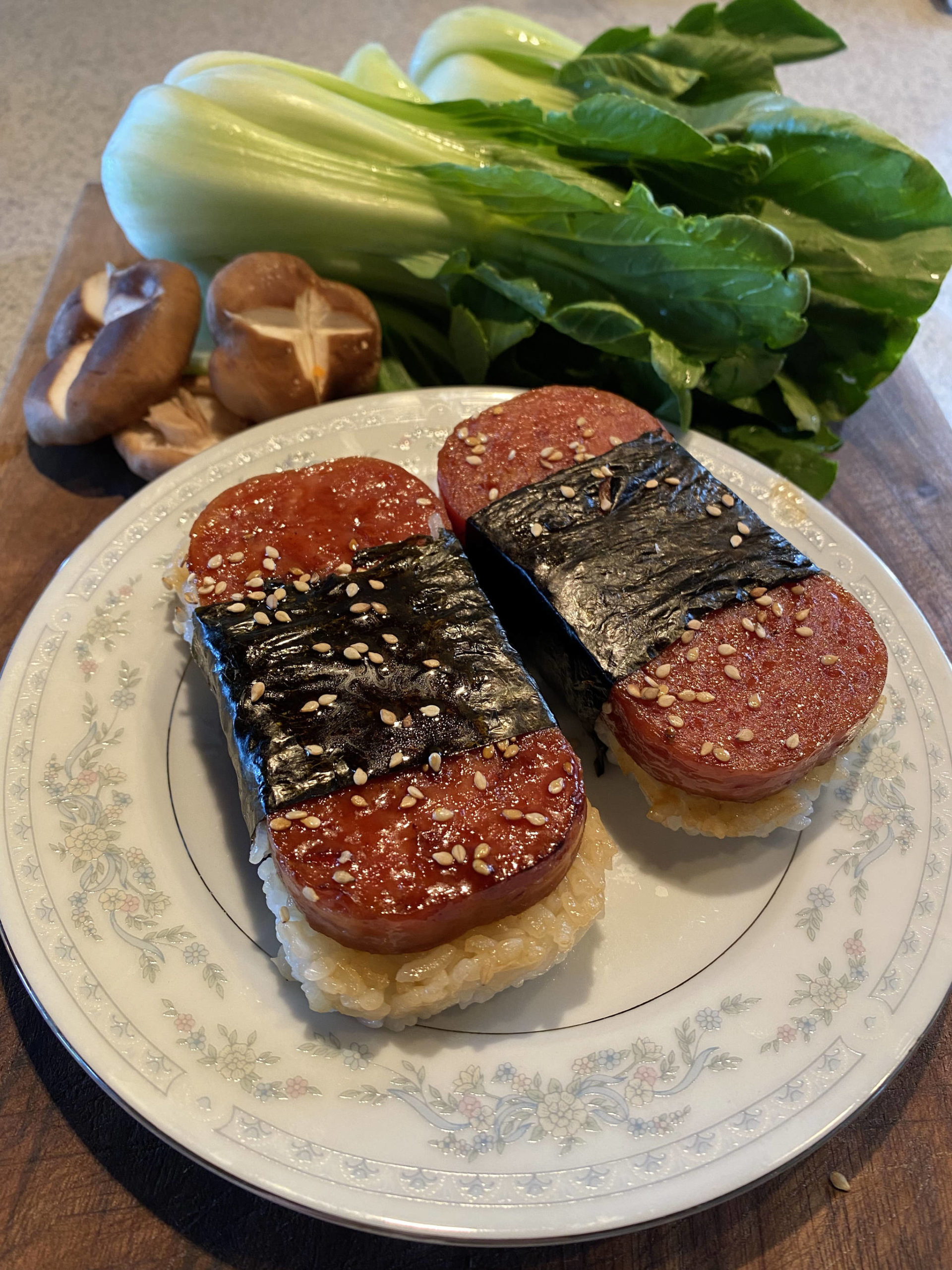
We ate sushi in an outdoor restaurant, seated on the floor at the low table, surrounded by roaming chickens and the hibiscus-scented breeze. Our first idyllic beach trip ended with windows down, music up, well-practiced harmonies, and an iconic road snack: Spam musubi.
Ingredients:
1 can of Spam
2 cups cooked sticky rice
2 teaspoons seasoned rice wine vinegar
3 teaspoons brown sugar
2 tablespoons soy sauce
2-3 sheets nori (seaweed paper)
A few pinches of furikake (or toasted sesame seeds)
Directions:
Cook your sticky rice, season with the rice wine vinegar, and allow to cool just enough to handle comfortably.
While your rice is cooling, slice your Spam. Keep and rinse out the can to use as a mold for the musubi. A standard can of Spam should be cut into 8 slices.
Fry your Spam until both sides are crispy.
Mix your soy sauce and brown sugar and pour over the cooked Spam in the pan. Keep flipping the Spam until the sauce thickens and each piece is well coated and sticky.
Line the empty can with plastic wrap, spoon some rice into the bottom, and press until flat. How much rice is up to you, but I aim for the rice layer to be at least double the thickness of the slice of Spam.
Sprinkle some furikake or sesame seeds on the rice, top with one slice of Spam, and press. Fold the plastic over the top of the Spam and press firmly.
Cut your nori sheet in thirds longways and set one piece in front of you with the short side facing you and the shiny side down.
Unmold your musubi, lay spam side down across the center of the nori, and fold both sides up to wrap around. Use a little water to help the seaweed stick to itself.
Tightly wrap in plastic immediately if you are taking the snack to go (very satisfying hiking food), otherwise just plate and serve.
Over the years the novelty and charm of life in Hawaii wore off for me, and I began to see through my sunset-tinted glasses to the mildewy realities of life in the tropics. Perpetual summer isn’t fun in drill boots, and life without seasons disoriented me.
The tropical time warp took its toll, and by the time my enlistment ended I was so eager to leave I didn’t bother to take one last trip to the north shore, and now I regret it. Someday I will go back and taste that salt water again, but for now, I will just enjoy my snack and let my imagination take me.
Tressa Dale is a U.S. Navy veteran and culinary and pastry school graduate from Anchorage. She currently lives in Nikiski with her husband, 1-year-old son and two black cats.
