
Like a lot of bibliophiles, I often find that my appetite for books sometimes exceeds what I am realistically able to read in this lifetime. A consistent indicator of a dwelling inhabited by me are teetering towers of books of all lengths, genres and formats, and not always in the picture-perfect way favored by many a #Bookstagram influencer.
It’s for that reason that, over the last year, I’ve tried to abide by a new guideline when it comes to bringing new books into my apartment: If I can buy it somewhere else for the same price, I don’t buy it.
Let me explain.
Take F. Scott Fitzgerald’s, “The Great Gatsby.” I awoke earlier this month with a sudden, ravenous urge to read the book, which I last read in high school and didn’t enjoy. Every bookstore sells “The Great Gatsby,” but I was reluctant to fork over a full fifteen dollars for a book that has been printed more than 25 million times worldwide.
I visited multiple stores before finally snagging a copy for less than five dollars at Inkwell’s in Soldotna. I later learned that the copy I purchased is a 1946 Bantam Books edition that features an uncommon cover, and I was thankful I’d resisted the urge to pay full price for a mass-marketed version.
It was while operating under this new restraint that I was delighted to enter Rainy Retreat Books in Juneau last month, which had a remarkable collection of books about Alaska that I haven’t seen sold in any other bookstores or online. I took home a copy of Ken Kesey’s 1992 “Sailor Song” — a book I didn’t know existed until seeing it in the store — and another, which presented as a mystery.
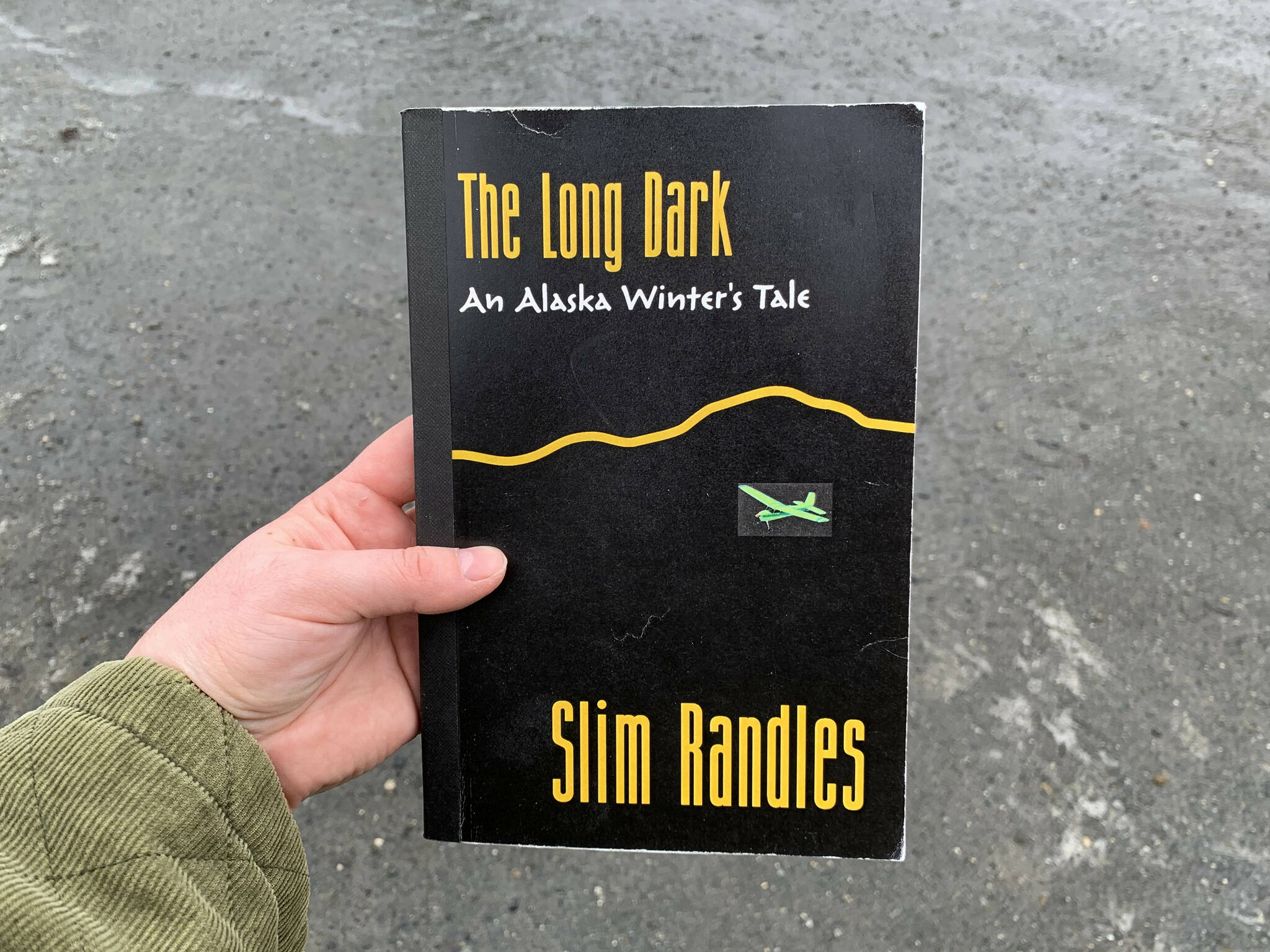
The book was black, clearly not distributed by a large publishing house and entirely devoid of a synopsis or any text that would otherwise indicate what kind of story unfurled across its pages. I felt confident that it was a book I wasn’t likely to encounter again any time soon and took it home for a little over four dollars.
Slim Randles’ 2003 “The Long Dark: An Alaska Winter’s Tale,” is a patchwork ode to male life in rural Alaska. It’s set in the fictional town of Kahiltna, which is populated with various iterations of the Alaska man character: There’s the lovesick bar-owner, the bush pilot trying to pass his business on to his son, the young buck bartender, the dog musher, etc.
Certainly, there are female characters, but they seem to exist mostly as obstacles standing between men and an authentic Alaskan lifestyle. Throwaway jokes from character about how letting women read will lead to the end of real rural living and obligatory refutations by the rough-and-tumble token woman resident are tired tropes and detract from what is otherwise an interesting story with likeable characters and good writing.
“Winter is Alaska,” reads one part of the book. “Tourists are gone, leaving the giant country to those who love it. Winter is a time of legends, of heroic deeds that go unheralded by the world, of friendships, stories and occasional tragedy. Winter in Kahiltna is a time of introspection, a time to ask oneself the important questions. A time to think. A time to read. A time for ideas.”
Randles skillfully channels universal experiences of life in Alaska in a way that bonds the book’s characters with readers who’ve spent time in Alaska. There’s a playful chapter about the town coming together to ogle over a basket of fresh strawberries flown up from California in mid-winter and another that explores the relationship between masculinity, cabin fever and domestic violence.
In my favorite chapter, two residents argue about whether snowmachines or dog teams are better for long-distance excursions and decide to race each other. The blow-by-blow narrative is exciting, action-filled and quintessentially Alaskan.
All in all, “The Long Dark,” is a quick, easy read that is committed to a version of Alaska that is attractive to many. I probably wouldn’t have read it without my new book-buying philosophy and am happy that approach is successfully helping me find new and unique reads.
“The Long Dark: An Alaska Winter’s Tale” was published Jan. 1, 2003, by the Ester, Alaska-based McRoy and Blackburn Publishers.
Reach reporter Ashlyn O’Hara at ashlyn.ohara@peninsulaclarion.com.
Off the Shelf is a bimonthly literature column written by the staff of the Peninsula Clarion.

 E-Wallet Purchase (Add Funds)
 Term Subscription