
AUTHOR’S NOTE: Part One of this three-part story about John Fenger, Homer’s first resident physician, provided some early personal background about Fenger and a handful of his early medical experiences in Alaska.
It was normal for Dr. John Fenger to receive phone calls when someone in Homer needed medical attention. This call wasn’t one of those times.
On the other end of the telephone line was a Mrs. Pulaski, who lived east of town and had a problem: One of her cows had somehow managed to get inside her house; currently, it was in her kitchen and was resisting all her efforts to prompt a peaceable departure.
Mrs. Pulaski realized, of course, that this was hardly a medical emergency, but she said she hadn’t known whom else to call. She wondered if Dr. Fenger would be willing to drive out to her place and see what he could do.
The doctor called a few other people, and they congregated at the Pulaski place. Eventually, they were able to coax and prod the uncooperative bovine back outdoors.
Cow removal wasn’t exactly what Dr. Fenger had signed up for when he had agreed in 1956 to become Homer’s first-ever resident physician and to run the community’s new hospital. But Fenger was a kindly neighbor and had a generous spirit. Helping each other was what good neighbors did.
Fenger and his wife Grace, a registered nurse, had met on duty on the medical ship M.S. Hygiene in 1954 and married in March 1955 during a stop in the port of Kodiak. After their on-board service ended in August, they had moved to Denver for additional medical work/study.
John had begun a residency at Colorado General Hospital while Grace had taken a position with the Denver Visiting Nurse Service. Both were interested in an eventual return to Alaska, where they had served together on the medical vessel Hygiene. Homer appealed to them because of its location, its scenic beauty, and the opportunities presented by its new hospital.
Dr. Fenger began his tenure as chief of staff at Homer Hospital on July 1, 1956. Over the next nine years, he and Grace tended to Homer’s medical needs, created a home for themselves and began a family. Eric, their first child, was born in 1958, followed by Heidi in 1959 and Peter in 1961.
By 1960, the Fengers also had one cat and one dog, and they owned a new two-story home on a five-acre parcel along the bluff on what is now Kachemak Drive.
Meanwhile, the practice of medicine was blossoming on the Kenai Peninsula. By the end of 1960, Dr. Marian Goble had served Kenai’s medical needs and departed for the States. Dr. Paul Isaak had moved his medical practice from Seward to Soldotna, and Dr. Calvin Fair had also moved his dental practice to Soldotna after completing his service with the U.S. Army.
Over the next few years, as oil and natural gas production intensified and the peninsula population burgeoned, more dentists, doctors and nurses moved to the area and improved medical care.
In Seldovia, which had had resident medical professionals since the mid-1910s, Dr. Osric Armstrong came and went and then came back again, filling the gap between longer-term solutions. After Dr. Russell Jackson departed in 1961, for instance, Armstrong returned until Dr. Cary Whitehead arrived the following year.
In September 1962, when Dr. Whitehead was out of town, a Cook Inlet Aviation Company aircraft crashed on takeoff from Seldovia, killing five of nine individuals on board. Dr. Fenger traveled to Seldovia to assist Whitehead’s wife Betty, who was also a physician, with triage on the survivors prior to arranging transport for the victims by an Air Force plane to Providence Hospital in Anchorage.
Only six months later, Dr. Fenger found himself back in Seldovia, once again under tragic circumstances. Returning by boat with some friends from clam digging, Dr. Cary Whitehead drowned. Fenger assisted Betty Whitehead, the mother of five small children, in caring for Cary’s patients at Seldovia Community Hospital.
Later, after Betty Whitehead and her kids departed for the States, Dr. Armstrong once again returned to Seldovia to serve the community’s needs.
Difficulties and Departure
In 1962, Dr. Fenger expanded his medical offerings. He opened his own medical office separate from the hospital and soon purchased the area’s first x-ray machine.
Reid Robinson recalled that the doctor’s large husky named Hartford liked to park himself right in front of the clinic entrance and sleep. Even most adults had difficulty attempting to step over him. “Coming or going,” Robinson said, “people would have to nudge him. ‘Hartford, move. Move, Hartford.’ He would reluctantly get up.”
But soon even the new clinic was not enough for Dr. Fenger. He had further medical and personal aspirations.
“My dad struggled (in Homer) to be paid, to make a decent living,” said son Eric Fenger. “There was a lot of bartering…. We got a lot of king crab and quarters of moose and fish and vegetables. But he could not charge what the doctors (elsewhere) were charging…. He spent a lot of money to build that doctor’s office.”
By late 1964, Dr. Fenger, who still reflected fondly on his impressions of the South Pacific during his time in the military, was negotiating with a company called Global Associates for a salaried position on an island there. The company contracted with the U.S. Army to provide medical care for civilians — employees and the families of those in the service — stationed in such isolated areas. Soon, Fenger had signed a one-year contract and began preparing to move.
The rest of the Fenger family, including wife Grace, was unhappy with the plan. According to Eric Fenger, Grace, who wanted to remain in Homer, reluctantly accompanied her husband with the children.
“When we left,” Eric recalled, “it was a gray, cold, icy day (at the end of March 1965), and just bleak because we were leaving, and nobody wanted to leave except for just one person of the five.”
Most of the family’s belongings were stored in the back of the doctor’s own clinic. Dr. Fenger arranged for Reuben Call to house-sit during their absence, and by the first of April they were gone.
Many believed that the Fenger family departure would be temporary. The Anchorage Daily Times reported that Dr. Fenger would be leaving Homer for only about two years.
And he did return after his Global Associates contract ran out, but he was finished practicing medicine in Homer.
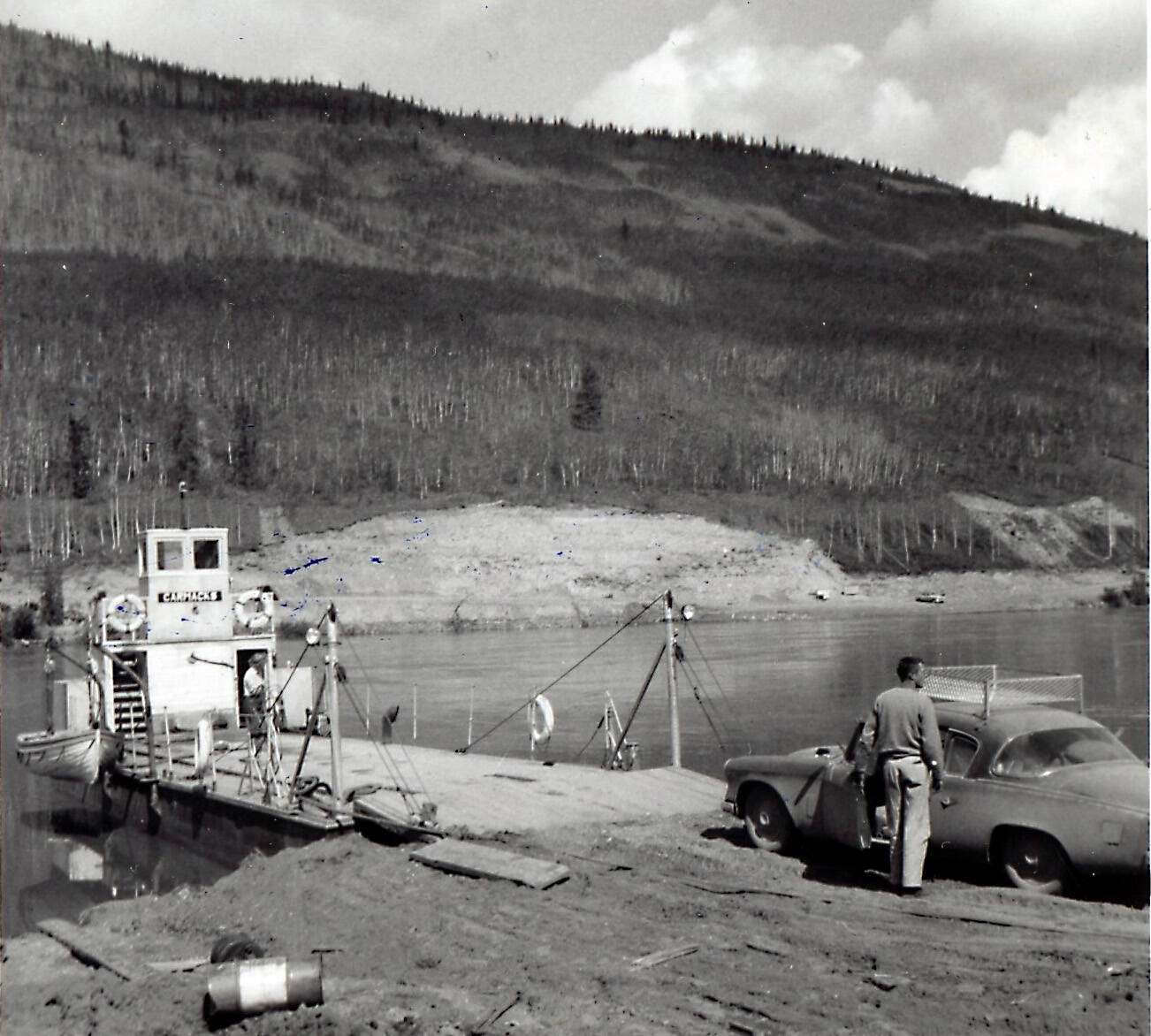
Photos courtesy of the Fenger Family Collection John Fenger took this photo when he traveled to Alaska in 1954 with Drs. Helen and Robert Whaley. Here, they are preparing to take their vehicles across the Stuart River in the Yukon Territory. Robert Whaley is standing by his car, while Helen Whaley is standing aboard the ferry.
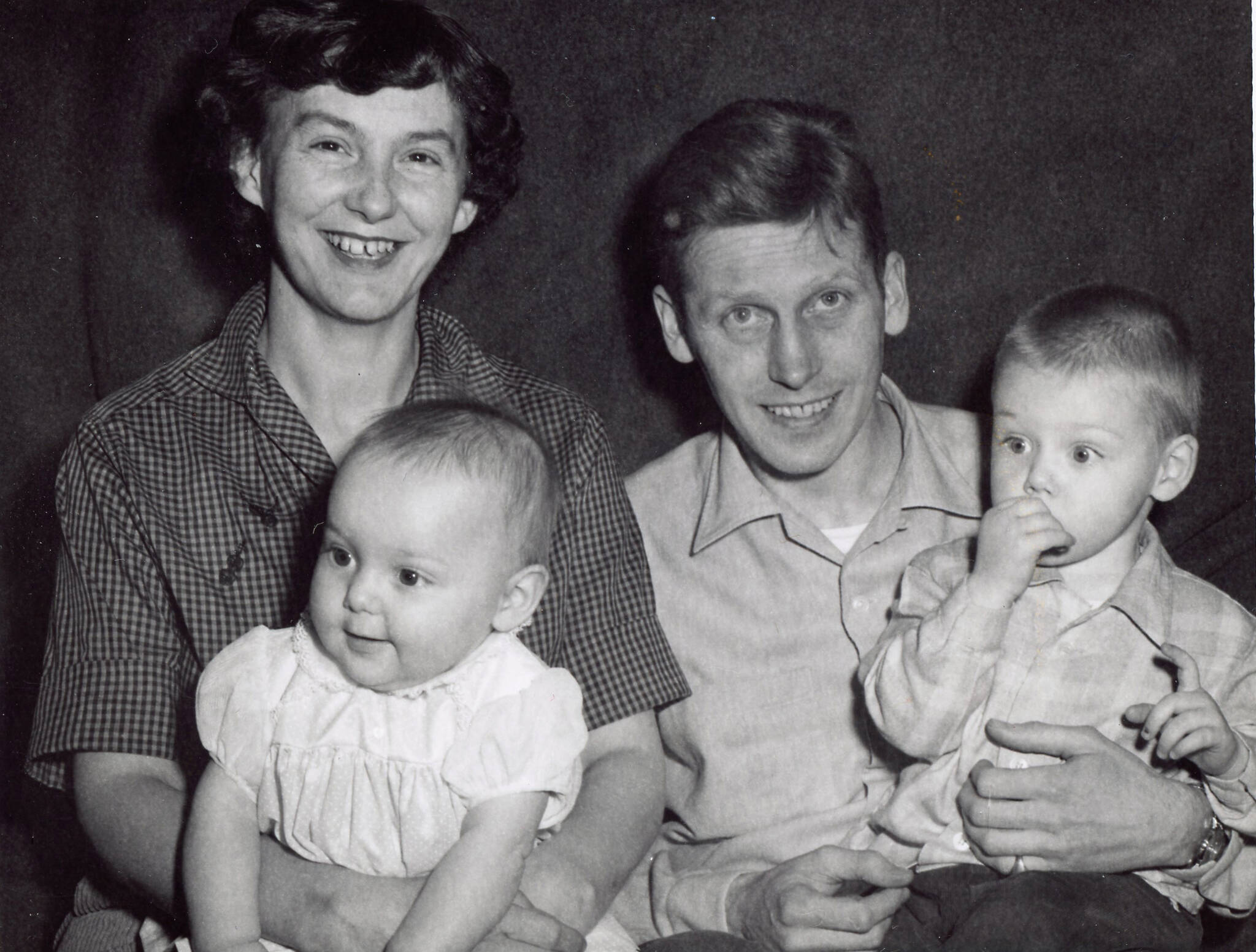
Homer’s Jim Reardon took this photo of the young Fenger family in 1960-61. From left to right are Grace, Heidi, John and Eric.
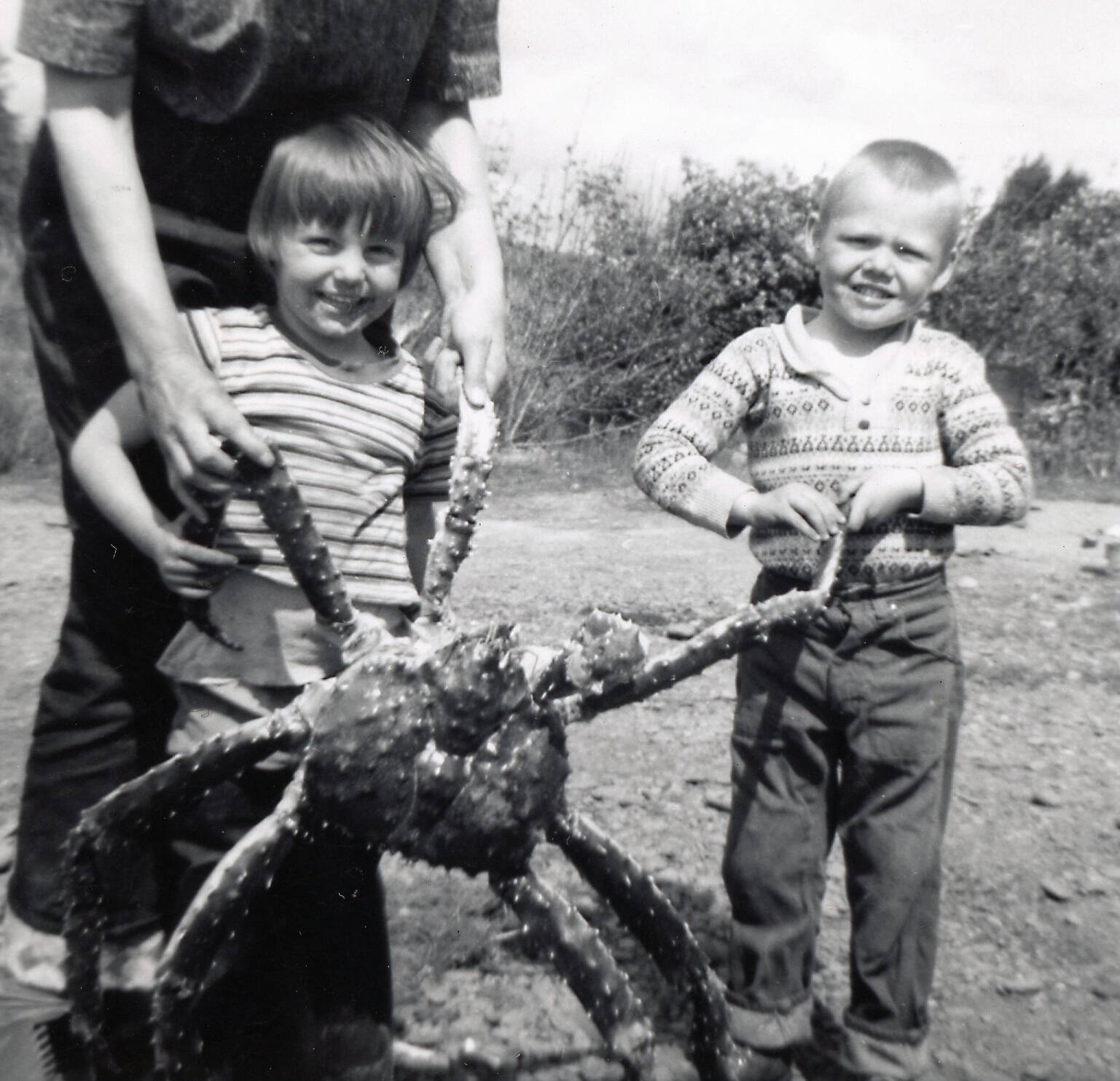
Grace, Heidi, live king crab, Eric—Seafood was another benefit of life in Homer. Pictured here in July 1961, Grace holds a live king crab, with assistance from daughter Heidi and son Eric. (Photo courtesy of the Fenger Family Collection)
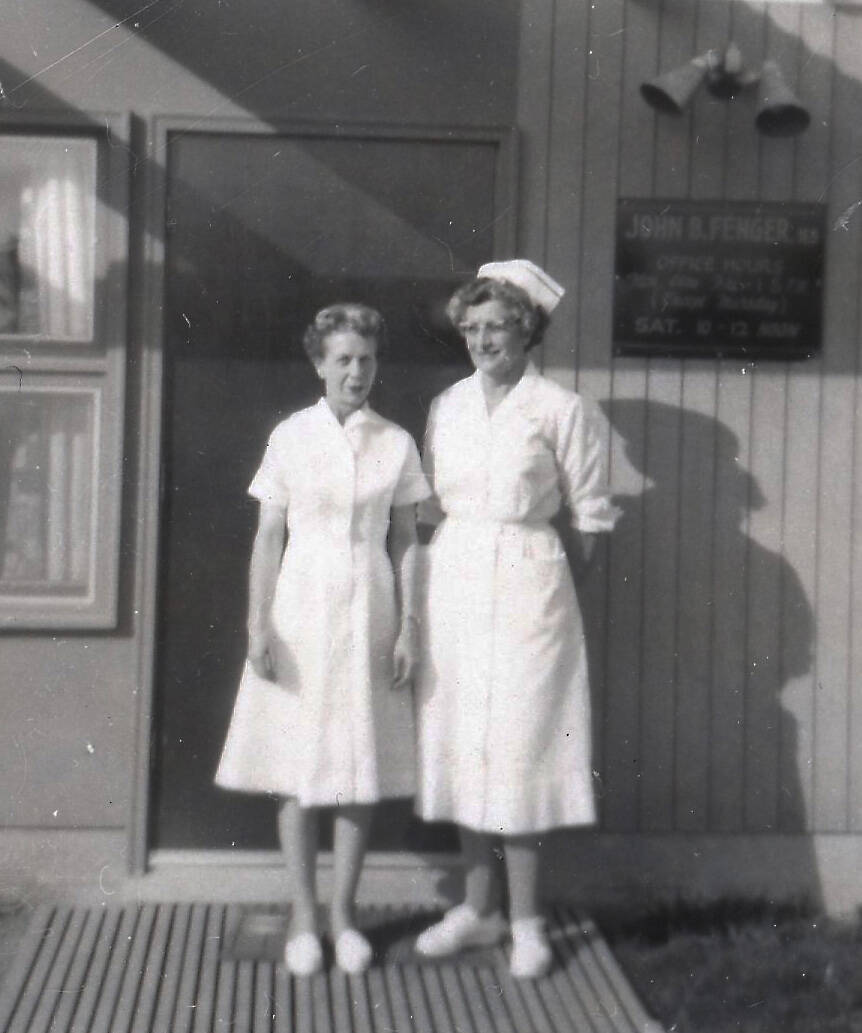
Registered nurses Kay Cowles (wife of Homer’s first mayor) and Wilma Cowgill pose in the sunshine outside of Dr. John Fenger’s clinic at the corner of Hohe and Cityview, east of the hospital in Homer.
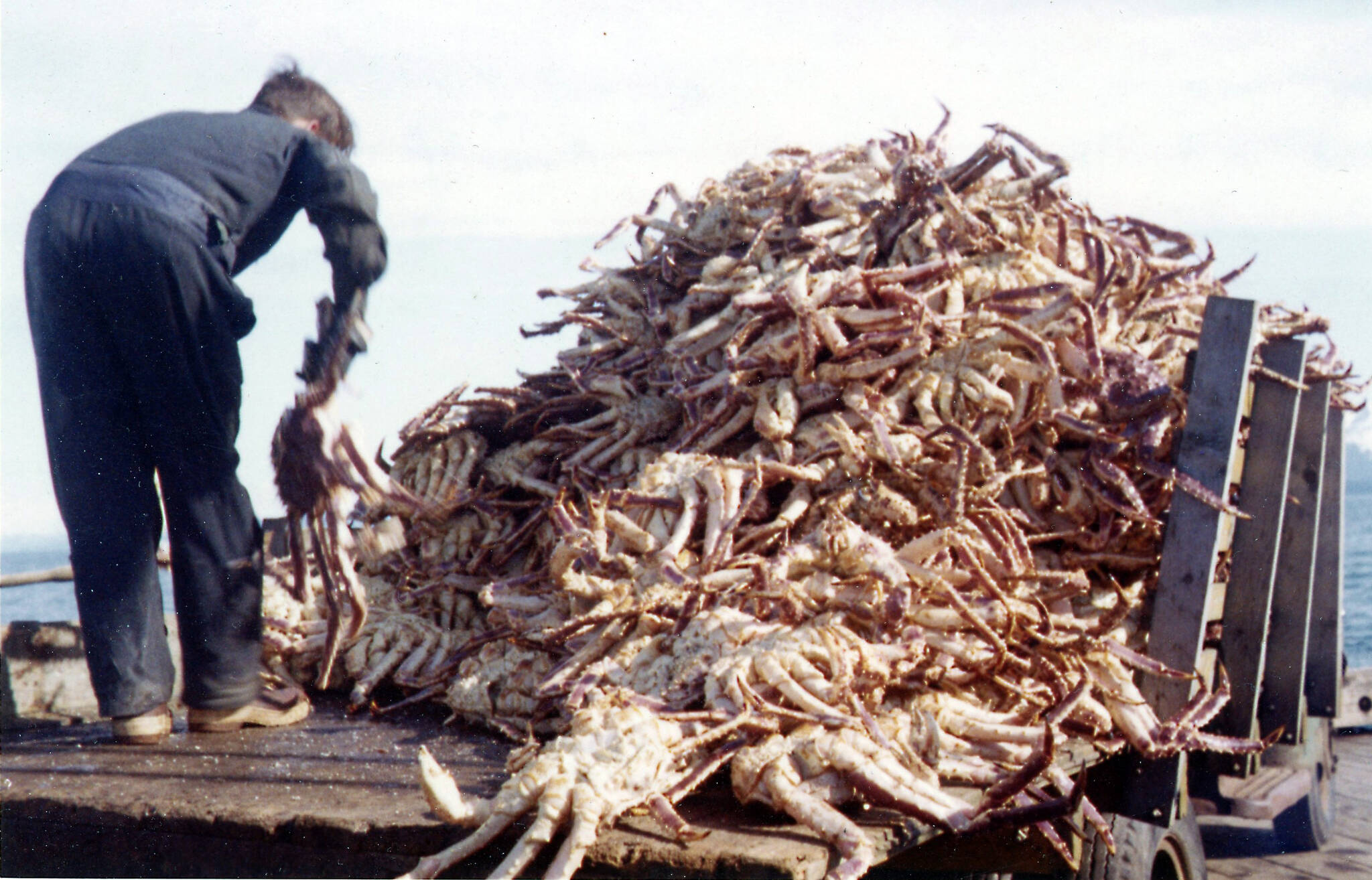
The bounty of the sea in Homer once included mounds of king crab, which the Fengers enjoyed along with shrimp and salmon and halibut. This photo was taken in 1964 at the Homer Spit dock. (Photo courtesy of the Fenger Family Collection)
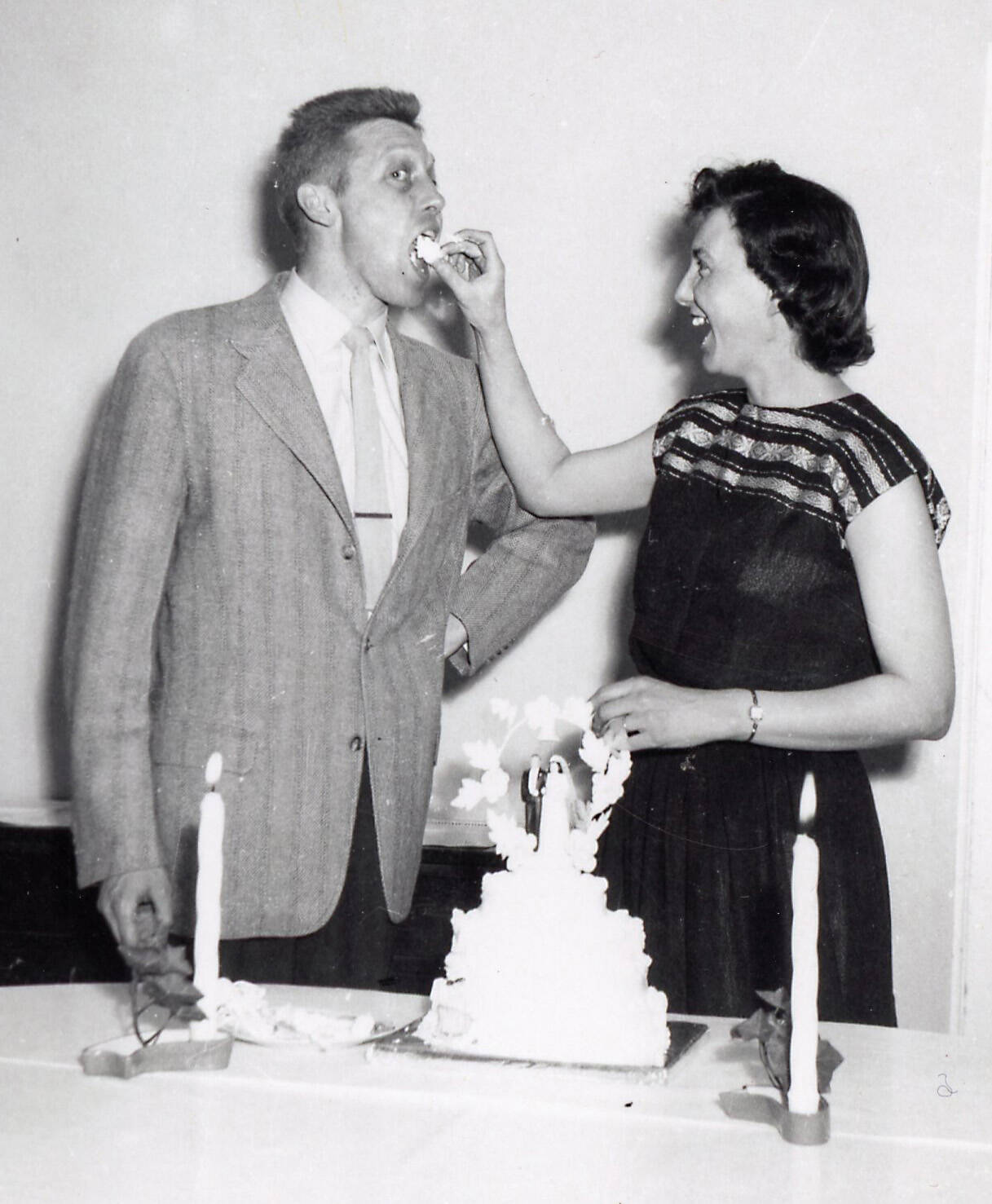
Newly married John and Grace Fenger have a good-natured exchange of wedding cake. They were married in Kodiak during one of the M.S. Hygiene’s ports of call. (Photo courtesy of the Fenger Family Collection)
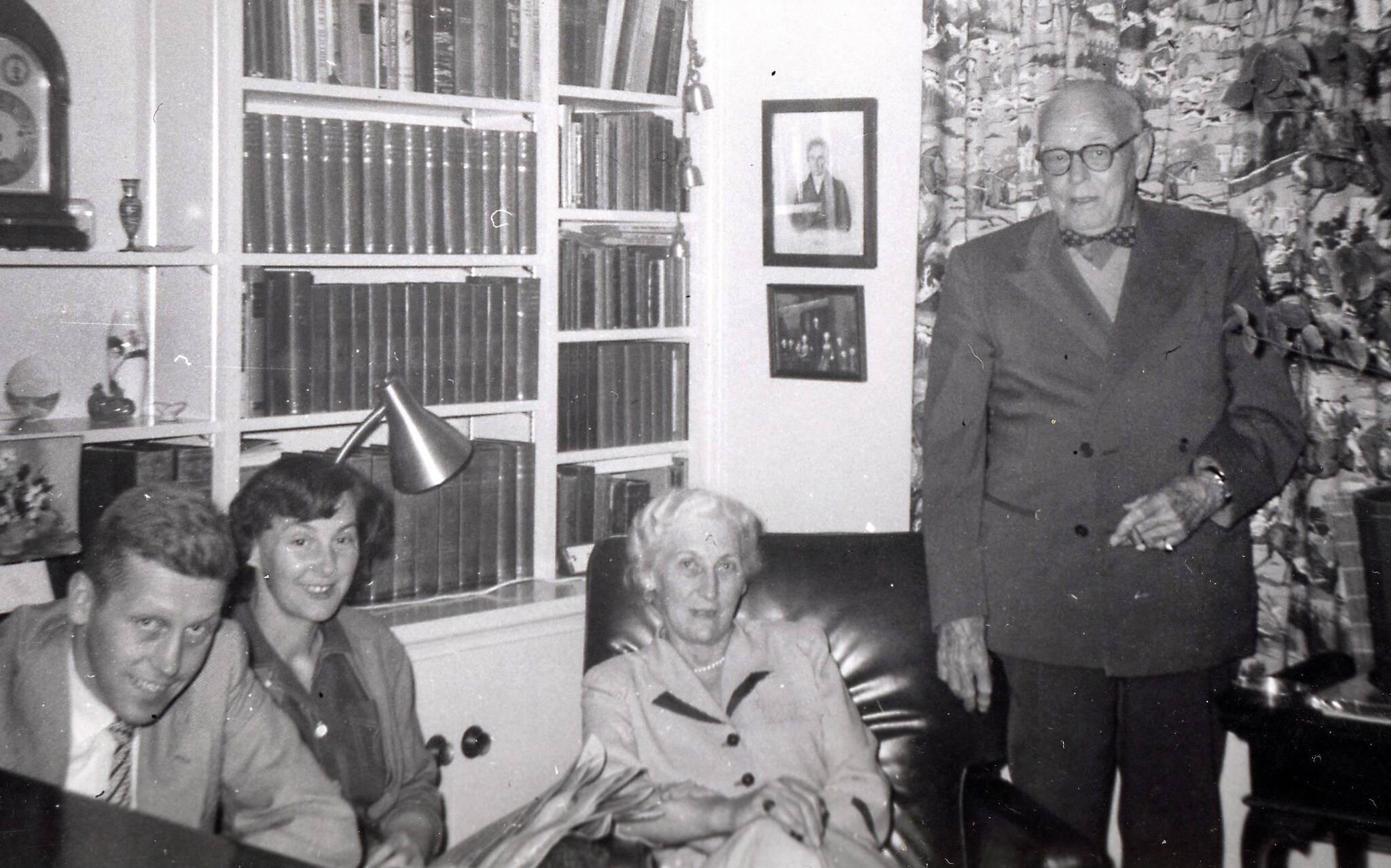
Between Alaska adventures — a year serving aboard the medical ship Hygiene and nine years living and working in Homer — John and Grace Fengers visited John’s parents, Katherine and Jorgen Fenger, in 1956 at their home in New York. (Photos courtesy of the Fenger Family Collection)
