
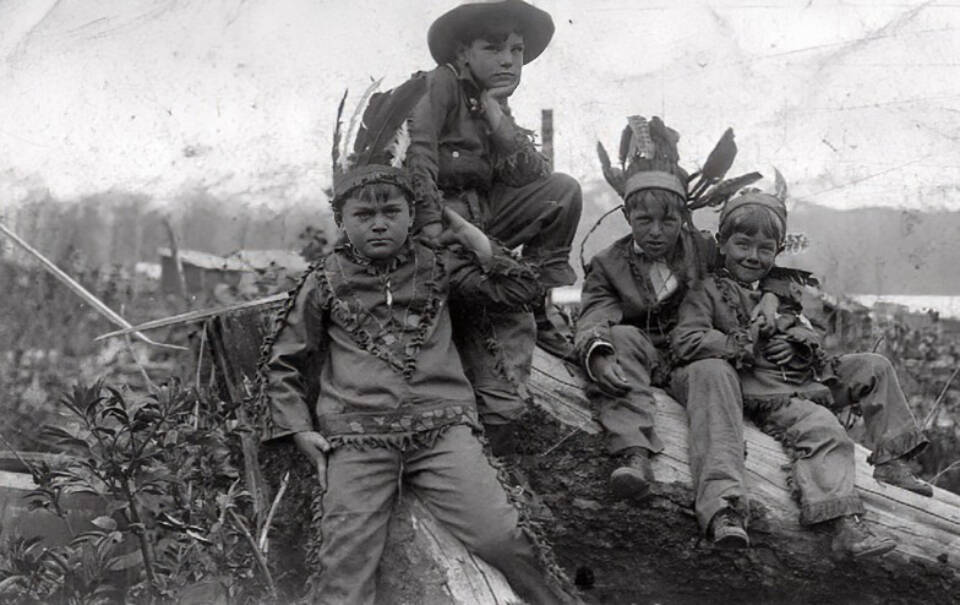
AUTHOR’S NOTE: King David Thurman, a miner and trapper who lived and worked in the Cooper Landing area during the early 1900s, was known for not adhering strictly to the rule of law. He was also known to be elusive—as local game wardens learned the hard way.
Law enforcement officials on the central Kenai Peninsula in late 1911 believed that King David Thurman, a well-known miner and trapper, had escaped justice after violating the territorial game laws. In November, a jury in Seward had acquitted him after his case was heard at trial.
Although the judge freed Thurman after the acquittal, game wardens kept their feelers out for new incriminating information that might yield a different result in court. In August 1912, warden John Crittenden Tolman reported to Alaska’s governor that a local miner (probably Steve Melchior) had claimed that “a bunch of fellows … had poison out all last winter and will do the same this winter.”
The tactics of these fellows resembled part of the strategy allegedly performed by Thurman in the previous year: kill a moose, poison the carcass, draw in fur-bearing scavengers and either trap them or collect them after they had ingested the poison.
The miner, however, refused to identify the perpetrators: “They are too treacherous a set,” he told Tolman, “and I have to live near them, and they could burn me out or shoot me in the back any time.” He urged Tolman to pursue the case on his own.
Tolman, who suspected Thurman—and his known trapping partner, John Erik Kulin—decided to keep his eyes wide open and monitor Thurman’s activities.
In early January 1913, Tolman informed the governor of his recent information-gathering: “Dec. 29 proceeded to Roosevelt roadhouse [on upper Kenai Lake] where we stopped for the night. This roadhouse is conducted by Mr. and Mrs. Al Roberts…. From them we got the following report: Nov. 5, ½ moose sold to Mrs. Revelle by King Thurman. Nov. 5, ½ moose sold to Anton [Eide] by Kulin. Dec. 15, ½ moose sold to F. E. Youngs by King Thurman.”
More poisoned moose carcasses were reported, as were the connected deaths of several area dogs, magpies and jays.
On Jan. 18, wardens Tolman and George Cantwell finally tracked down Thurman at Bean Creek, his home near Cooper Landing. “He owns a string of dogs,” Cantwell told the governor. “[He] has no cache of dried fish for their keep and evidently feeds them on moose.” The wardens chatted with Thurman, but he was wily and said nothing that gave them enough information to make an arrest. A cursory search of the premises revealed no furs, no traps and no poison.
Then in late March, law enforcement officials finally thought they had enough information to bring Thurman to justice. Tolman, along with Deputy U.S. Marshall Isaac Evans and two other men—traveling on two dog sleds and armed with arrest warrants for Thurman and Kulin—began to close in.
About 200 yards into the timber from Swan Lake (headwaters of the Chickaloon River), they located one of Kulin’s trapping cabins, which showed signs of recent activity but was unoccupied.
To cover more ground more quickly, the four men split into two pairs, and soon one of the pairs located another Kulin shelter, with its owner inside. They arrested him and questioned him about Thurman. Kulin admitted that Thurman was due back in about two hours, so the lawmen attempted a ruse. One took Kulin into custody and departed with the dog team, while the other remained in the cabin, hoping to catch a returning Thurman unawares.
But the plan failed to fool Thurman, and the cagey trapper managed to escape on foot into the wilderness.
The officials confiscated Thurman’s dogs, his sled, his snowshoes and his .30-40 Winchester rifle. Kulin, still in custody, said they’d never catch Thurman. He would hike for the Interior, Kulin claimed, because “he knew every foot of the country there.”
Back in Seward, Kulin was charged with one count of game violations. Since it was his first offense, they believed he would plead guilty to receive a lighter sentence. They hoped that news of his conviction would reach Thurman and prompt him to turn himself in. (They held back one additional count against Kulin, and they had three counts ready to charge against Thurman.)
Finally, in early July, Thurman surrendered. About three months after Kulin’s conviction and subsequent stint behind bars, Thurman was sentenced to 50 days in the Seward jail and fined $100.
Almost immediately, the Juneau Empire commented: “The conviction of King Thurman will meet with the hearty approval of all law-abiding citizens of [the] Kenai Peninsula, as he has been a notorious violator of the game law. His operations were carried on in such a way that it was only after repeated efforts on the part of the game warden that he was apprehended, the game warden finally catching him ‘with the goods.’ Another man against whom numerous complaints have been made from time to time fled the country as soon as he learned of the arrest of Thurman, and he has not been seen or heard from since.”
Thurman, of course, saw things differently. From his cell, he wrote to the governor: “Dear Sir, I take the liberty as a free-thinking American citizen to inform your honor that the game of the Kenai Peninsula has been and is being wantonly destroyed. There are certain mining camps … killing both moose and sheep regardless of age or sex. J.C. Tolman, former game warden, has been well aware of the facts as I have stated but would not file a complaint because he thought they would be of use to him later.
“There was a complaint filed against [me] last March for killing a yearling female moose,” he continued, “and the warden J.C. Tolman seized my three work dogs and is still holding them. I have been put to a great deal of trouble since that time. I came in and give myself up July 2 and plead guilty to the charge, although the moose was killed through a mistake and not a pound of the meat went to waste. I have always tried to abide by the law, but when I see it violated on every hand it makes it hard to keep still. I am a prospector and it is to my interest to preserve the game…. I hate to see a game preserve set aside [but] it will have to be done if the game is to be preserved for the future generations. Sincerely yours King D. Thurman.”
The governor shared Thurman’s sorrowful message with Tolman, who responded with what could hardly be called sympathy: “Re: King Thurman. I beg to state that, if you were personally acquainted with him, I would not deem it necessary to make any answer to his charges. First, as to the mining companies destroying the game of the Pen., there is nothing to it….
“Now, as to King Thurman,” he continued, “I beg to refer you to my Jan. report, in which you will readily see that he and his partner Kulin are the 2 worst violators in this district… I do not think it worthwhile to take up any more of your time on the subject, for you will most likely be kept in touch with him as long as he stays in the country through the game wardens, for there is no doubt but he will continue his violations.”
These sentiments were echoed in early September by Seward game warden John Baughman, in a report he sent in September to W.W. Shorthill, secretary to the governor: “Dear Sir: In reply to your letter of the 19th … referring to King Thurman, I have investigated the matter, and from reliable sources. I find him unreliable. He is one of the worst violators of the game law we have in the section of the country.”
In December, Deputy U.S. Marshal Isaac Evans sold Thurman’s three work dogs at a public auction.
TO BE CONTINUED….
