
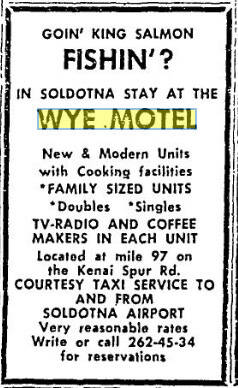
AUTHOR’S NOTE: In his Soldotna motel on Dec. 18. 1961, Arthur Vernon Watson shot and killed homesteader Marion Grissom. Although he claimed self-defense, he was later convicted of second-degree murder and sentenced to 15 years in prison. Watson was 53 at the time of the shooting and had a long criminal history. The appeal of his conviction went all the way to the Alaska Supreme Court.
In early December 1963, Alaska Supreme Court Justice Anthony Dimond delivered the high court’s decision on the appeal of the second-degree murder conviction of Arthur Vernon Watson: The conviction was reversed because of an error committed by the trial court in admitting prejudicial hearsay evidence regarding Watson’s temper.
A new trial was ordered.
The problem during the first trial began when State Trooper Wayne Morgan testified that Mrs. Watson had been in bed when he arrived at the scene of the shooting. Two hours later, after Morgan and Kenai Police Chief Charles Peavley had been interrogating Arthur Watson, his wife had emerged from the bedroom and wondered aloud at the stain she saw on her kitchen floor.
When told it was the blood from Marion Grissom, whom her husband had admitted to shooting, she exclaimed, “Oh, no!” and then turned to Arthur and said, “It’s your temper. Your temper has done it again.” Watson’s defense attorney, Peter B. Walton, had objected to the testimony as hearsay, but the judge had allowed it to stand.
Beth Watson also testified that she remembered nothing about her husband and Grissom fighting, and yet her uninformed statement about Arthur’s temper causing Grissom’s death cast grave doubt upon Watson’s claim to have shot Grissom in self-defense. Whether she believed her husband’s temper had caused the death or not, she certainly could not know for sure.
The second trial was held in Superior Court in late 1964. Once again, Arthur Watson was found guilty of second-degree murder and sentenced to 15 years in prison. Once again, he appealed.
The problem in the second trial mirrored the problem in the first, with a twist. Although jurors in the second trial were not introduced to Mrs. Watson’s prejudicial statement at any time during the proceedings, they found out about it, nevertheless.
On Nov. 6, the last day of the trial before the jury was to begin its deliberation, several jurors read that day’s copy of the Anchorage Daily Times, which contained a story about the trial in progress and the reason that the previous conviction had been overturned.
Trouble Follows Trouble
Once again, Watson was released on bond, pending his appeal. He was still required to stay in the area, however, in order to appear for another trial — for possession of a concealable firearm by a felon.
But Watson decided to take no chances. In January 1965, he skipped town. In fact, he left Alaska.
When he failed to make his scheduled court appearance, a federal arrest warrant was issued. A manhunt ensued.
On Feb. 12, FBI agents nabbed Watson at a San Francisco bus station just as he was about to board an express bus for Southern California. He was sent initially to McNeil Island federal penitentiary in Washington and then transferred to Leavenworth prison in Kansas while awaiting the results of his appeal of his murder conviction.
One FBI agent reported that at this time, Watson had spent one-third of his life behind bars.
In April 1966, in a decision delivered by Justice J.J. Rabinowitz, the Alaska Supreme Court reversed Watson’s second conviction and ordered a third trial. In Superior Court on Oct. 27, a jury of seven men and five women acquitted Watson on the murder charge.
It was good news for Watson, but it didn’t last.
Because he had skipped bail in Alaska and fled to California, he had violated the conditions of his original parole from his sentence in the penitentiary on Alcatraz Island. He was returned to prison pending a complete review of his sentence.
Finally, on July 5, 1967, the U.S. Board of Parole in Washington, D.C., issued a Certificate of Parole releasing Arthur Vernon Watson on July 11.
It was more good news for Watson, but some people seem destined for bad news.
In November 1969 Watson left the Old Crow Club in Redding, California, after playing cards; he walked outdoors via the rear entrance after telling the other players that he felt dizzy. Outside, he later told police, he was attacked by two men who, according to a news article, “struck him and took about $3 from his front pants pocket.”
Officers at the scene reported that Watson was bleeding from cuts on his chin, left eyebrow and nose. While he was being questioned, he passed out, and officers concluded that he was more drunk than injured.
Unsure where Watson called home, they hauled him off to jail. His driver’s license bore an Anchorage address, his car registration was from Portland, Oregon, and he claimed to have recently worked for three weeks in Fremont, California.
On Sept. 19, 1976, Watson was a passenger in a car on Interstate 80N, just west of The Dalles in Oregon, when the vehicle in which he was riding struck a parked truck. Watson was killed.
According to the Oregon Death Index, Watson had married again, this time to a woman known as Miyoko Watson, who had petitioned to be naturalized in 1972 and who achieved citizenship in 1977.
Meanwhile, in Soldotna, Victor and Nellie Frolich’s contest to rename the Watson Motel had produced results: It would henceforth be known as the Wye Motel.
The Frolichs expanded their business and eventually sold it. The Wye Motel eventually became the Soldotna Inn, with an in-house restaurant known as Alfie’s.
Today, the Soldotna Inn, with more expansion and remodeling, still stands in the same place along East Redoubt Avenue, near where it meets the Spur Highway. And what was Alfie’s in the 1960s and 1970s is now Mykel’s Restaurant.
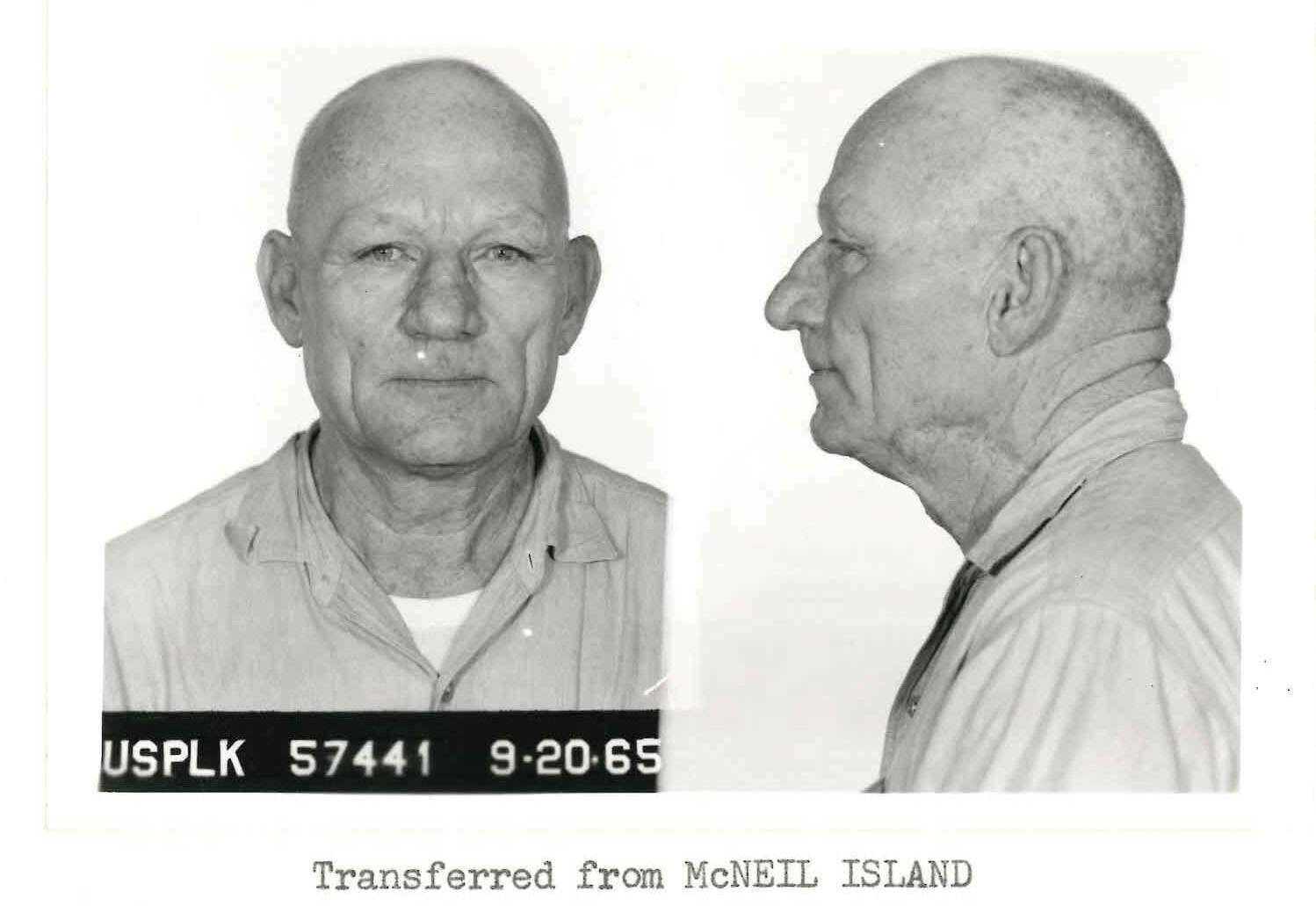
In his late 50s, Arthur Vernon Watson was photographed after another prison transfer. (Photo courtesy of the National Archives)
