
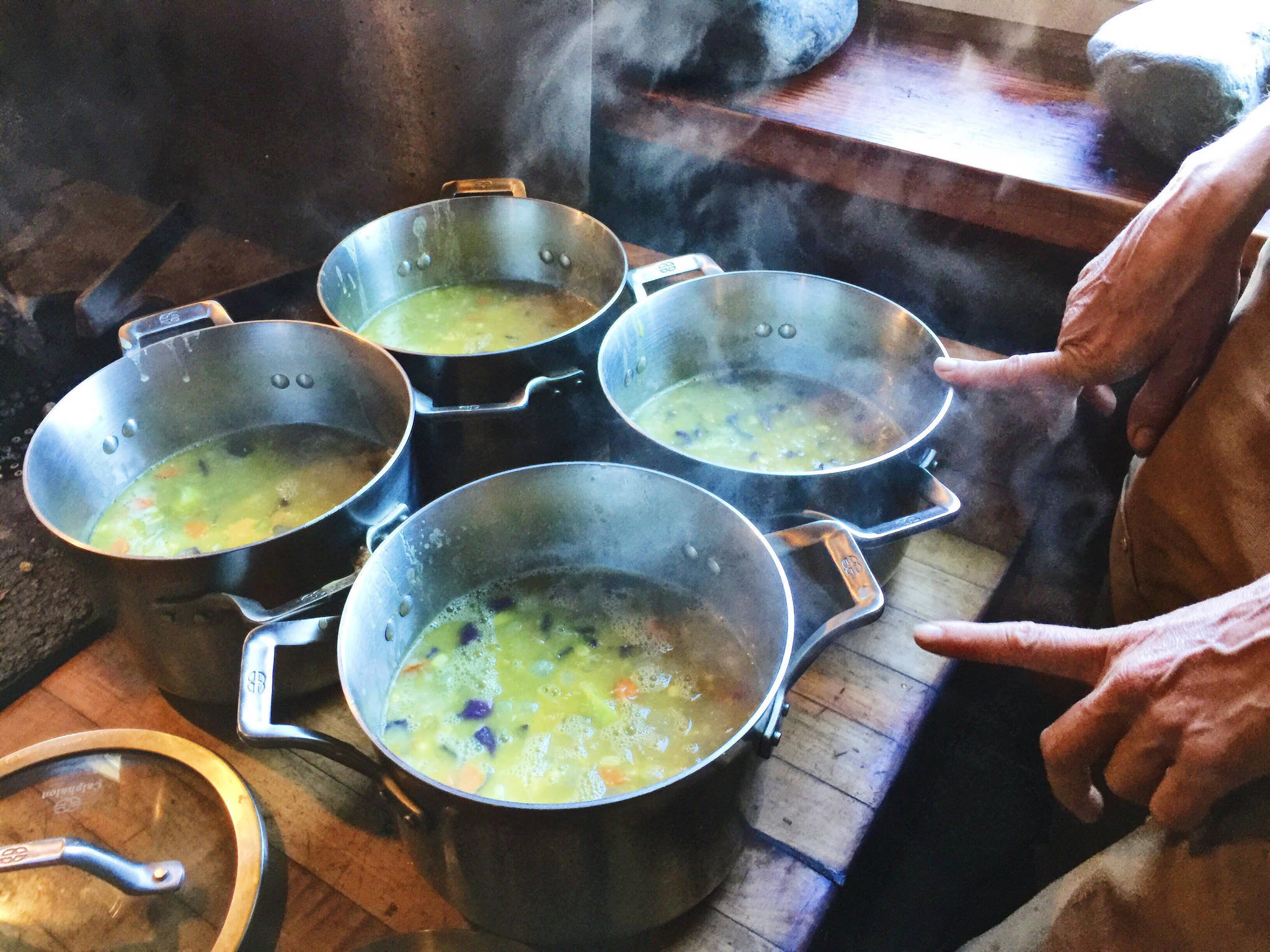
On Tuesday at noon, the lunch bell rings in Ionia, a health-conscious community near Kasilof.
Over 50 servings of brown rice with pumpkin seeds and sesame salt, baby daikon radish, sauerkraut and split-pea soup make their way out of the large kitchen in the Community Center and into the bellies of the residents of the community. After lunch, a group will plant 50 crabapple trees near their berry patch. Food and the process of creating food are sacred in Ionia.
In 1986, five families who share an appreciation for the macrobiotic tradition gathered together to create a community where they could practice a culture rooted in whole food and its effects on mental health.
Eliza Eller, an Ionia resident who has been there since the beginning, said that they were seeking balance.
The macrobiotic diet consists of whole grains and plant-based foods, like whole grain bread and pasta, millet, couscous, beans, seeds, root vegetables, leafy vegetables, sea vegetables and more. A grain and a vegetable are the minimum for a meal, but then several vegetable dishes like beans or pickles may become added side dishes.
“Food is a big part for us,” Eller said. “It’s personal — what you eat every day is like your personal relationship with nature, you know?”
Ionia is now in its third generation of families, many coming from the original founders. Roughly 50 people call it home, Eller said, with an influx of volunteers in the summer.
“Sometimes in the summer we’re feeding 80 or 90 people,” Eller said.
The first five acres were purchased for $300 down and then $300 per month. The group lived in teepees for the first winter before the families pooled together their Permanent Fund Dividend checks to create a building fund that they used to create open-concept cabins for each family. Every year, the community tries to expand its land. Ionia Inc. is a nonprofit that can receive grants and fundraise for new projects, like the ongoing current barn project, which will provide a small folk school and different shops that will make it easier for families to build housing, which Ionia is currently short on.
Majority of the cooking is done in the home, where kitchens are built with extra space. The community will have group feeds for many lunches and holidays, which are every full moon, Thanksgiving, solstice or Christmas depending on the year and the Fourth of July. On Sept. 15, Ionia will celebrate the harvest moon with a local food festival that features healthy food vendors and a farmers market at Soldotna Creek Park.
The food in Ionia is sourced locally as much as possible through foraging, gardening and partnerships with local farmers. Brown rice and other grains are imported in bulk.
Eller said the garden is her happy place and it produces thousands of pounds of food like kale, radishes, lettuce, garlic and more.
Because of the short growing season in Alaska, pickling and fermenting produce is a way to enjoy plant-based products all year long. Miso, a Japanese soybean ferment that is used as a seasoning, and tempeh, an Indonesian fermented soybean product used as a meat alternative, are Ionia favorites.
“Because food is so important to us, we spend a lot of our time preparing food, fermenting food, pickling food,” Eller said. “We’re all about the food here. It’s very time-consuming.”
Animal products of any sort, including honey, and concentrated sugar will never be found in an Ionia kitchen.
“Everyone thinks we’re crazy because we don’t eat fish here,” Eller said. “We’re not restrictive about what people eat, we’re like, ‘Eat whatever you need to eat, just not on the property’, and that seems to work well. Slowly the environment wins and you adjust.”
Despite no honey or concentrated sugar, Ionia is not without sweet treats. Eller said they eat desserts like berry and fruit pies, crisps and cookies, about three times a week. Desserts are made using a gentle sweetener like like brown rice syrup, and occasionally maple syrup.
Eller said the benefits from eating this way go beyond physical health.
“There’s just a tremendous appreciation with how food can affect our emotions and help us think clearly,” Eller said. “Everyone knows it’s good for your heart and it’s good for your weight and diabetes and all these things that are physically based, but there isn’t quite as much awareness in the medical field around food and mental health.”
Everyone cooks and rotates on a schedule, and Eller said almost everyone wants to be in the kitchen. Food is more than just fuel — it’s an art and a way for community members to express themselves, she added.
“Embedded in macrobiotics is a real love of cooking,” Eller said. “Cooking became an art and a skill that is very revered, and there’s a lot of respect for the cook in the household. Everybody grows up cooking and everyone knows it’s one of the things everyone needs to do and share and it’s not looked at as a burden, but as an opportunity to be creative.”
Menu planning is intuitive and season-based, with warming soups and stews for the winter months and salads and blanched vegetables for the summer.
The gastronomically inclined can get a taste of Ionia cuisine at the at 11 a.m. on Saturday, July 14, at the Soldotna Saturday Farmers Market as part of the Chef at the Market series. Ionia residents Ally Bril and Emma Becherer will be making samples for the public.
“We’re going to do vegan bruschetta, and keep passing them through there so people can have tasters and see what we’re doing and all about,” Bril said.
Reach Victoria Petersen at vpetersen@peninsulaclarion.com.
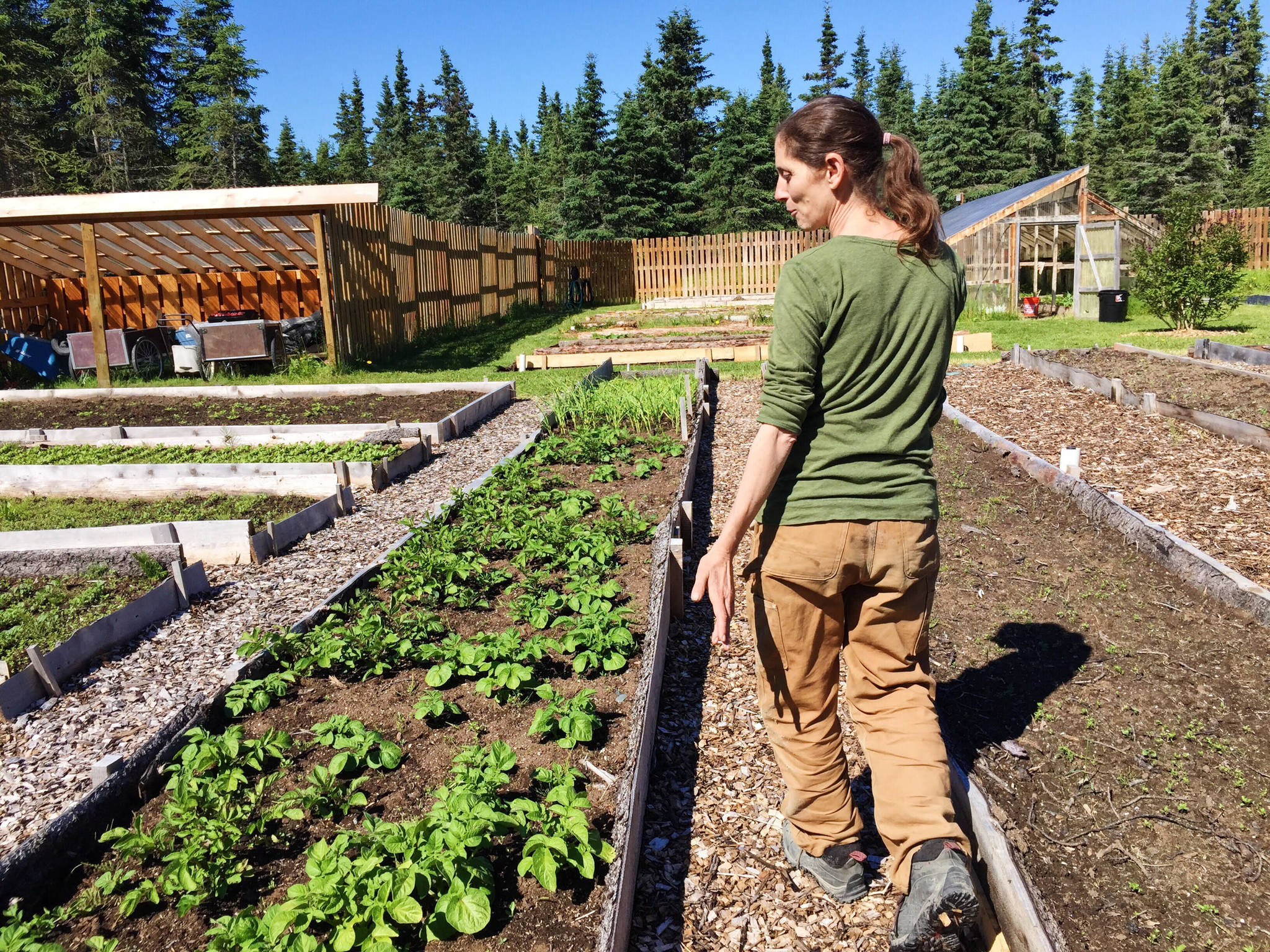
Eliza Eller walks through the garden in Ionia on Tuesday, July 3, near Kasilof, Alaska. Eller said that the garden provides much of the food for the community. (Photo by Victoria Petersen/Peninsula Clarion)
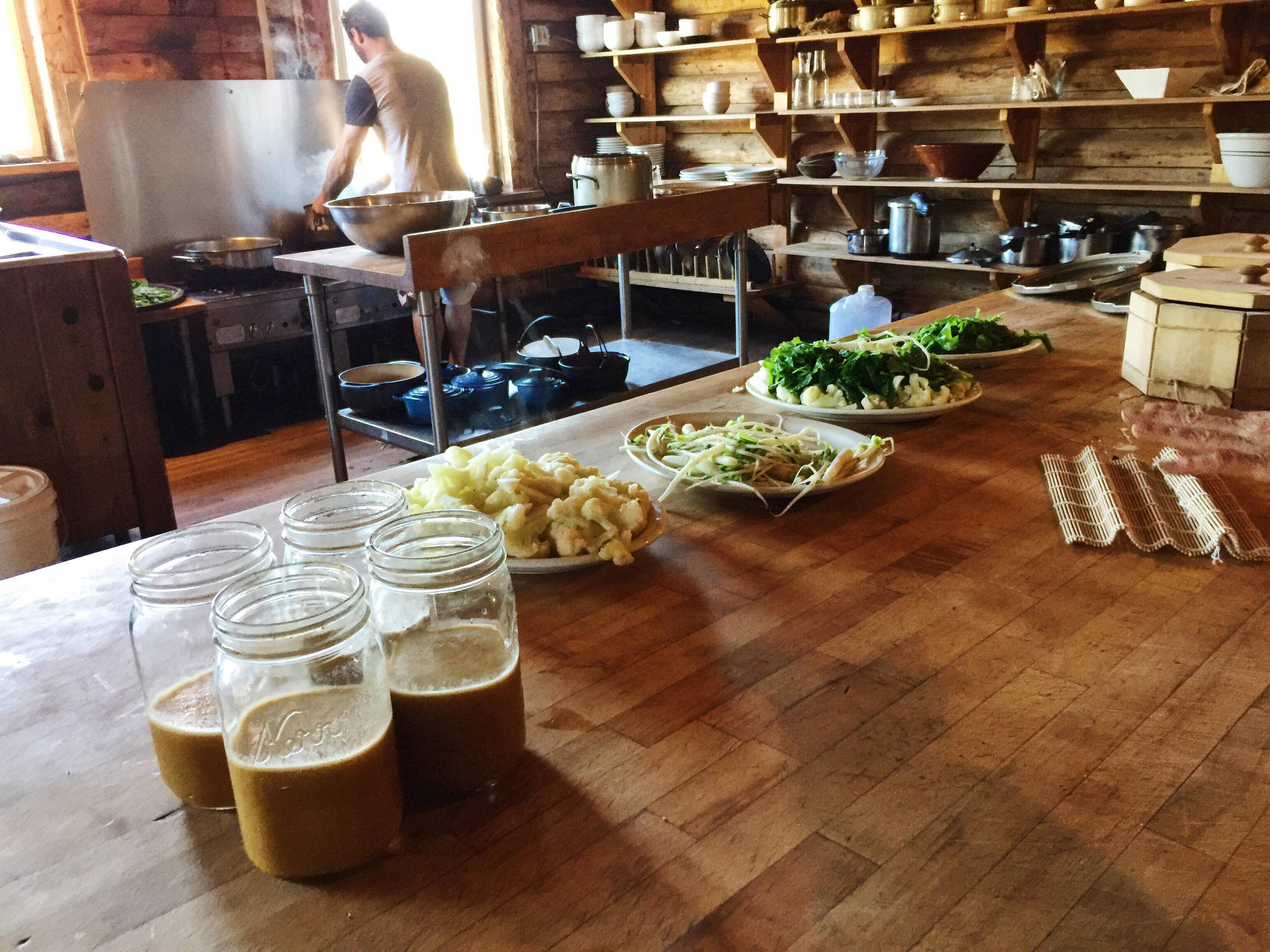
Salad fixings sit inside the community kitchen inside the Ionian Community Center on Tuesday, July 3, near Kasilof, Alaska. (Photo by Victoria Petersen/Peninsula Clarion)
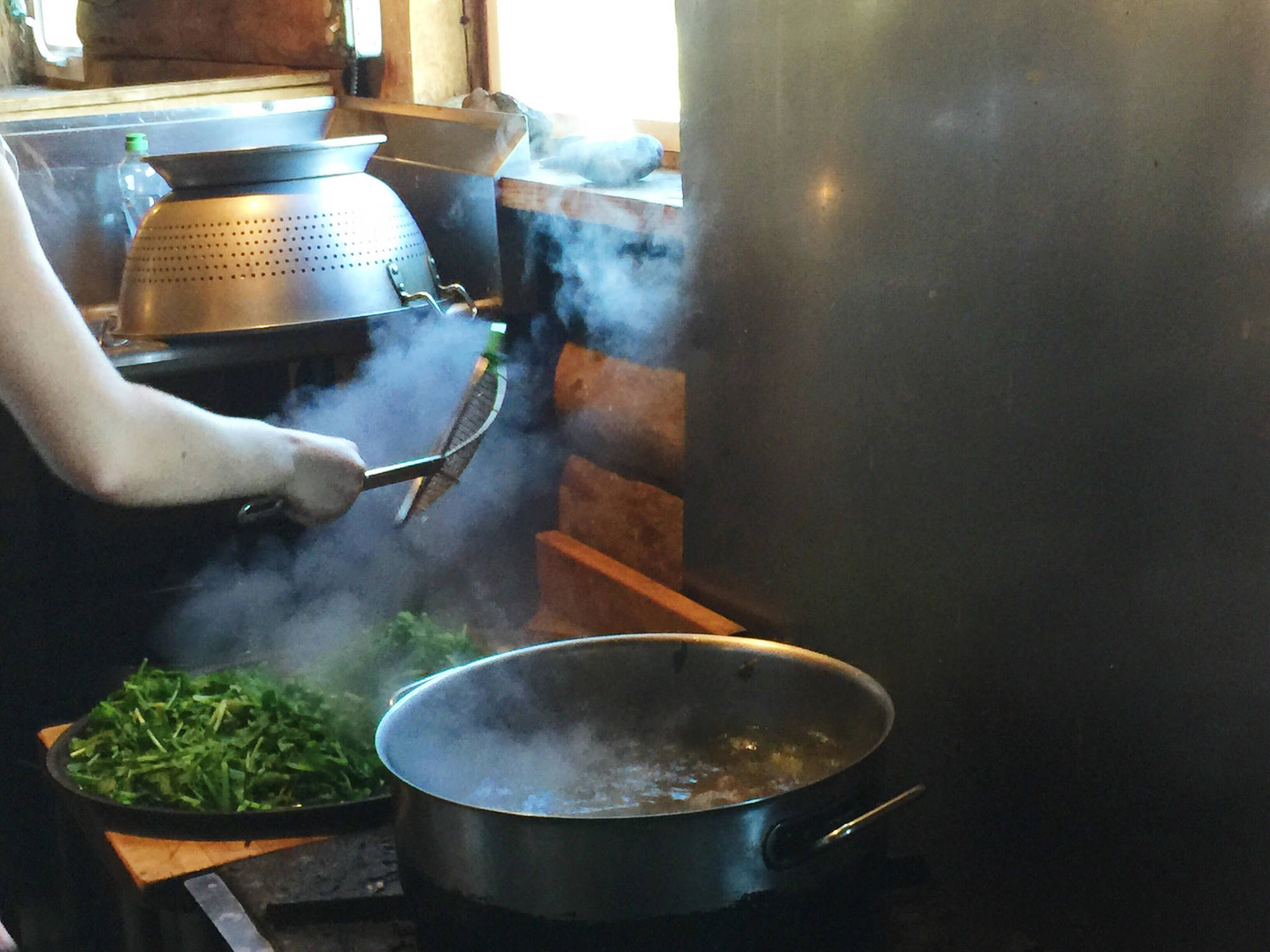
Residents take turns cooking for the community in the large kitchen inside the Ionian Community Center on Tuesday, July 3, near Kasilof, Alaska. (Photo by Victoria Petersen/Peninsula Clarion)
