
My first job as a field biologist in Alaska was working for the Tongass National Forest. I was stationed in Petersburg, but would be boated or flown out to remote field camps. My job was to visit and assess forest stands that were being considered for timber sales.
Southeast Alaska is magical, though often very foggy and rainy. Towering, mossy forests inhabit islands with rich intertidal zones, mountains and glaciers. Southeast Alaska sits in the middle of a temperate rainforest ecosystem that extends from Northern California all the way up to the Kenai Peninsula.
Sitka spruce and mountain hemlock forests on the wetter, eastern side of the Kenai Peninsula are more similar to Southeast Alaska than the boreal forests on the western Kenai lowlands.
The Kenai Peninsula forest community does not include all of the trees that are common in Southeast Alaska. As an ecologist, I spend time wondering why some species occur here while other species are absent.
Ecologists use the term “niche” to describe the conditions where a plant or animal can thrive. Alaska can be too cold for many species and, therefore, outside of their niche.
Alaska may have the right conditions for other species, but the plant or animal has not been able to disperse into all the hospitable places yet. For example, tree species in Alaska have spent the last 14,000 years slowly reoccupying niches that opened from glacial retreat.
The possibility of open niches waiting to be filled makes me think about what could be here and what may show up in the future as our local climate continues to warm. I’ve been recently wondering if yellow cedar could establish on the Kenai Peninsula.
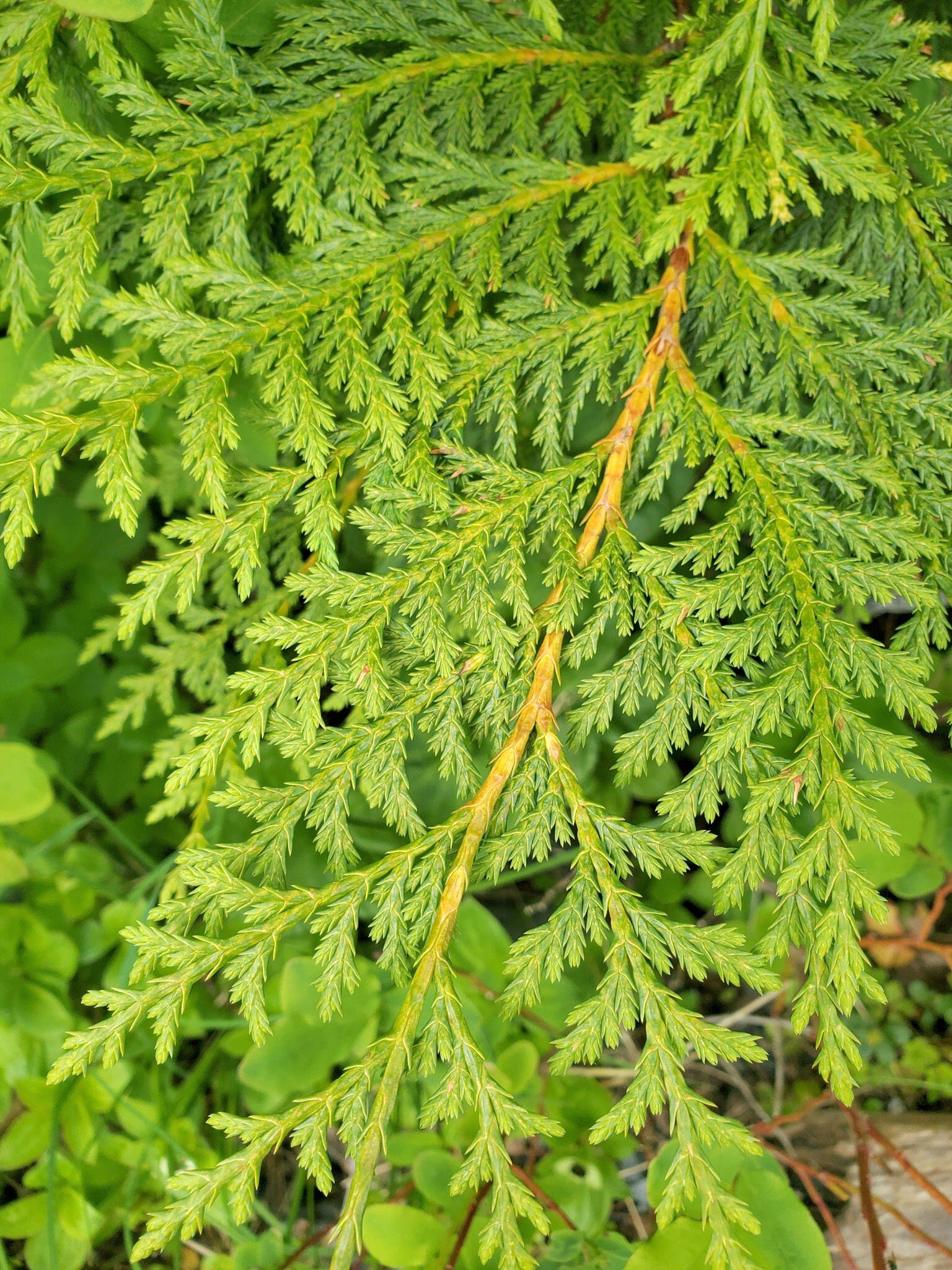
Yellow-cedar is an evergreen tree with scaly leaves on hanging branches. In Southeast Alaska, yellow cedar can be shrublike when growing in places that are boggy with poorly drained and low nutrient soils. On upland sites, yellow cedar can grow tall and straight to over 100 feet. The bark on these large trees looks silvery and fibrous with long vertical ridges.
Yellow cedar is a member of the cypress family. They are slow-growing and long-lived, often living for over 500 years. The oldest yellow cedars, including a 1,600-year-old tree, have been found in British Columbia.
In Alaska, yellow cedar are widely distributed across the Southeast from Juneau to Ketchikan. West from Glacier Bay toward Prince William Sound is where the distribution becomes interesting.
Traveling east to west, there is a large break with no yellow cedar to be found for 300 miles except for a population at Icy Bay. Then two small, isolated populations occur in Prince William Sound at Cordova-Hawkins Island and the Cedar Bay area near Valdez.
The Prince William Sound populations are thought to be descendants of trees that survived on small, ice-free refugia during the Pleistocene glaciation and are surprisingly more closely related to populations in British Columbia than Alaska.
Yellow cedar are currently experiencing a regional mortality event, called yellow cedar decline, throughout Southeast Alaska. The yellow cedar decline has been linked directly to recent climate change that accelerated in the 1970s. Nearly 1 million acres of yellow cedar decline has been mapped since the 1980s.
Yellow cedar decline is largely caused by the loss of snowpack during winter thaw events, allowing late-season freeze events to damage the shallow root systems of yellow cedar. Healthy stands are associated with colder areas in the North and warmer areas in the South.
The isolated populations in Prince William Sound are currently healthy and recruiting seedlings, which is likely due to the heavy annual snow accumulation that protects roots from freeze events and protects seedlings from Sitka deer. Deer are also less abundant in Prince William Sound than in Southeast Alaska.
The stands of yellow cedar do not seem to be getting larger or colonizing large areas of unoccupied, but suitable habitat. Researchers hypothesize that yellow cedar is a long-lived species that may employ an evolutionary strategy of waiting to take advantage of favorable conditions.
Natural migration for this tree occurs as pulse events during these rare windows of opportunity. Experimental plantings in Yakutat, a community in the zone unoccupied by yellow cedar, have thrived. This suggests that humans could facilitate the migration of yellow cedar.
The eastern side of the Kenai Peninsula is just outside the range of yellow cedar. However, the U.S. Forest Service included the Kenai in a management plan for yellow cedar as a place to consider for future facilitated migration. The heavier snowfall and lack of deer could make the Kenai an open niche where yellow cedar could establish another thriving population.
Moving yellow cedar outside of its historical range would be a novel approach for natural resource management and conservation, which generally strives to maintain or restore the conditions that existed over the past several hundred years. The fossil record provides evidence that plants and animals moved, adapted in place or died in response to past climate change.
The pace of climate change that we are experiencing today has rarely been experienced over the past million years. Humans could help species that cannot move quickly enough to survive.
Natural resource managers are beginning to explore when, where and how to facilitate species movement to track their climate niche. We do this because we want to maintain viable and healthy populations somewhere in North America. Stewarding fish, wildlife and plant species through rapid climate change is a new and profound challenge for natural resource management.
Dr. Magness is a landscape ecologist at Kenai National Wildlife Refuge. She has a MS degree in wildlife management from Texas A&M University and a PHD in Biology from University of Alaska, Fairbanks. Find more information at http://kenai.fws.gov or http://www.facebook.com/kenainationalwildliferefuge.
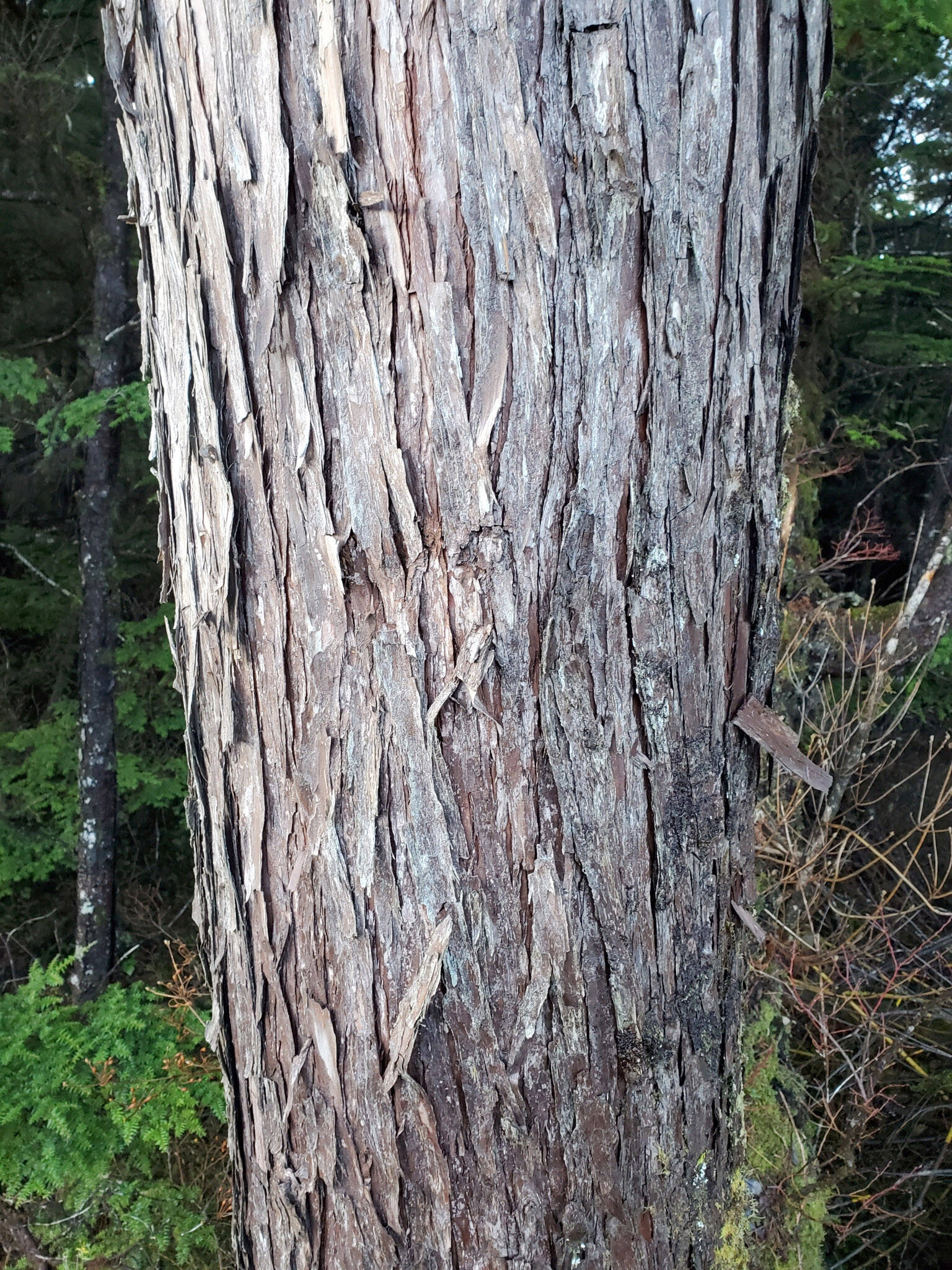
The bark of a larger diameter yellow cedar near Sitka. (Photo by M. Goff http://www.sitkanature.org/)
