
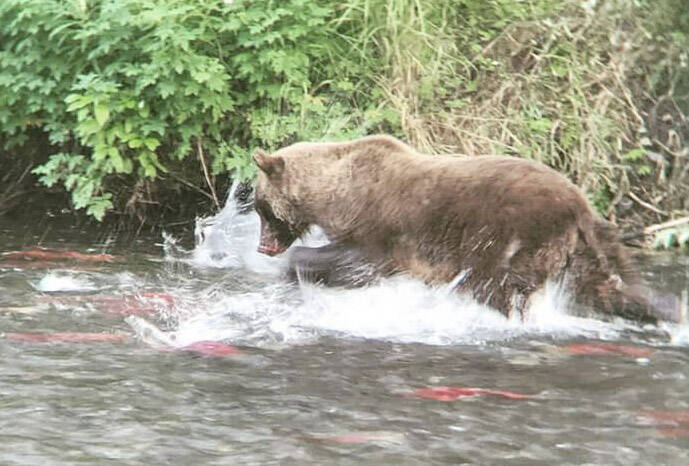
When you think of Alaska and wildlife, the image of waters teeming with the bright red colors of salmon and brown bears fishing for them comes quickly to mind. It is beautiful and awe-inspiring, an experience, until having it, I couldn’t quite comprehend.
As the salmon run continues and thousands of salmon make it upstream to spawn and die, it doesn’t take long for the area to not only hold the beauty of the runs that feed brown and black bears but also the clamoring of seagulls and the flap of raven wings as they claim fish carcasses.
Eagles perch overhead, waiting for their chance too. Along with the overwhelming cacophony of life in the water, the odor of spawned-out fish carcasses overwhelms the senses.
While something I would prefer to leave rather than take, the odor is a good reminder that beyond providing food for wildlife, birds and people, salmon provide another valuable ecosystem service of returning nutrients to the waters and forest soils.
I am part of this tapestry that day, my oldest dragging me out to fish. We join others fishing to fill their freezers with salmon. Our freezer was well stocked, so we enjoyed catch-and-release fishing of rainbows and dollies that followed the second run of sockeye salmon and fed on their eggs.
If water is life, then most certainly, salmon are life as well.
I had started the day with doubts that I could “hang” with my son and joked with my husband that our family needed to go out in waves to last as long as my son would want to fish.
As the day was nearing its end, I was surprised to find myself still standing in the water, my son’s fly line, dancing overhead in that beautiful arching dance of a well-practiced angler before it flowed out in distances that would leave my line in a tangled mess. I was content with my less practiced and shorter cast, and while not the image of a true artist of fly casting, I did manage to find an occasional rainbow or a dolly at the end of my line.
It didn’t take a giant leap for me to wonder about the ecological processes that support this amazing productivity year after year, changes that are unfolding, and the importance of expanding our knowledge through science.
From 1979 through 2018, Alaska’s average annual air temperature increased by 3 F, and the western side of the Kenai Peninsula saw an average annual temperature increase of 3.4 F. Globally, if temperatures continue to rise at current rates over the next 80 years, we will witness a loss of 60% of the world’s glaciers and 100% loss of sea ice.
On the Kenai, water is stored in montane glaciers, winter snowpack, lowland lakes and peatlands. Studies on the Kenai National Wildlife Refuge have documented accelerating drying of wetlands, including peatlands, on the Kenai Lowlands.
For salmon, which begin and end life in freshwater systems — rivers, tributaries and connected lakes — and spend middle years feeding on ocean-rich foods, it is uncertain what loss of sea ice, glacial retreat and impacts to glacial-fed streams, earlier snowpack melts and wetland/peatland drying will mean.
Unpacking these complex processes will take the work of many if we are to reduce uncertainty about how the refuge’s freshwater systems are changing and impacts to salmon and other resources we value and find novel ways to conserve them.
I like to think we have a great start.
The refuge recently joined the Kenai Fjords National Park’s efforts to track glacial retreat.
Our U.S. Fish and Wildlife Service Alaska Region water resources team is planning to resume monitoring water discharge on several important anadromous streams on the refuge this summer.
The Kenai Fish and Wildlife Conservation Office’s fisheries team is measuring and monitoring water and air temperatures in several clearwater and glacial rivers important to salmon within the refuge. This information, along with their telemetry studies on coho salmon, will increase our understanding of how these variables affect fish development, growth, timing of migration and survival rates.
The importance of peatlands to freshwater systems function and providing ecosystem services including water and carbon storage is increasingly being recognized. Peatlands comprise 3% of the world’s surface, and 85% of the planet’s peatlands are found in the boreal and temperate forests of the far north. Peatlands store an astounding 44% of the planet’s carbon, far exceeding the carbon stored in the world’s forests.
Recognizing the immense value of peatlands, the refuge is working to map peatland depth and extent using a combination of new aerial remote imagery and working with partners at the University of Alaska Anchorage and our water resources team to quantify the refuge’s peatlands’ carbon and water storage capacity.
A sometimes-maligned wildlife species present on the refuge, the American beaver, may provide a promising nature-based solution to address drying of peatlands and help maintain their important ecosystem services.
Beaver-constructed dams slow moving water, increase surface water, re-connect surface and groundwater, and rehydrate wetland soils. How could we manage beavers, or even construction of beaver dam analogs, help “re-wet” a drying peatland sponge and store and/or release glacial and snowpack melt longer into the year here on the Kenai?
To begin to answer these questions, the refuge is working to map current and potential distribution of beaver dams and better understand underlying geomorphology, both of which are needed to assess the potential role of beaver management or beaver dam analogs in our conservation efforts.
Climate-driven changes to freshwater systems and the fish and wildlife they support are complex, and the need for more information is great — water is life.
Kris Inman is the Supervisory Wildlife Biologist at the Kenai National Wildlife Refuge. You can find more information on the Refuge at http://kenai.fws.gov or http://www.facebook.com/kenainationalwildliferefuge. Look for Refuge Notebook Articles on the first and third Fridays of each month or Find past Refuge Notebook articles (1999–present) at https://www.fws.gov/kenai-refuge-notebook.
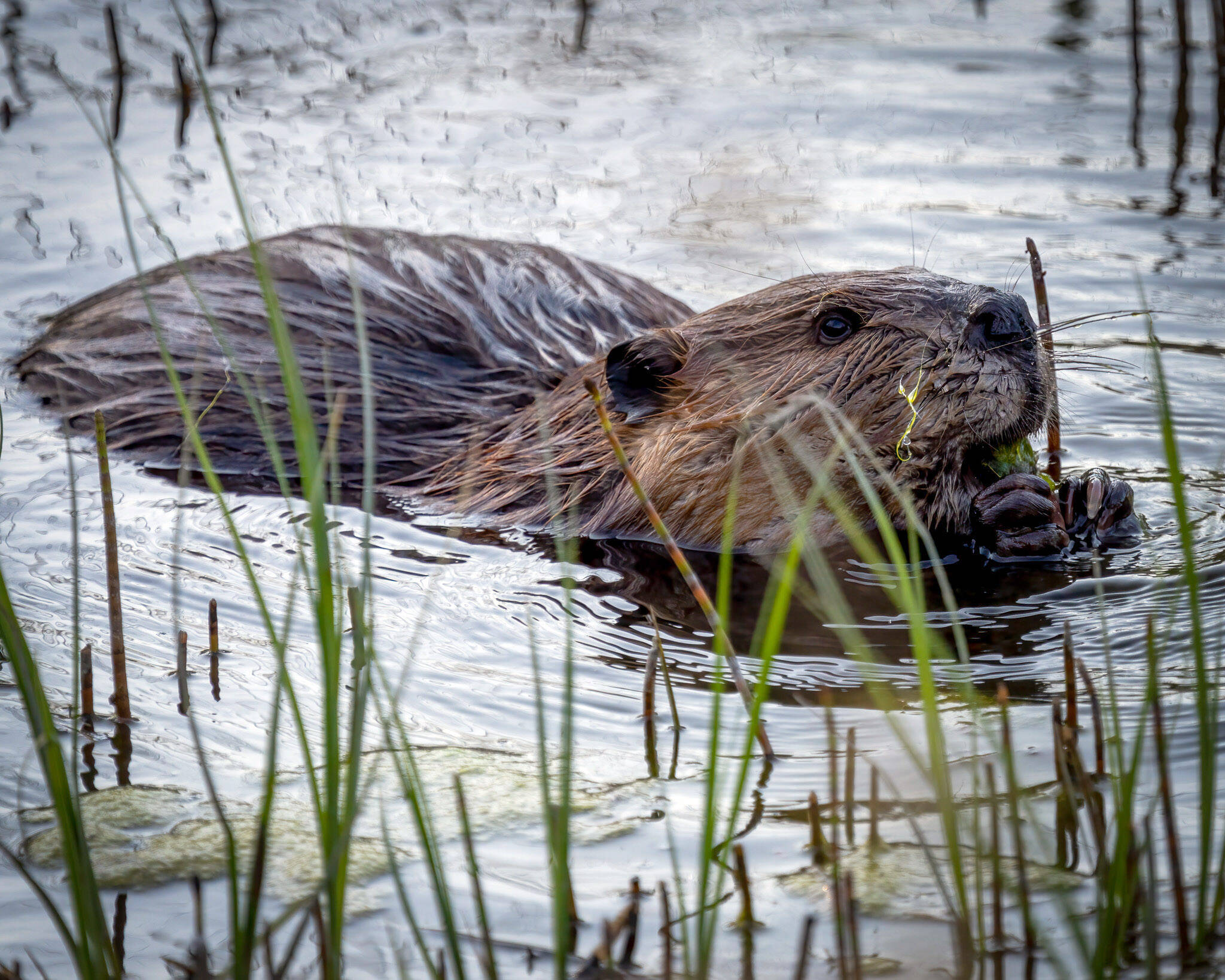
Nature-based solutions like conserving peatlands and encouraging beaver in the right places and times are promising tools for ensuring abundant cool waters for fish and people. (Photo by C. Canterbury/USFWS)
