
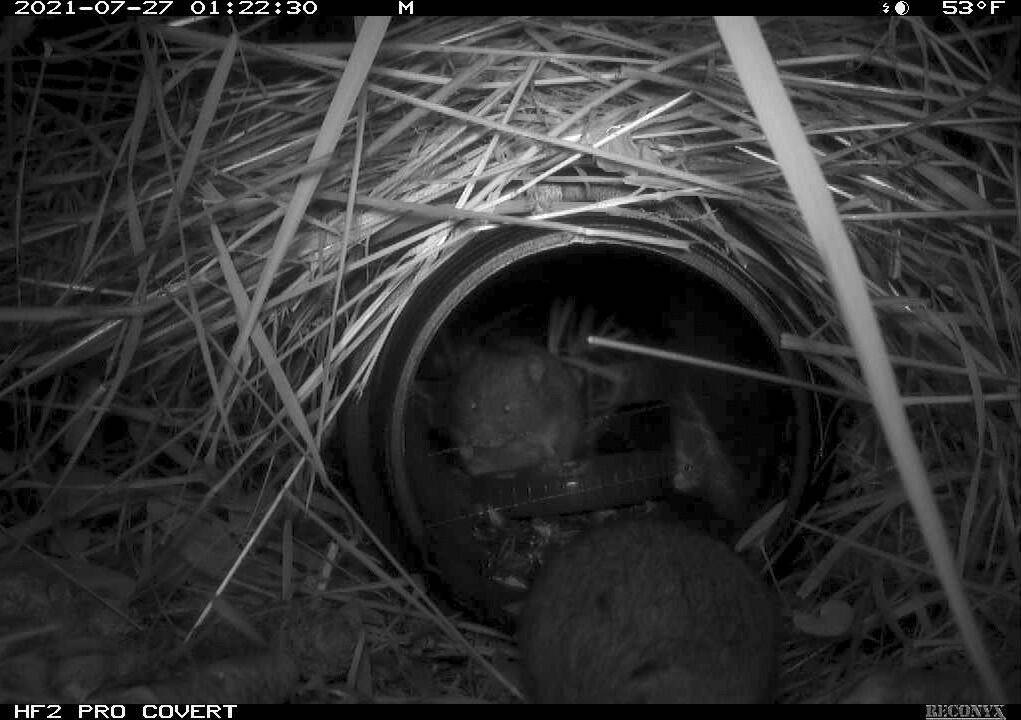
When I think about the Pleistocene, my mind naturally wanders to the large charismatic megafauna that dominated this period from 2.58 million to 11,700 years ago. I get captivated by species such as short-faced bears, mammoths and woolly rhinoceros, but I often neglect that there were more than just the ice age giants.
It was an age filled with a diverse array of wildlife, from the giants to the tiny, many of which can still be found today. One in particular recently garnered my attention, a rather small and secretive creature — the northern bog lemming (Synaptomys borealis).
The northern bog lemming is a small, semiaquatic rodent found in wetlands and forested areas across much of Alaska. These lemmings are known for their ability to swim and dive and are often found foraging for food along the edges of streams, ponds and bogs.
They are well-adapted to life in these wet environments, with long, dense fur that helps to insulate them from the cold and wet. Their feet are also heavily furred, which allows them to move easily through the wet, spongy ground.
Despite their small size, northern bog lemmings play a crucial role in the ecosystem by serving as prey for a variety of predators, including owls, hawks and foxes. They are also important seed dispersers, helping to distribute the seeds of plants they consume throughout the landscape.
The diet of northern bog lemmings is varied and includes a mix of plant and animal matter. In the summer months, they primarily feed on grasses, sedges and other herbaceous plants.
When these food sources are scarce in the winter, they turn to woody plants, bark and fungi. They have also been known to consume insects, snails and other invertebrates.
Northern bog lemmings are active year-round, but their behavior changes with the seasons. In the summer, they spend most of their time foraging and building nests, typically in grassy areas or along the edges of water bodies. In the winter, they become more sedentary, huddling together in their nests to conserve warmth.
Unlike some other lemming species, northern bog lemmings do not undergo large-scale migrations. Instead, they have a home range that they defend against intruders, using vocalizations and physical aggression to establish dominance.
These lemmings are also known for their territorial behavior, marking their territory with urine and scent glands located on their feet and chest.
The reproductive biology of northern bog lemmings needs to be better understood, but it is thought that they breed once per year, with females giving birth to litters of two to six young.
The young are born in a relatively undeveloped state, with their eyes closed and their fur sparse. They grow quickly, however, and are fully weaned at three to four weeks of age.
In the winter, northern bog lemmings may construct small, dome-shaped nests of vegetation to take shelter. They are generally active throughout the year but may become less so during periods of extreme cold or drought.
One interesting aspect of northern bog lemming’s behavior is their use of “runways.” These are well-defined pathways through the wetland vegetation the lemmings use to travel from place to place. These runways are often used repeatedly and can be easily identified by the flattened vegetation and the presence of droppings.
Despite their importance in the ecosystem, little is known about the population dynamics of northern bog lemmings.
Some studies have suggested that these animals may have cyclical population dynamics, with populations increasing and then declining over time. Other factors, such as weather and food availability, may also influence their population size.
One of the main threats to northern bog lemmings is habitat loss, as wetlands and other areas are drained or developed for human use. Climate change may also pose a threat, as rising temperatures and changing precipitation patterns may alter the availability of suitable habitat; populations may become isolated and constrain gene flow.
Conserving and protecting the habitat of northern bog lemmings is crucial for their long-term survival. We can achieve this throughout their range through various measures, including conserving wetlands, restoring degraded habitats and implementing land use practices that minimize the impact on these sensitive areas.
These glacial relicts are a fascinating and important species that play a vital role in the ecosystem of Alaska. Further research is needed to fully understand and safeguard these animals, including studies on their population dynamics, reproductive biology and responses to habitat changes.
The future is uncertain, but by better understanding these animals, we can take steps to ensure that they go down a different path than some of their former neighbors — mammoths and steppe bison.
Colin Canterbury is a biological science technician on the Kenai National Wildlife Refuge. You can find more information on the Refuge at http://kenai.fws.gov or http://www.facebook.com/kenainationalwildliferefuge. Look for Refuge Notebook Articles on the first and third Fridays of each month or Find past Refuge Notebook articles (1999–present) at https://www.fws.gov/kenai-refuge-notebook.
