
Editor’s note: This article has been slightly updated from the original version that ran on April 22, 2022.
Yes, it’s that time of year again, when we start thinking about spring cleaning and yardwork. Likewise, there continue to be vast numbers of beetle-kill trees that you may be considering taking down.
It is also the time of year when migratory birds are returning and getting their nests established.
Migratory birds, including songbirds, waterfowl, shorebirds and raptors, are protected under the Migratory Bird Treaty Act. The act covers all native birds in Alaska, except grouse and ptarmigan, and in this instance provides guidance to protect these amazing travelers.
Migratory birds provide numerous ecosystem benefits, including pest control and pollinating plants. However, these birds which navigate tremendous odds to reach summer and winter ranges each year also face the perils of direct mortality from human-caused sources and our human-altered landscapes.
In addition, long journeys and changes to winter habitats pose additional challenges for migratory species.
In the natural world, birds are the best-studied group of wildlife species. According to the latest research published in 2019, over the last 50 years, the total population of North American birds has declined by an estimated 3 billion breeding birds.
Many of the 1,000-plus bird species protected under the Migratory Bird Treaty Act are experiencing population declines due to increased threats across the landscape. The threats contributing to declining bird populations include natural and human-caused sources of bird mortality.
So, what can we do? Action on our part will allow bird habitats to continue to function and support bird life. A solution lies in understanding factors responsible for these extensive losses.
There are many complex environmental factors, including pesticide use, insect declines, logging, wildfires and climate change (drought, heat, vegetation changes). There’s also direct threats like outdoor cats and bird strikes on glass windows and doors.
While there isn’t one single factor that can account for these widespread mortalities, there are two important catalysts that have been tied to bird declines worldwide.
At the top of the list is habitat loss from land conversion to development, agriculture and resource extraction. Habitat degradation, a close second, occurs when natural areas become fragmented into pieces, water quality is compromised and habitat alterations occur in association with the colonization of invasive plants.
During the local nesting season, which generally peaks between May 1 and July 15 in Southcentral Alaska, migratory birds are susceptible to unintended nest failure when clearing wooded areas and vegetation. Migratory birds nest not only on tree branches, in trees and snag cavities, but also among shrubs and downed vegetation, on open ground and on cliffs.
The current recommended window starting on May 1 does not adequately cover the migratory bird nesting period any longer though. When developed it was actually pretty reliable, but in this changing climate, resident species like chickadees, nuthatches and woodpeckers begin nesting earlier, even into mid-April, depending on the weather year.
The advantage we have for those species is that they are all cavity nesters, and you can see potential cavity holes in trees. Therefore, the only way to avoid impacts in these circumstances is to remove dead standing trees prior to them being selected as a nest site.
Often by the end of May most of the woodpecker chicks have grown to a size that they can be heard chirping and squeaking from the nest hole, and by early June they are sometimes poking their heads out of the hole, anticipating their parents return with food.
During this time, you can often tap or scratch on a tree with cavity holes, and the youngsters will vocalize thinking it is the parents returning with a tasty morsel. Some longer distance migrants like yellow warblers do not show up on the Kenai until the first week in June, so there is no one size fits all anymore.
While beetle-killed spruce trees are unsightly and potentially damaging if they fall on property, they also serve a purpose. These dead-standing trees are favored by four species of woodpeckers, black-capped and boreal chickadees, red-breasted nuthatches, American robin, violet-green and tree swallows.
Cavity nesters, like boreal and saw-whet owls, may also nest in these trees. If you need to remove these dead standing trees, be aware that if cavity holes are present, there is a real likelihood that eggs or young birds are present, and the same guidelines above apply.
By number of nests, 65 to 70% of our nesting passerines are ground nesters as opposed to your classic vision of nests being in trees or brush. Many nests — if not most — are well-camouflaged or otherwise almost undetectable.
Not surprisingly, spring and summer vegetation clearing, grubbing, brush hogging, burning, stockpiling fill, and other land disturbance and construction activities can inadvertently destroy active nests, eggs or nestlings. While adult birds can usually escape such activities, their eggs and chicks have no defense.
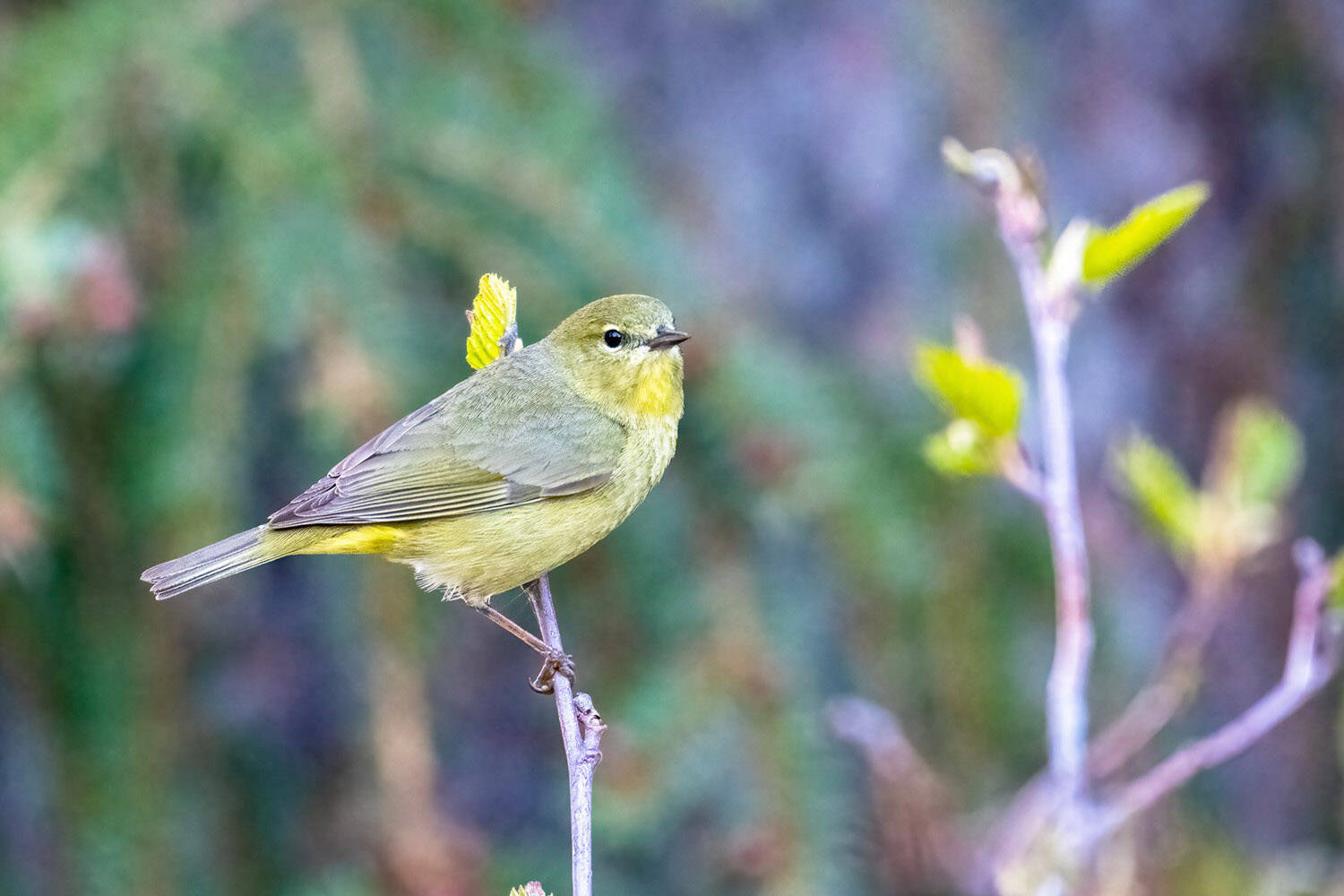
In addition, white-crowned and Lincoln’s sparrow, orange-crowned warblers, dark-eyed junco, common redpoll, and in some cases, even American robin are attracted to slash and woody debris piles for nest sites.
By conducting vegetation clearing, or removing, burying or burning brush piles on either side of the nesting season, before May 1 and/or after July 15, you can reduce impacts on nesting migratory birds and incidental mortality of young birds that the Migratory Bird Treaty Act was established to safeguard.
This is a good basis, but again, birds are arriving earlier and, when possible, consider clearing vegetation before mid-April. These recommendations are not only something for homeowners to have on the radar but also for developers and contractors since birds can quickly move into and nest in existing slash piles or any that are to remain on-site during construction.
Suppose you encounter an active nest before or after the local recommended avoidance times. In that case, it is important to leave it undisturbed until the eggs hatch, and the young depart the nest.
Many public- and private-sector entities, industries and private property owners alike have voluntarily implemented beneficial practices to avoid and minimize the take of migratory birds.
Still, birds remain in decline. So, for us to be greater than the sum of all our parts in reducing the impact on birds, it requires us not to have a weak link in the chain.
Simply changing some of our everyday habits can go a long way in helping birds:
• Reducing lawn space and growing native plants help provide shelter and food.
• House cats remain the No. 1 threat to wild birds, so keep those kitties inside!
• Using window decals or hanging parachute cords vertically in front of clear and reflective windows can effectively reduce bird-window collisions.
• With over 90% of plastics not being recycled, reducing plastic use will help seabirds, marine mammals and sea turtles.
• Most common pesticides are toxic to birds, so check for organic alternatives when looking for ways to treat weeds and pesky insects.
• And yes, even drinking shade-grown coffee helps as it is economically beneficial to coffee growers and helps over 40 species of North American migratory songbirds that winter in coffee plantations, AND the coffee is delicious too.
These examples are just a few simple steps we can take to protect birds in our area and beyond. Finally, enjoy watching birds, and please share what you see. Scientists understand how birds are faring from hundreds of thousands of people like you who report what they’re seeing in backyards, neighborhoods and wild places around the world.
If you have questions regarding guidance to reduce impacts on nesting birds, please get in touch with the U.S. Fish and Wildlife Service Fisheries and Ecological Services Office at 907-271-2888. Our timing recommendations for vegetation clearing and ground disturbance activities can be found here: https://www.fws.gov/alaska-bird-nesting-season.
Lynnda Kahn is the Refuge Operations Specialist at the Kenai National Wildlife Refuge, responsible for oil/gas surface management, activities within industrial right-of-ways, and those associated with highway improvements on the Refuge. This article has been updated and originally appeared in the Refuge Notebook on April 22nd, 2022. You can find more information on the Refuge at http://kenai.fws.gov or http://www.facebook.com/kenainationalwildliferefuge. Look for Refuge Notebook Articles on the first and third Fridays of each month or Find past Refuge Notebook articles (1999–present) at https://www.fws.gov/kenai-refuge-notebook.
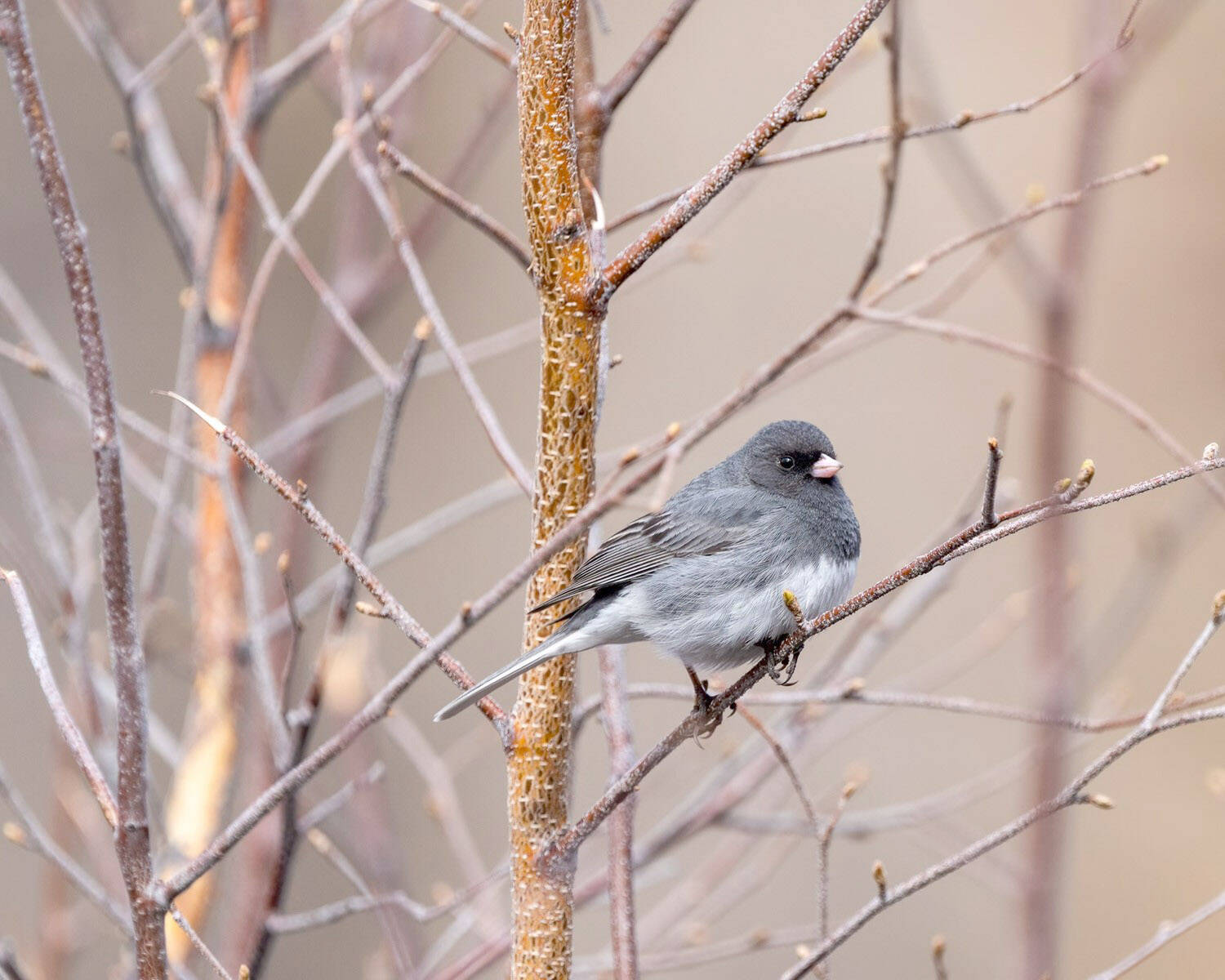
The dark-eyed junco is one of the bird species that likes to nest in slash and wood piles. (Photo by Colin Canterbury/FWS)
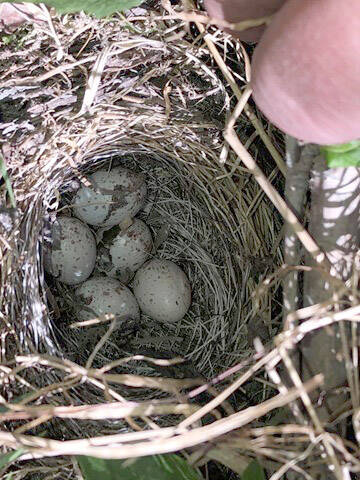
The ground nest of a dark-eyed junco. (Photo by Todd Eskelin/FWS)
