
At first glance, the boreal forest of Kenai National Wildlife Refuge and the pine rocklands of Key Deer National Wildlife Refuge have very little, if anything, in common.
For starters, about 4,060 miles separate the two places if you’re a cormorant, and 5,330 miles if you’re in a Chrysler.
Comparing the weather for each location: Big Pine Key, Florida, averages 46 inches of rain per year while Soldotna averages 22 inches of precipitation per year that includes the 86 inches of snowfall in Alaska.
You get the gist, these two places are not the same. The two very different climates affecting two very different ecosystems, they couldn’t possibly have anything in common, right? Let’s have a look:
The Ecosystems
Pine rocklands are a globally endangered ecosystem found only in the Lower Florida Keys, Everglades National Park and in scattered parcels in Miami-Dade County. They are limited to less than 3% of their original extent due to conversion to other land uses, significant ecological degradation and destruction.
Pine rocklands consist of an open canopy of slash pines with patchy understory and groundcover layers. Subcanopy layers include a diverse assemblage of tropical and temperate shrubs, palms, grasses and herbs. Pine rocklands occur at an elevation of 3 to 8 feet above mean sea level and are usually underlain by a freshwater lens (a layer of fresh groundwater atop denser saltwater).
Pine rocklands found on Big Pine Key have the highest plant diversity of all plant communities in the Florida Keys. Over 240 species of plants have been identified in the pine rocklands of South Florida and the Lower Keys. This community contains 14 herbs endemic to South Florida, five of which occur only in the Lower Keys.
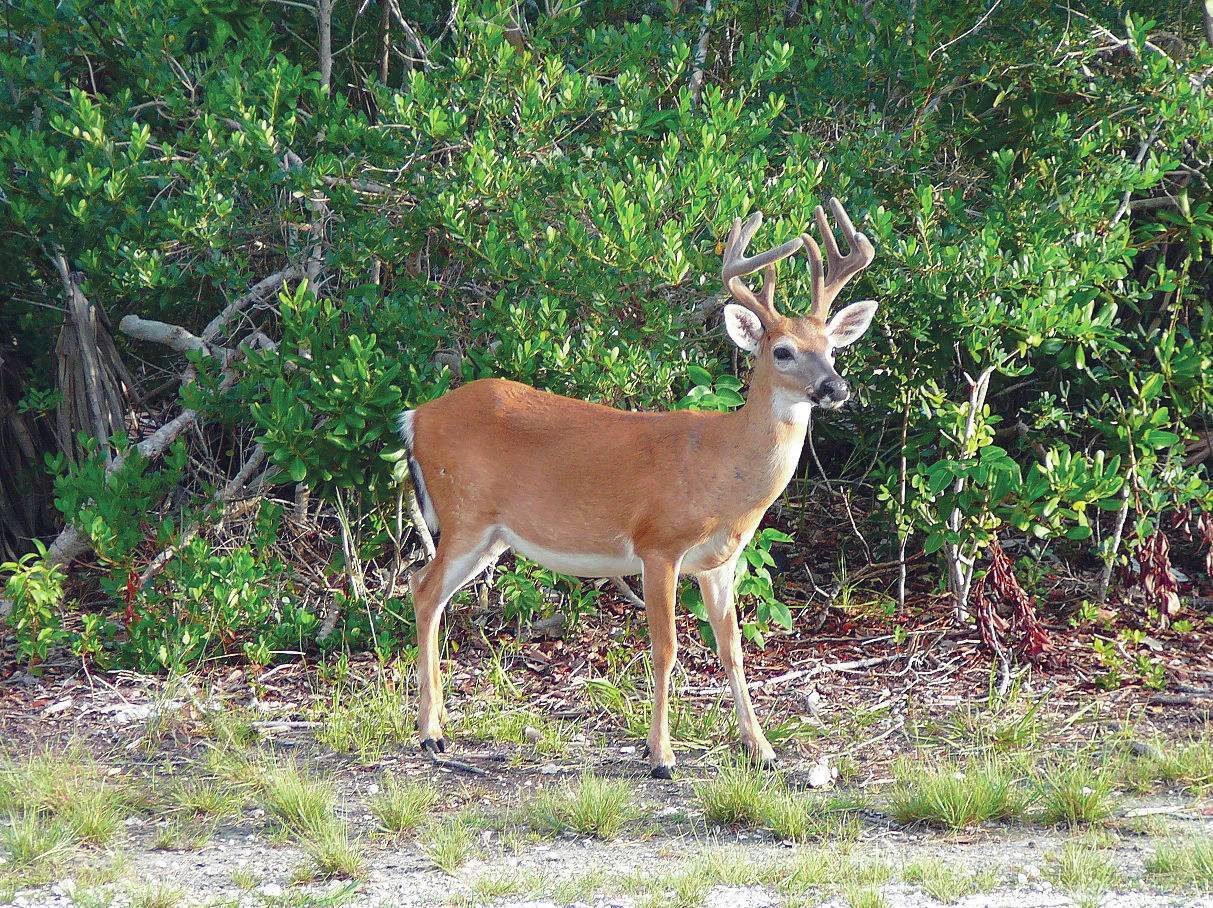
Pine rocklands contain significant freshwater resources, including widespread freshwater solution holes and marshes that are important to wildlife. The main mammal species is the endangered Key deer.
The Key deer is the smallest subspecies of the North American white-tailed deer. Males stand on average 1 meter at the shoulder and average 90 pounds. Females are smaller, averaging 65 pounds.
The Northern boreal forest of the Kenai National Wildlife Refuge is a vast landscape ranging from sea level to 2,000 feet above sea level.
This forest is primarily composed of white and black spruce, birch, aspen and cottonwood trees in various stages of succession. This forest is an important source of food and shelter for moose, black and brown bears, lynx, wolves, coyotes, porcupine, weasels, red squirrels and snowshoe hares.
This habitat is an important nesting area for summer migrants, including orange-crowned and myrtle warblers, olive-sided flycatchers, fox sparrows, ruby-crowned kinglets, and Swainson’s and hermit thrushes. Local resident birds include great horned owls, hairy and downy woodpeckers, spruce grouse, red-breasted nuthatches, and boreal and black-capped chickadees.
These two very different ecosystems located on the North American continent could not be farther apart from each other, not just in location but by most of the characteristics of land. One is home to the smallest deer of its kind (Key deer) and the other the largest member of the deer family (moose).
If you’re asking yourself, “What on earth could the forest of the Kenai Peninsula share with an island in the Florida straits?” here’s the answer.
Fire
Pine rocklands are dependent on fire to maintain the diverse assemblage of plants. Radiocarbon dating on soil samples taken from the bottoms of two water holes on Big Pine Key reveal repeated, local fires during the past 450 to 500 years, documenting the long importance of fire in the Florida Keys’ pine rocklands.
Pine rocklands historically burned once or twice every decade. Fire frequency has been shown to be an important parameter affecting the abundance and diversity of endemic herbs and the vegetation structure of pine rocklands. In the absence of fire, pine rocklands will succeed to hardwood hammock approximately within a 50-year time frame.
Ed Berg, a retired ecologist who worked for many years at Kenai National Wildlife Refuge, determined that the fire return interval (the amount of time between fires) in the mixed spruce and hardwoods forests on the western Kenai Peninsula was about 130 years while the return interval of fires within the black spruce forests was approximately 80 years.
While fires occur less often in the boreal forest than they do in the pine rocklands, they do occur naturally from lightning and have been occurring long before modern settlers ever laid eyes on the area. Fire is the common denominator in many natural systems, even those separated by many miles and occupied by vastly different species.
Brian Pippin has been the Acting Fire Management Officer at Kenai NWR since mid-July. He will soon be heading back to his permanent job as the Fire Operations Specialist for South Florida Refuges based at Florida Panther National Wildlife Refuge in Immokalee, Florida. Find more Refuge Notebook articles (1999–present) at https://www.fws.gov/refuge/Kenai/community/refuge_notebook.html.
By BRIAN PIPPIN
Kenai National Wildlife Refuge
