
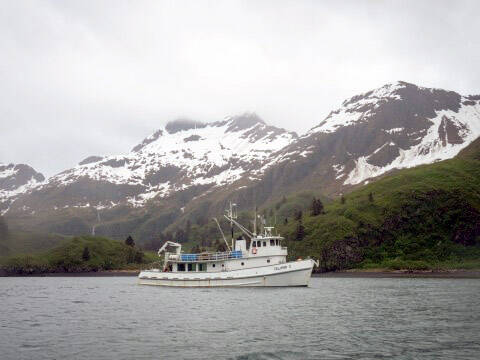
“Cowboys use rope; you collected dock line.” Consider it another lesson learned onboard the R/V Island C. And there were many more over the six days spent on the outer coast beaches of Kenai Fjords National Park and Alaska Maritime National Wildlife Refuge.
Remote is often one of the first words that come to mind when describing Alaska beaches. Or maybe rugged? Pristine? Wild? But certainly not littered. However, if you take a closer look, litter applies.
Like other coastal areas of the world, Alaska’s beaches collect marine debris, a.k.a. trash, garbage, litter, waste, refuse, junk. Whatever you call it, it’s out there.
Alaska has plenty of coastline for marine debris to accumulate on — over 33,000 miles counting all the islands!
Old fishing nets, packing bands, plastic bags and other items entangle wildlife, preventing wildlife from swimming, feeding and flying. Derelict fishing gear catches fish and other wildlife; a process known as “ghost fishing.”
Smaller pieces of debris, including microplastics (less than 5 millimeters in length), can be ingested by wildlife. These plastics are not only bad for the wildlife, but they can bioaccumulate in species that humans consume.
Plus, no one wants to see trash on the beach, further impacting recreation and tourism industries.
A less obvious threat of marine debris is transport of invasive and non-native species to new locations. Non-native species are living organisms introduced to a new environment in which they don’t naturally occur. Invasive species take it a step further and are non-native species that cause harm to the environment, economy, or human, animal or plant health.
Plastic debris is a particular concern for invasive species transport because it is highly buoyant and slow to degrade. Marine species in nearshore environments, such as mussels and barnacles, can attach to debris. The debris can be carried out to sea and transported on ocean currents, all the while carrying these hitchhikers along, sometimes hundreds of miles away.
The substantial reach of invasive species transport was particularly evident following the 2011 tsunami in Japan. Debris from Japan washed up all along the Pacific Coast of North America and Hawaii.
Over a five-year study, researchers documented at least 289 different animal species arriving from Japan! Most of these species were macroinvertebrates (235), but it also included fish (2), microinvertebrates (33) and protists (19). None of these were previously reported to have transported between the continents across the ocean.
Perhaps more surprising was the time lapsed before arrival — living species continued to arrive in North America on debris after nearly six years in the ocean! This is four years longer than the previous documented survival of coastal species rafting in the ocean.
Another striking example was a floating dock that washed up in Oregon. It was covered in over 400 pounds of plant and animal materials! There were 60 unique species identified, including wakame kelp, a known invasive species.
Not all marine debris is from natural disasters. Many Alaskans may recall the 2022 cargo ship spill that had people searching beaches high and low for coveted coolers. And many other spills happen each year that are not as infamous. Other debris comes in the form of derelict fishing gear and vessels.
Then there’s anything else you’d expect in a landfill — a plastic cup, a bike helmet, a chip bag, a flip-flop or a takeout container. Plus, things you wouldn’t expect — a handmade ladder, a hard hat, a wooden fishing float.
The math is simple. More marine debris equals more potential negative ecological and economic impacts.
Recognizing the negative impacts, National Park Service – Kenai Fjords National Park and Resurrection Bay Conservation Alliance, along with other local partners, began implementing marine debris cleanup projects in 2009. Since then, the scale and scope of the project has grown to include beaches within Alaska Maritime National Wildlife Refuge and Port Graham Corporation.
Fortunately, I was able to join 10 others representing six different organizations (National Park Service, U.S. Fish and Wildlife Service, National Oceanic and Atmospheric Administration, Resurrection Bay Conservation Alliance, Friends of Alaska National Wildlife Refuges and the Student Conservation Association) to eagerly sign up for the 2023 Marine Debris Cleanup Crew.
Plus, three members of the R/V Island C Crew. And two members of the Kenai Fjords National Park M/V Couloir Crew. And four Kenai Fjords National Park staff on the Shore Crew. Needless to say, marine debris cleanup is a team effort.
Each beach we stopped at was unique. On Alaska Maritime Wildlife Refuge’s Morning Cove large piles of driftwood with steep and forested mountainsides greeted us.
In Kenai Fjords National Park, smooth white-gray granite boulders the size of baseballs, basketballs and coffee-table-sized balls made up Black Bay’s beach and Thunder Bay met us with the beauty of hidden waterfalls and inland lagoons. Finally, Taroka Bay graced us with quiet, dense forests crisscrossed with bear trails.
A closer look, however, revealed what doesn’t belong there. Plastic bottles. Foam pieces. Fishing nets. Heavy boat line. Cutting boards. Foam pieces. Flip flops. Metal water bottles. Takeout containers. Chip bags. Foam pieces. Plastic buoys. Foam mats. Fishing floats. Laundry detergent bottles. Hard hats. Foam pieces. Plastic cups. Beverage cans. Gas cans. Plastic straws. And more foam pieces …
At each bay we loaded up on the landing skiff and stormed the beach, armed with gloves and trash bags. Once ashore, we scurried into different directions and began filling bags.
Suitable plastics for a local recycling project went into green bags to be donated. Everything else (except “treasures”) went into the yellow bags to be taken to the landfill.
All the while keeping a list of what we collected — two foam shoes, 50 plastic bottles, two whole fishing nets, 10 fishing net pieces, 15 foam floats, six plastic buoys — to be added to the total collected for each beach.
“Treasures” were kept easily accessible for two reasons: avoiding the garbage pile and more importantly, bragging rights. The infamous cooler spill was still fresh in all our minds.
Though only a banged-up bottom half of one was found, everyone made it home with something — a plastic buoy (or six), Japanese plastic floats, a crab trap tag, a bike helmet — to decorate a porch or use for interpretive programs. We turned trash into treasure.
Trash and “treasures” weren’t the only thing for which we looked. Taking advantage of our mission to scour beaches, we also looked in the wrack lines for crab carapaces, the hard upper shell that is shed during molting.
We searched for evidence of one species in particular — invasive green crabs (aka European green crabs, Carcinus maenas). Despite the common name, they aren’t always green but rather can be identified by five spines behind each eye.
Invasive green crabs were first detected in Alaska by Metlakatla Indian Community Department of Fish and Wildlife in 2022. Ultimately their arrival to Alaska has potentially huge implications for nearshore ecosystems, and subsistence, recreational and commercial fisheries.
It’s no wonder they are listed on 100 of the World’s Worst Invasive Alien Species. The detection underscores the importance of early detection surveys for these, and other invasive species, across the state. (Thankfully, none were found!)
After the beach was cleaned and wrack lines were searched, the trash bags were stuffed into large white “super sacks” and hauled onto the landing stiff. The sacks were transported back to the Island C and lifted by a crane to the stern for short-term storage.
Every few days, as the stern got more and more full, the M/V Couloir arrived and ferried the sacks back to Seward. And the process continued. And will continue. There are always more foam pieces, plastic bottles and foam pieces to remove.
In total, we removed 3,867 pounds of marine debris from eight beaches. As a marine debris cleanup crew first-timer, this was astonishing to me. To the veterans on the crew, this amounted to expected maintenance levels.
For example, we removed 592 pounds of marine debris from two beaches in Thunder Bay. A similar amount (575 pounds) was removed in 2021.
However, in 2009 when those same beaches were cleaned for the first time, over 6,000 pounds was removed. That’s more than 10 times the marine debris! Another lesson learned — just like a car, regular maintenance pays off.
This project, along with countless others across the state, wouldn’t be possible without the collaboration between federal, state and tribal agencies, volunteer organizations and local partners. While each one has a different mission, authority and objectives, the overarching goal is the same, resulting in real positive change for Alaska’s wild beaches.
Ashley Lutto is the Invasive Species Outreach and Education Biologist for the USFWS, Alaska Region. Learn more about the Alaska Invasive Species Program https://www.fws.gov/initiative/invasive-species/invasive-species-alaska. The Refuge Notebook is published twice a month, and you can see past Refuge Notebook articles at https://www.fws.gov/kenai-refuge-notebook
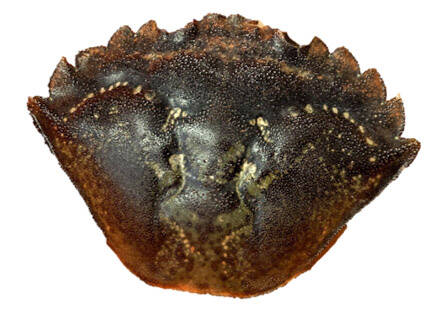
While collecting marine trash from beaches we also searched for invasive green crab carapace, not always green so better to identify by five spines behind each eye. (Photo by Linda Shaw/NOAA)
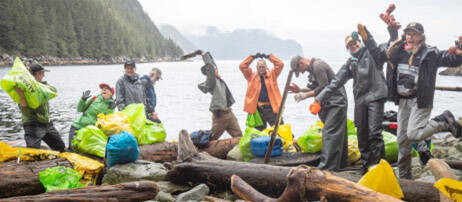
The 2023 Marine trash cleanup crew. (Photo by Sarah Conlin/NPS)
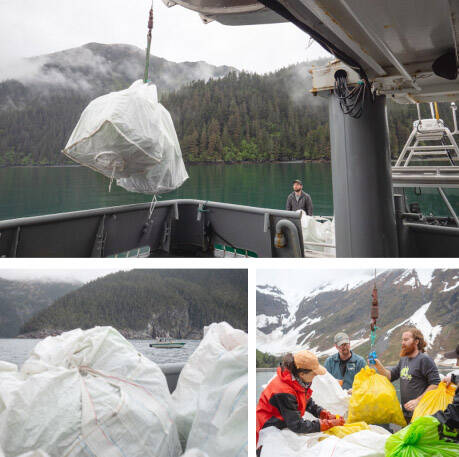
Thousands of pounds of trash collected at eight beaches. (Photo by Sarah Conlin/NPS)
