Opinion: Uniting Alaskans to address the youth mental health crisis
Published 10:30 pm Tuesday, August 8, 2023
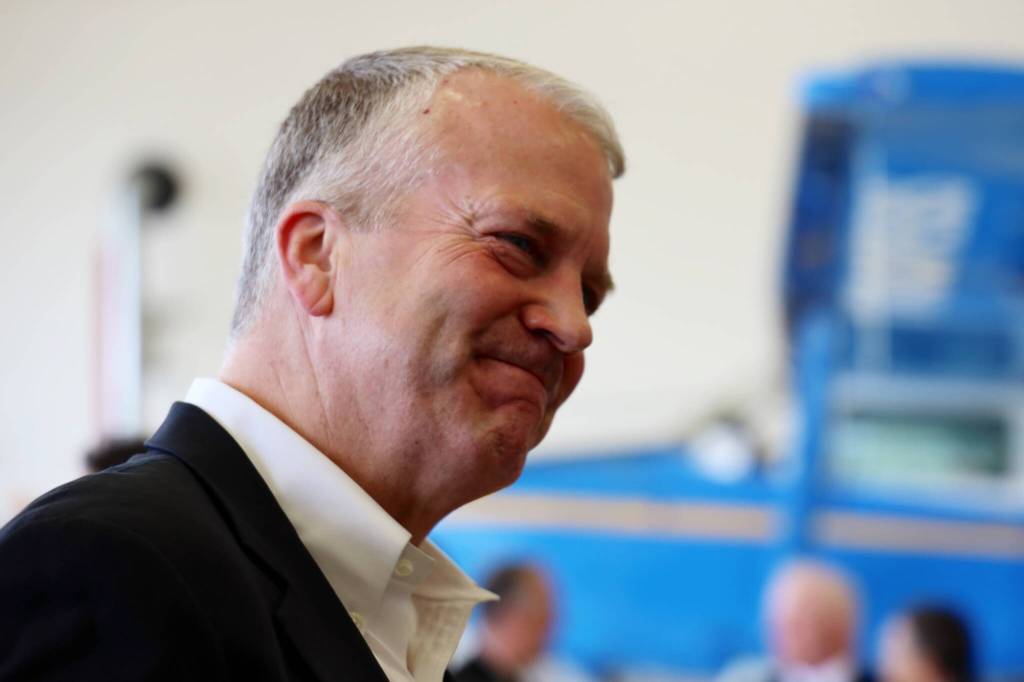
On June 26, I hosted the U.S. Surgeon General, Dr. Vivek Murthy, in Anchorage to hold a series of town hall-style roundtables — as well as a Facebook Live dialogue — to discuss the mental health crisis among our youth, how social media impacts that crisis, and how we can work together to combat it. The meetings were very productive and I thank the hundreds of Alaska mental health experts, parents, youth, public officials, tribal and nonprofit leaders, for sharing their insights and for coming together as a community to empower our kids and set them up for healthy and resilient futures.
As a parent, it has been impossible not to hear stories about young people seemingly addicted to their social media accounts. More disturbing are stories of online bullying, of young girls being told and believing they aren’t good enough.
Throughout the years, I began to read about the dramatic increase in suicides, and hear from Alaska’s parents, asking what could be done. If you haven’t read the Office of the Surgeon General’s report on Social Media and Youth Mental Health, I urge you to do so. It makes a very compelling case as to why we need to get together — governments at all levels, community and health care organizations, and parents — to take action.
The statistics are shocking. Suicides among adolescents over the previous decade have jumped 29 percent. For teenage girls, there was a 50 percent increase across the country in suicide attempts during the pandemic.
What’s causing this? Most Alaskans know that it’s a very complex issue. There are many factors — and the pandemic certainly didn’t help. But I don’t believe it’s a coincidence that increases in depression rates among young people, particularly teenage girls, began to rise considerably in 2013. What happened then? Facebook acquired Instagram and young people began to flock to the site.
Then came selfies and TikTok, which wrought an insidious obsessiveness. Even those who aren’t parents know that there is something horribly amiss with a whole generation who have been so addicted by Big Tech that they can’t seem to look up from their phones. For parents, it can feel frustrating and helpless.
I’m a Republican and generally adhere to the principle of less government and more freedom.
But I believe government should step in when the financial interests of big business are hurting our people, particularly our young people. Big Tech’s business model is to get our children hooked. And guess what: Our children are hooked.
I’ve introduced legislation that requires reporting on targeted advertising and encourages online advertisers to dedicate some of their ads to mental health PSAs. We also need better enforcement of age verification for users of social media. Companies should be held liable if they are violating these age standards.
My colleagues and I on the Senate Commerce Committee were recently able to advance The Kids Online Safety Act, which gives parents significantly more control over what their kids are allowed to see online and limits harmful and addictive content that kids are bombarded with. It also gives young people and parents the tools to better protect their information.
We also passed out of Committee the Children’s Online Privacy Protection Act (COPPA), which protects young people online by updating data privacy rules, expands protections to include teenagers, and bans targeted advertising for kids and teenagers. We also advanced the Filter Bubble Transparency Act, which requires greater transparency regarding social media companies’ addictive algorithms that target kids, and allows users to opt out of such features.
I look forward to working with my colleagues to get these important bills to the Senate floor for a vote. But more needs to be done. An important part of our recent meetings here was to get ideas from Alaskans on what more we can do together to address the challenges of youth mental health.
This is going to be a big battle. Big Tech special interests are large and will fight against legislation that undermines their business model of more kids staring at their iPhones for more hours each day. But Alaskans are stronger and more powerful.
Meanwhile, while youth can access nearly anything on the internet, access to mental health resources is swathed in red tape. We need to change this approach to mental health and social service resources. My KIDS Health Act focuses on a “whole health” model for youth, and authorizes federal funding for state Medicaid programs to improve coordination between mental health and community health care providers.
Another one of my bills, the LINC Act, which was signed into law last December, works to expand collaborative care in Alaska to make it easier for health care and social service providers to work together for the benefit of our whole health.
As is often the case, the challenges of youth mental health are related to other problems our society is facing, particularly addiction and isolation.
Some Alaskans remember when Surgeon General Murthy came to Alaska in 2016 to join me at a Wellness Summit that my office organized in the Mat-Su Valley, attended by hundreds of Alaskans, focused on countering the opioid epidemic.
Dr. Murthy pointed to isolation, loneliness, and lack of connection as being one of the root causes for addiction at our Wellness Summit.
He recently issued another report about the severe challenges of loneliness and isolation. The health impacts of loneliness and isolation are profound. “The mortality impact of being socially disconnected is similar to that caused by smoking up to 15 cigarettes a day, and even greater than that associated with obesity and physical inactivity,” he wrote.
His call to action, to work together to create social bonds, is true in both adult populations and our youth. If we fail to act, he wrote, “We will pay an ever-increasing price in the form of our individual and collective health and well-being.”
I believe that addressing youth mental health is the health care challenge of our time. We can have the strongest economy, the best quality of life, but if our kids are depressed, lack resilience, and are considering ending their lives, what good is it all? It is an issue that should unite all of us, but addressing it won’t be easy.
I will continue to focus on the mental health of Alaskans because our children deserve it — and I will continue to welcome ideas from all Alaskans on this critical issue.
Dan Sullivan represents Alaska in the U.S. Senate.