
Spring is always a busy time in Bristol Bay, but the coronavirus pandemic has brought meaning to the phrase “over scheduled.”
Even as the daylight increases into the late evenings, the days and weeks are far too short for all that needs to be done — spring chores, subsistence hunting, fishing and gathering opportunities, and of course, trying to carry out our normal workloads while staying home with children.
Bristol Bay knows all too well the devastating impacts of a pandemic: a century ago, the Spanish flu wreaked havoc on many of our communities. Today our people carry that loss with us. So we take seriously the duty of preventing such destruction from returning to our region.
Organizations around the region have been working to keep Bristol Bay communities safe from the spread of COVID-19, including Curyung, the federally-recognized Tribe of Dillingham, where I serve as the Tribal Administrator. On any given day, health care experts, grocery store managers, elected officials, Tribal leaders and staff, as well as many others are all collaborating on the best way to ensure the safety and longevity of our communities. It’s been the focus of my workload for over a month — our tribe closed offices to the public on March 10, while still providing services to our citizens and our Council issued a disaster declaration on March 24. During this time, we have also actively scaled back our work in other arenas to allow us and others to focus on COVID-19, including delaying our work to assume tribal health care delivery, so that BBAHC is able to focus on combating the pandemic in Bristol Bay.
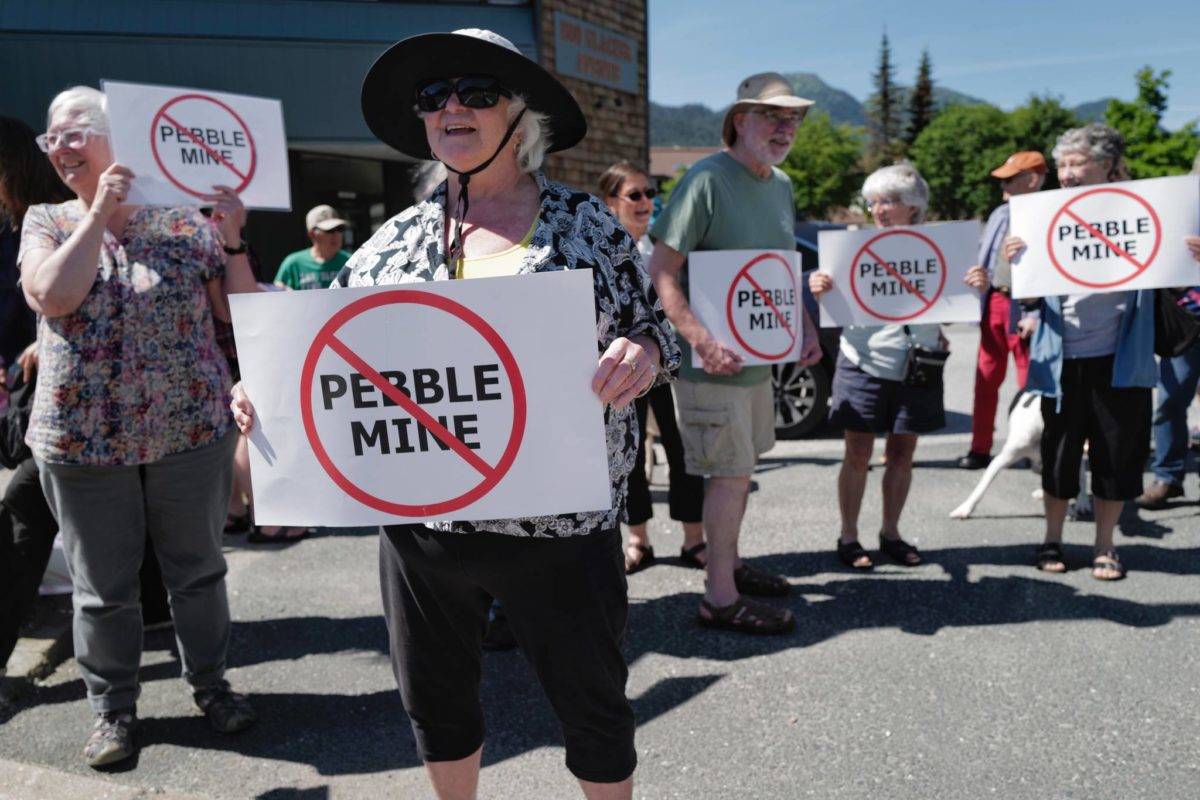
Somehow, through all of this, Curyung, a cooperating agency in Pebble’s environmental review process, was also expected to review and provide substantive comments on a preliminary draft of the Final Environmental Impact statement for Pebble as if nothing had changed.
Before we understood the true threat of COVID-19, cooperating agencies started to review this document and immediately had many significant concerns related to the extent and severity of the impacts of Pebble’s current plans, and the lack of critical data and detailed mine plans that make it impossible to analyze the full impacts of the project. Numerous missing studies were identified — and the mine proposal itself continues to change, even after the conclusion of public comment, carrying ever-changing impacts that will reverberate across the region.
Then, COVID-19 forced us into a near-lockdown as the memory of the last pandemic looms in our collective memories. Bristol Bay has one hospital with 16 beds and just two ventilators — and that’s here in Dillingham. Over twenty of our neighboring villages have even fewer health resources, some are fortunate enough to have health aids and clinics but some do not. We need to be extremely careful in the coming months, and that requires collaboration and near round-the-clock communication with our community and the state. There is no time to fight Pebble as we face this immediate threat.
Pebble and the Army Corps are backing us into this corner. Both the current pandemic and the proposed Pebble mine could change our lives forever, and threaten to wipe out the world’s last remaining salmon cultures. It is unreasonable to ask a Tribe to choose between working to stop a pandemic that could destroy our communities, or weighing in on the single largest development project ever proposed for our region. We should never have to choose between a thorough review of the impacts a future project could have, or acting swiftly to address an emerging public health crisis.
Pebble’s own initial review admits massive destruction of the habitat that sustains the salmon that powers region – at least 105 miles of streams and 2,226 acres of wetlands will be wiped off the map. Because Pebble pitches mining the full deposit to the investment community despite deceitfully proposing to start with just the first eighth of the deposit, we know the impacts will be far greater over time – a reality still not address in the environmental review.
Still, while the Army Corps of Engineers is itself busy addressing the pandemic in other regions – the Alaska District says it can keep moving forward on Pebble. In fact, in March the agency said “Pebble consumes a lot of resources for me and my team. … We want to make a decision so we can move on to what else we have in our queue.”
That is completely unacceptable. “Getting to their queue” is no justification for forcing our region to choose between addressing two different crises that will affect our communities for generations to come.
Our Bristol Bay communities are not at peace right now. The threat of Pebble continues to loom over us — our investments in our businesses and the sustainability of our cultures — as it has for more than a decade. Now, the threat of the global COVID-19 pandemic consumes our days and keeps us up at night. Together, the gravity of these impending dangers are too much to fathom, let alone respond to accordingly.
Pebble has had a rushed and inadequate permit review since day one. This has been stated not just by Curyung but by many of the other cooperating agencies, over and over again. There’s never been a true concern for protecting Bristol Bay, from the company or the federal regulators. Now that COVID-19 is here, it is unconscionable for Pebble’s review to go on as planned.
We ask the Corps to have some respect for the severity of what we face here by doing the bare minimum and slowing this process down. We ask Gov. Mike Dunleavy, Sens. Lisa Murkowski and Dan Sullivan, and Rep. Don Young to support this request.
We need strong science and a better review. But for any of that to be possible — we need to get through this pandemic safely. Please set Pebble’s application aside until our region has weathered this current storm.
• Courtenay Carty is the Tribal Administrator for the Curyung Tribal Council, the federally recognized Tribe of Dillingham.
 E-Wallet Purchase (Add Funds)
 Term Subscription