
By Rich Moniak
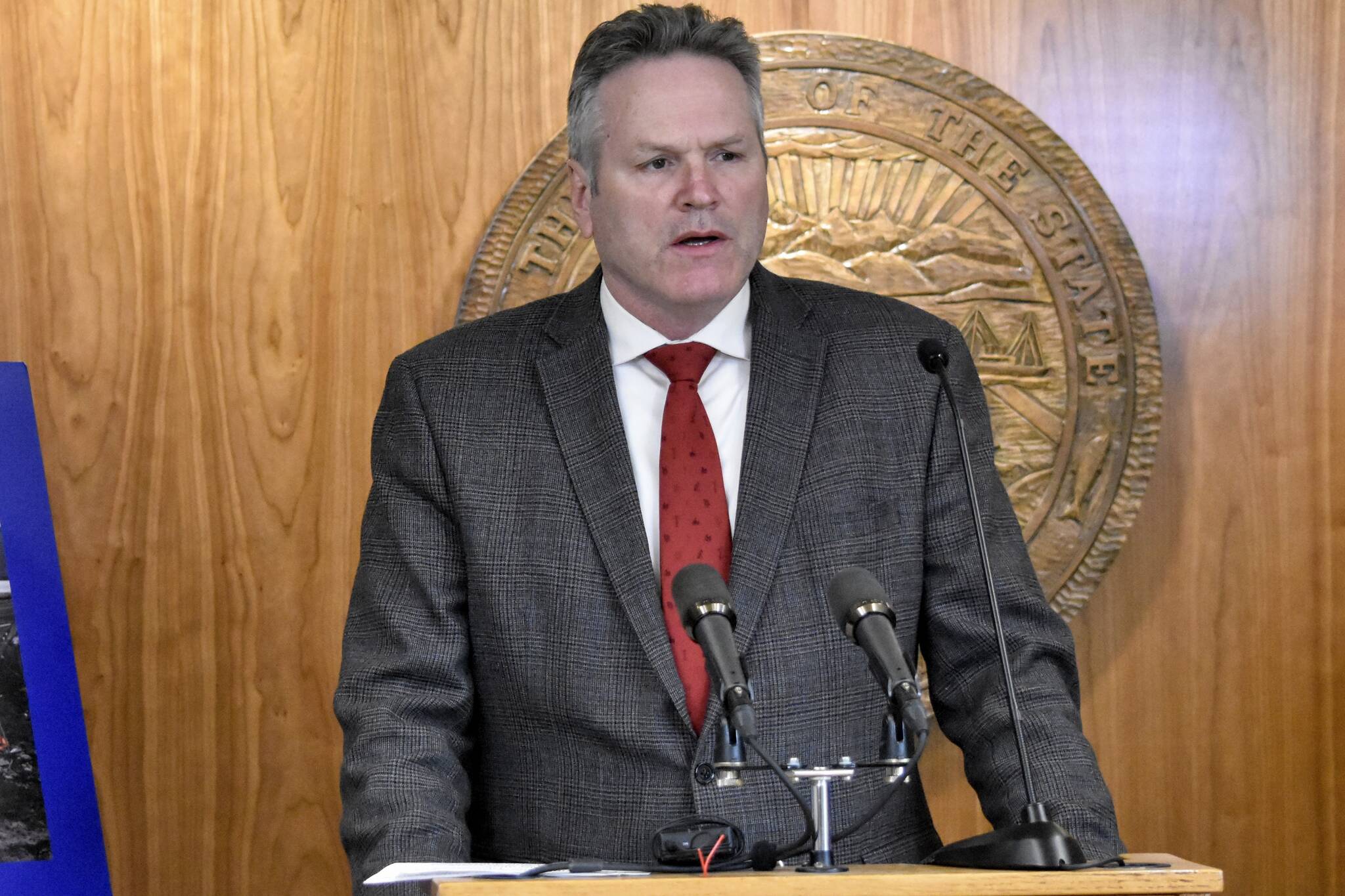
We are in better shape today fiscally than we were when I came into office,” Gov. Mike Dunleavy told the audience at the first gubernatorial debate in which all four candidates participated. That’s a true statement. But the governor had nothing to do with getting us there.
Dunleavy was first bailed out by the federal government. Then soaring oil prices put another billion dollars or more into the state treasury. Meanwhile, the events surrounding both fiscal injections caused Alaskans serious economic hardship.
To grasp how little Dunleavy’s fiscal policies helped erase the state budget deficit begins with recalling his campaign promises in 2018. He claimed he’d be able to balance the budget without new taxes or serious spending cuts. On top of that, our annual PFD would be increased by reverting to the 1982 statutory formula. And as a bonus, he’d retroactively pay us another $3,600 because that formula hadn’t been used the prior three years.
Because money doesn’t grow on trees, none of that happened.
Instead, he hired Donna Arduin, a well-traveled budget hatchet woman. After recognizing his campaign promises weren’t realistic, she drafted a balanced budget plan that slashed funding for K-12 education by 25%, the University of Alaska by 41% and the Alaska Marine Highway System 65%. To a lesser degree, that austerity was applied to almost every state agency.
There were no new state taxes, as promised. But the plan included diverting all local government oil and gas related property taxes to the state. Those communities would have been forced to make up their loss of revenue by raising taxes.
In the end, legislative resistance and public outcry softened the blow. Balancing the budget required withdrawals from the state’s reserves and the Alaska Permanent Fund earnings account. Taking money from the latter meant smaller PFDs than Dunleavy promised with no retroactive payments.
Voters across the state were so angry that a petition to recall him quickly gained enough signatures to clear the first hurdle in that process. Then COVID-19 arrived and effectively ended the effort.
The bigger impacts of COVID included a statewide shutdown of schools and nonessential businesses in the spring of 2020. It also crushed oil demand. Oil prices, which began the year around $70 per barrel, dropped to below $30. For a brief period in April, it was under $10. The loss of state revenue from the North Slope that year was estimated to be about $700 million.
But Congress passed three pandemic relief bills that included checks worth $3,200 for almost every adult, another $2,500 for every child, and economic assistance to state and local governments and many businesses.
To gauge what Congress did for Alaska, consider that in Fiscal Year 2019, federal grants, contracts and direct payments put $10.3 billion into the state’s economy. That figure jumped to $16.6 billion in 2020 and 18.6 billion in 2021. Even Dunleavy admitted the fiscal situation would have been much more dire without the added federal spending.
Still, he failed to convince legislators to fund a stimulus payment from the permanent fund in 2020. And failed again in 2021 to deliver the full PFD despite calling the Legislature into four special sessions.
Finally, before 2021 drew to a close, Congress committed a billion dollars to Alaska via the Infrastructure Investment and Jobs Act. It’s for improving roads, bridges, airports, ferries, domestic water and wastewater systems and rural broadband service. Dunleavy contributed nothing to crafting that legislation.
About the same time that bill passed, oil prices hit $80 per barrel for the first time in three years. The war in Ukraine pushed it to up over $100, where it remained until late August. That unexpected windfall gave the Legislature more money to put in our PFDs.
But the high prices also meant it cost Alaskans more at the gas pump and for home heating fuel. That’s why the Legislature padded the PFD with $600 for energy relief.
No one should believe the current fiscal picture will last. And the state still lacks a sustainable budget plan.
“One promise I made to Alaskans was to present you with a permanent fiscal plan,” Dunleavy said when releasing what he called “an honest budget” in February 2019. The history he’s hiding from now is why he doesn’t deserve a second chance to get it right.
Rich Moniak is a Juneau resident and retired civil engineer with more than 25 years of experience working in the public sector.
