
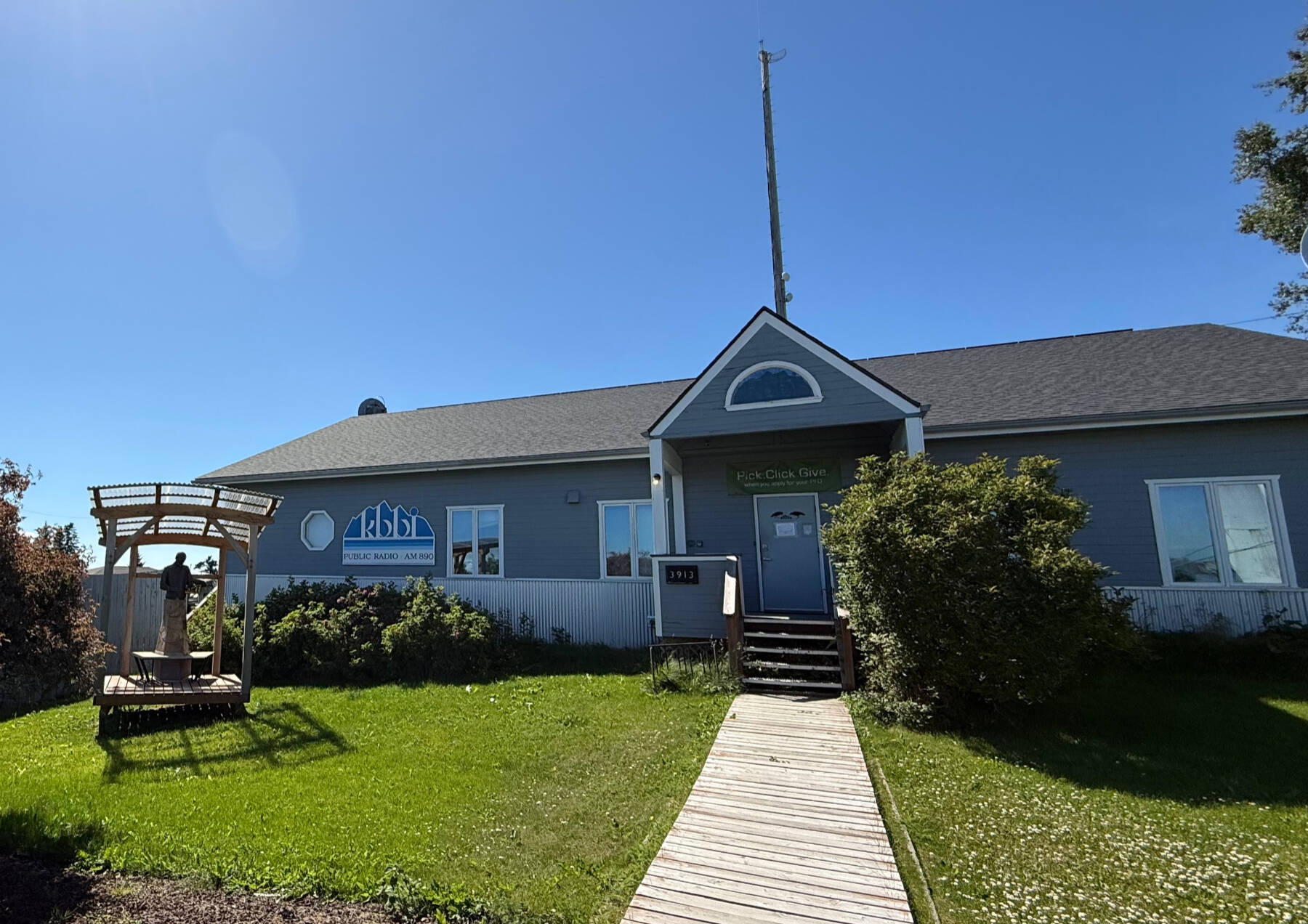
When people think about what connects Alaska’s far-flung communities and our limited road access, the first answers are often logistical: bush planes, ferries, snowmachines. But there’s another important way Alaskans stay connected, and it’s under threat: our public media stations.
Alaska’s public media system is in crisis. The administration, with the support of Congress, eliminated a crucial stream of federal funding that was administered by the Corporation for Public Broadcasting, or CPB, which recognized Alaska’s unique geographic challenges and relied heavily on local stations to fill critical gaps in communication infrastructure. Alaska, once receiving 28% of CPB’s system support funding, has lost its standing. That loss now threatens to dismantle public media across our state.
If nothing is done, the lost funding — as much as $15 million per year — will result in the complete loss of broadcast signals in remote communities. Those cuts affect locals’ ability to receive critical messages about natural disasters and other emergencies, and they isolate thousands of people from accurate and up-to-date news.
Public media is more than just news — it’s essential community infrastructure serving Alaska’s towns and villages. In many places, radio remains the most reliable option for emergency alerts, weather updates and local news. In times of crisis, it plays a vital role in keeping people informed and connected. And unlike many digital services, public radio is always free with no subscription or login required. Accessibility matters in communities where affordability and infrastructure are real barriers. Radio is the one voice that reaches everyone.
Without immediate intervention, Alaskans face a loss of $15 million annually and:
— Local journalism and rural news coverage.
— Educational programming that fuels lifelong learning and student success.
— Emergency communication channels that warn of weather events, fires, and other disasters.
— Cultural programming that preserves Indigenous languages, oral history, and storytelling.
That’s why the Alaska Community Foundation has launched the Voices Across Alaska Fund — a coordinated, statewide response to this urgent threat. The fund is open for donations from individual donors, corporate donors, and philanthropic organizations.
This fund is not meant to compete with individual, local station and TV campaigns, but to complement them by offering an easy way for individuals, partners, and other foundations to support a statewide effort to preserve essential programming. The funding priority will be on closing the gap between what Alaska’s public media stations would have received from the Corporation for Public Broadcasting in 2024 and what they are now able to raise independently. An advisory board of Alaska public media leaders will ensure the funds are distributed equitably among our public media organizations.
We’re asking: Will you help ensure that every Alaskan from Bethel to Nome to Ninilchik can stay connected, no matter how far they are from the road system? In a state where bush planes and boats often carry the load, public media have long carried the message, reaching people where roads don’t. That connection is now at risk.
We invite support from individuals, foundations, and businesses who believe strong local media is essential to a strong Alaska.
Public media is a public good. Let’s keep it strong — together.
Ed Ulman is president and CEO of Alaska Public Media. Jaclyn Sallee is president and CEO of Koahnic Broadcast Corp. Mollie Kabler is executive director of CoastAlaska.
