
The Central Council Tlingit and Haida Constitution declares as our peoples’ inherent right that our tribal government, “Protect, preserve and enhance Tlingit ‘Haa Aani’ and Haida ‘Íitl’ tlagáay’, our way of life, its ecosystems and resources, including the right to clean water and access to native foods and traditional practices through our inherent rights to traditional and customary hunting, fishing and gathering.”
Tlingit & Haida works constructively with all elected officials of any political party without partisanship. We aim to be collaborative partners, working together in the best interest of Alaska — our homelands. Yet today we are challenged by our disagreement with Alaska elected officials that support the proposed full exemption of the Tongass National Forest from the Roadless Rule. Any elected official in Alaska who supports a full exemption is disregarding their constituents, undermining the public process, and ignoring the sovereign Tribal governments — whose people have lived and depended on these lands and waters since time immemorial.
The indigenous tribal governments of Southeast Alaska know our traditional territory, we have lived, depended on, and stewarded these lands and waters since time immemorial. We know that the full exemption for development activities would forever harm our homelands.
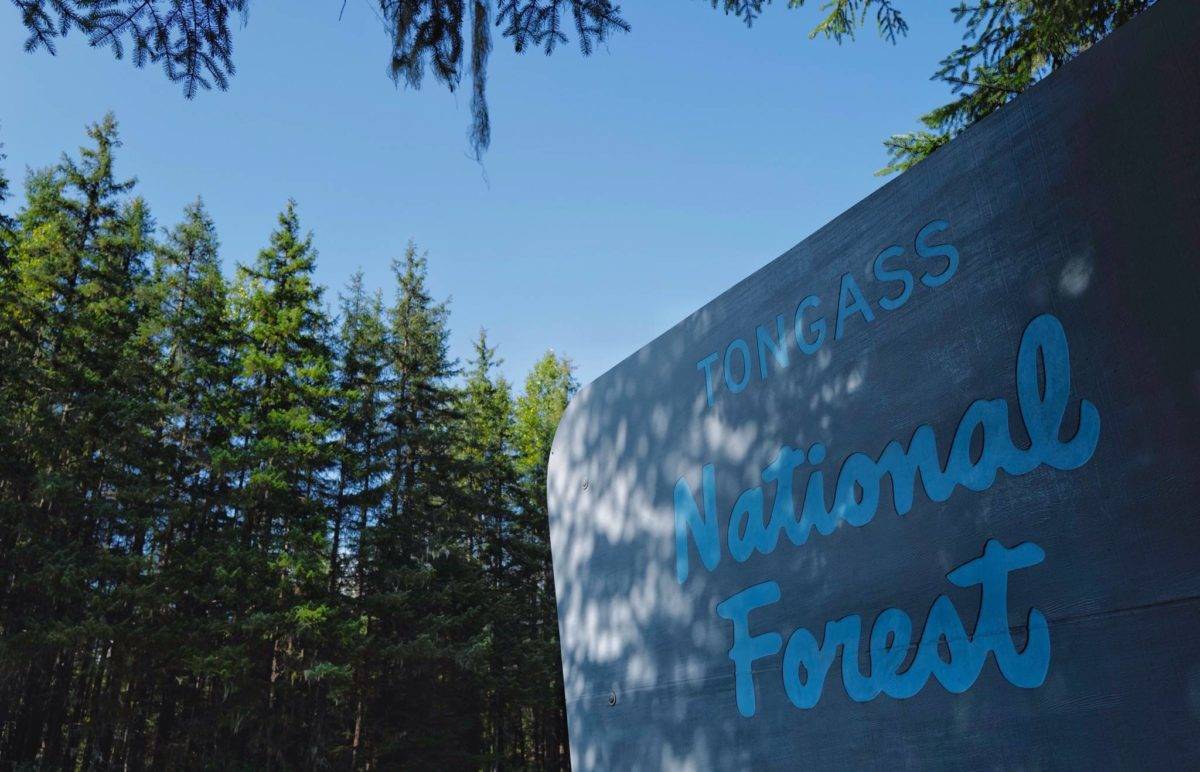
The Tongass National Forest is the United States’ largest national forest and the largest remaining temperate rainforest on earth. Some see it as a salmon forest, a timber forest, a vast wilderness to visit and explore. Indigenous people see it differently. The Tongass is the traditional homelands of the Tlingit, Haida and Tsimshian people, a lineage that stretches so deep in time, we call it immemorial. Our origin stories are derived from these lands. Our ancestors are buried here. Our songs and dances are created here. Our languages have always been spoken here.
Who are we? Our people are professional athletes, entrepreneurs, artists, Hollywood actors, CEOs running corporations that have brought millions of dollars to our region, fashion designers, teachers, culture bearers, doting aunties, fishermen, and sovereign tribal governments. We are diverse peoples, but if there is one thread that unites the tribes and people of Southeast Alaska, it is our relationship and connection to our sacred places known today as the Tongass. Our health and well-being, identity, and worldview are intricately woven into the fabric that is our homeland.
Six federally recognized tribal governments stepped forward to engage on the Roadless Rule proposals with the State of Alaska and consult with the US Department of Agriculture; however, our tribes were treated as “cooperating agencies” instead of as sovereign tribal governments exercising our inherent rights. Despite inappropriate treatment, these tribes agreed to participate in order to be “at the table” instead of “on the menu.” In addition to answering our communities’ needs, and despite additional and significant impacts of government shutdowns and reduced program funding from our federal trustee, these tribes satisfied arbitrary and expedited deadlines to meaningfully engage in with state and federal representatives. However, our pleas for respect and for justice have been ignored.
Each of our tribes have different needs and priorities. Some of our communities sought expanded protections to heal local lands after devastating logging practices. Others sought strategic adjustments to the Roadless Rule that would permit controls of local development. And not a single tribal government engaged as a cooperating agency advocated for a full and complete exemption of the Roadless Rule. In a word, our tribes are reasonable in being accountable to the unique needs of each of their communities.
These cooperating tribes cannot help but believe the entire process has repeatedly disrespected and ignored sovereign tribal nations and their tribal citizens. For example, the USDA compensated the Alaska Forest Association, a timber industry lobbying group, with $200,000 for their time and expertise in engaging in the Roadless process. The State of Alaska received $2 million. And yet, despite the tribes’ traditional indigenous knowledge of their lands and waters, and despite their representation of the communities embedded within the Tongass, our tribes received no compensation.
Our tribal leaders have been repeatedly denied opportunities to engage face-to-face with U.S. Department of Agriculture Secretary Sonny Perdue, who will ultimately determine the fate of our homelands. Meanwhile, Secretary Purdue invited representatives of other governments, environmental nonprofit organizations, and the timber industry to meet with key USDA officials in Washington, D.C. Our tribal governments have repeatedly requested government-to-government consultation without success.
Southeast Alaska tribes believe the requisite environmental process has been arbitrarily and capriciously rushed to decision despite the magnitude of potential adverse impacts that lifting these protections could be expected to impose upon our homelands.
Our tribal governments concerns are shared by others. During the public scoping period last fall, the vast majority of written comments and public testimony, according to the administrative record of the U.S. Forest Service, favored no change to the Roadless Rule across the board.
Sen. Lisa Murkowski and Gov. Mike Dunleavy support a full exemption of the Tongass from the Roadless Rule. We believe it is their obligation to respect the views of the first people of these lands, and their responsibility to develop compromises that are responsive to our needs. To do less is to undermine tribal governments.
We respect our federal and state elected officials and have successfully collaborated with them on numerous and often contentious matters. Yet we cannot compromise our homelands. As the original land managers of Southeast Alaska, we know that a blanket removal of protections for our remaining old growth is not a viable solution. A full removal of the Roadless Rule protections must be replaced with the opportunity for tribal governments to meaningfully engage with state and federal government officials in the management of the lands we depend on.
We acknowledge that compromise is necessary, and our desired outcomes are not unreasonable; however, no outcome is credible unless tribal governments are respected as full partners in the decision-making process.
Richard Chalyee Éesh Peterson is president of Central Council of Tlingit and Haida Indian Tribes of Alaska.
Richard Chalyee Éesh Peterson is president of Central Council of Tlingit and Haida Indian Tribes of Alaska.
