
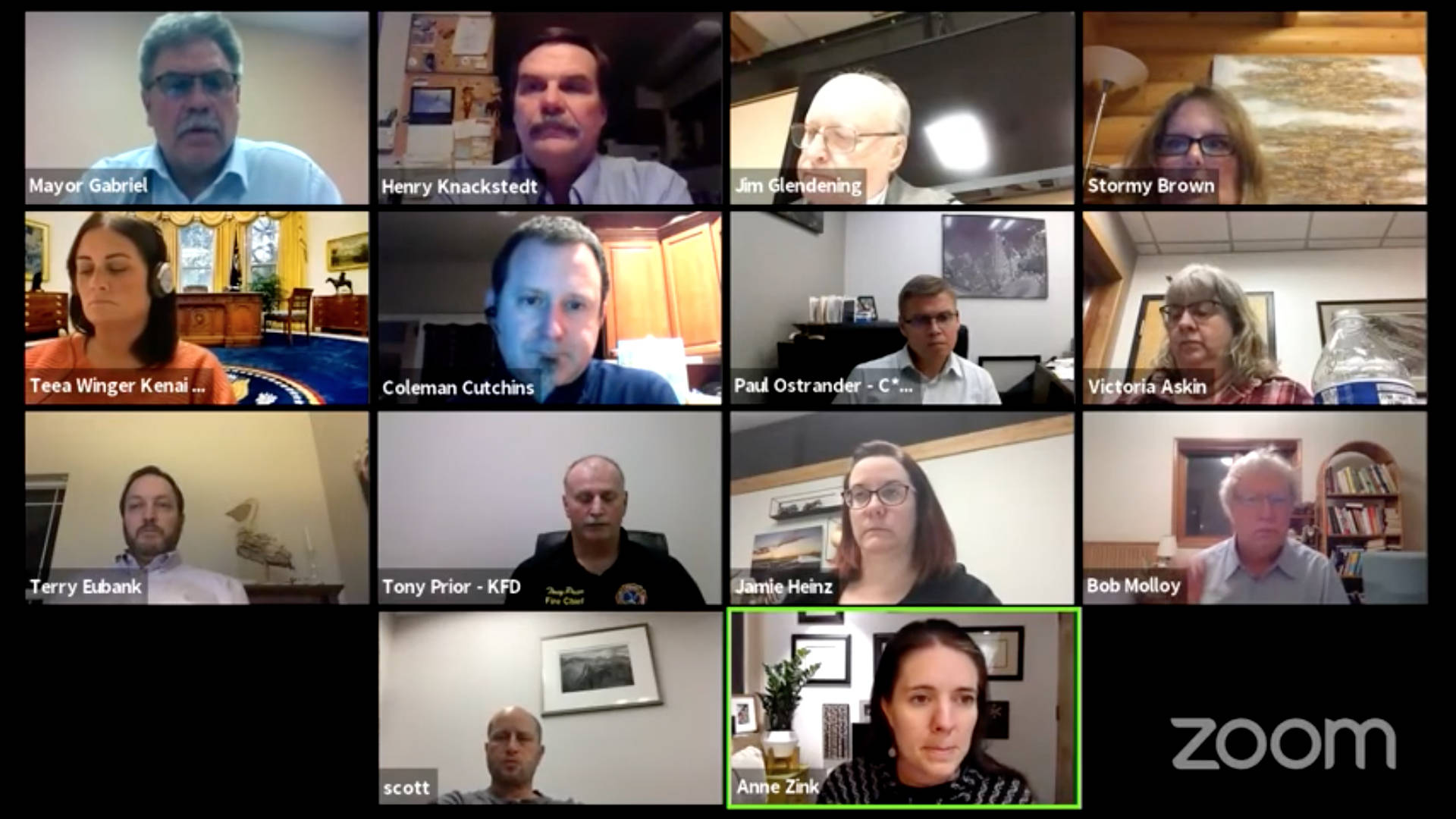
Alaska’s Chief Medical Officer Dr. Anne Zink fielded questions from the Kenai City Council during their Wednesday night work session and provided the latest update on the status of COVID-19 in Alaska amid growing case numbers statewide and with the arrival of the first vaccine doses on the horizon.
Recent developments have focused mostly on the arrival of the first COVID-19 vaccine doses in the state, which is expected to happen soon. Zink said that Alaska will be getting their entire December allocation of the vaccine at once instead of spacing it out over weeks, which will allow them greater flexibility in how they are able to distribute it.
The state’s distribution plans have been challenging, Zink said, because plans at the federal level change frequently and because of how sensitive the Pfizer vaccine is. The Pfizer vaccine, which is expected to be distributed to states first, requires storage in an ultra cool chamber until it is ready to be distributed. This includes during the transit process. Most of the doses are being shipped to a location either in Anchorage or Fairbanks directly from the federal government, which Zink said both have -80 degree freezers.
Zink said that once the vaccine is removed from the ultra cool chamber, providers will be able to refrigerate it for five days before it is no longer good. This requires extensive planning on the part of DHSS, which must coordinate distribution with the type of transportation, weather conditions and the team awaiting the vaccine’s arrival, among other things.
“When a community is ready for the vaccine … we look at the shipping, we look at the timing, we look at the transportation— it’s either driven or it’s flown — and we pull it out of that freezer and [say] ‘go’. And then they’ve got five days from the moment we say ‘go’ to being able to get those people vaccinated,” Zink said.
Zink said that they have the ability to send out “pizza trays” of the vaccine, which hold 975 doses, but that doesn’t always make sense for some of Alaska’s smaller communities. Instead, one option is to send a tray to a central community for them to then distribute to smaller communities around them. Such is the case for places like Utqiagvik.
In contrast, Zink said other communities have said they would rather wait for Moderna’s vaccine, which is more low-maintenance and is expected to arrive a week later.
Both Pfizer and Moderna’s vaccines require two doses to be administered weeks apart. Zink said it will be extremely important for people to follow up with the second dose and that they should “plan their life around” it. Both Pfizer and Moderna’s vaccines have been praised for their efficacy rates of more than 90%, however, they are not as efficacious if people only receive the first dose, which has an efficacy rate of around 54%.
Zink also noted that the vaccines have not been studied in children under the age of 12, meaning they should not get the vaccine yet. Additionally, the vaccines were not studied in pregnant women, although there were some women who became pregnant during the study. People who are very sick or who are receiving chemotherapy or radiation should also wait to get the vaccine.
One thing Zink said she is slightly worried about is people getting cold feet about getting the second dose after receiving the first, as the vaccine has been known to result in people experiencing fevers, aches and soreness in the arm where they received the vaccine. This has been more so than with the flu vaccine, but Zink said that those symptoms are people’s immune symptoms building up a response to the virus and people should not be discouraged from getting vaccinated.
“I want to set that expectation ahead of time so people are not surprised,” Zink said, adding that her hospital is asking employees to take off the day after they get their second dose in preparation for people not feeling well.
Instead of thinking of COVID like the flu, Zink said, she thinks of it more like polio, which similarly spread among people who were asymptomatic. The U.S. Centers for Disease control estimates that 40% of people who are infected with COVID-19 are asymptomatic. Viruses with high fatality rates are easier to control because when the host dies they cannot spread it to other people. In contrast, COVID’s rapid spread among people who are frequently asymptomatic means it is difficult to control.
Among the first people to receive the COVID vaccine will be residents of long-term care facilities, staff in long-term care facilities and frontline health care workers, such as EMS. In addition to nursing home residents being a vulnerable population, Zink said, vaccinating them first will free up the state’s COVID testing capacity. Currently, long-term care facility staff and residents are tested frequently so they are better able to prevent outbreaks in the facility. Zink emphasized the importance of people getting tested for COVID-19 at the beginning of symptom onset. The earlier people are tested, the quicker they know whether or not to quarantine and the easier it is to minimize virus spread.
Kenai Mayor Brian Gabriel said that following his Nov. 18 video address to the city, in which he urged residents to practice COVID-19 mitigation protocols ahead of Thanksgiving, he received emails from members of the community in response.
“Interestingly enough, right after that PSA, my email blew up because people thought we were trying to institute a mask mandate and it was just a simple continuation of the messaging that we’ve been doing,” Gabriel said.
The City of Soldotna recently considered a mask mandate in buildings open to the public and received swift and passionate backlash in the form of over 500 pages of public comment, most in opposition to the move. The Soldotna City Council ultimately killed the legislation.
The CDC, municipalities across the peninsula and Kenai Peninsula Borough administration have urged residents to follow COVID-19 mitigation protocols such as washing or disinfecting hands frequently, keeping 6 feet of distance between themselves and people not in their household and wearing masks in situations where social distancing is not possible.
More information on COVID-19 and the State of Alaska’s response to the pandemic can be found on DHSS’ website at http://dhss.alaska.gov/. Additionally, Dr. Zink and other DHSS officials host several “ECHO”s each week where they provide information about new COVID-19 developments in the state. ECHO information can also be found on the DHSS website.
Reach reporter Ashlyn O’Hara at ashlyn.ohara@peninsulaclarion.com.
