
As urban Alaska’s electric utilities look to import natural gas to fill a looming supply gap, residents and businesses face a future surge in electricity and heating prices.
Some of the price increase is unavoidable: Importing gas will require expensive infrastructure, and those construction costs will be paid by consumers.
But observers of the state’s urban electric and gas utilities are now warning of an even more painful possibility: Customers could be charged tens or even hundreds of millions of dollars for work that may not benefit them.
Urban Alaska’s privately-owned gas utility, Enstar, hopes to bill its customers to reimburse a project developer’s study costs for one import project — even if the project isn’t built.
There’s also a risk that the region’s utilities could build two separate import projects to meet differing priorities and timelines when one project could be enough to meet demand.
“The ultimate horror show is we end up with two projects,” said Antony Scott, a former Alaska public utility regulator who now works as an analyst for a green energy organization, Renewable Energy Alaska Project. “If each project is going to cost a half a billion dollars and you have two of them, then we’re paying half a billion for no reason.”
Scott is personally skeptical that more than one import facility will ultimately be built given the substantial expense involved, and he thinks competition could be good for consumers as long as only one project emerges.
But for now, two separate projects are moving ahead.
Collaboration, then a split
One of the two projects is led by Harvest, an affiliate of the privately held oil and gas company Hilcorp.
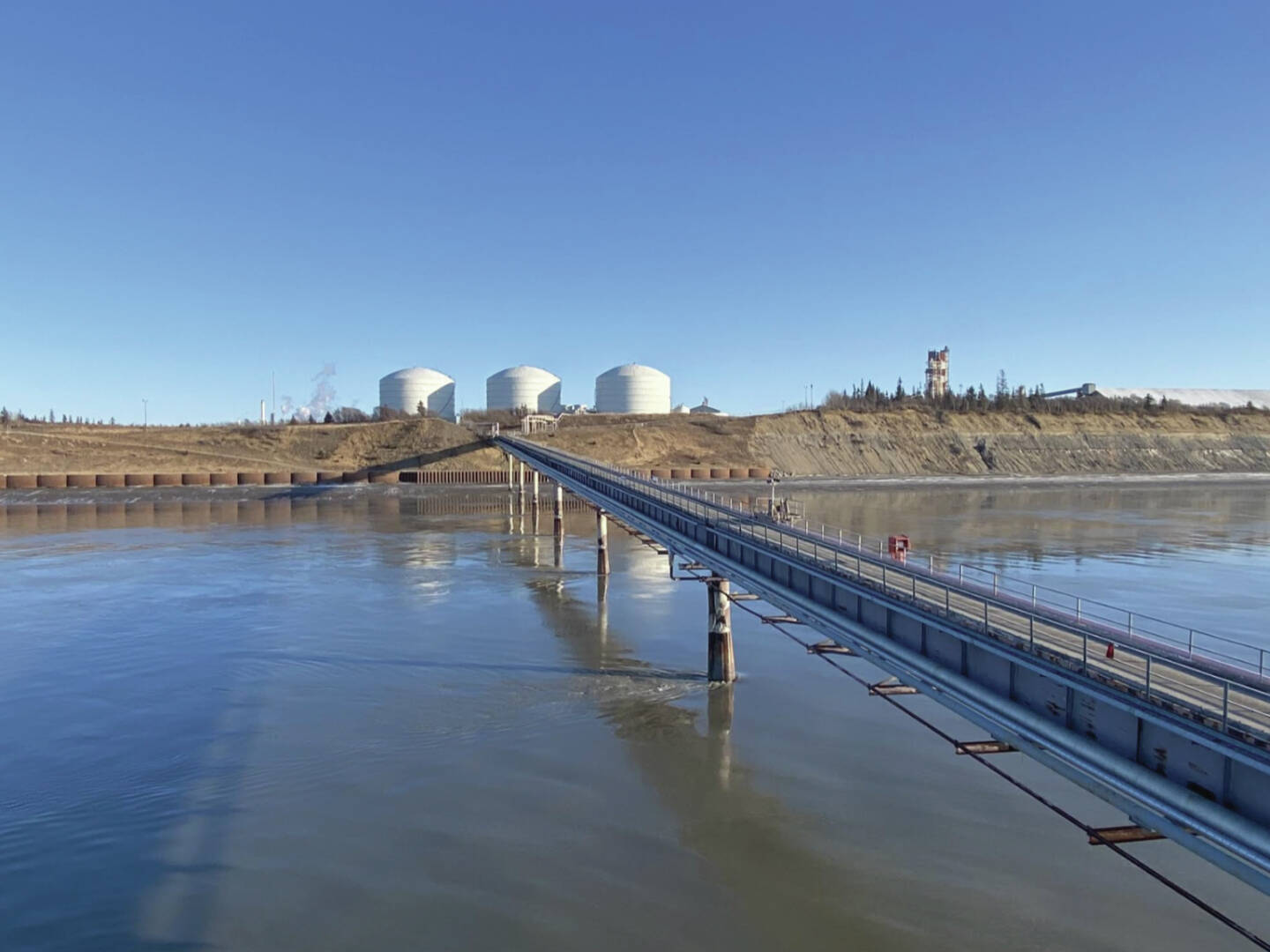
Harvest’s project would repurpose a dormant liquefied natural gas export plant on the Kenai Peninsula so that it can receive cargoes of LNG shipped in from outside Alaska.
The retrofitting plan, according to utility studies and officials involved, could cost $500 million or more, and it has at least one major potential customer lined up: Anchorage’s cooperatively owned electric utility, Chugach Electric Association, which has endorsed the project. Harvest last week announced that it had finalized a deal to buy the plant from its previous owner for an undisclosed sum.
Meanwhile, Enstar, the natural gas utility, is working with another energy company, Glenfarne, on a separate project, also on the Kenai Peninsula.
That project would involve construction of new LNG imports infrastructure and, according to Enstar President John Sims, could also cost hundreds of millions of dollars.
Urban Alaska’s other three electric utilities — one on the Kenai Peninsula, one in the Mat-Su north of Anchorage, and one in Fairbanks — could end up procuring imported gas from either project, though no formal agreements have been announced.
The parallel development efforts represent a significant split among urban Alaska’s utilities — which, according to regulators and watchdogs, also drove up costs for consumers by failing to coordinate when they spent $1.5 billion on new power plants and other infrastructure in recent years.
Sims acknowledged as much, and said he’d welcome intervention from regulators to encourage closer collaboration.
“It’s a mathematical certainty. All the load on the same project reduces the cost,” Sims said in an interview. “This isn’t the only example where utilities can’t work together and it’s cost ratepayers more.”
Chugach, Enstar and the other urban Alaska electric utilities had previously been studying import projects cooperatively in an Enstar-led working group they formed in 2022 in response to the impending gas shortage.
But then, earlier this year, Chugach effectively split off in its partnership with Harvest, according to Sims — who said in an interview that he was “very surprised” and only learned of that separate project when he heard a rumor about it the night before it was announced.
The announcement underscored an already tense relationship between Enstar and Hilcorp, the Harvest affiliate. The two companies had been feuding in court over the terms of an existing, unrelated natural gas supply contract.
Sims has said publicly that his company is not interested in participating in a project that could further consolidate the position of Hilcorp, which is currently urban Alaska’s dominant supplier to utilities of locally produced natural gas.
The Enstar-Glenfarne project, Sims said, would have the advantage of being what’s known as a “greenfield” facility — meaning it’s newly built — in contrast to the existing facilities that Harvest wants to repurpose.
“If you’re going to be spending half a billion dollars, I’d much rather do it on greenfield than something where I don’t know what I’m digging into,” he said.
A spokeswoman for Chugach, the Anchorage electric utility, said that the region’s dependence on Hilcorp is not inherently problematic and that the company has been an “excellent business partner.”
Chugach, said spokeswoman Julie Hasquet, is pursuing the retrofit because of how quickly the project can launch — as soon as 2026, according to Harvest. Chugach’s primary contract for locally produced natural gas ends in 2028, while the Enstar-Glenfarne project isn’t expected to come online until 2029 at the earliest.
“Our plans are not only the most cost-effective and closest to completion but are designed to be flexible, scalable and work with other long-term supply options to continue offering valuable service to Alaskans well into the future,” Harvest’s chief executive, Jason Rebrook, said in a prepared statement.
Sims said he thinks utilities could work together to stretch out scarce gas supplies so that Chugach could wait until the Glenfarne-Enstar project comes online.
No ‘blank check’ for Enstar
Some of Enstar’s customers, meanwhile, are raising concerns about what they describe as an unusual arrangement with Glenfarne that they say shifts risk to consumers.
Enstar, in filings with state utility regulators, said Glenfarne is expected to spend up to $48 million studying the project before making a final decision on whether to build it. If it’s not built, Enstar will still have to reimburse Glenfarne for those costs — and it aims to raise that money by billing its customers.
Residential consumers would see increases to their bills of $15 a month over the course of a year, Enstar said in its preliminary filing with the Regulatory Commission of Alaska in January.
That filing drew sharp objections from some watchdogs and consumers. One lawyer representing a pair of Anchorage commercial real estate firms wrote in a comment that Enstar “seeks to shield its shareholders from any risk associated with exploring the potential construction of a project that may never provide any benefit to ratepayers.”
“Speculative, non-regulated projects that Enstar wants to engage in are an Enstar shareholder and owner issue, not a ratepayer issue,” Robin Brena, a veteran energy lawyer and co-owner of one of the real estate firms, said in a phone interview.
The commission rejected Enstar’s request for preapproval to bill customers up to $48 million to pay Glenfarne, saying in a formal order that it would not give Enstar a “blank check.”
Commissioners did, however, say they would consider allowing Enstar to recover up to $42 million once the money is spent — if the company can show those expenses were reasonable, among other conditions.
A Glenfarne spokesman referred a request for comment to Enstar.
Nathaniel Herz is a freelance reporter who’s spent a decade as a journalist in Alaska, including stints at the Anchorage Daily News and Alaska Public Media. His articles published in the Alaska Beacon first appeared in his newsletter, Northern Journal. This article appeared online at alaskabeacon.com. Alaska Beacon, an affiliate of States Newsroom, is an independent, nonpartisan news organization focused on connecting Alaskans to their state government.
