
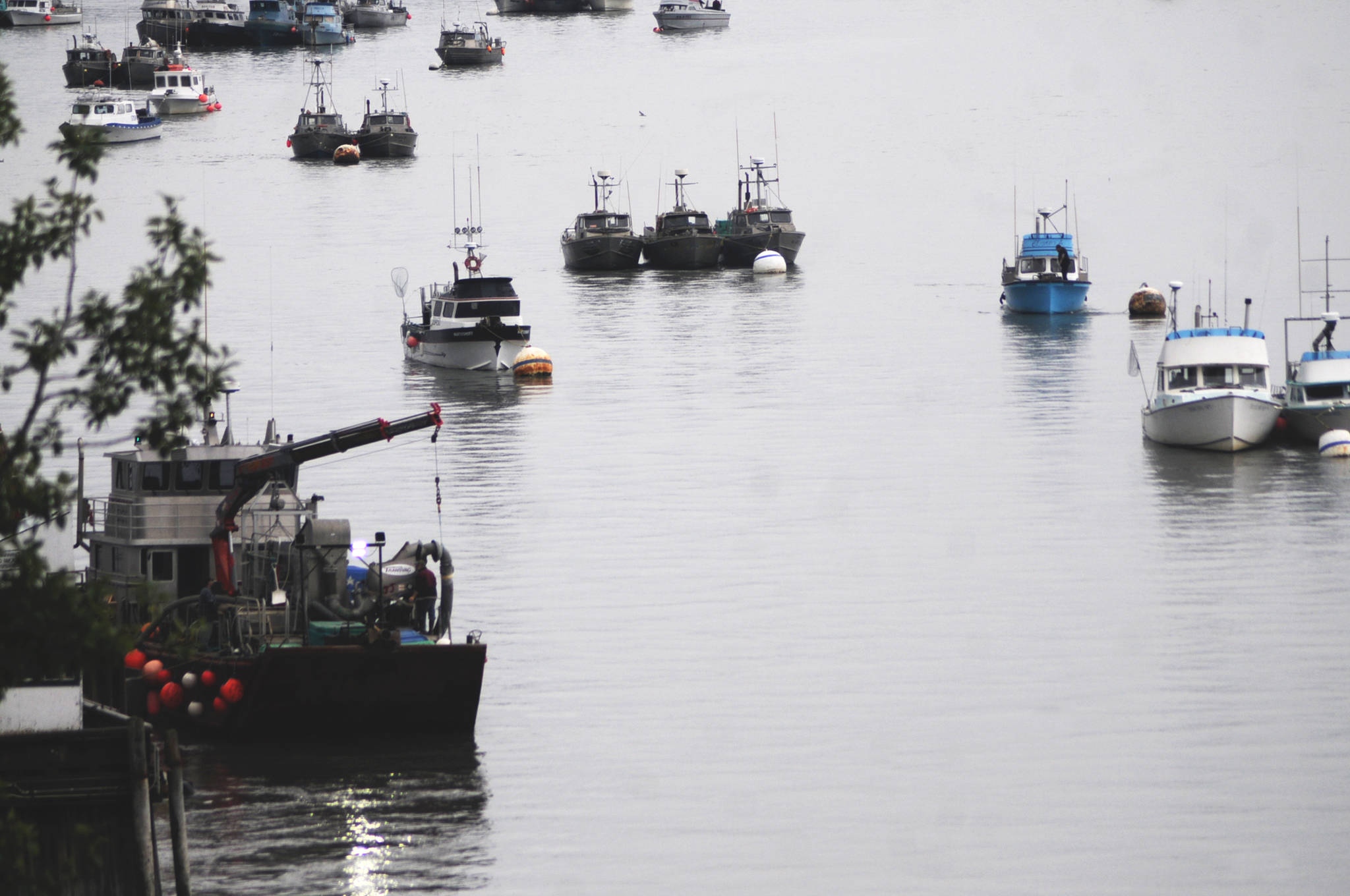
Sockeye salmon were scarcer in Upper Cook Inlet this year, but coho, chum and pink salmon were more plentiful than expected.
Commercial fishermen in Upper Cook Inlet harvested fewer overall salmon this year than average, and made less, according to a season summary released Tuesday by the Alaska Department of Fish and Game. Sockeye harvests were smaller than average, and they showed up late, frontloading the commercial fishery with most of its sockeye catch for the season before July 20.
Fishermen were expecting a slow year, based on the preseason forecast, and the actual harvest was slightly larger than the forecast. Commercial fishermen brought in about 1.8 million sockeye, according to the season summary, compared to the preseason forecast of 1.7 million sockeye.
“The Kenai River run exceeded the forecast by approximately 700,000 sockeye salmon and Fish Creek exceeded the forecast by 4,000 sockeye salmon,” the report states. “The Kasilof River sockeye salmon total run estimate was very close to forecast with approximately 4,000 sockeye salmon less than expected, while the number of sockeye salmon returning to the Susitna River and all other systems (minor systems) was less than forecast.”
The commercial sockeye harvest was the smallest in the last decade, about 18 percent lower than the 2007–2016 average, according to the season summary. Altogether, fishermen harvested about 3 million salmon of all species, about half a million fewer than the recent 10-year average.
Sockeye are the most valuable species on the books for Cook Inlet fishermen — about 93 percent of the value in a typical year is in sockeye salmon. In 2017, it was about 83 percent, or $19.6 million. Average price per pound paid to fishermen fell around $1.86, according to the season summary.
It was a middle-ground price compared to other years and other areas of Alaska — last year, Upper Cook Inlet fishermen received an average of about $1.51 per pound, while they received an average of $2.18 per pound in 2013. The volume was smaller, though, leading to total season exvessel value 21 percent below the recent 10-year average, according to the summary.
“It was a real small harvest expectation,” said commercial fisheries area management biologist Pat Shields. “We exceeded it by a little bit. … It’s not the strongest by any means, but it was a good price that helped the harvest. And the coho run helped — it came in late but pretty good.”
Late run timing left managers puzzling on how to schedule commercial openings. Historical models showed that the Kenai River sockeye run should have been about 40 percent complete by July 20, when managers re-evaluated the run size, but it was still only at about 265,000 fish, though commercial fishermen had harvested about 1.4 million sockeye.
The sockeye run has been late to show up in the rivers before, but the one this year was exceptionally late, Shields said. Final calculations are still in the works, but he estimated it was between four and seven days late, which made it hard for managers to decide whether to open up commercial fishing with the expectation the fish would show up or close commercial fishing on the off chance the fish didn’t show up at all. This year, they erred on the side of caution and closed the fishery twice to boost passage.
“(Managers are) really nervous about taking that late of a run timing prediction in the middle of the season and believing it,” Shields said. “We knew it was going to be late. … It caught us off guard, both sockeye and coho, and we took restrictions on the commercial fishery.”
After those closures, the sockeye showed up in force, and managers exceeded their escapement goals on the Kenai and Kasilof rivers and on Fish Creek at the end of the season. None of the margins over the goals were wide, but it was frustrating for the managers and for the fishermen who were restricted from fishing in season, Shields said.
“There always is that aspect of management — you always are betting on the come,” he said. “But when you get so far into the run and you get midway through the run and you find yourself significantly short, you’re kind of forced into taking some action. And we took some action.”
The larger than normal harvest of chum, coho and pinks was odd, especially given that pinks are usually scarcer in odd years in Upper Cook Inlet — a two-year fish, pinks tend to be plentiful in even-numbered years in the area and scarcer in odd-numbered years. Coho were late to arrive in many of the streams, especially the streams in the Matanuska-Susitna Valley, but they arrived in very large numbers compared to previous years. Given that harvests were above normal even with the commercial fishing restrictions, the numbers would have likely been even higher if sockeye had been plentiful enough to keep the fishery open, Shields said.
“It’s an ironic year in that the sockeye was a fairly small run, and yet the odd year pinks, the chum and the coho (are high),” he said. “And even locally, with the chinook, we met or exceeded most of those goals.”
While Upper Cook Inlet experienced a slow year, most of the state had a strong year. A preliminary harvest and value summary from Fish and Game released Tuesday shows a total statewide value of $678.8 million, an approximately 66.7 percent increase from the 2016 season. Most of that value comes from a record-breaking sockeye harvest in Bristol Bay this season, with 37.7 million sockeye harvested. Norton Sound saw a record harvest of coho and Chignik and the Alaska Peninsula set new records for wild pink harvests. The total value is still preliminary and is coming off a year later designated as a disaster for pink salmon, when harvests were less than half the forecast, and when sockeye harvests were very low in Cook Inlet.
Reach Elizabeth Earl at elizabeth.earl@peninsulaclarion.com.
