
Editor’s note: A caption to a photo with this story has been updated to note that students were using a small dose of saline with their injections.
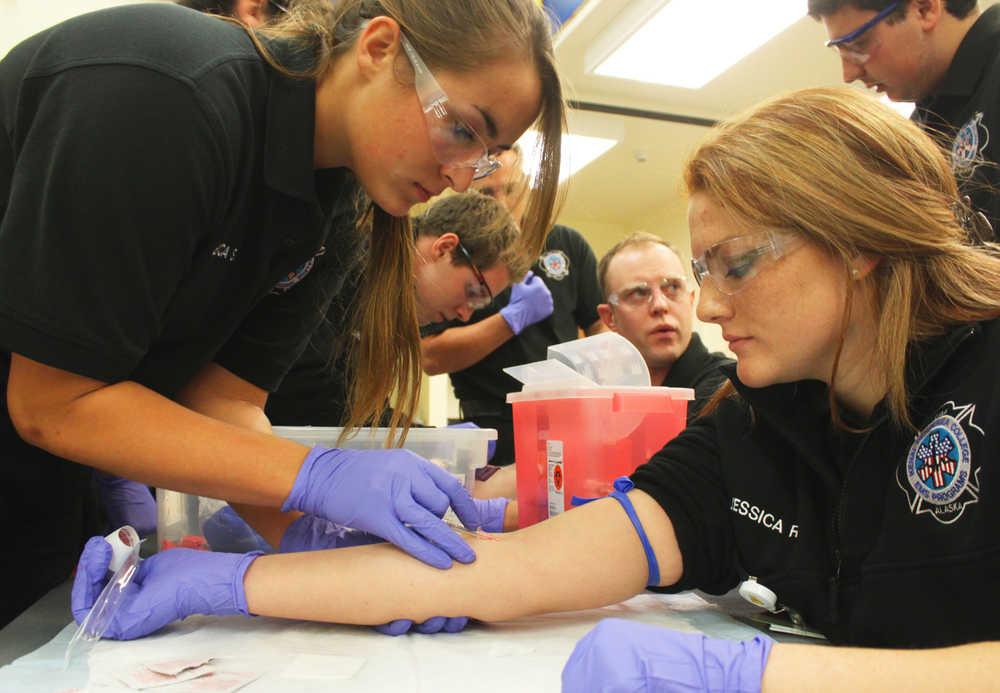
Straight-faced, Luke Michael casually congratulated Darren Finley on successfully inserting an intravenous catheter into his forearm as blood poured from his vein. Finley mumbled a “thank you” and then began to self-critique his first attempt.
Michael and Finley are Kenai Peninsula College Paramedic Program students, who practiced intramuscular, intravenous and subcutaneous injections for the first time on willing and able patients — their classmates.
“A few have passed out over the years,” Assistant Professor of Paramedic Technology Paul Perry said. “If they practice on each other it makes them much better clinicians. It teaches them to be a little bit gentler. By the end of the program they will have practiced at least 250 injections.”
This fall, nine students are in the 10th class to go through KPC’s Emergency Medical Services program since its conception 10 years ago, said Perry. By the end of the program, they will join 73 alumni who have graduated the nationally accredited program, he said.
KPC’s program has a 91 percent graduation rate, while the national average is 64 percent, Perry said. Upon completing the required capstone internship, which is usually done out of state, virtually all walk away with job offers, he said.
A college program that offers an associate degree in Paramedic Technology is almost unheard of. It makes them more marketable than if they had gone through a certificate program, and it ensures his graduates are “top shelf.”
If a student’s academic standing drops below an 80 percent average they are dropped from the program and have to start over, Perry said. They are tested weekly on what they learn.
“They learn so much on a consistent basis,” Advancement Program Manager Suzie Kendrick said. “They will constantly be called on it. They have to be confident in what they are doing.”
After nine years of working in a small second-level classroom, the program has moved into a high-tech space on the first floor, Perry said.
Simulation labs that can be designed to model households or businesses contain $100,000 life-like SimMan mannequins. Practice rooms contain materials for anything required for Emergency Medical Technicians 1-3, and the classroom has the ability for international teleconferencing.
And the plan is to keep expanding, Paramedic Program Clinical Coordinator Tiffani Perry said. The next addition will be a life-size simulator that models exactly the set up of the back of an ambulance, she said.
For the first year of the program, students are learning the basics such as writing incident reports, learning algebra, health and pharmacology, Perry said. In the second year they start to practice in labs and simulations.
“Students must be EMT 1 and have completed a full year of anatomy and physiology before I will even look at their application,” Perry said.
The new class is in the simulators within the first two weeks of the school year, and come to class in program uniforms — black polo shirts and cargo pants, Perry said. The students are immediately divided into three squads that rarely change, and often become like family, he said.
Communication skills are taught so students know how to work with the rest of a care team such as doctors, nurses and fire fighters, and how to be empathetic to their patients, Perry said.
Students end their degree with a 480-hour ride along internship, Perry said. Many favorite sites are with partner programs in Georgia, Texas, Oregon or New York, he said.
“It is a three-prong process,” Kendrick said. “It is pretty radical.”
Perry said he wants to teach paramedics that he would feel safe taking care of his own family.
The reason the program is so successful is the instructors, administration and the paramedics coming out of this department are quality, Perry said. They know they are in entering a career in public service.
KPC opens the lab to other emergency service programs such as the Nikiski and Kenai fire departments, and Central Emergency Services, Perry said. The EMS program maintains strong local partnerships, and is able to take his students to hospitals where they are able to gain real-life experience in the field.
“We have so much and it is such a blessing to have it,” Perry said. “The community needs to see that this program is really special.”
Reach Kelly Sullivan at kelly.sullivan@peninsulaclarion.com.
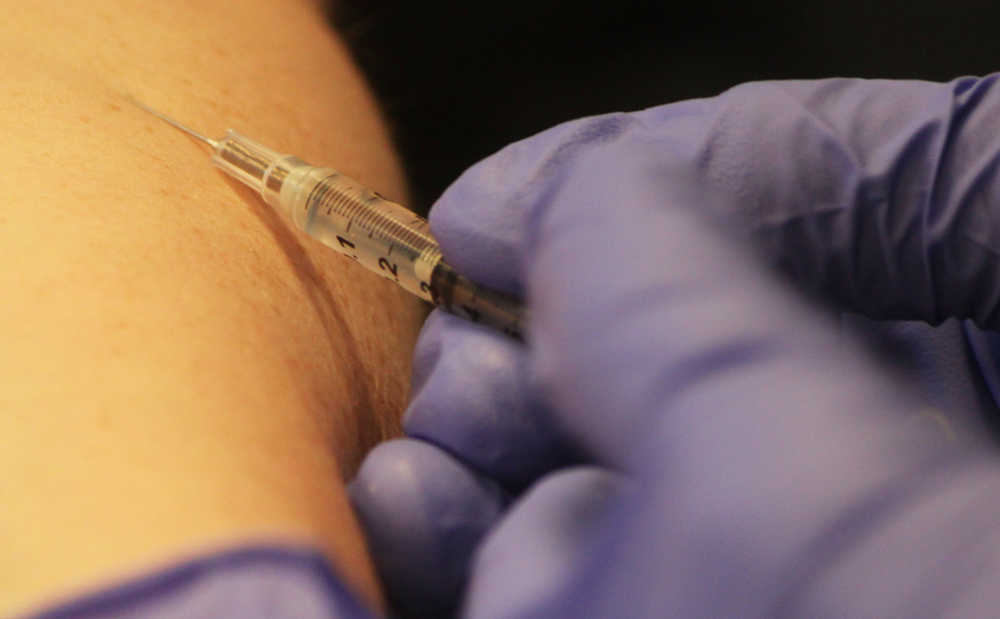
Photo by Kelly Sullivan/ Peninsula Clarion Becca Satathite practices intravenous injections on classmate Jessica Roper, Monday, September 29, 2014, at the Kenai Peninsula College in Soldotna, Alaska.
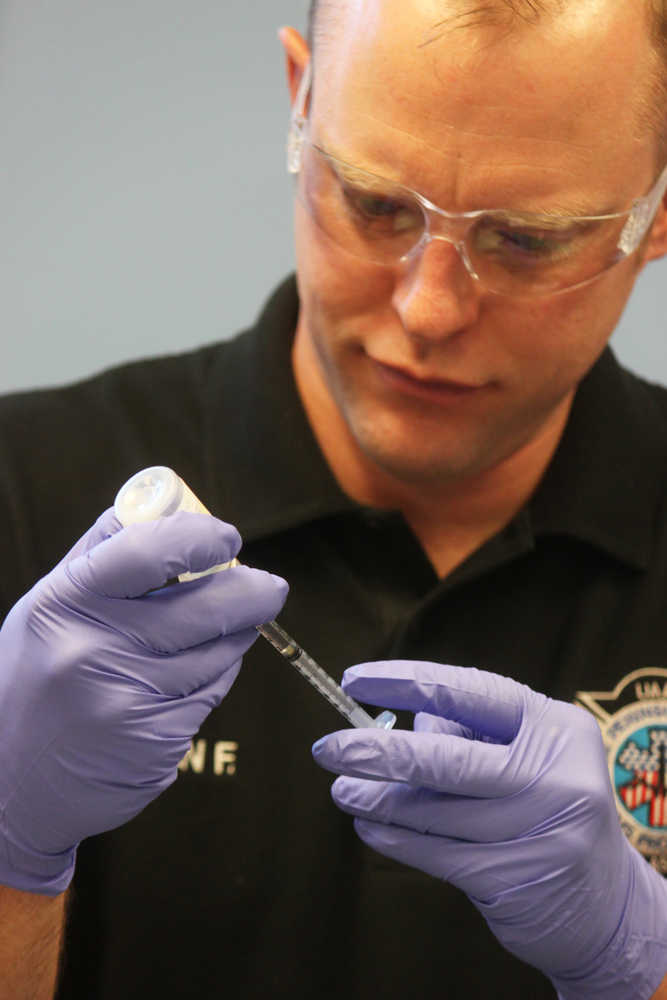
Photo by Kelly Sullivan/ Peninsula Clarion Darren Finley fills a needle with a small dose of insulin before he practices injecting himself in the stomach, Monday, September 29, 2014, at the Kenai Peninsula College in Soldotna, Alaska.
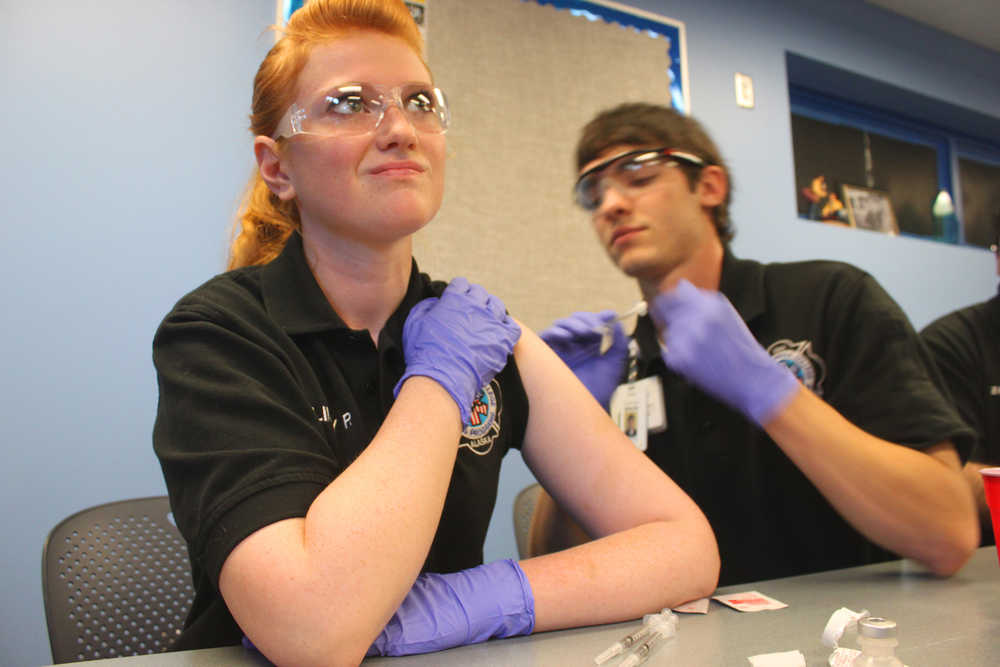
Photo by Kelly Sullivan/ Peninsula Clarion Lindey Pabst looks away as classmate Brooks Simmons practices an intramuscular injection on her, Monday, September 29, 2014, at the Kenai Peninsula College in Soldotna, Alaska.
