
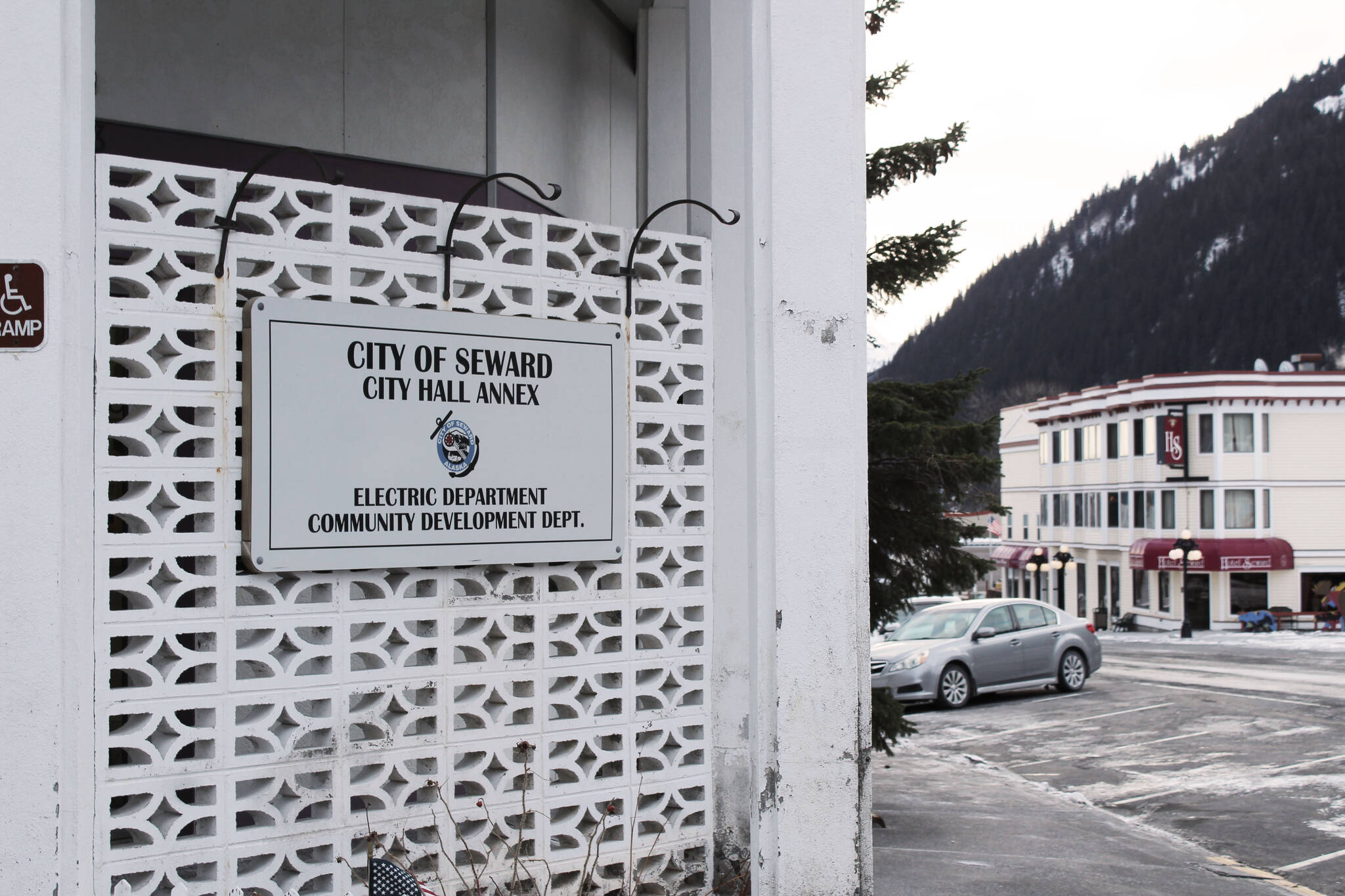
Seward-area residents interested in serving on a newly formed city committee that will help plan the future of the city’s electric utility will have two more weeks to submit applications following a vote in favor of the extension by Seward City Council members during their Monday night meeting.
Council members voted during their June 12 meeting to direct the city to set up a temporary, seven-member committee to look at the current problems with and the potential future of the city’s electric utility. Four of the members must live inside city limits, and three may live outside the city but within city service areas, such as in Moose Pass or Lowell Point.
The group voted to extend the application deadline after just three people applied to serve on the committee prior to the council’s June 23 deadline. An additional four applications came in after the deadline. When assembled, committee members will be tasked with evaluating the status of Seward’s electric utility.
Creation of the committee came roughly five weeks after city residents narrowly voted to kill a sale of the city utility to Homer Electric Association. Although a majority of voters — 58% — supported the sale, votes in favor did not meet the 60% threshold needed to move the sale forward. The sale ultimately came down to just seven votes.
In opting to move forward with an ad hoc committee, council members said it will give a group of people not necessarily affiliated with the electric utility a chance to review what is at stake for the city.
City council members would need to decide by their first meeting in August whether or not to put the same sale back before city voters during the city’s regular election in October. Even when that decision has been made, council members said the committee can continue to review information until election day.
Some council members said during the group’s June 12 meeting, though, that even if the city puts a sale before voters again, it is clear that the city needs to work on its electric utility in the meantime and in the event that the sale fails again.
“We need to accept the fact that we need to have a plan for rebuilding our utility and taking care of it in this moment, and not just have our eye on the slice of pie that we didn’t one time and now we want to get again,” said council member Liz DeMoss.
Council member Randy Wells agreed, adding that he’d like to see the city put together a cost estimate for rebuilding the city utility — including rate hikes, pay raises and new staff — for voters to consider.
“There’s no reason why we can’t work on (rebuilding the utility) and educate ourselves and educate the public, which would be best before the public was to go and vote again,” Wells said.
Those comments came on the heels of a presentation from Seward Electric Utility General Manager Rob Montgomery, who told council members at their June 12 meeting that cybersecurity, rate stability and a lack of expertise are going to be challenges for the city moving forward.
Further, Montgomery said he expects rate increases for Seward Electric customers this year, to be determined via a rate study, will be “fairly significant.”
“With nearly 25 years of experience in the electric utility industry, interacting with industry professionals and experts from trade associations and utilities of all sizes, I have developed a good understanding of the expertise and resources it takes to effectively operate an electric utility,” Montgomery said. “One thing I know for certain: Seward’s electric utility is not built to effectively operate in today’s rapidly changing industry. Seward simply lacks the resources, expertise and financial resources to be successful.”
Montgomery presented to the council four paths forward for the city’s utility.
First, the city could do nothing and maintain its status quo. By doing nothing, the city will continue to struggle when it comes to paying for maintenance and capital projects, and utility customers will see rates go up. Because Seward has a small revenue base — about 2,900 meters — customers end up paying a higher proportion of rate increases. That’s as compared to large utilities that can apply smaller increases to many customers.
The city could also work to rebuild the existing utility, which would involve increasing the number of department staff and making existing nonunion staff salaries more competitive. Doing so would be expensive, Montgomery said, and any efforts to bring in more staff could be met with ongoing housing problems in Seward.
The additional positions needed would be an additional lineman, a railbelt position, a business operations manager, a customer relations and communications employee and an information technology position, which Montgomery said could be outsourced. Increasing the department’s nonunion salaries would cost the city about $850,000 in order to be competitive.
The third option presented to council members was outsourcing the services provided by Seward Electric to another utility or firm. This option, Montgomery said, could also be expensive and impact union contracts, slap the city with new regulatory restrictions and take months to implement. What outsourcing would cost the city and how it would impact rates, he said, is not known.
The last option would be to put another utility sale on the ballot for consideration by Seward voters. Montgomery told council members on June 12 that, in the case of Seward’s electric utility, there is nothing in state statute or the city charter that would preclude the city legally from putting a similar question on the ballot.
“Homer (Electric Association) said that at that point in time if we get to a point where the City of Seward looks again at potentially selling that they still wanted to be a part of that process,” Montgomery said. “And I’ve heard the same thing from Chugach (Electric Association) as well.”
In reviewing the various options, Montgomery said he favored rebuilding the utility or putting a sale back on the ballot.
“If you look at option two, which is rebuild the utility, or option four, which is to revisit the selling of the utility, I think those are the two most viable options,” Montgomery said. “We can’t stay where we are.”
Seward City Council meetings can be streamed on the city’s YouTube channel.
Reach reporter Ashlyn O’Hara at ashlyn.ohara@peninsulaclarion.com.
