

King salmon were in the spotlight last month at the annual Kenai Classic Roundtable, which centered on the decline of the species in the Kenai River and across the state.
The event, hosted by the Kenai River Sportfishing Association, took place Aug. 20 in the Soldotna Field House.
In the first of three panels, Alaska Fish and Game Commissioner Doug Vincent-Lang facilitated a conversation on the state of the Alaska king salmon. Chief fishery scientist Bill Templin drove a conversation in a second panel on how hatchery salmon impact and interact with wild salmon. Additionally, during a third panel, a group of local, state and federal lawmakers discussed legislation and regulation of the species.
State-managed fisheries
Among the drivers in Alaska’s effort to attain statehood in the 20th century, Vincent-Lang said, was management of its salmon fisheries. Under state management, runs of salmon that were decimated decades ago have been restored. Vincent-Lang said the State Department of Fish and Game and State Board of Fisheries work together to manage sustainable and vibrant fisheries across the state.
“We are doing the right things,” he said. “That’s not to say every one of our fisheries is meeting every one of its escapement goals, but we are much better off having a state-managed fishery than we are having a federally managed fishery moving forward.”
King salmon provide a unique management challenge, Vincent-Lang said, because they have such a long lifespan — months in the riverbed, a year or two in fresh water as juveniles, then up to six years in the ocean before returning home to the river. Each of those life stages has its own susceptibility to environmental impacts.
The department is exploring multiple questions about how shifts in local waters and the ocean are impacting the species. Vincent-Lang pointed to predation from rising rainbow trout and seal populations, increasing temperatures, disease, competition with hatchery fish and impact to riverbanks from fishers or floods.
King salmon aren’t at risk of extinction, Vincent-Lang said in reference to an effort out of the Lower 48 to get Gulf of Alaska king salmon listed under the Endangered Species Act. A failure to meet escapement goals, as has been observed in the Kenai River, means that the stock is not meeting department goals for maximum yield of fish. Vincent-Lang noted that across the state, kings are beginning to reach goals that have not been achieved in years — like Kenai River late-run king salmon narrowly clearing the lower bound of their escapement goal this year after being listed as a stock of management concern in 2023.
“That should be applauded,” he said. “Our management is working to rebuild this run.”
Understanding complex connections
Questions remain about what caused and is causing salmon declines, but Vincent-Lang said “we know it’s not bycatch.” Many in recent years have pointed to incidental catch and harvest of king salmon in federally managed trawl fisheries south of Alaska waters. The commissioner said the math doesn’t add up. Reported chum salmon bycatch is counted in tens of thousands, he said, while the department projected hundreds of thousands more fish than arrived this year. More studies are being conducted to fill in the blanks.
When hatchery managers discussed the potential interactions between hatchery and wild salmon, Templin said that “competition does occur,” but that’s a normal element of any healthy ecosystem. It’s not possible, he said, to look at competition as the discrete relationship between two species like hatchery and wild salmon. The ocean is too big — the whole ecological system cannot be understood.
That isn’t to say that work isn’t being done to fill in blanks related to how hatchery and wild salmon interact. Templin cited information from 2022 that suggests that hatchery and wild salmon aren’t necessarily in the same place at the same time eating the same food, making a competitive impact less likely. He also pointed to data indicating that hatchery production is lower today than it was in 1990.
The ocean, panel moderator Craig Medred said, is “the jungle.” There are a lot of questions to ask, and little definitive that can be said.
While abundance remains low, Vincent-Lang said the department will continue to implement reductions on harvest by closing fisheries or limiting opportunity — “that’s the only thing we can control very easily.”
“Nothing is harder in my job than to reduce opportunity for people to go out and go fish, but sometimes it’s necessary to ensure sustainability.”
‘Who gets how much’
That topic, of necessary restrictions on local fisheries, dominated the final panel of the roundtable — where U.S. Rep. Nick Begich III, Kenai Peninsula Borough Mayor Peter Micciche and Alaska Board of Fisheries Chair Märit Carlson-Van Dort gathered to discuss legislation and regulation.
Carlson-Van Dort said the role of the board of fish is allocation — “It’s deciding who gets how much.” Those conversations get “spicy,” she said, because most Alaska fisheries are wholly allocated and the board is left to “carve up that pie.”
Micciche pushed back on that definition, saying that the overescapement by millions of sockeye salmon in local rivers this year means commerce to the borough and its residents is lost. He said that the millions in lost revenue to local commercial anglers is a contributor to outmigration. He said he wants to see more done to balance conservation of fish with “flexibility for maximum value on years like these and adequate value on years with lower returns.”
“I’m not going to do the science thing on this excess escapement because I don’t know,” Micciche said. “We’re putting four and a half million fish into a river; we’re going to learn about it first hand here in the next four or five years. Whatever goes up the river is lost to commerce and out the door. We know we’re above that point where it’s painful for Southcentral to lose that level of commerce. We’ve got to find a better way.”
Carlson-Van Dort said the board will always manage to protect the weaker stock of salmon. Selective gear, like the board considered and rejected earlier this year, “starts to address some of those issues.”
Begich said he’d advocate for removing federal management from the waters of Cook Inlet, though he said it’s not Congress’ “top priority.”
A full recording of the roundtable, including all three panels and opening and closing remarks by KRSA Executive Director Shannon Martin and U.S. Sens. Dan Sullivan and Lisa Murkowski, can be found at “Kenai River Sportfishing” on YouTube.
Reach reporter Jake Dye at jacob.dye@peninsulaclarion.com.
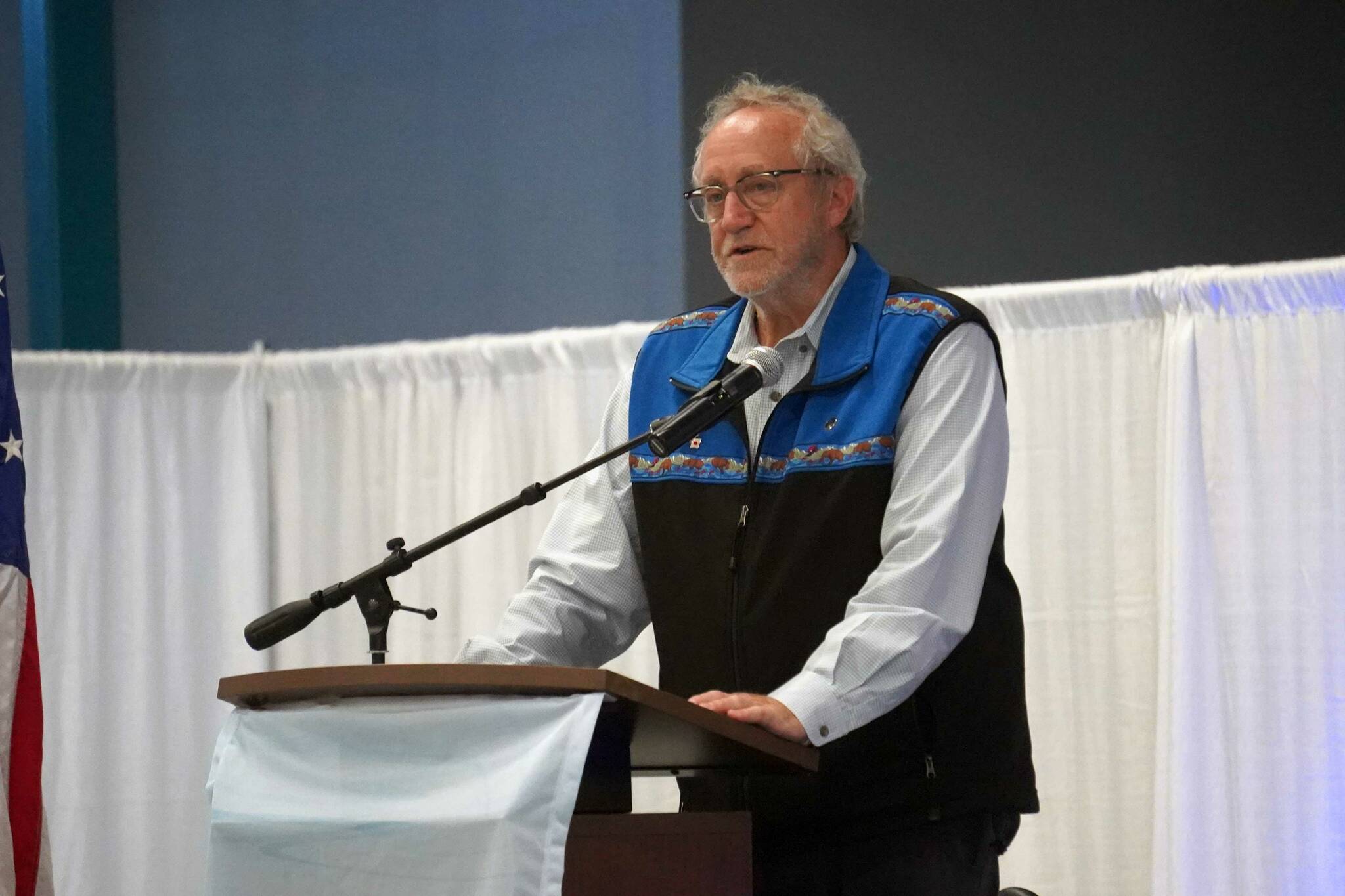
Alaska Department of Fish and Game Commissioner Doug Vincent-Lang speaks during the Kenai Classic Roundtable hosted by the Kenai River Sportfishing Association on Aug. 20, 2025, at the Soldotna Field House in Soldotna, Alaska. (Jake Dye/Peninsula Clarion)
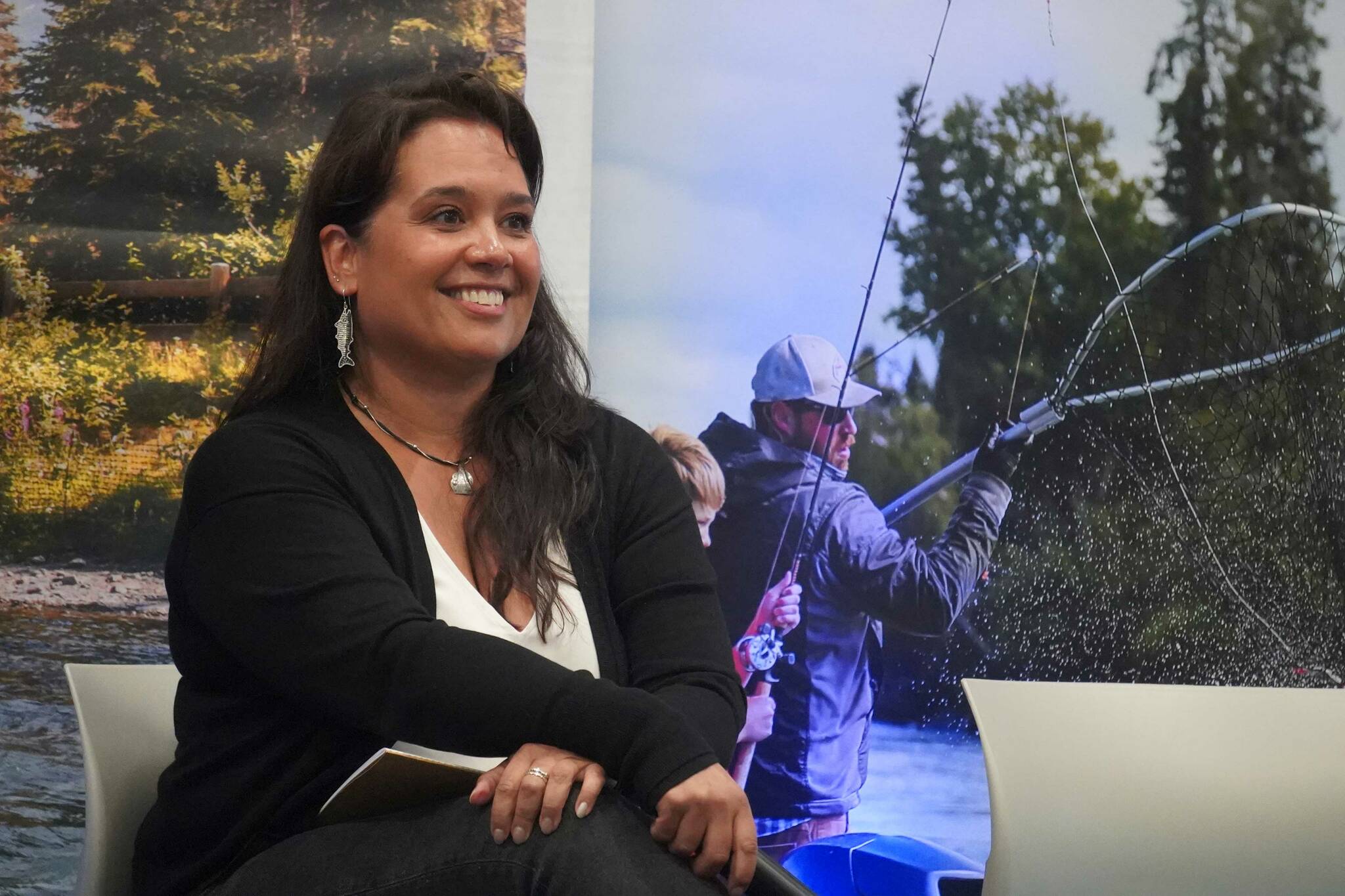
Alaska Board of Fisheries Chair Märit Carlson-Van Dort participates in a panel on Alaska king salmon legislation and regulation during the Kenai Classic Roundtable hosted by the Kenai River Sportfishing Association at the Soldotna Field House on Aug. 20, 2025, in Soldotna, Alaska. (Jake Dye/Peninsula Clarion)
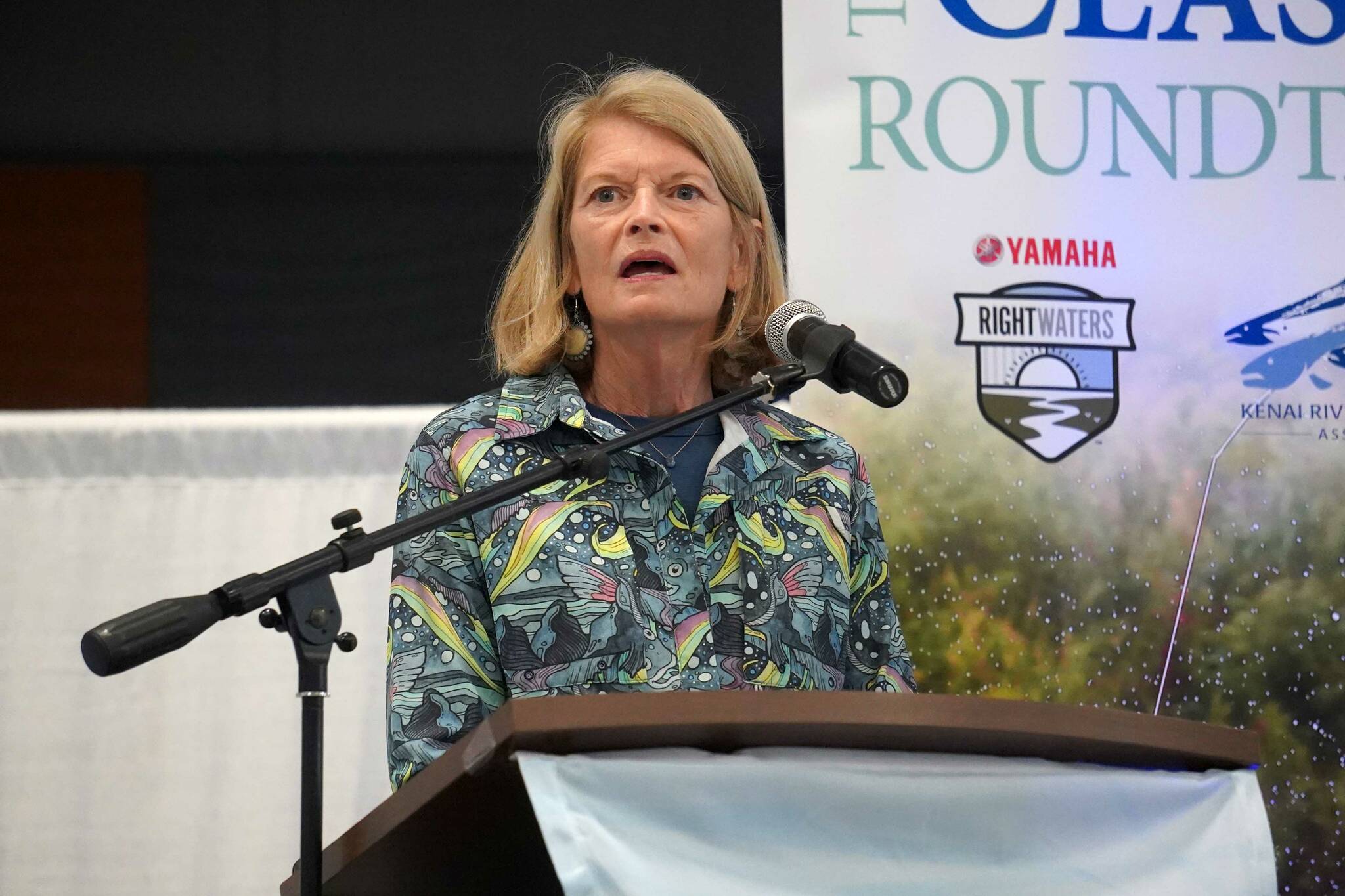
U.S. Sen. Lisa Murkowski speaks during the Kenai Classic Roundtable hosted by the Kenai River Sportfishing Association at the Soldotna Field House on Aug. 20, 2025, in Soldotna, Alaska. (Jake Dye/Peninsula Clarion)
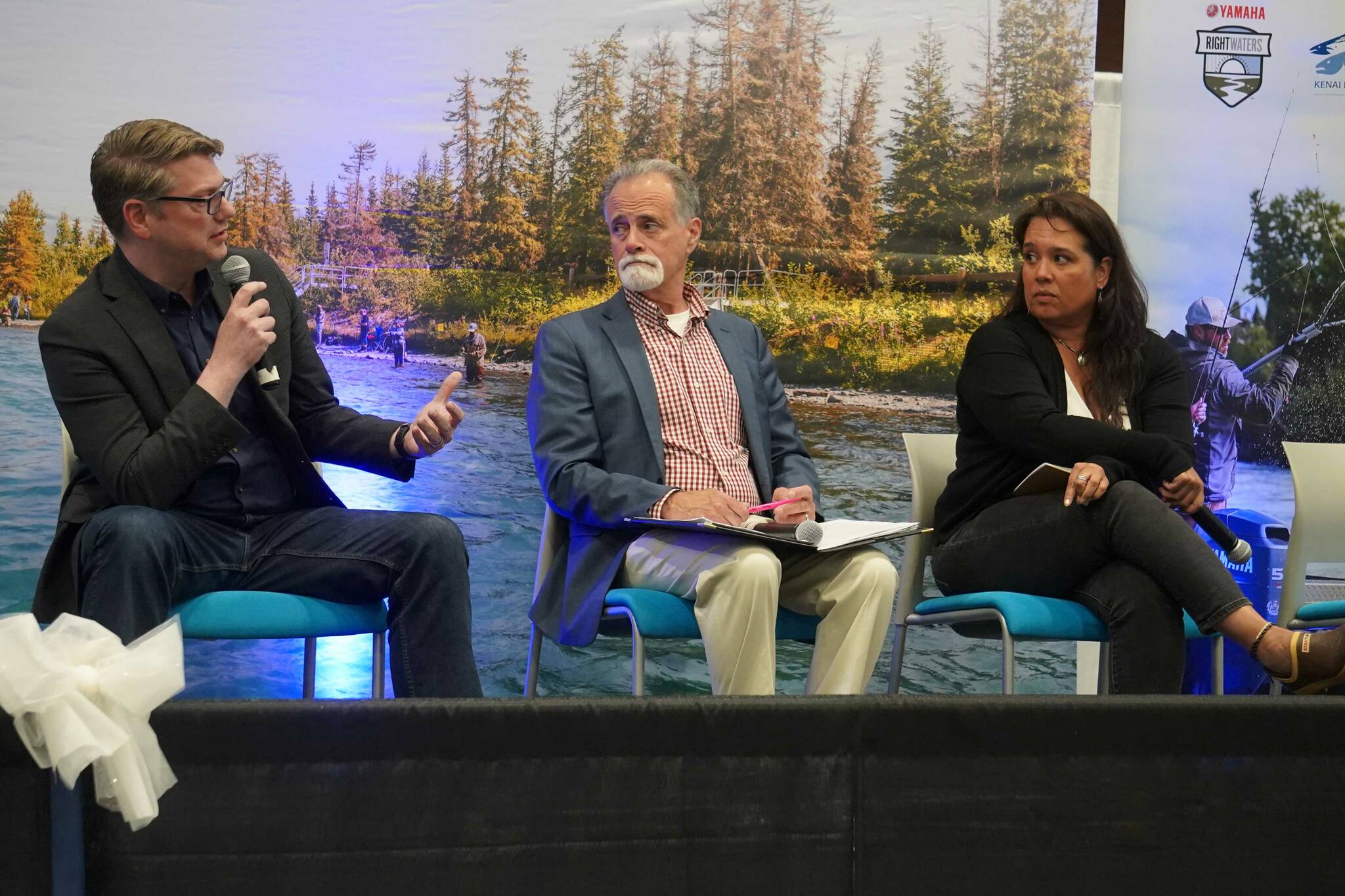
U.S. Rep. Nick Begich III, Kenai Peninsula Borough Mayor Peter Micciche and Alaska Board of Fisheries Chair Märit Carlson-Van Dort participate in a panel on Alaska king salmon legislation and regulation during the Kenai Classic Roundtable hosted by the Kenai River Sportfishing Association at the Soldotna Field House on Aug. 20, 2025, in Soldotna, Alaska. (Jake Dye/Peninsula Clarion)
