
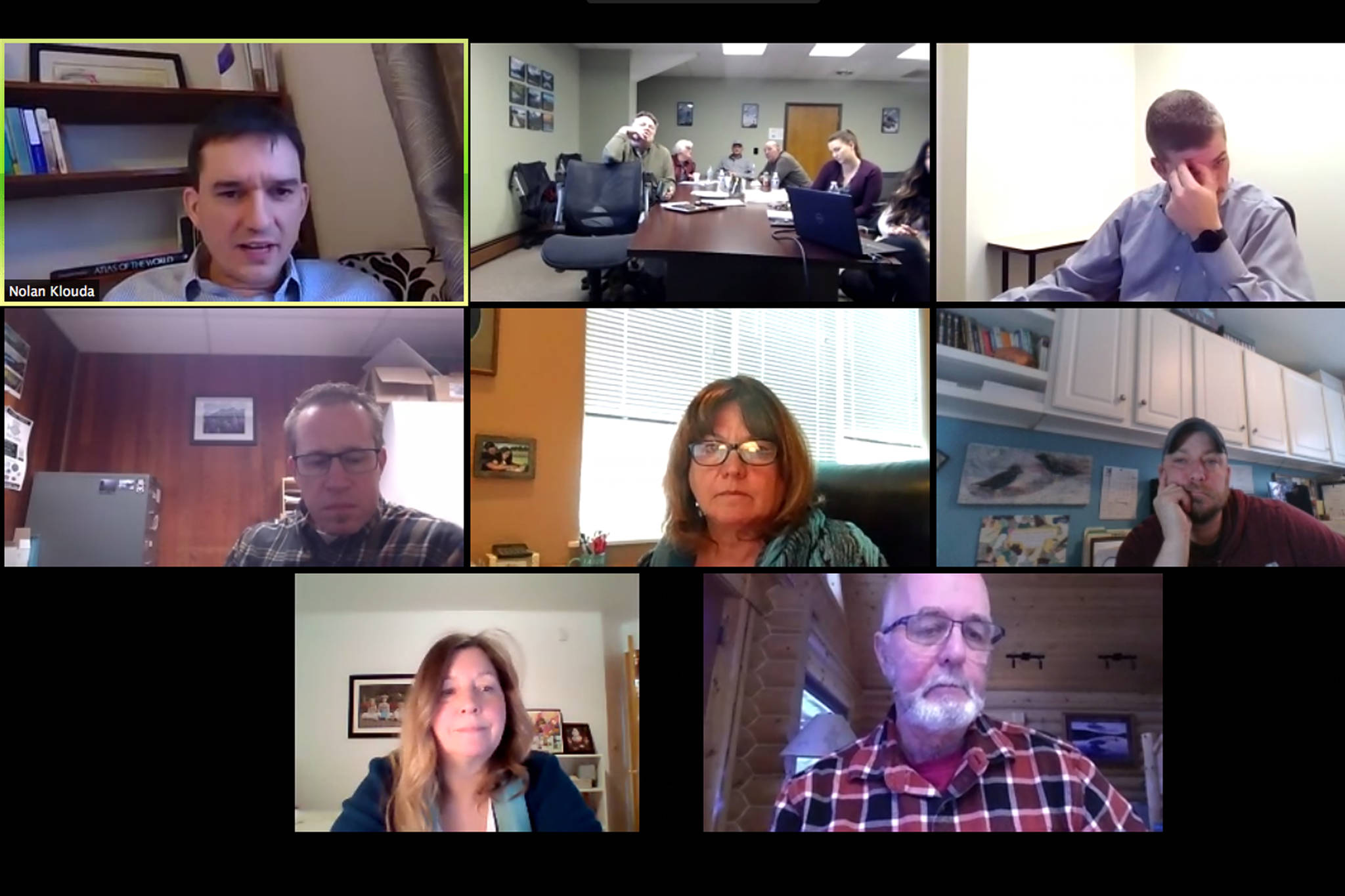
It will likely take years for Alaska’s economy to fully recover from the effects of the COVID-19 pandemic, but the Kenai Peninsula may fare better than the rest of the state. That’s what researchers from the University of Alaska Anchorage predicted Wednesday during a virtual forum hosted by the Kenai Peninsula Economic Development District.
Nolan Klouda, who is the executive director of UAA’s Center for Economic Development, said repeatedly during the forum Wednesday that the diversity of the Kenai Peninsula’s economy compared with other regions in the state is one of its biggest strengths when it comes to bouncing back from the immense job loss that took place in 2020.
“The Kenai Peninsula has a strong commercial fishing industry, but it’s not Bristol Bay, which is almost entirely dependent on that,” Klouda said. “It has a strong oil and gas industry, but it’s not the North Slope. It has a strong tourism sector, but it’s not the Southeast.”
Alaska’s Department of Labor divides the state into six distinct economic regions in order to localize some of the statewide data on employment numbers. For DOL purposes, the Kenai Peninsula is part of the Gulf Coast region along with the Kodiak Island Borough and the Valdez-Cordova Census Area. Klouda said that the Kenai Peninsula accounts for about three-quarters of the population of the entire Gulf Coast region.
The Gulf Coast region only lost about 5% of the total number of jobs available during the past year, which is better than the statewide average of 7% job loss and significantly better than the Northern economic region — which includes the North Slope oil fields and suffered a 16% job loss.
Almost every industry on the Kenai Peninsula experienced job loss in 2020, with the exception of the “retail trade” and “other services” industries, which each saw 100 new jobs created in the Gulf Coast region. Klouda said that the new retail jobs likely came from big-box grocery chains, like Walmart and Safeway, rather than smaller establishments.
Leisure and hospitality jobs took the biggest hit locally, with about 600 jobs lost in that sector this year.
Part of the challenge Alaska faces in rebuilding its economy comes from the fact that the pandemic didn’t create new problems, but exacerbated ones that already existed, Klouda said.
From September 2015 to September 2018, for example, the State of Alaska saw a slow, steady decline in job numbers for an overall loss of 12,600 jobs during that time period. Job numbers began to increase slightly after that, and Alaska gained 2,040 jobs from October 2018 to October 2019. While the numbers started to trend upward, it was not enough to make up for the job losses in the previous years. At the rate of growth seen in 2019, it would have taken about seven years for Alaska to return to the job numbers seen before 2015, Klouda said in his presentation.
Then the pandemic hit Alaska in March of 2020, and the rate of job loss grew exponentially. Alaska lost 23,500 jobs between November 2019 and November 2020, with most of that loss occurring in the first few months of the pandemic. Monthly job loss has slowed in recent months, but the number of new unemployment insurance claims recorded each week is still about four times higher than normal. About 4,000 new unemployment insurance claims were recorded in Alaska last week, Klouda said, and at the peak of the pandemic Alaska was recording about 14,000 new unemployment claims in a given week.
The latest forecast from UAA’s Institute for Social and Economic Research shows a slow but steady increase in annual average employment for at least the next two years, but Klouda said that a “full recovery” is not expected for several years and is heavily dependent on external forces. Oil and gas prices, the return of out-of-state tourists, and actions by the U.S. Congress will all be major factors in the state’s economic future.
Reach reporter Brian Mazurek at bmazurek@peninsulaclarion.com.
