
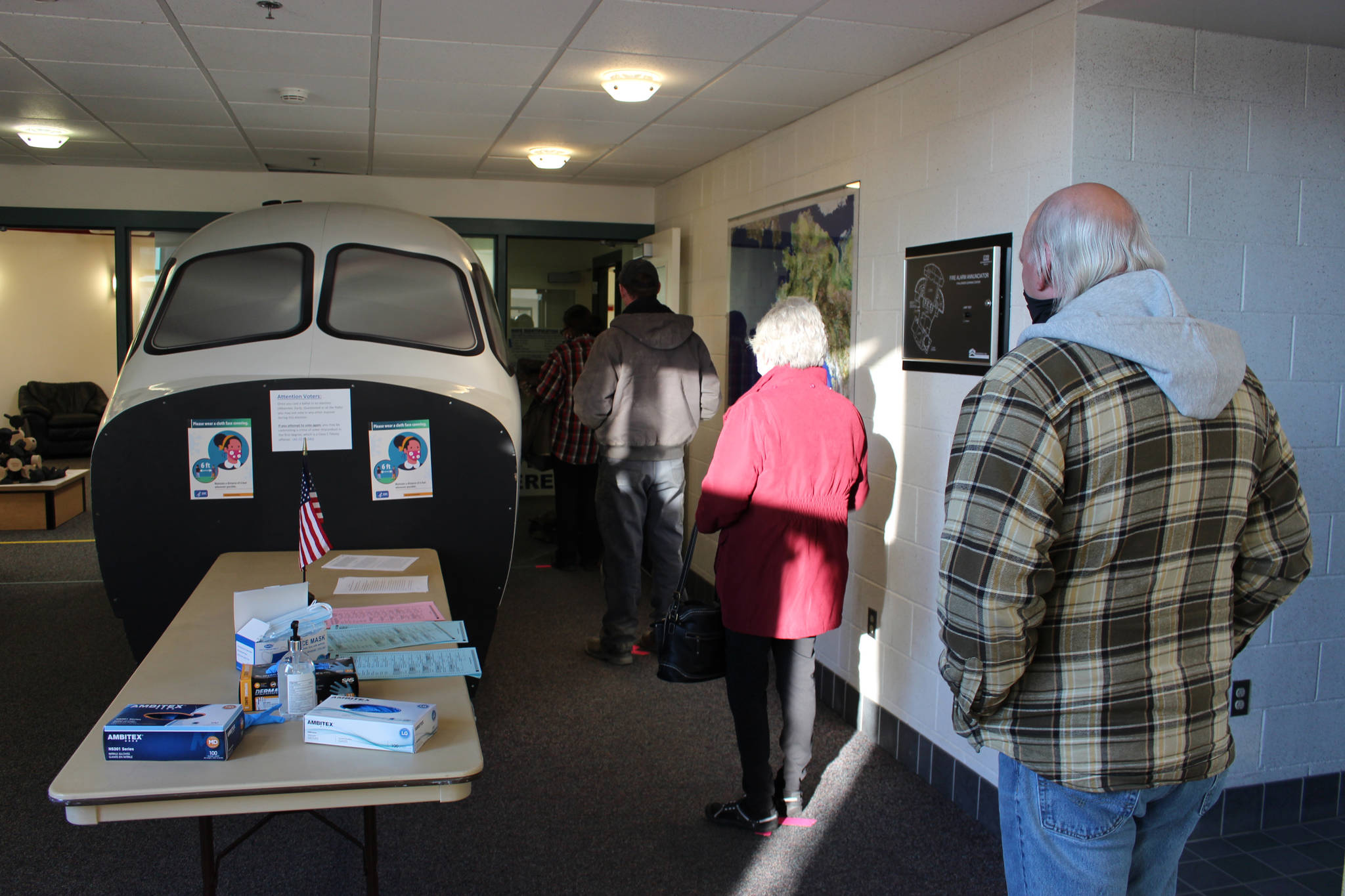
Republicans came out strong in early results on election night in Alaska, both statewide and locally.
The first peninsula votes showed Republican Ben Carpenter leading in the race for the State House District 29 seat with 74.94% of the vote and Republican Ron Gillham leading in the race for the State House District 30 seat with 66.56% of the vote.
District 29 includes Nikiski, Seward, Hope and Sterling. District 30 includes Kenai and Soldotna.
Preliminary tallies also showed the southern peninsula’s Rep. Sarah Vance, R-Homer, and Sen. Gary Stevens, R-Kodiak, leading in their respective races for reelection. Vance leads challenger Kelly Cooper 72% to 27%, while Stevens leads Alaska Independence Party candidate Greg Madden 64% to 35%.
At the statewide level, Sen. Dan Sullivan is leading Dr. Al Gross, Rep. Don Young is ahead of challenger Alyse Galvin, and Alaskans are favoring President Donald Trump over Joe Biden.
Also on Alaska’s ballot were two initiatives, one that would raise taxes on oil and gas production and another that would implement ranked-choice voting and open primaries in statewide elections.
Early results showed voters rejecting the oil tax Ballot Measure 1, also known as the Fair Share Act, with 36.28% of the voters in support and 63.72% against. Voters also had so far rejected Ballot Measure 2, which would reform statewide primaries, with 44.24% in support and 55.76% against.
Even with the polls closed and some election day ballots tallied, Alaskans won’t know the full, official results of Tuesday’s election until later this month, and some races are too close to call. The target date for the election to be certified in Alaska is Nov. 25, after absentee ballots are counted starting Nov. 10.
The state has received more than 110,000 absentee ballots that still need to be counted.
Some patience required
As of Tuesday, 161,217 absentee ballots and early ballots had been voted and returned statewide, according to the Alaska Division of Elections. That number includes special needs ballots, federal write-in absentee ballots, and those returned via mail, email and fax. Absentee ballots will be counted by the division starting on Nov. 10.
Some voters in the state were able to vote early and in person. Of the more than 161,000 early and absentee votes, 50,841 of them are early votes that had been cast in person before the election, according to the division. Only the early votes cast before Oct. 29 will get counted on Election Day. Any early votes cast after Oct. 29 will be counted along with absentee ballots.
Early in-person voting is not the same thing as absentee-in person voting. Absentee in-person votes will be counted along with the absentee ballots that were mailed or faxed in, with questioned ballots and with special needs ballots, again, starting Nov. 10. As of Tuesday, the division reported that 110,376 absentee ballots had been received. Those include 87,782 absentee ballots returned by mail, 14,856 absentee in-person ballots, 7,413 returned online, 29 returned by fax, 279 special needs ballots and 17 federal write-in absentee ballots. Early in-person voting was not available on the lower Kenai Peninsula, with only in-person absentee voting occurring at the pre-Election Day voting place of Homer City Hall.
As of Tuesday, the state had received 4,437 absentee ballots from District 31. Of those, 1,467 are absentee-in person ballots, 2,844 are mail-in ballots, 111 are ballots returned online, four were returned by fax, and 11 were federal write-in absentee ballots.
The reason for the week-long delay before the division starts counting absentee ballots has to do with verifying them, according to Tiffany Montemayor, public relations manager for the division. To prevent duplicate voting, officials check Election Day precinct registers with absentee ballots received, she wrote in an email. Ballots are logged as received when they arrive at Division of Elections offices.
The Absentee Review Board checks ballots to determine count eligibility. They have been meeting since last Tuesday and work through next Tuesday, Nov. 10, at which point eligible ballots are opened and counted. By statute, Alaska is required to finish counting all eligible ballots no later than 15 days after Election Day. Absentee ballots postmarked by Nov. 3 can still be counted if they’re received by Nov. 13 if mailed within the United States and by Nov. 18 if mailed from outside the U.S.
Montemayor noted that because of Alaska’s size and with many communities not on the road system, returning precinct registers to the Division of Elections also takes time.
“The voting process has always been unique in Alaska, and this is just one more aspect that is unique,” she wrote. “… No matter how you cast your vote or when your vote is counted, all eligible votes will be counted. … Please assure voters that just because it may take longer to count all ballots, that doesn’t mean anything bad or wrong has happened. There are just a lot of ballots.”
Alaska isn’t alone in taking time to count ballots, Montemayor wrote, noting that counting nationwide is expected to last for days and even weeks in many states.
Central peninsula votes
At the Soldotna Regional Sports Complex, more than 420 people had cast ballots at the Central Voting Precinct at 1:30 p.m. on Election Day.
Poll worker Cindy Newby, who said she has been a poll worker since the 1970s, said that there was a line of people waiting to vote when the polls opened at 7 a.m. Tuesday morning. Their precinct’s room had been busy, Newby said, but on average the process was taking voters about 10 minutes from when they entered the precinct to when they left.
Newby said that the PPE the state provided felt adequate. While she spoke, poll workers around her sanitized pens and wiped down voting booths as voters came out of them.
Signage on the floors, which included social distancing markers and masking tape arrows indicating a one-way flow of traffic, was just part of the COVID-19 mitigation protocols that were implemented in the precincts. Voting booths were spaced apart, resulting in about five fewer booths than a normal year, Newby said.
Overall, Newby said turnout on Tuesday seemed higher than other years.
Jake Owens, of Soldotna, said that he was voting for the first time on Tuesday out of a sense of civic obligation.
“I’m starting to feel like I need to do or say something,” Owens said. “I don’t really like politics in general, but I just feel like things are getting too dang divisive.”
Owens said he voted “yes” on both of the ballot measures Alaskans are weighing this year, and picked Joe Biden for president. For Owens, he was more interested in voting on the ballot measures, where he felt that his voice would have more of an impact.
DJ Blatchford, of Soldotna, said that she typically votes absentee by mail, but she forgot to mail it in this year and came to vote in person “because it was so important.”
Blatchford voted for Donald Trump for president and said she is hoping for a “landslide” victory for the president.
Some voters, like Laurie Mead and William Gainey of Soldotna, said that they vote every chance they get in order to exercise their civic duty, but preferred to keep their votes to themselves.
Another first-time voter, Danielle Kjostad, of Soldotna, recently turned 18 and was taking advantage of her first opportunity to cast her ballot. While she also declined to share how she voted, she described the voting experience as “liberating.”
“I’m making a difference,” Kjostad said. “My voice is being heard, and this election in particular seemed very important.”
Kjostad also said the voting process itself was easier than she expected.
“Everyone was really nice, and it went very smoothly,” Kjostad said.
Terry Hinz, of Soldotna, said he voted Republican down the ballot, and while speaking with the Clarion Hinz assisted another voter in finding their correct polling location.
“With the way things are going in Washington, I guess that’s the main reason I voted that way,” Hinz said.
Jennifer Hack, of Soldotna, was more concerned this year with the local issues on the ballot, including the two ballot measures and Soldotna’s representative in the State Legislature.
Hack said she voted for James Baisden over Ron Gillham in the District 30 race, although her original choice was Gary Knopp, who was the incumbent for the seat and died in a midair plane crash this summer along with six others.
“I think Gillham is a little goofy in his ideas, so I chose the candidate that was left,” Hack said.
Hack said she had a hard time choosing how to vote on the statewide ballot measures, but ultimately voted “yes” on both of them.
“I think we made a mistake when we had the oil tax change,” Hack said. “I don’t know if this is the best time to try and change it back, but I think we made a mistake of changing it in the first place and it’s worth a shot. And then for the other one, I think it will give people a chance to maybe vote for their first choice instead of feeling obligated to vote for one of two choices.”
Dwight Weidig, of Kenai, said that he was voting for the first time after missing opportunities in the past to make his voice heard.
“I’ve started to realize that voting is actually something that everybody needs to do, and it’s something that has been fought for, so I’m just trying to do my part and make sure that I do it,” Weidig said.
Weidig mentioned voting “yes” on Ballot Measure 2 and chose Biden as his presidential choice. For Alaska’s only seat in the U.S. House of Representatives, he chose Alyse Galvin over incumbent Don Young.
“I think with Biden, hopefully he’s going to be able to bring us all back together and get things back to what it used to be,” Weidig said. “It wouldn’t hurt to see what happens, you know?”
Weidig said he had to stand in a short line at the Challenger Learning Center in Kenai, which was surprising to him given the relatively small population of the city.
“I was kind of thinking I’d get in there and get out in a couple seconds,” Weidig said. “But by the same token I’m sure everybody’s got the same idea.”
Kathy Reyna, of Kenai, was another regular voter who cast her vote down the Republican party line on Tuesday in order to make sure “everything goes the way it’s supposed to go.”
When asked if she hoped to see a return to normalcy after the election, Reyna gave an emphatic “Yes, definitely.”
William Anderson, of Kenai, said that he works in the oil fields, so he was voting for Trump and against Ballot Measure 1 in order to protect his career.
“Biden’s not for oil and gas too much, it seems like,” Anderson said. “He’d put me out of work.”
Arlene Carver, of Kenai, said that she always comes out to vote, and this year she came out to vote specifically for Trump and against Ballot Measure 1.
Carver said that she noticed more people at the polling place this year than in years past, and also expressed her desire for life to turn less political after the election.
“I’m just hoping the election goes smooth, and whoever wins, we just deal with it,” Carver said.
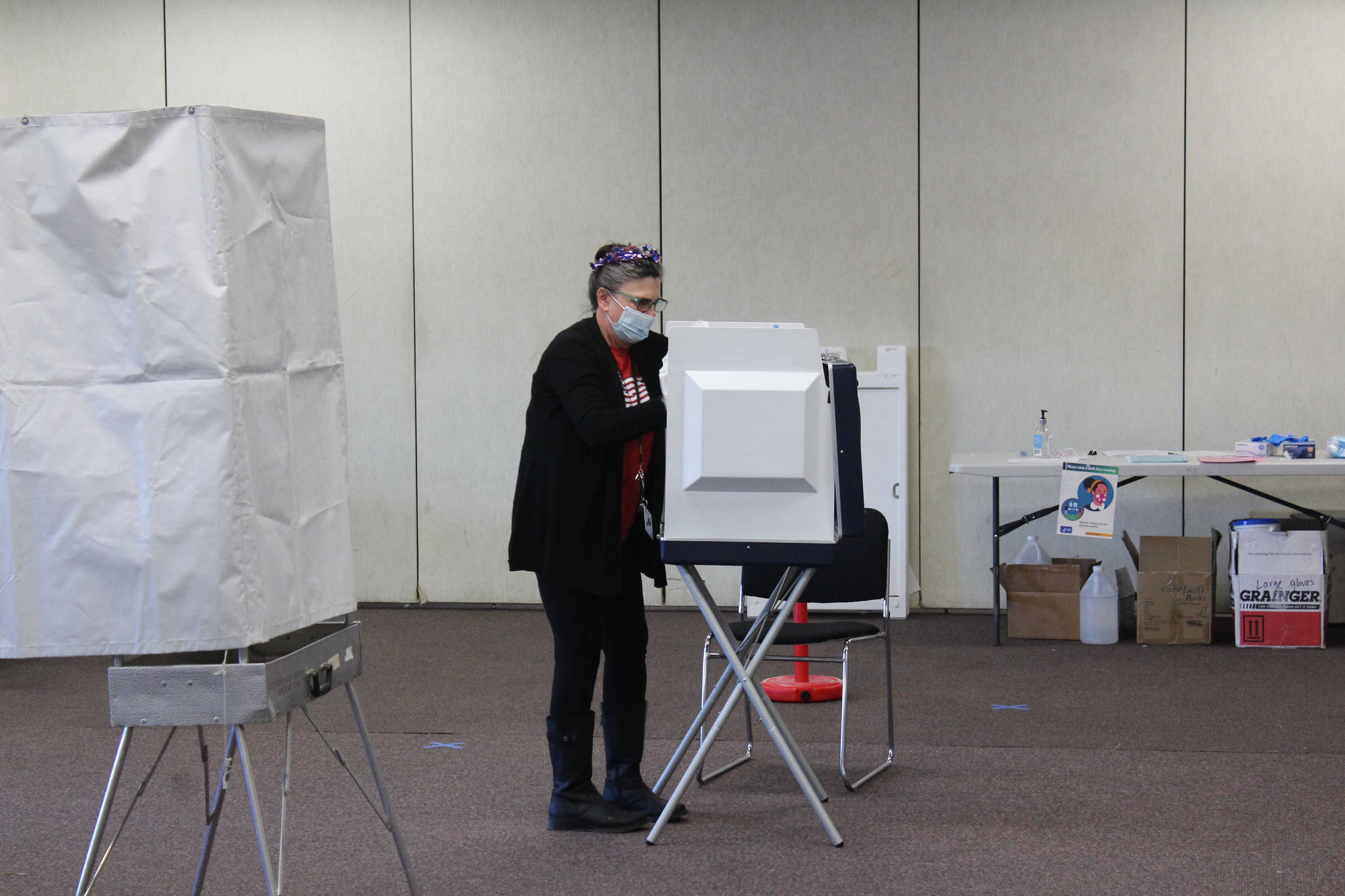
A poll worker is seen disinfecting a voting booth at the Soldotna Regional Sports Complex on Tuesday, Nov. 3 in Soldotna, Alaska. (Photo by Ashlyn O’Hara/Peninsula Clarion)
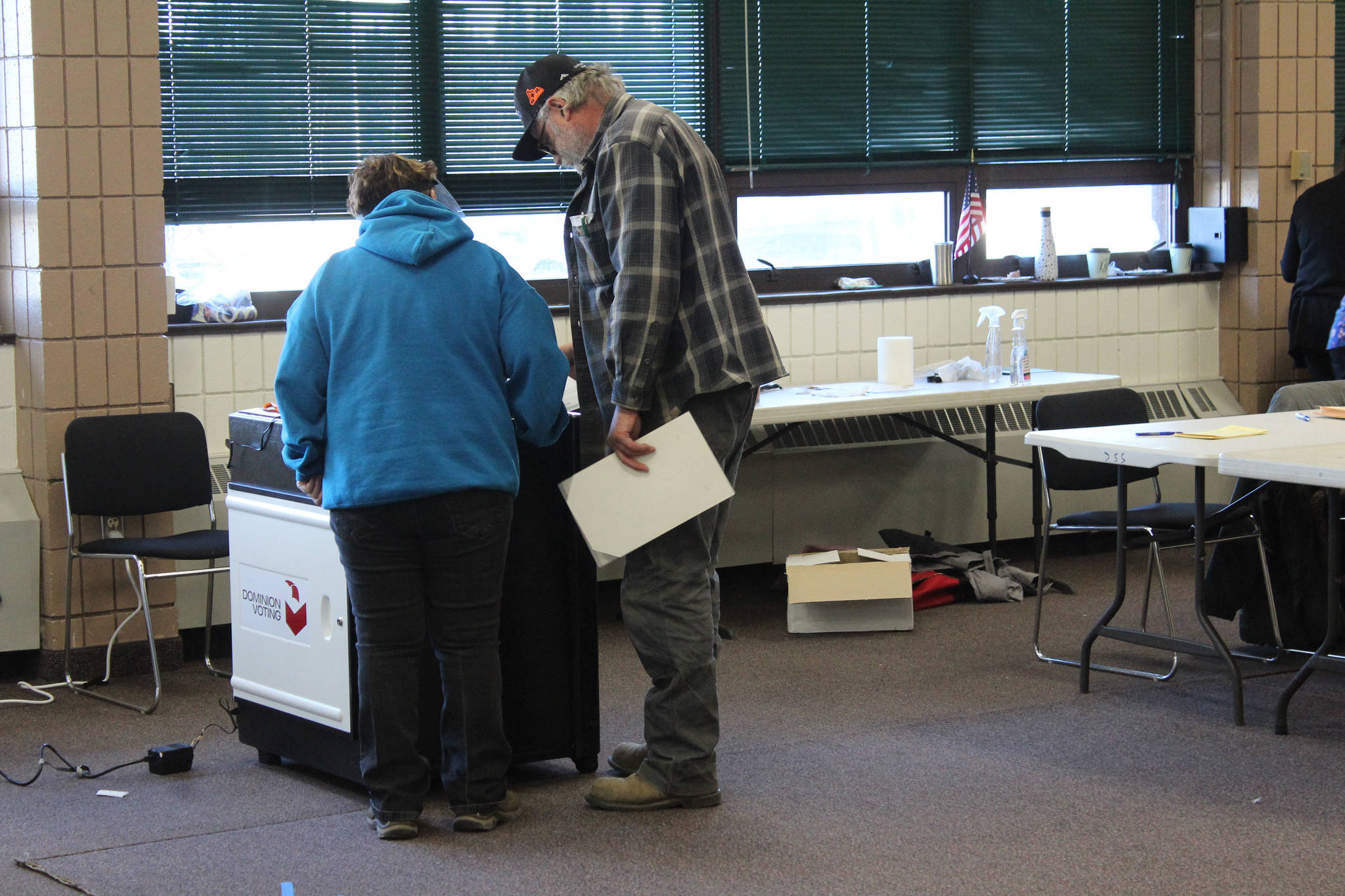
A poll worker helps a voter with their ballot at the Soldotna Regional Sports Complex on Tuesday, Nov. 3 in Soldotna, Alaska. (Photo by Ashlyn O’Hara/Peninsula Clarion)
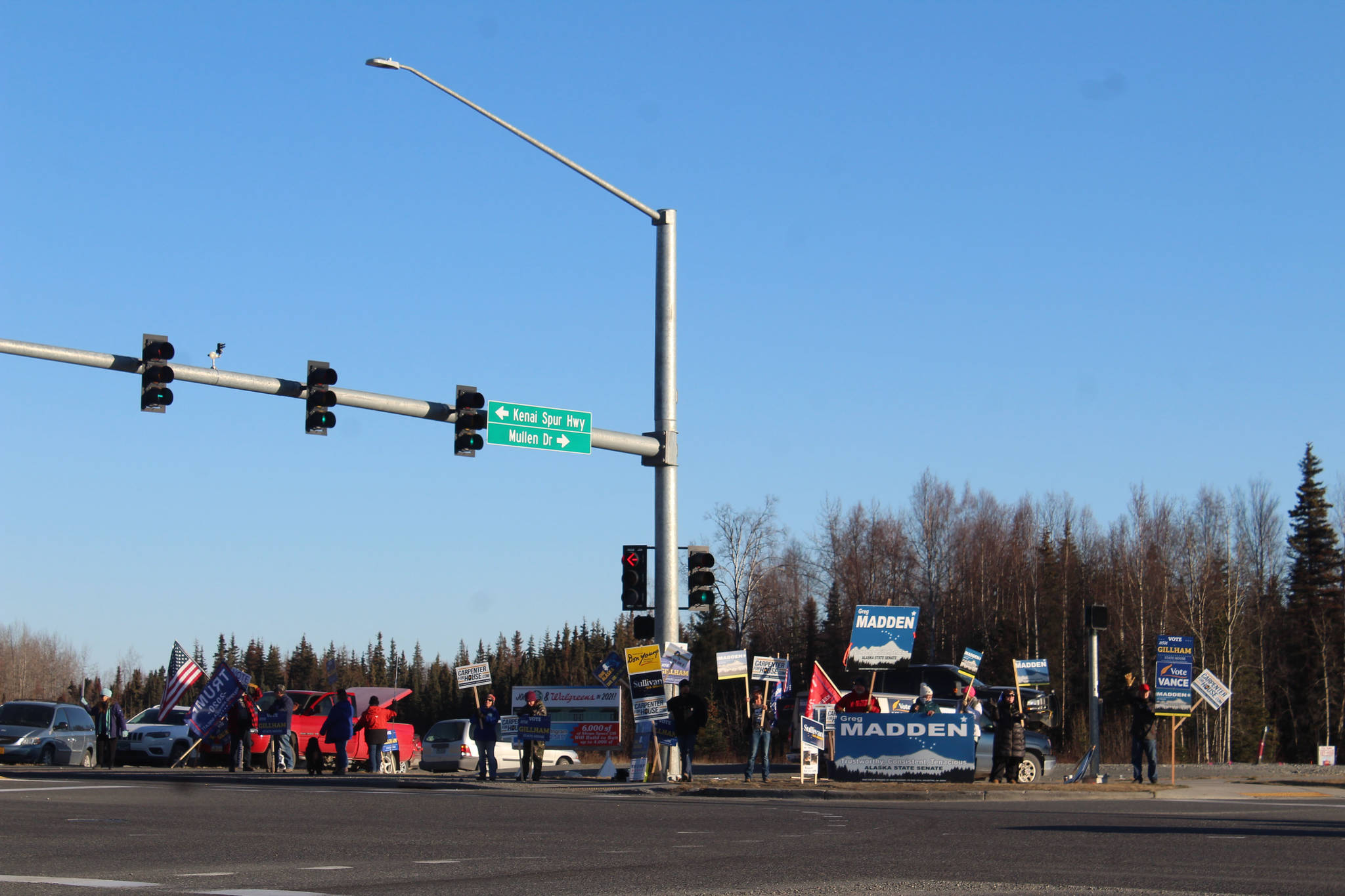
People are seen holding political signs at the intersection of Sterling Hwy. and Kenai Spur Hwy. on Tuesday, Nov. 3 in Soldotna, Alaska. (Photo by Ashlyn O’Hara/Peninsula Clarion)
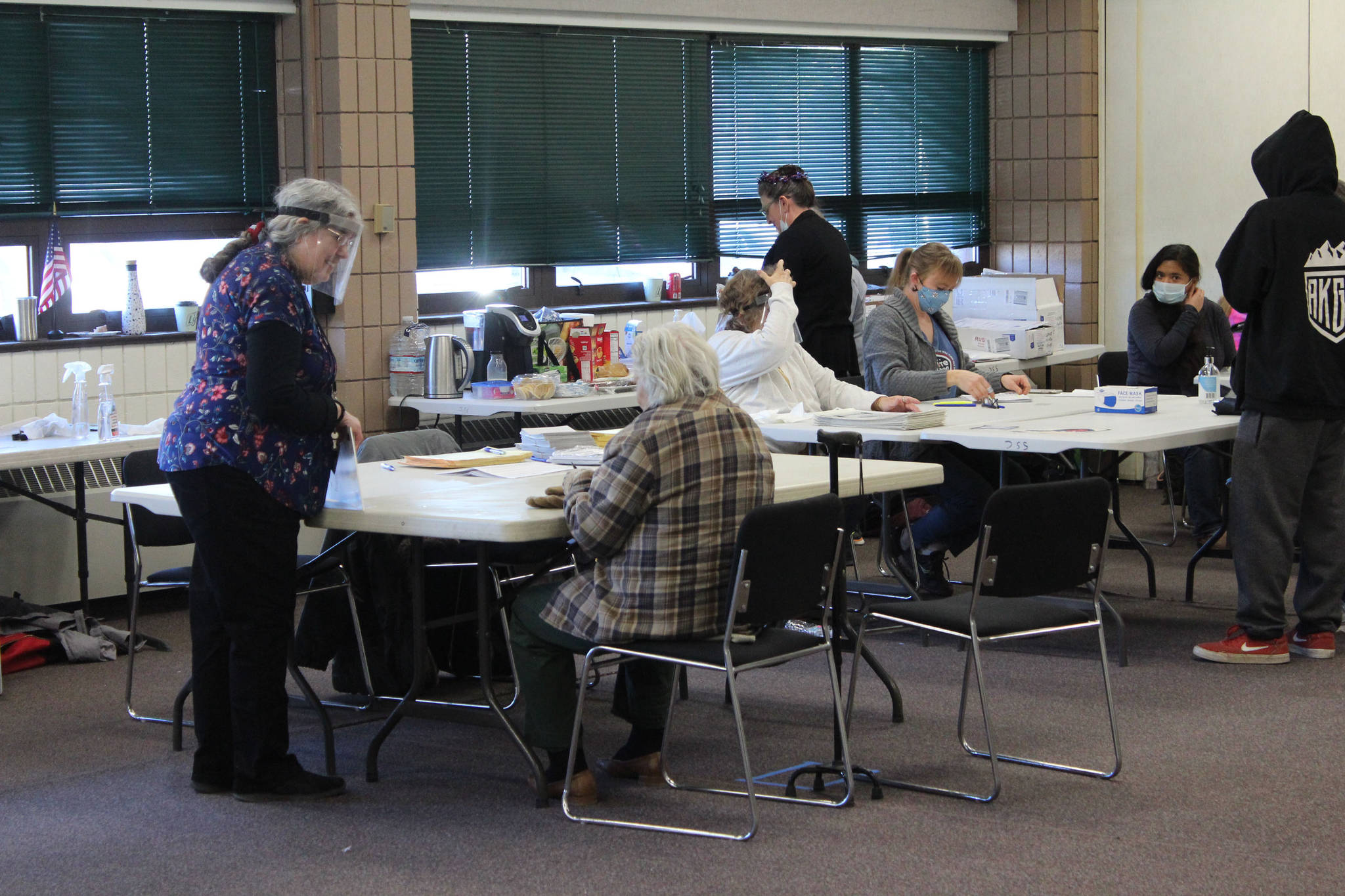
Cindy Newby (left) assists a voter with their ballot at the Soldotna Regional Sports Complex on Tuesday, Nov. 3 in Soldotna, Alaska. (Photo by Ashlyn O’Hara/Peninsula Clarion)
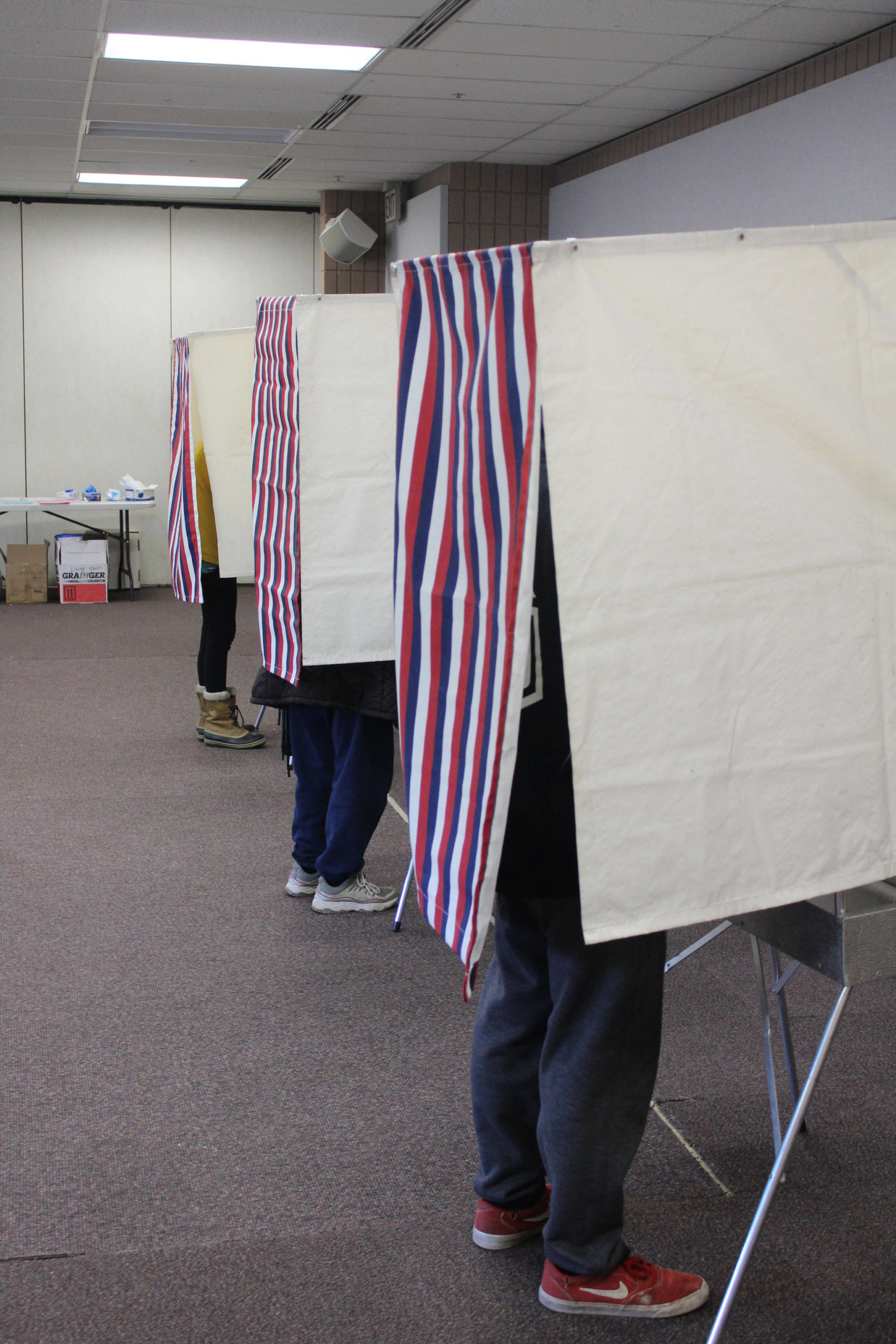
Voters fill out ballots in voting booths at the Soldotna Regional Sports Complex on Tuesday, Nov. 3 in Soldotna, Alaska. (Photo by Ashlyn O’Hara/Peninsula Clarion)
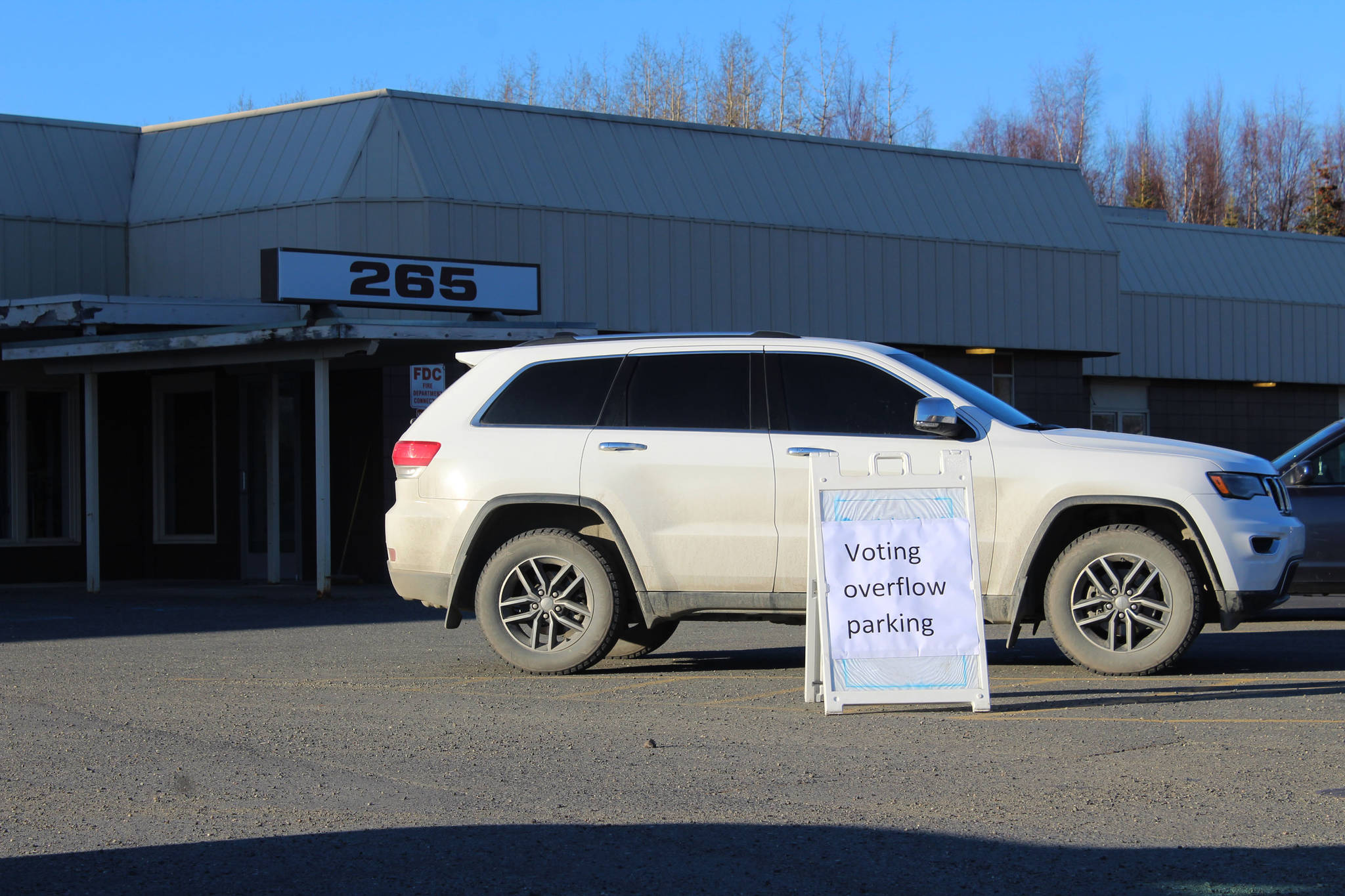
A sign indicating voting overflow parking is seen outside of the Soldotna Public Library on Tuesday, Nov. 3 in Soldotna, Alaska. (Photo by Ashlyn O’Hara/Peninsula Clarion)
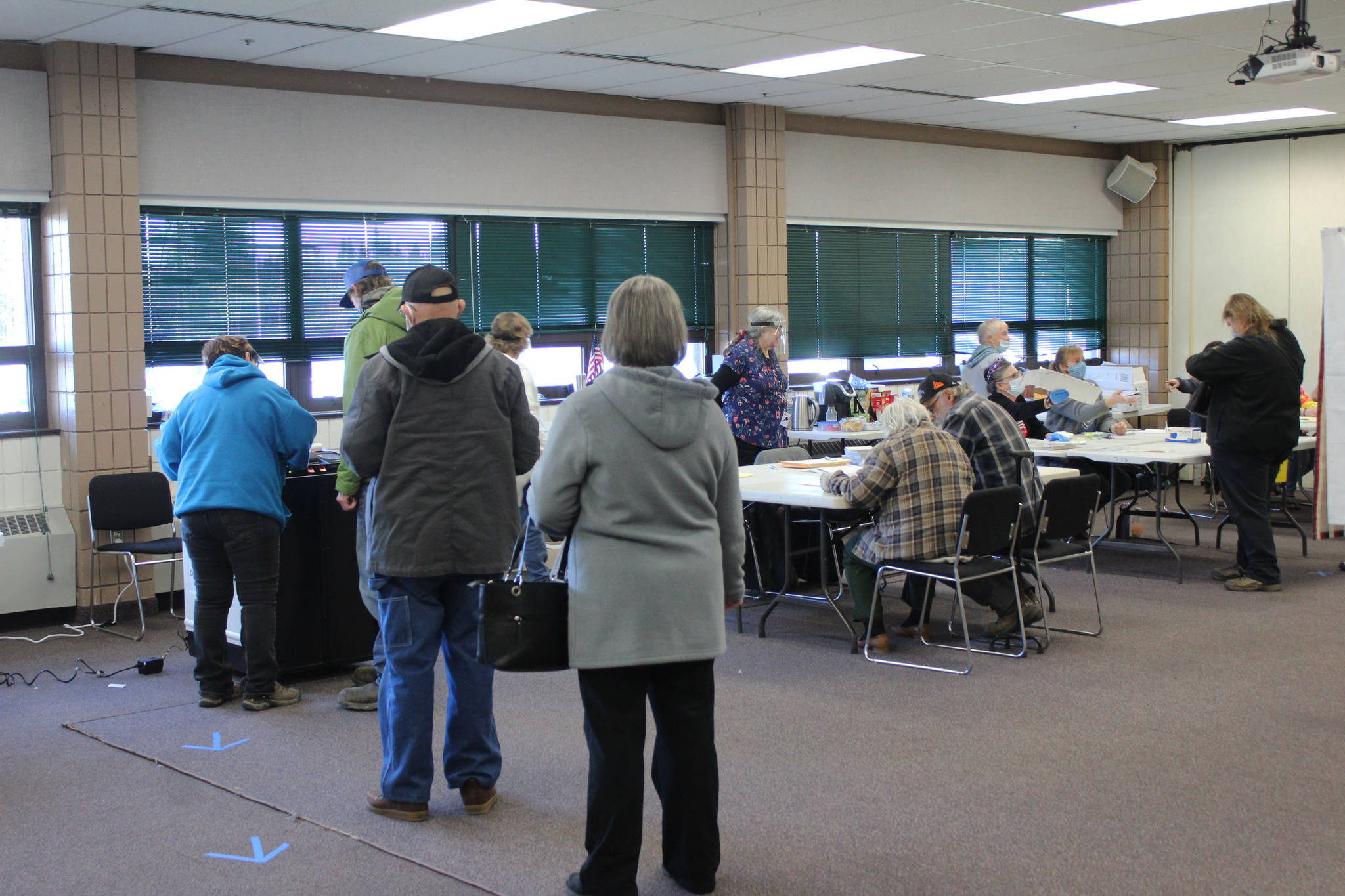
Voters line up to put their ballots in a ballot machine at the Soldotna Regional Sports Complex on Tuesday, Nov. 3 in Soldotna, Alaska. (Photo by Ashlyn O’Hara/Peninsula Clarion) Voters line up to put their ballots in a ballot machine at the Soldotna Regional Sports Complex on Tuesday, Nov. 3 in Soldotna, Alaska. (Photo by Ashlyn O’Hara/Peninsula Clarion)
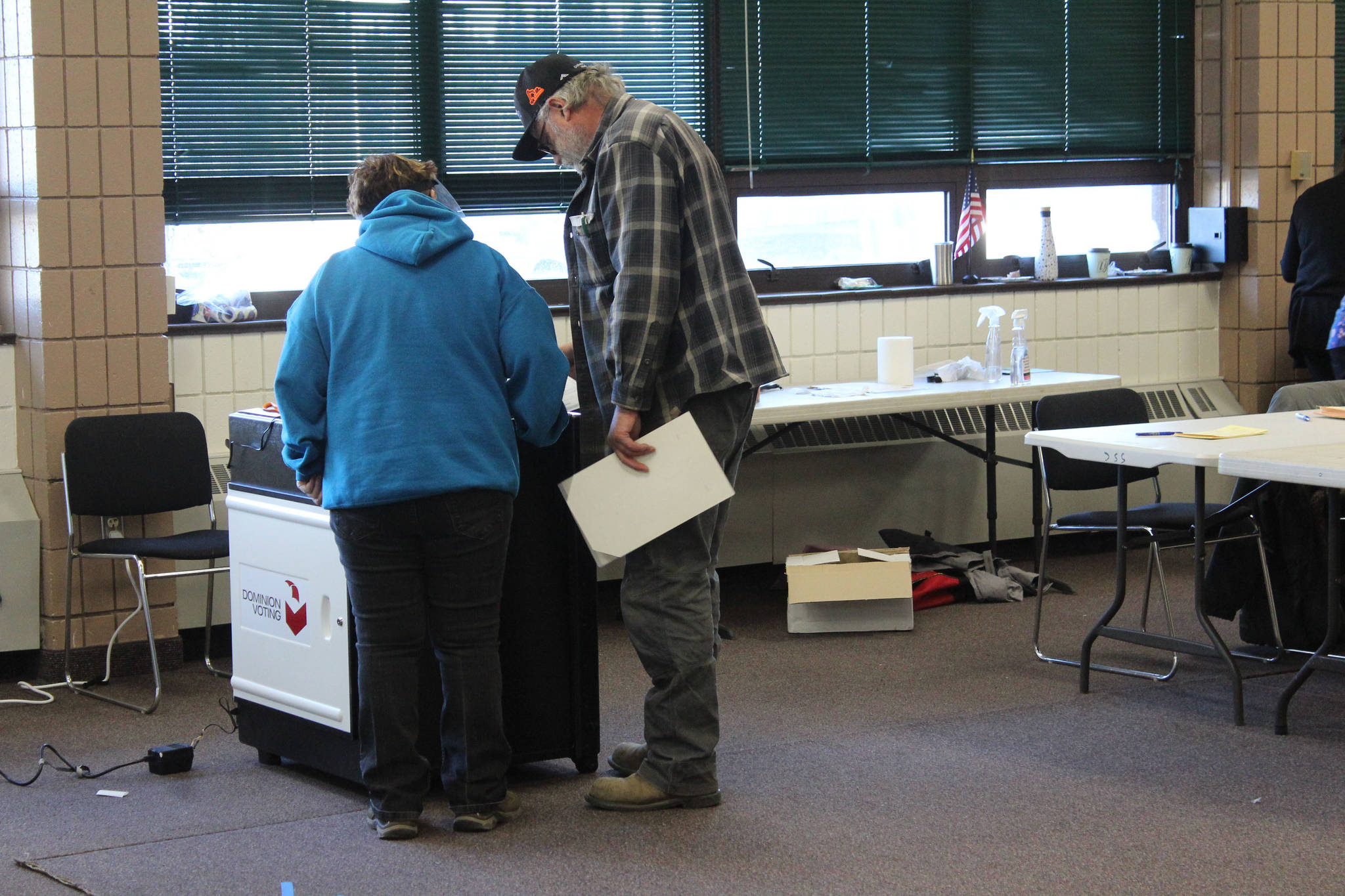
A poll worker helps a voter with his ballot at the Soldotna Regional Sports Complex on Tuesday, Nov. 3 in Soldotna, Alaska. (Photo by Ashlyn O’Hara/Peninsula Clarion)
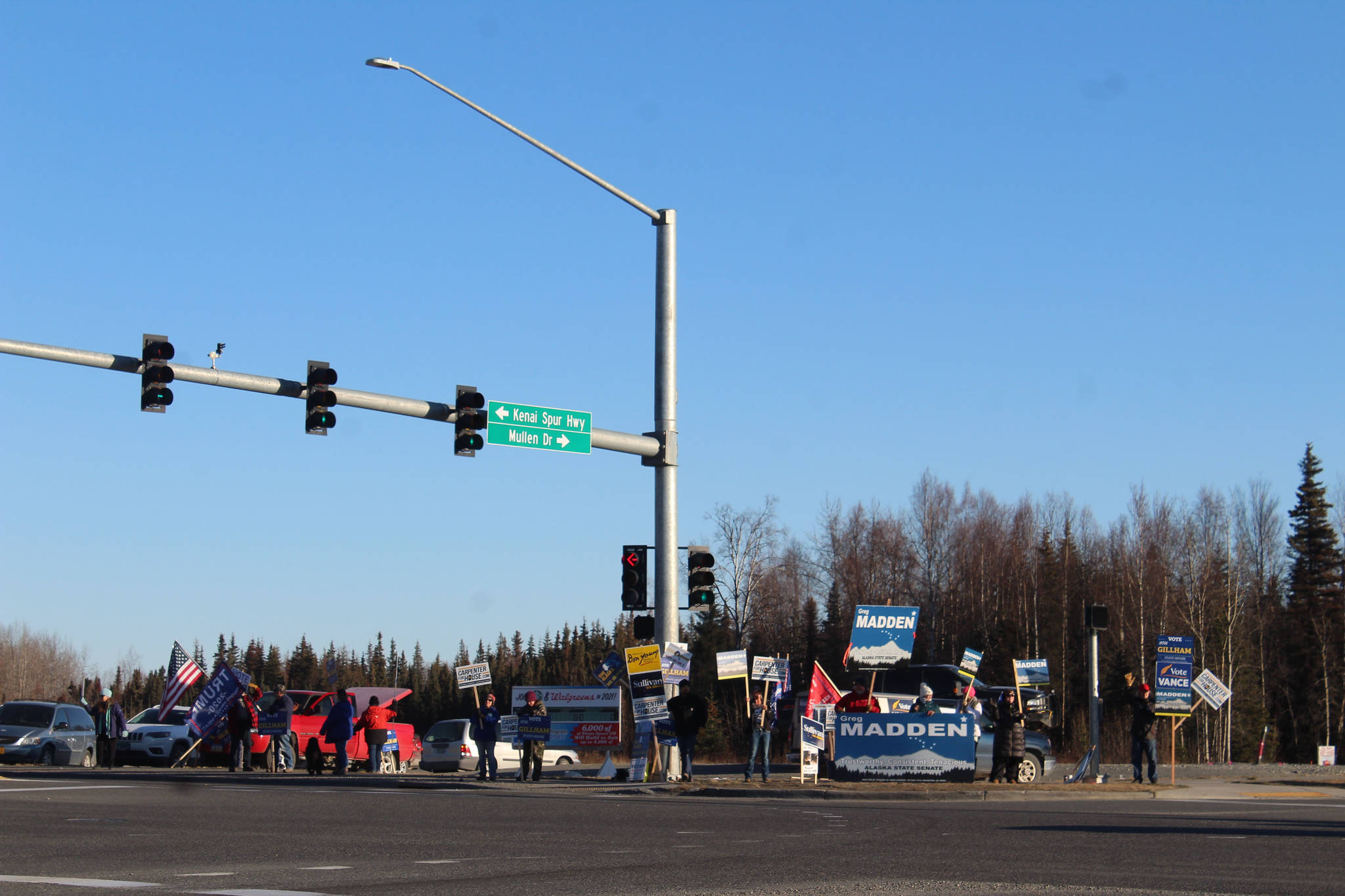
Supporters hold campaign signs at the intersection of Sterling Highway and Kenai Spur Highway on Tuesday, Nov. 3 in Soldotna, Alaska. (Photo by Ashlyn O’Hara/Peninsula Clarion)
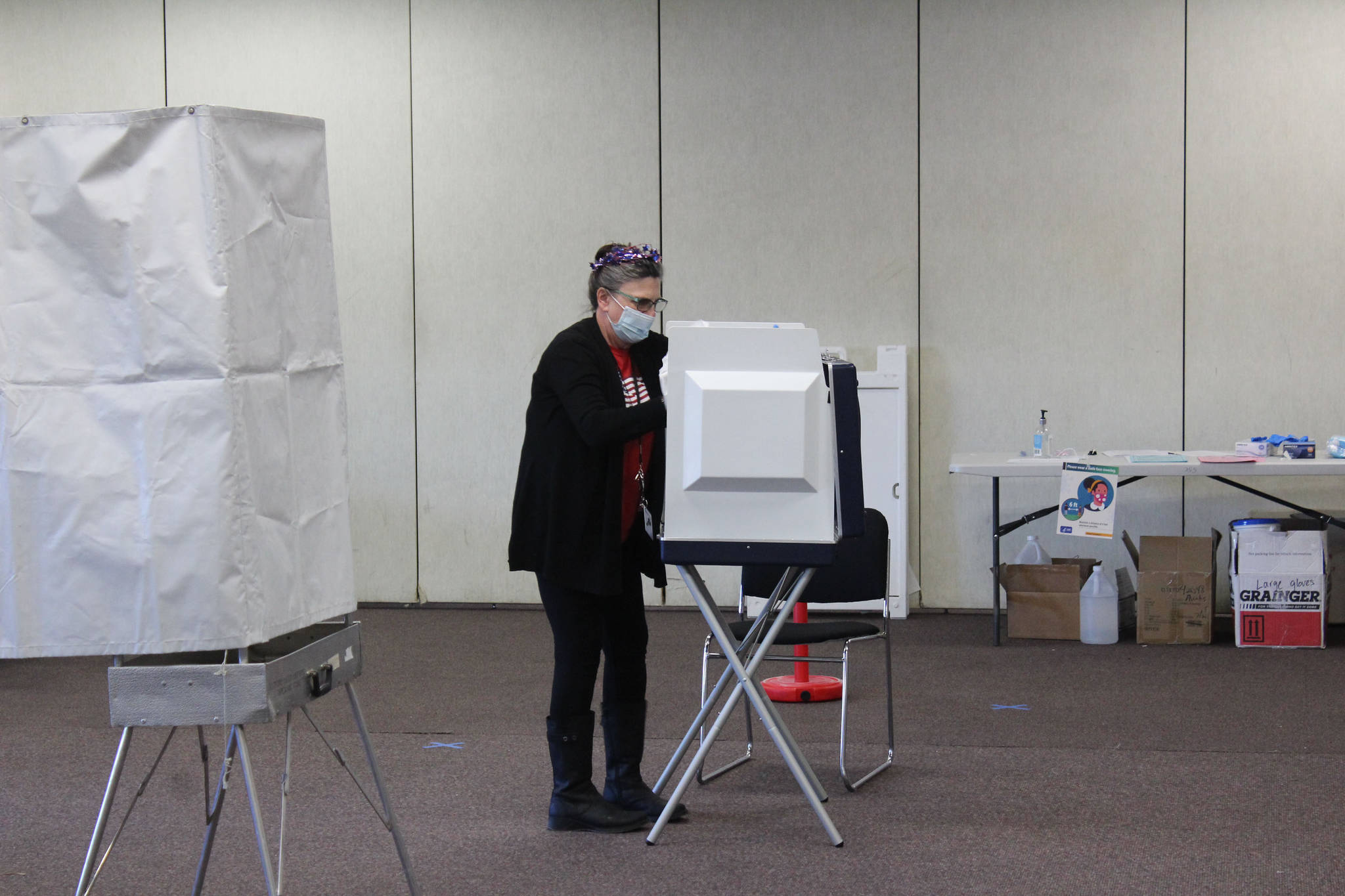
A poll worker disinfects a voting booth at the Soldotna Regional Sports Complex on Tuesday, Nov. 3 in Soldotna, Alaska. (Photo by Ashlyn O’Hara/Peninsula Clarion)
