
By Gene Johnson
and Mark Thiessen
Associated Press
ANCHORAGE — For isolated communities at the top of the world, keeping the planet’s largest land predators — polar bears — out of town is key to coexistence.
That can mean patrolling for the animals by snowmobile or four-wheeler, shooing them away with spotlights or a revved engine, or hazing them with beanbag shotguns. In one Canadian town, polar bears that can’t be scared off are kept in an air-conditioned “bear jail” until they can be flown out onto the sea ice. Such bear patrols have long succeeded in reducing conflict.
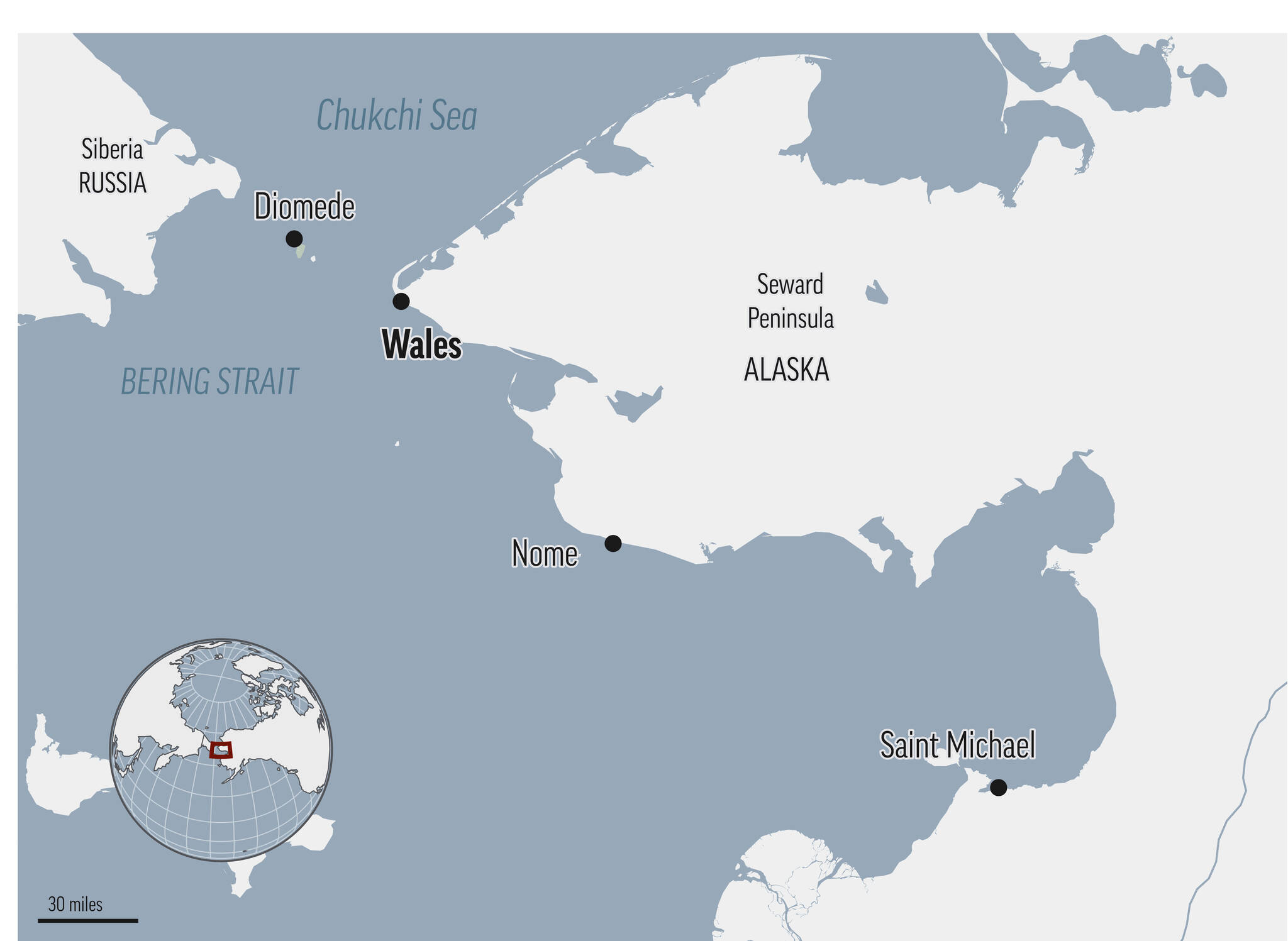
But this week, a polar bear attack killed a mother and her 1-year-old son in Wales, a tiny, remote Alaska whaling village whose bear patrol had lapsed. The incident — the first fatal polar bear attack in Alaska in 30 years — underscored the risks of living alongside the creatures, which can weigh more than 1,700 pounds.
While it’s not clear why the bear attacked, and while no patrol can prevent all troublesome encounters between bears and people, the mauling has renewed interest in such programs.
“There’s absolutely discussion now in Wales, saying, ‘Hey, maybe things have changed to the point that we need this, and how do we do that?’” said Susan Nedza, the chief administrator for the Bering Strait School District.
Polar bear attacks are extremely rare. But as climate change reduces the amount of Arctic ice, forcing the bears to spend more time on land, the number of encounters between people and bears is on the rise, researchers say. Raising awareness and improving ways to keep both bears and people safe has become imperative.
In northeastern Russia, patrollers have planted walrus carcasses far from villages to lure the bears away. The patrols were increased in 2019 when about 60 polar bears descended on Ryrkaypiy in Russia’s remote Chukotka region, forcing the cancellation of all public events.
In Arviat, a hamlet on the Hudson Bay in northern Canada, a bear patrol program was credited with dramatically reducing the number of bears killed in defense of life or property, from about eight per year before it began in 2010 to one per year afterward.
Another Hudson Bay town — Churchill, in northeastern Manitoba — has had a bear alert program for decades and has turned the animals into a tourist attraction. There, wildlife agents and police patrol by helicopter and by ground to protect trick-or-treaters on Halloween. Problem bears are captured and kept in an air-conditioned “bear jail” until the ice freezes up and they can be transported out to where they can find natural prey such as seals.
Another successful model is among the coastal communities of the North Slope, where Alaska meets the Arctic Ocean; tribes there have traditionally hunted the bears, along with whales and seals. It’s not uncommon to see dozens of bears on the outskirts of some of those villages, depending on the time of year and ice conditions.
In the early 1990s, scores of polar bears massed on the shore of Utqiagvik, formerly known as Barrow, the northernmost community in the U.S. The village elders gathered: The school year was approaching, and something had to be done.
On their advice, the town put together patrols to try to keep the polar bears out.
“We went on shifts, we used whatever we could use, a snow machine or a truck,” recalled Billy Adams, an employee of the North Slope Borough Department of Wildlife Management who still sometimes patrols for bears. “It’s all about keeping the people and the bears safe.”
The goal is to keep an eye out for bears, respond to reported sightings, and shoo them away as gently as possible. Sometimes that means just revving the engine of a snowmobile, truck or four-wheeler, or shining a spotlight at them; other times it can escalate to the use of beanbags or “cracker shells,” like firecrackers fired from a shotgun, to harass the bears, said Taqulik Hepa, director of the North Slope Borough Department of Wildlife Management in Alaska.
The North Slope has patrols on standby in case bears come close; three villages have active patrols now, Hepa said.
In Kaktovik in 2014, a patroller shooed away a polar bear that had gotten into the entryway of an 81-year-old woman’s home, where it was feeding on a drum of seal oil. The woman had hidden inside and was unharmed.
The North Slope Borough doesn’t maintain a budget for the program, but supports it by providing fuel or equipment. When available, grants from the U.S. Fish and Wildlife Service help offset the costs, which can include pay for patrollers.
Polar bears appear less frequently in Wales, a community that is the westernmost point on the North American mainland — just 50 miles from Russia across the Bering Strait. Wales is home to about 150 people, almost all of them Inupiat. It’s accessible by plane and boat, including barges that deliver household goods. Winter trails provide snowmobile access to other communities and subsistence hunting grounds.
Wales began a polar bear patrol in 2014 with the help of the World Wildlife Fund, which has supported the creation of several such programs in far northern communities across the globe. But the local program became inactive due to a confluence of factors — including the COVID-19 pandemic, the relative lack of bears and the recent death of its leader, Clyde Oxereok.
The community also has fewer financial resources than some of its counterparts in the North Slope, where the oil industry has buoyed the economy.
Even if a patrol had been active, though, it’s not clear it could have prevented Tuesday’s attack. It occurred early in the afternoon — not typically a risky time for bear encounters — and came amid a near whiteout, with extremely poor visibility.
Authorities investigating the mauling said they intend “to learn from this tragedy and determine what future measures we and our communities can take to prevent future fatal human-bear encounters,” according to a joint statement released Thursday by the U.S. Fish and Wildlife Service, the Alaska Department of Fish and Game and the Alaska Nannut Co-management Council, which represents 15 Alaska Native tribes that have traditionally hunted polar bears.
Chrissy Friberg, a traveling optician from Washington state, spent a couple days in Wales just before the attack, holding a clinic for the villagers. She said people didn’t seem overly concerned about the risk of bears.
“We were outside, walking around,” she said. “There were no threats or warnings.”
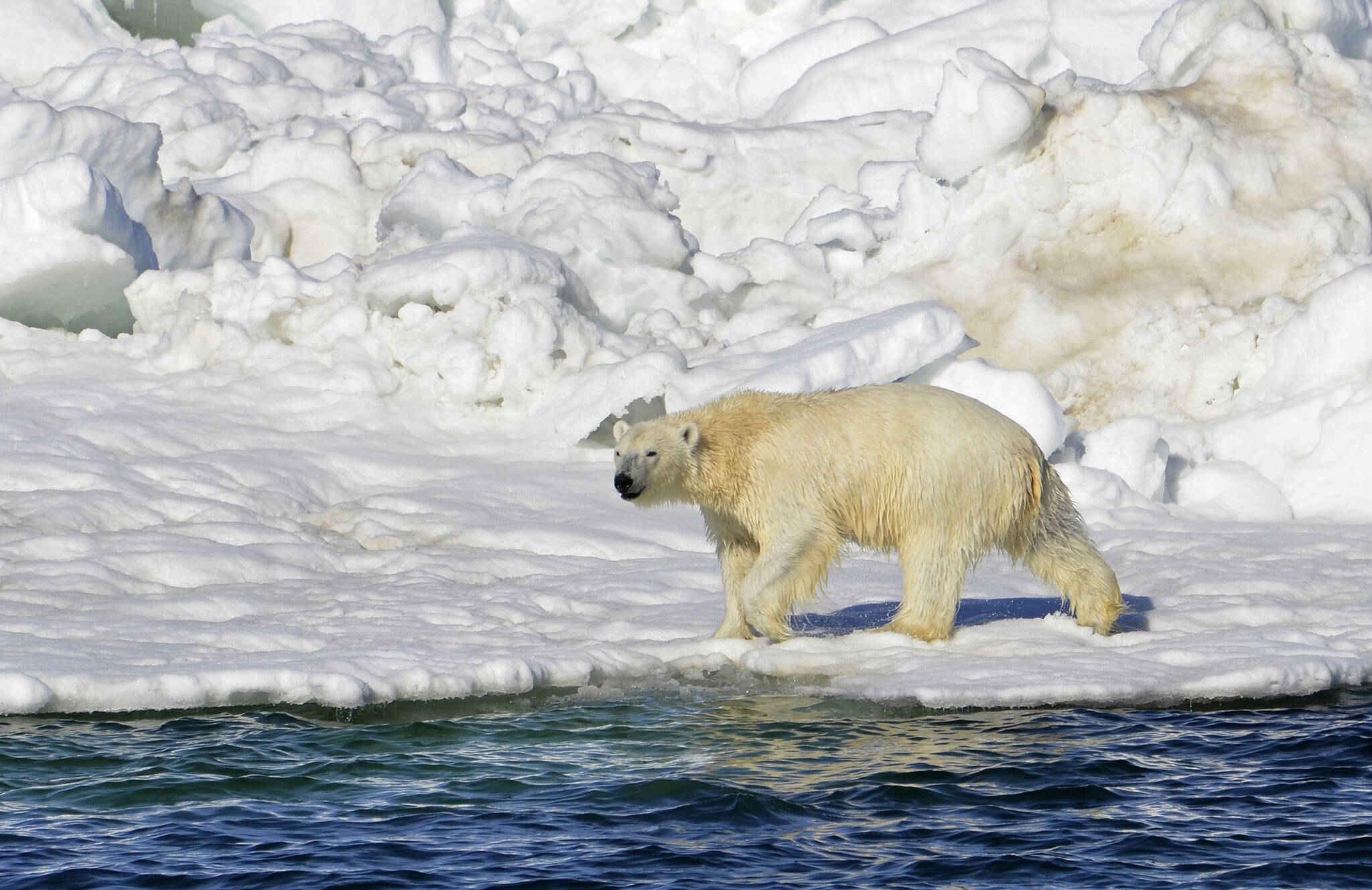
In this June 15, 2014, file photo released by the U.S. Geological Survey, a polar bear dries off after taking a swim in the Chukchi Sea in Alaska. A polar bear has attacked and killed two people in a remote village in western Alaska, according to state troopers who said they received the report of the attack on Tuesday, Jan 17, 2023, in Wales, on the western tip of the Seward Peninsula. (Brian Battaile/U.S. Geological Survey via AP, File)
