
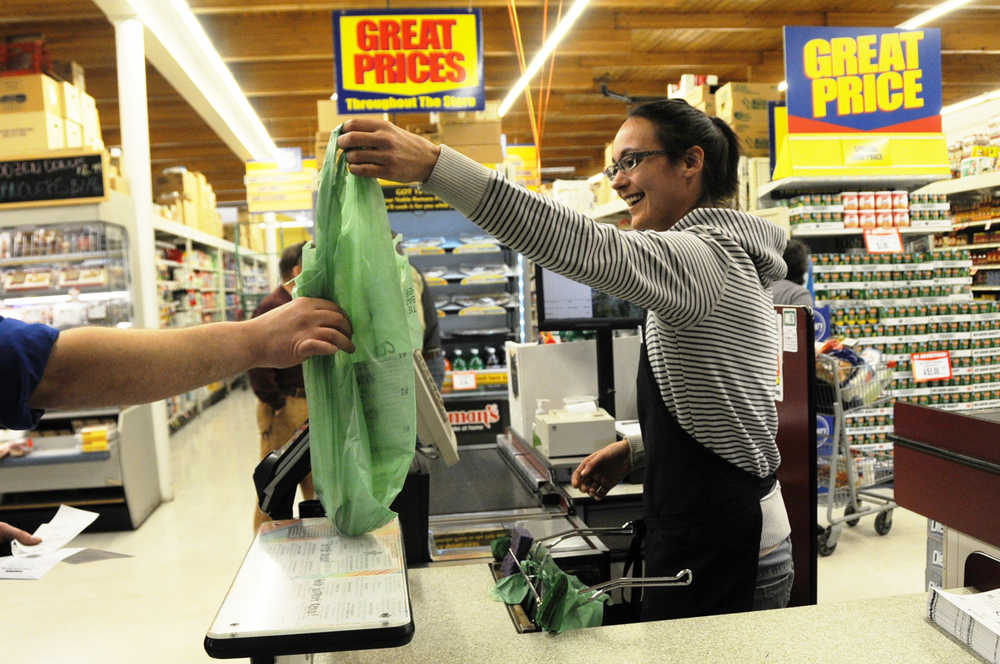
A proposed ordinance before the Kenai Peninsula Borough assembly would make groceries subject to sales tax for six months instead of three.
Currently, nonprepared food items are only subject to a 3 percent borough for three months of the year — from June 1 through Aug. 31. For the remaining nine months of the year, no borough sales tax applies.
However, a new proposal would apply a sales tax from April 1 through Sept. 30, adding three months to the window subject to taxes. Assembly member Dale Bagley, who introduced the ordinance Tuesday, said it would help supplement borough revenue in hard fiscal times.
Bagley said he chose to introduce the ordinance now because the borough is in its budget process and expanding the amount of time in which the sales tax applies would bring in additional revenue for the borough. Moving the tax to apply for six months instead of three would also align it better with the fiscal quarters, which would make reporting more simple.
“If you’re filing sales tax (amounts) in those quarters, you’ll have two months you tax and one month you don’t, and then the next quarter, it’s the opposite,” Bagley said. “It’d be nice to (do the accounting) right at the quarter.”
The change would increase annual sales tax revenue to the borough by approximately $1.4 million, Bagley said in a memo to the assembly.
The grocery tax has been up for public debate several times in the last six years. Most recently, the year-round tax in Soldotna was repealed during the general election in October. Soldotna had been allowed to charge sales taxes year-round on groceries in the city, and a citizens’ coalition challenged its authority to do so. A court ruled in the citizens’ group’s favor, and the measure passed last year.
Soldotna city officials have said that the city may have to find other sources of revenue, such as raising property taxes or annexing neighboring areas, to make up for the loss.
Soldotna City Manager Mark Dixson said the city administration is in the midst of its budget planning process now. He said he was aware that the bill had been introduced to the assembly but did not play a part in crafting it.
“I’m aware of it, but until it actually passes I’m not changing anything in the budget,” Dixson said.
The city of Soldotna took a financial hit from the loss of the grocery tax — the projections are that the city lost $350,000 in the last quarter, though it’s unclear how much of the loss was directly from the grocery tax because the price of gasoline dropped around the same time the tax was repealed, Dixson said. The city is still analyzing that, he said.
Voters in Soldotna will be able to weigh in on whether Soldotna should form a charter commission to explore becoming a home-rule city in a May 10 special election. Becoming a home-rule city would allow Soldotna to levy its own taxes, the same way Kenai and Homer can. The nonprepared food items tax was not the only catalyzing issue to push for home rule, but it was one of them, Dixson said.
“The home rule decision isn’t really a city administrative decision — it’s really a decision of the citizens,” Dixson said. “It’s a lot more complicated than just nonprepared foods sales tax.”
Bagley said the ordinance had very little do with Soldotna, though the city would benefit from it. He acknowledged in the memo to the borough assembly that the voters had weighed in on this several times in the past six years, but he said the voters has not rejected the nonprepared food items tax entirely, just Soldotna’s ability to levy its own tax.
The exemption would still be in place for six months of the year, and extending the application of the tax would help capture some of the shoulder seasons, he said.
“During the six months in the summer when you have people down here vacationing, but you have a lot of shoulder season activity that happens, we can try to capture more of that in the area,” Bagley said.
Reach Elizabeth Earl at elizabeth.earl@peninsulaclarion.com.
