
Editor’s note: This article has been updated to clarify that the two commercial fishermen on the panel did not support the Stand for Salmon ballot initiative.
The debate over whether the state’s salmon habitat permitting laws are enough has a lot of grey areas, both for those for and against.
Across the state, salmon habitat advocates and development advocates have been struggling for more than a year over whether to strengthen the Alaska Department of Fish and Game’s policies on how and when to issue permits for projects in anadromous fish habitat. Advocates for revising the law say the current law is vague and defaults to granting permits; opponents say the permitting requirements are already protective enough and any further restrictions will hamper economic development.
The debate has led to a bill in the legislature and a controversial proposed ballot initiative, known as the Stand for Salmon initiative, which would bypass the legislative process and ask voters for approval of more restrictive permitting requirements. The Alaska Division of Elections denied the initiative, though a court reversed that decision, and the state appealed to the Alaska Supreme Court.
A panel of stakeholders, experts and legislators gathered in Kenai on Thursday to open up a broad conversation on state law regarding salmon habitat. While all said they recognized the importance of protecting habitat, they got into the weeds on the particular of how to do that.
“This habitat issue … has been important for Alaskans since the very beginning, and others who depend on salmon, whether in Britain or elsewhere, for over 1,000 years,” said Bob King, a longtime radio journalist at Bristol Bay radio station KDLG, in an introduction to the forum. “Salmon remain vitally important today in the lives of Alaskans … habitat is the foundation of this resource.”
The panel included those who definitively think the current statute was enough, those who definitively want to see it updated and others who fall somewhere between.
The first group included Josh Kindred, the Alaska Oil and Gas Association’s environmental legal counsel. The debate implies that salmon habitat is not currently protected, which it is, he said. Though he said the industry is open to discussing concerns and issues with salmon habitat, the ballot initiative circumvents the public process and goes too far.
“Stand for Salmon is like burning the house down because you’re afraid the milk has gone bad,” he said. “It’s over broad, it’s destructive, and it doesn’t really fit anything I’ve heard (of concerns from the public) … Stand for Salmon stops development.”
Valerie Brown, the legal director for environmental law firm Trustees for Alaska, supports revising the law, saying there was potential risk for large projects to make it through permitting with no public notice and without much enforcement authority from Fish and Game. Fish and Game’s Habitat division has approximately 35 employees spread across the state, who stay busy and are responsible for all the salmon habitat permits.
“Ironically, though all those other divisions depend on what the habitat division does, it’s the smallest of the departments at Fish and Game,” she said. “So I think that’s a problem and I think the law could be changed so that there’s more revenue streams that bring money into the state so that the habitat division can be more robust and do a better job and have more reach than they have now.”
In response to concerns from the public, largely in the wake of the fight over the Susitna-Watana Hydroelectric Project, which has since been suspended, Rep. Louise Stutes (R-Kodiak) introduced House Bill 199 during the Alaska Legislature’s last session. The bill proposed a number of changes to Title 16, such as creating major and minor tiers for permits based on the level of proposed habitat damage and a structure for notifying the public of pending permits in a given area.
Stutes, a member of the panel at the Kenai forum, said her staff is working on revisions to the bill now based on the feedback they received during the hearings last year and plans to make amendments in the upcoming session.
“It will have plenty of hearings,” she said. “It will be on the front burner.”
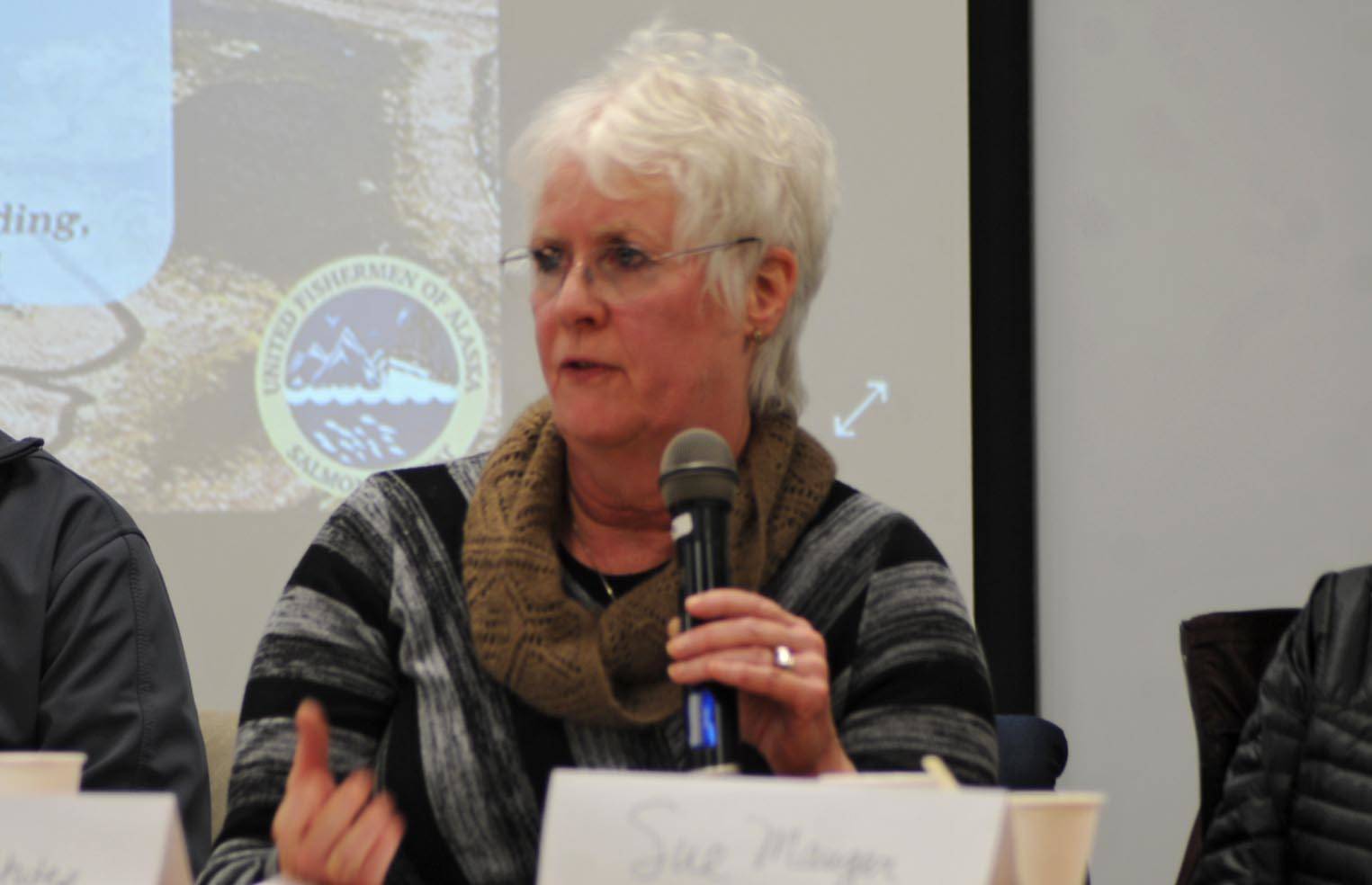
Some elements of the bill, like public notice, are amenable to both sides. Panel member Sue Mauger, the science director for Homer-based environmental nonprofit Cook Inletkeeper, said public notice would be helpful so she and other scientists working in streams proposed for projects can provide significant data to help guide decisionmaking.
“Probably the biggest concern I have with our existing regulations is that it doesn’t allow a more holistic landscape perspective on a proposed project, whether it’s large or small,” she said. “Potentially, the small ones being of most concern, that a project that’s proposed does not take into account how much of that similar habitat has already been lost on that landscape. Our bet chance of having thriving fisheries in the future is to provide diverse habitat options for salmon as they face changing climate conditions, changing fishery impacts.”
Panel member Deantha Crockett, the executive director of the Alaska Mining Association, said she didn’t support revising the law but in listening to the discussion said she found common ground with each of the speakers.
“I don’t like a lot of the provisions in HB 199, but I comment (Stutes) because the legislative arena is a place where you can have that discussion and create and change and have an open discussion,” she said. “The ballot initiative process simply isn’t.”
Few members of the panel said they supported the ballot initiative because it didn’t allow for adequate discussion and compromise. The two commercial fishermen on the panel, Cook Inlet setnetter Jim Butler and Sen. Peter Micciche (R-Soldotna), who fishes on a drift gillnet vessel in Cook Inlet, both said they opposed it. Micciche said he completely opposed the initiative though he supported some elements of HB 199.
He said he hoped people would come together and compromise to improve the law.
“I guess the way I see it is it’s a balance,” he said. “And I think one of the problems we have in this state is that we have a tendency to not bring everyone to the table … No one wants to give any quarter. No one wants to give any ground. No one wants to sit at the table and talk about how our Title 16 can be improved. And there are place where it could be improved.”
Reach Elizabeth Earl at elizabeth.earl@peninsulaclarion.com.
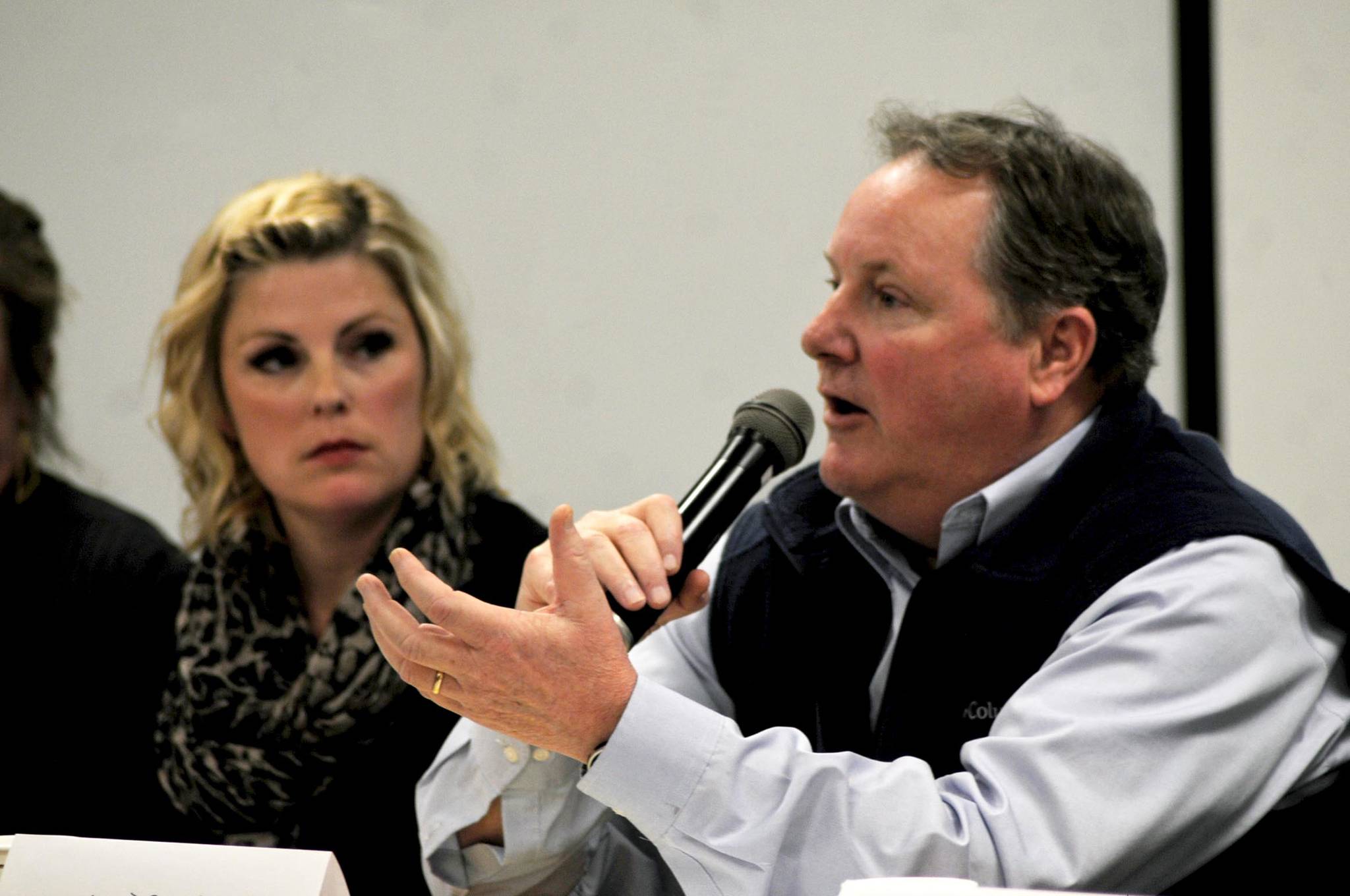
Rep. Louise Stutes, R-Kodiak, addresses a question during a forum on salmon habitat policy at Cook Inlet Aquaculture Association’s headquarters Thursday, Dec. 14, 2017 in Kenai, Alaska. A group of panelists discussed the merits of the current salmon habitat permitting process, contained within Title 16 of the Alaska Administrative Code, and a proposed ballot initiative that would significantly tighten restrictions on permitting for projects that impact salmon streams. (Photo by Elizabeth Earl/Peninsula Clarion)
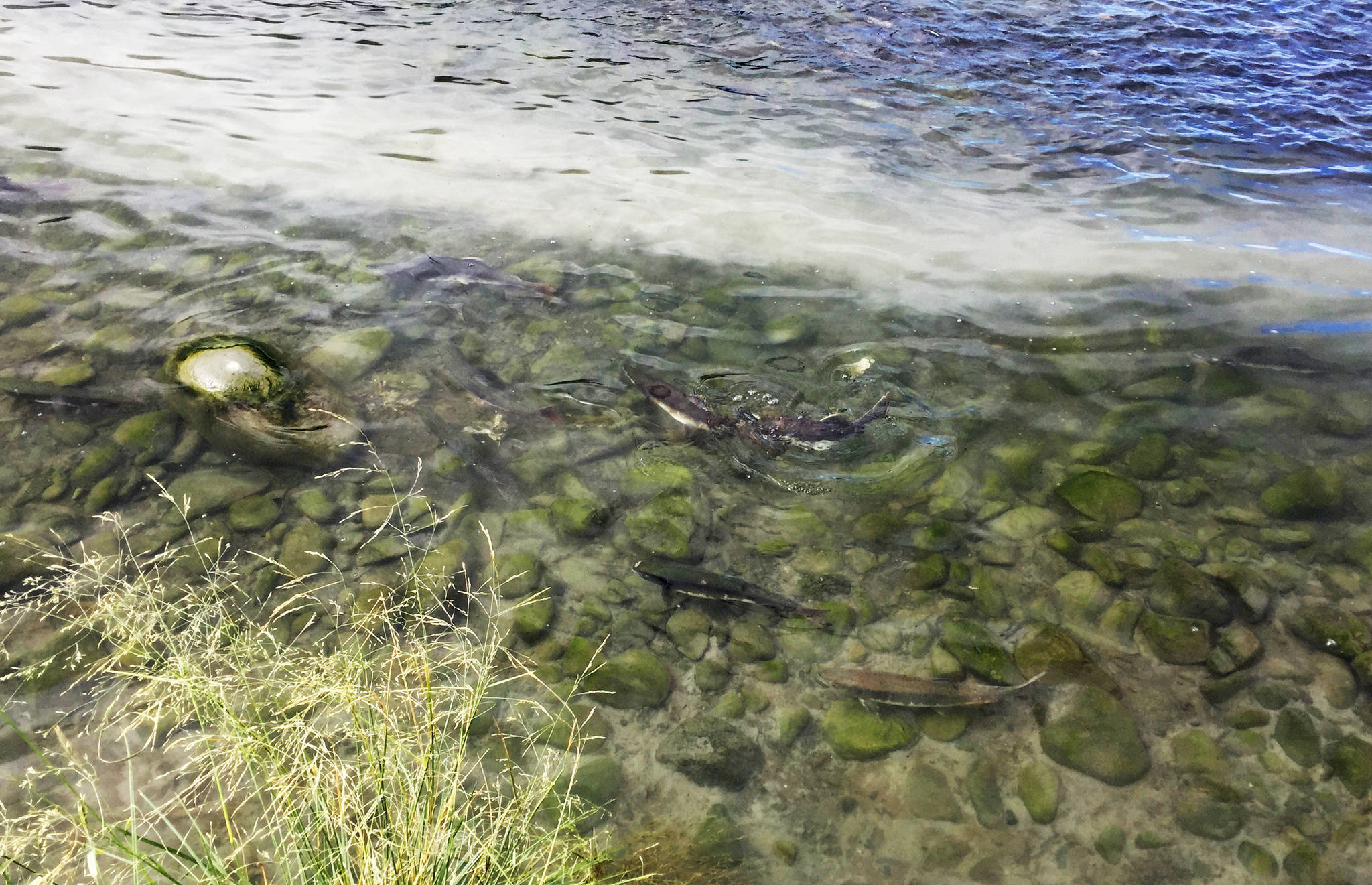
Pink salmon mill in the shallows of Resurrection Creek near its confluence with Cook Inlet on Sunday, Aug. 13, 2017 in Hope, Alaska. Pink salmon can return to the river in large numbers in the late summer and early fall. (Photo by Elizabeth Earl/Peninsula Clarion)
