
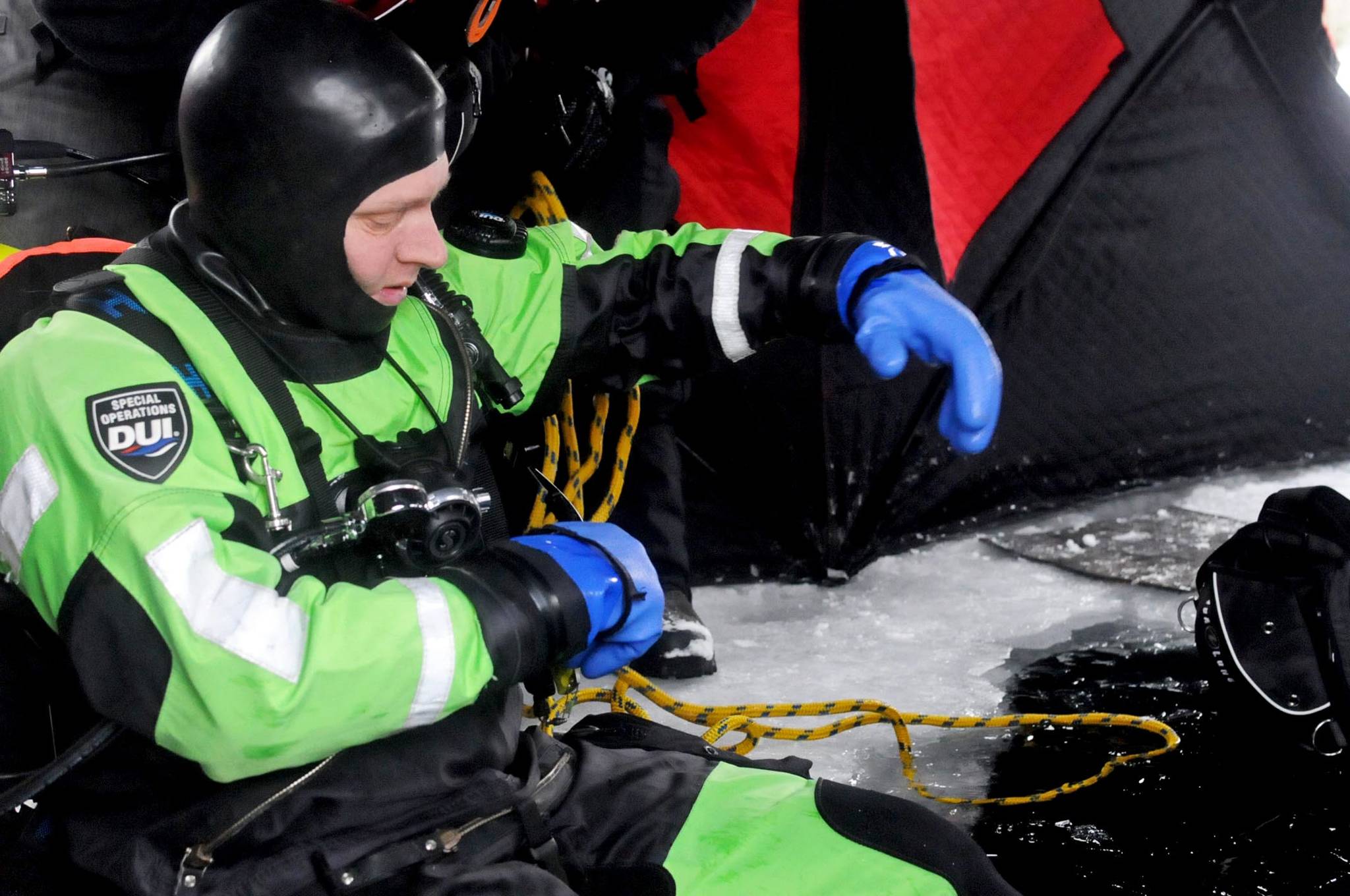
The old saying goes that there’s no bad conditions, only bad gear. The Nikiski Fire Department is testing exactly how far that goes with some of the hardest conditions imaginable: underwater beneath about three feet of ice, with blizzard conditions raging outside.
Luckily, they’re outfitted to match it. Each diver from the Nikiski Fire Department wears about 100 pounds of gear and is attached to a rope. As divers Kassidy Stock and Matt Quiner prepared to descend into the frigid waters of Island Lake on Friday, they first tied themselves together. Some light makes it through the clear ice, but with the addition about a foot of snow that fell Thursday, the divers don’t have to go far from the hole before the light fades.
“Don’t you drop that flashlight,” Senior Captain Bryan Crisp warned Stock, half-jokingly. Stock waved the flashlight into the clear water, the beam shooting far through the clear, dark water toward the lake bed below.
The water starts out clear, but it doesn’t take much to worsen conditions. Instructor Mitch Osborne, who accompanied Stock and Quiner into the water, surfaced again before both of them made the return trip. The two had stirred up the thick lake sediment on the bottom, making visibility virtually nil until it settled again, he said.
“It’s like a bomb went off down there,” he said with a laugh.
That’s something the divers have to prepare for, Crisp said.
“Some places, it’s just black, or if you hit the bottom and it gets stirred up, (you can’t see),” he said. “…If we’re looking for evidence or something, you have to get down in that stuff, stirring it up, looking for something. We have lights, but in really black water, you can have a light right here, (and see) nothing. It’s all about being comfortable with your surroundings and not freaking out.”
The Nikiski Fire Department has had an ice diving team since the 1980s, allowing them to perform rescue and recovery operations underwater even in winter. However, it lapsed for a number of years until 2015, when the captains began a push to get the divers recertified. Crisp and Stephen Robertson, a firefighter with the department, are both certified divemasters.
Now they’re working on building up the diving certifications in the department. It takes at least three certified divers to even get an operation into the water, Crisp said — one as the primary diver, one as a safety diver, and a third called the 90 percent diver. If something goes wrong with the primary diver, the safety diver immediately goes into the water, and the 90 percent diver gets his gear in place to become the safety diver.
“He follows the line down, gets to the primary diver, helps him figure out what’s going on or if he’s entangled, get him untangled and they both come back,” Crisp said. “The 90 percent diver has all his gear on except his mask — that’s why we call him the 90 percent diver … as you can see, we’re kind of safety-oriented. We have backups to the backups.”
Each diver is attached to a line monitored by a tender on the ice, and the divers Friday were tethered together. Very basic communication was translated to rope tugs — one tug pattern meant “give me more slack,” another meant “everything’s fine” and another said “I’m coming back.” Silvery bubbles percolated out from the under the ice as the air they were breathing migrated back along the underside of the ice sheet and escaped.
Proper certification takes hundreds of hours of training, classes and diving. The Nikiski firefighters spent much of the last week out practicing in the waters of Island Lake, even in the blizzard Thursday. They worked on a variety of skills, such as diving down and seeking an object on the lake bottom, swimming a distance out and staying together on their way back and a process called “bailing out,” which involves taking off their breathing masks and switching to a secondary breathing mask and tank while underwater and then immediately coming back.
Their ice diving skills could come in handy if a car goes through a frozen lake surface, for example, and they need to recover it, Crisp said. Robertson is certified as an underwater criminal investigator, which includes the skills to recover bodies or evidence underwater, Crisp said. They won’t be diving in response to pipeline issues, though — that’s in the realm of commercial divers, he said.
Having successfully swapped masks, Quiner and Stock successfully resurfaced through the triangular hole inside the ice fishing hut. Stock’s mask was roughly the same, but Quiner had had to remove his head covering to take off the full-face mask he was wearing and his bare head was exposed.
“That looks chilly,” Crisp said, pulling the line up to help them out of the water.
Quiner responded with an enthusiastic “yeah,” shaking water from his hair and hauling out.
Reach Elizabeth Earl at eearl@peninsulaclarion.com.
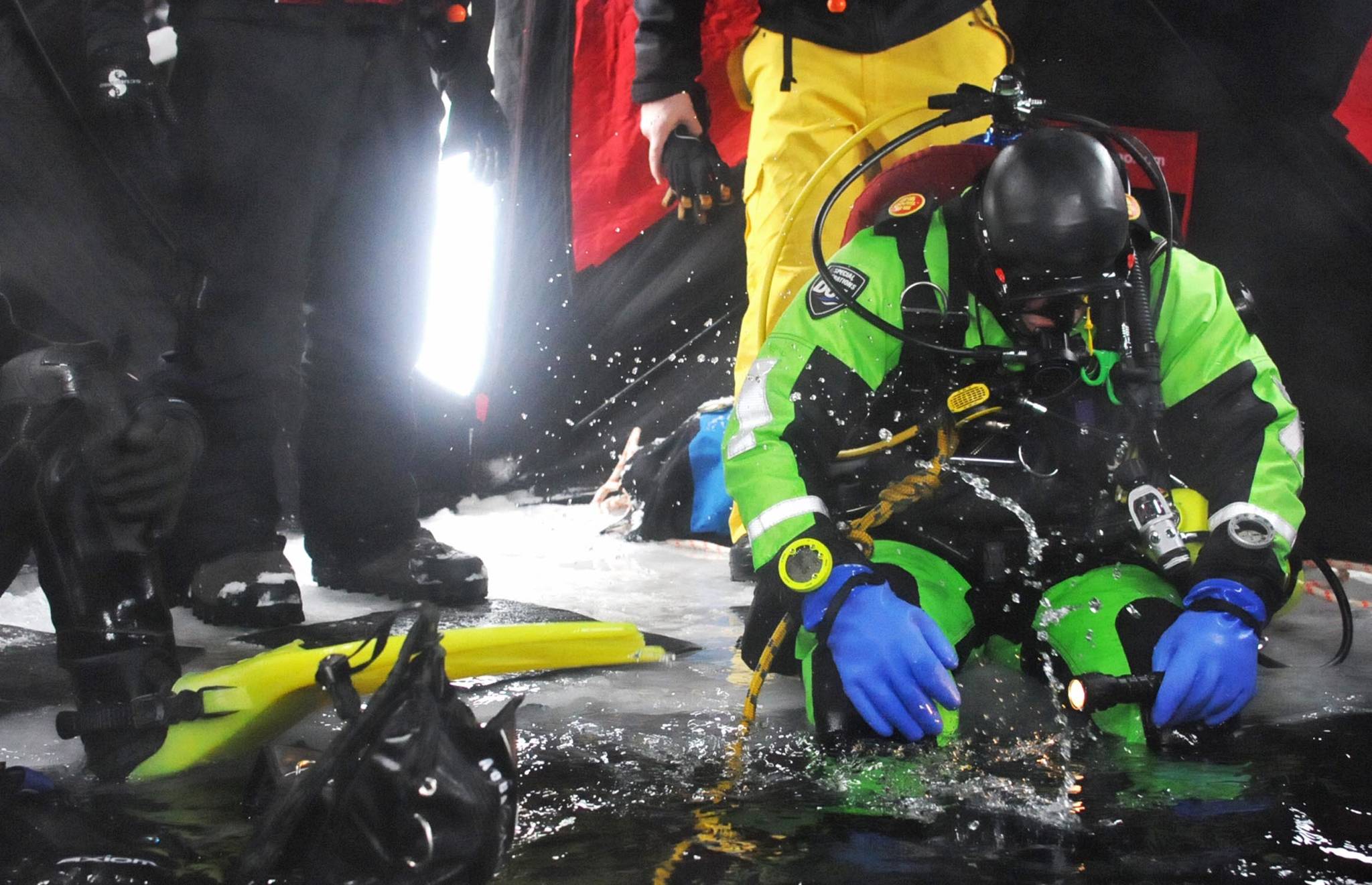
Kassidy Stock of the Nikiski Fire Department prepares to dive through a hole in the ice on Island Lake as part of a diving training drill Friday, March 9, 2018 in Nikiski, Alaska. The Nikiski Fire Department is working on getting its ice diving team up to certifications to perform operations on frozen lakes if need be, such as rescuing sunken cars or people or recovering evidence. (Photo by Elizabeth Earl/Peninsula Clarion)
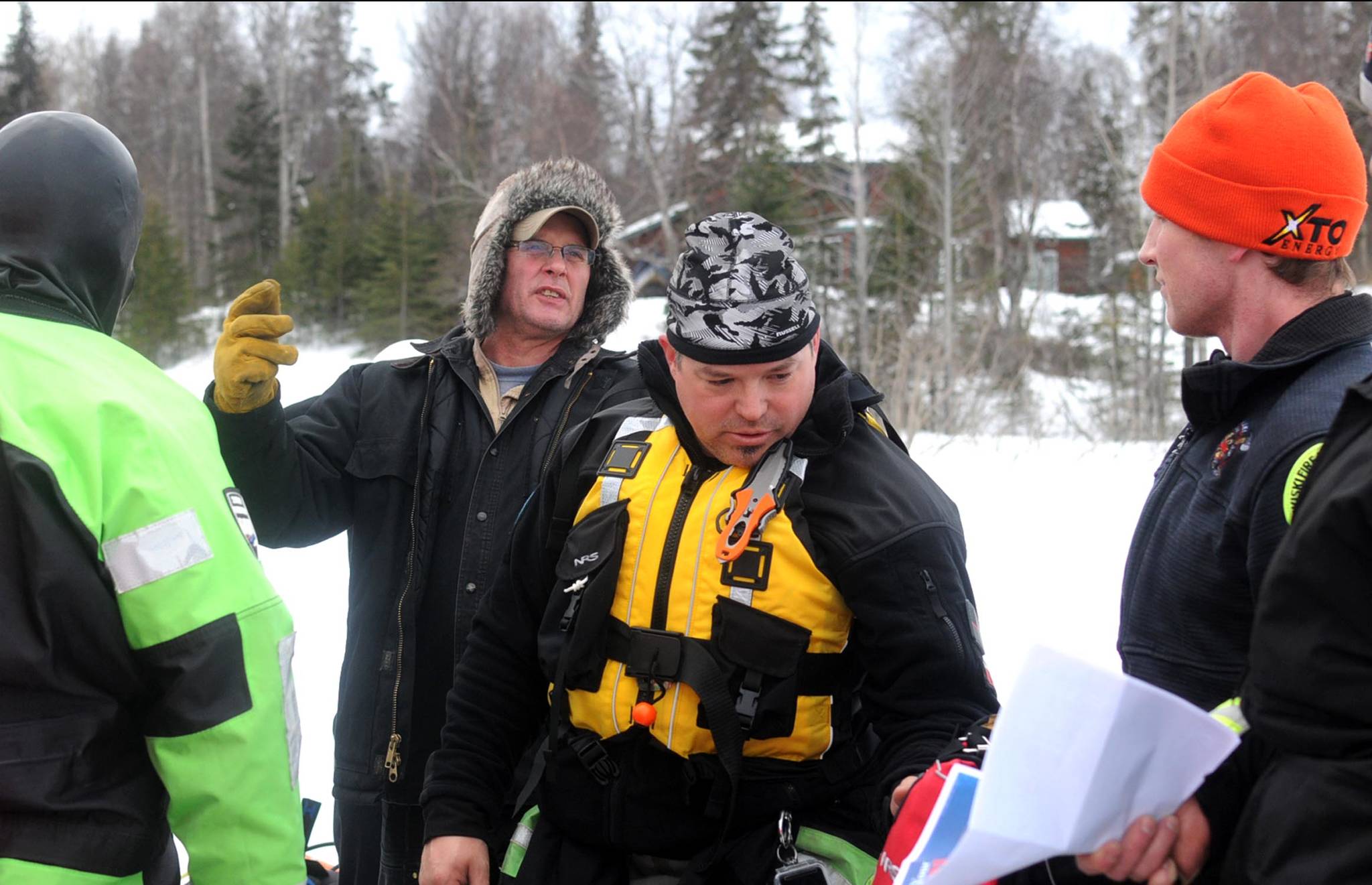
Mitch Osborne (back), owner of the Test the Waters dive shop in North Pole and an ice diving instructor, gives a safety briefing to members of the Nikiski Fire Department before an ice diving drill on Island Lake on Friday in Nikiski. The Nikiski Fire Department is working on getting its ice diving team up to certifications to perform operations on frozen lakes if need be, such as rescuing sunken cars or people or recovering evidence. (Photo by Elizabeth Earl/Peninsula Clarion)
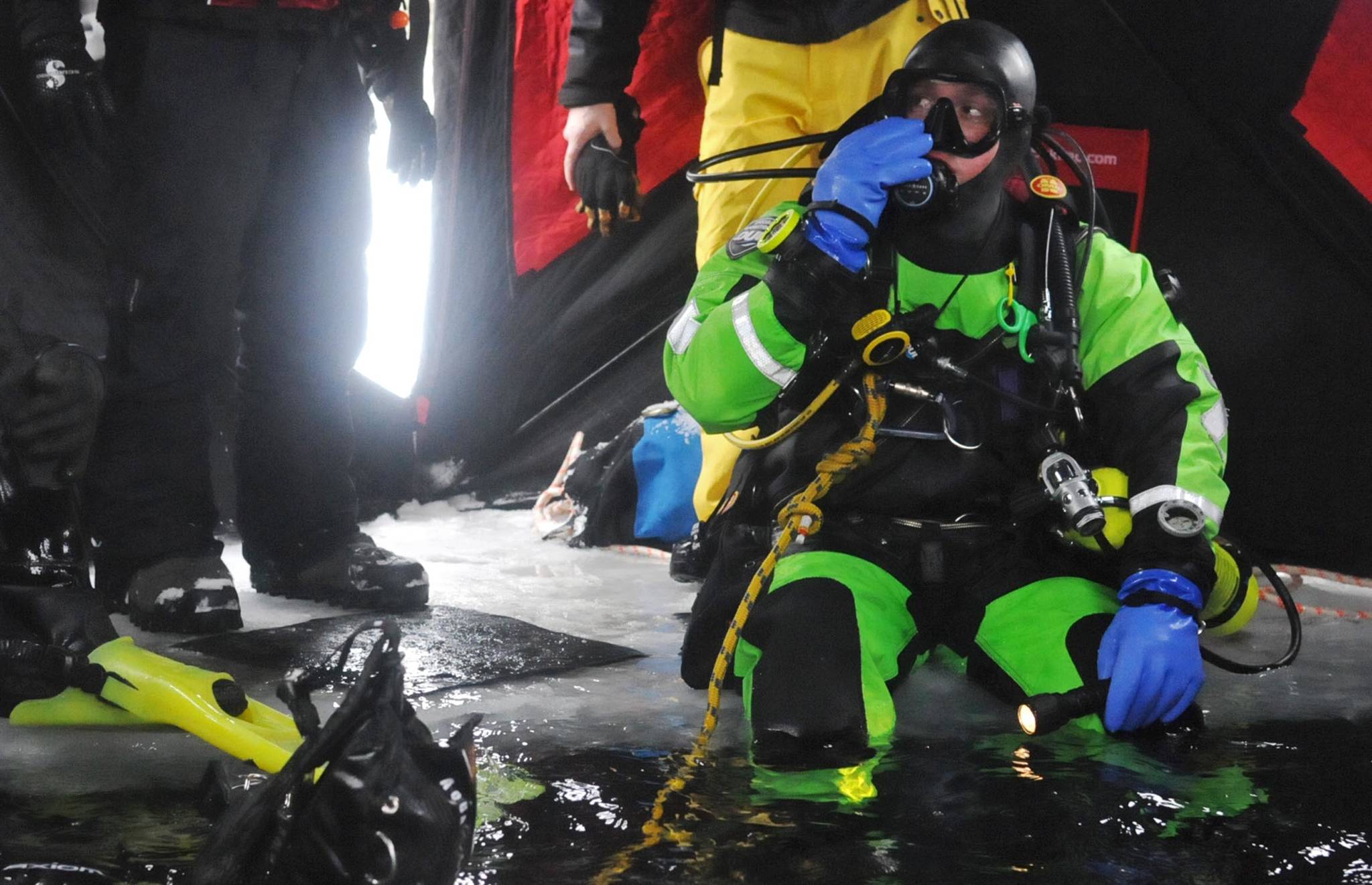
Kassidy Stock of the Nikiski Fire Department prepares to drop through a hole in the ice covering Island Lake as part of a training drill Friday, March 9, 2018 in Nikiski, Alaska. The Nikiski Fire Department is working on bringing all the members of its ice diving team up to proper certifications. To attain full certifications, divers have to clock a number of hours in the water, including practicing beneath the ice. (Photo by Elizabeth Earl/Peninsula Clarion)
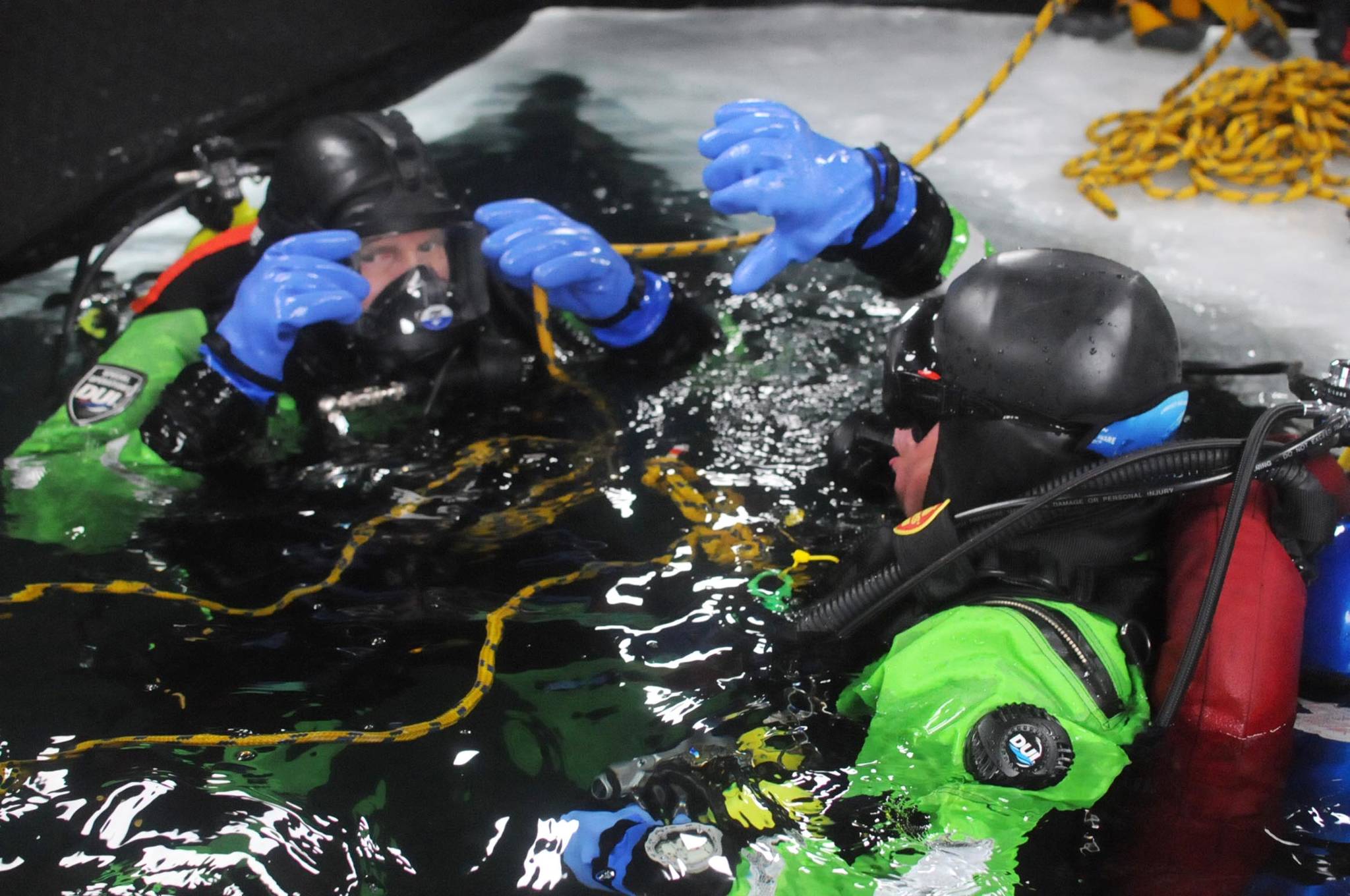
Kassidy Stock (right) of the Nikiski Fire Department signals diving partner Matt Quiner (left) to dive through a hole in the ice on Island Lake as part of a diving training drill Friday, March 9, 2018 in Nikiski, Alaska. The Nikiski Fire Department is working on getting its ice diving team up to certifications to perform operations on frozen lakes if need be, such as rescuing sunken cars or people or recovering evidence. (Photo by Elizabeth Earl/Peninsula Clarion)
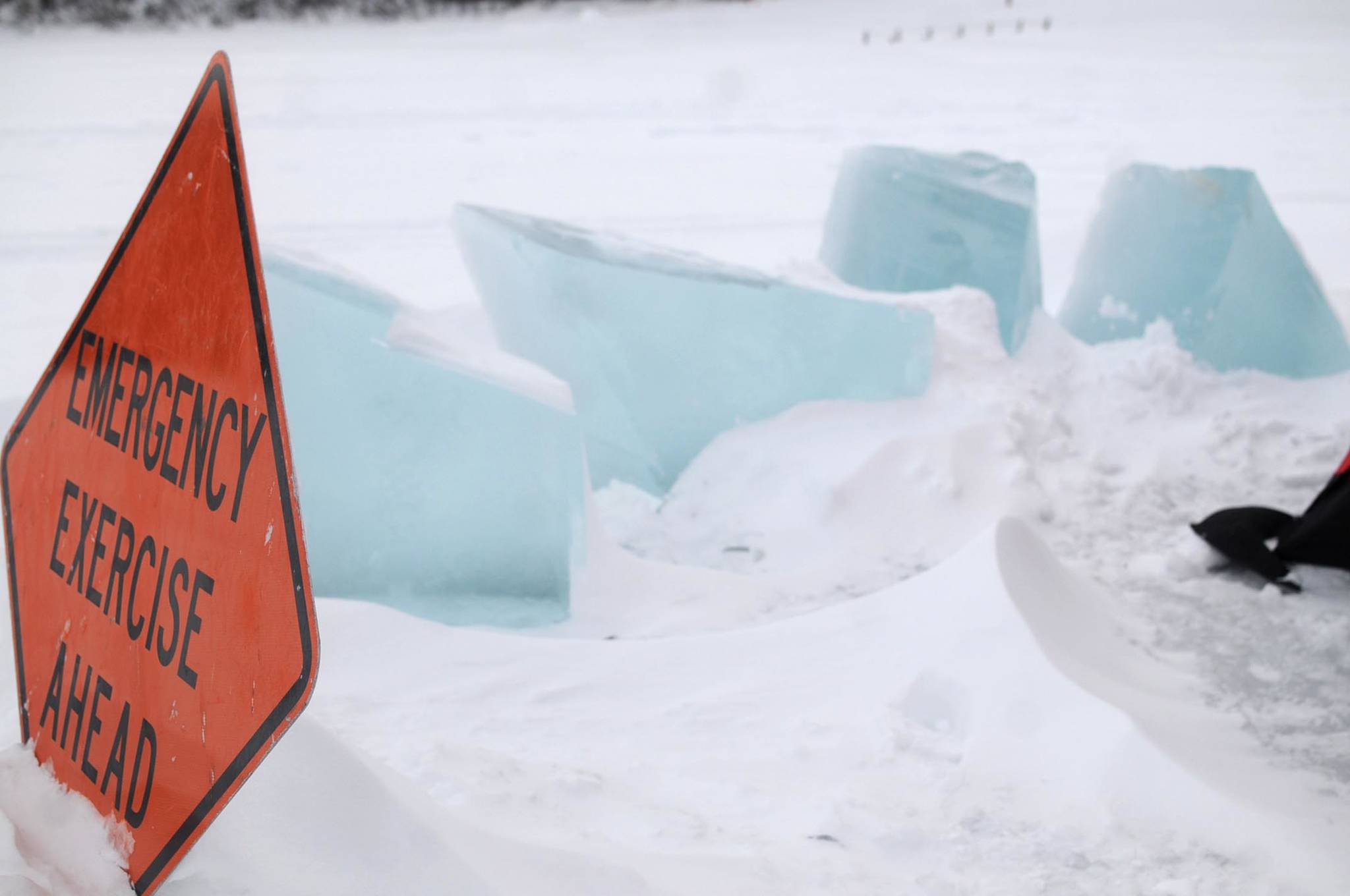
Three-foot high blocks of ice sit on the frozen surface of Island Lake near a sign warning the public that the Nikiski Fire Department is conducting an ice diving drill on Friday, March 9, 2018 in Nikiski, Alaska. The Nikiski Fire Department is working on bringing all the members of its ice diving team up to proper certifications. To attain full certifications, divers have to clock a number of hours in the water, including practicing beneath the ice. (Photo by Elizabeth Earl/Peninsula Clarion)
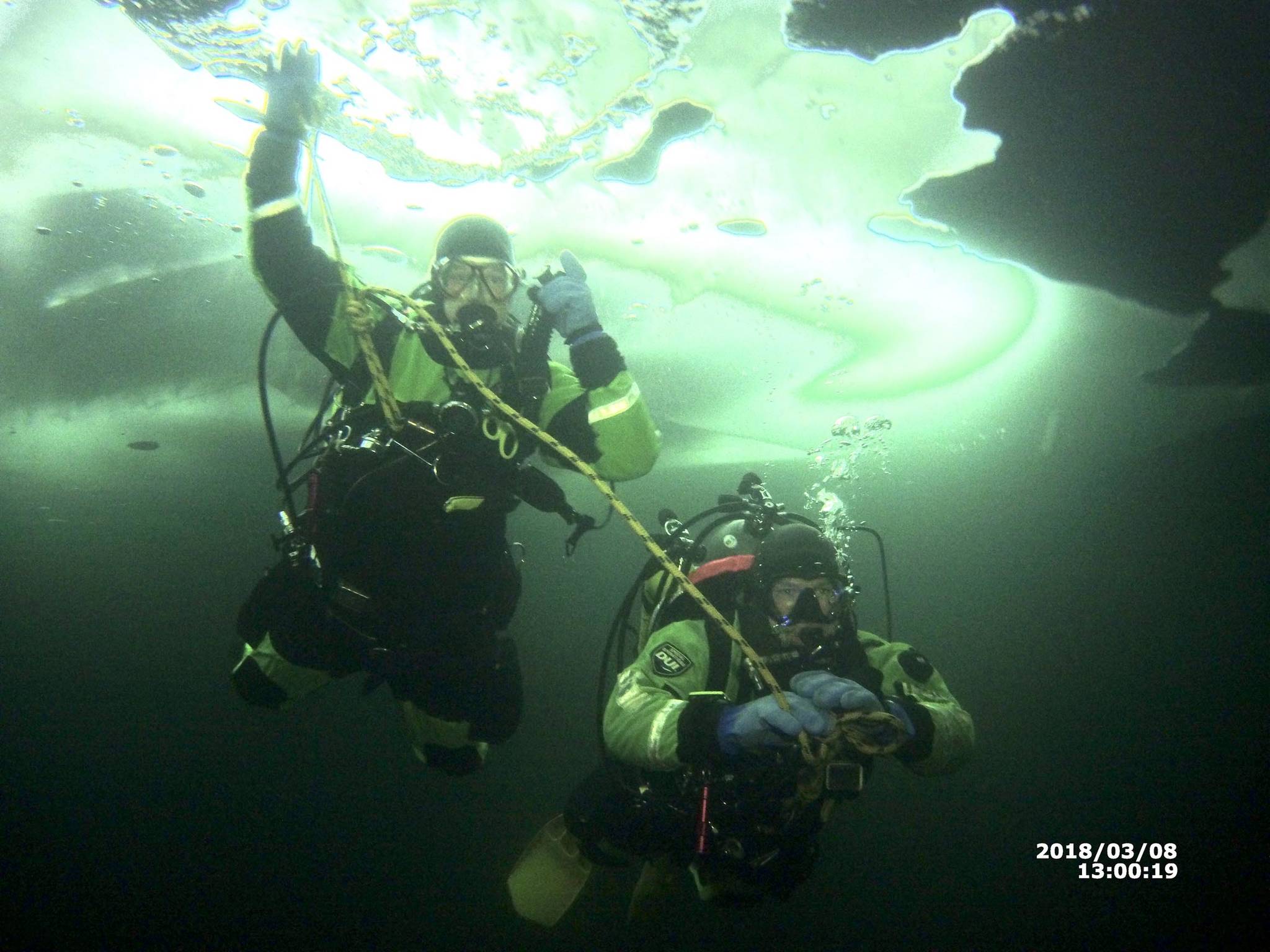
Nikiski Fire Department Senior Captain Bryan Crisp and firefighter Stephen Robertson dive beneath the ice of Island Lake on Thursday, March 8, 2018 in Nikiski, Alaska. Crisp and Robertson are leading an effort to rebuild Nikiski Fire Department’s ice diving team. (Photo courtesy Bryan Crisp)
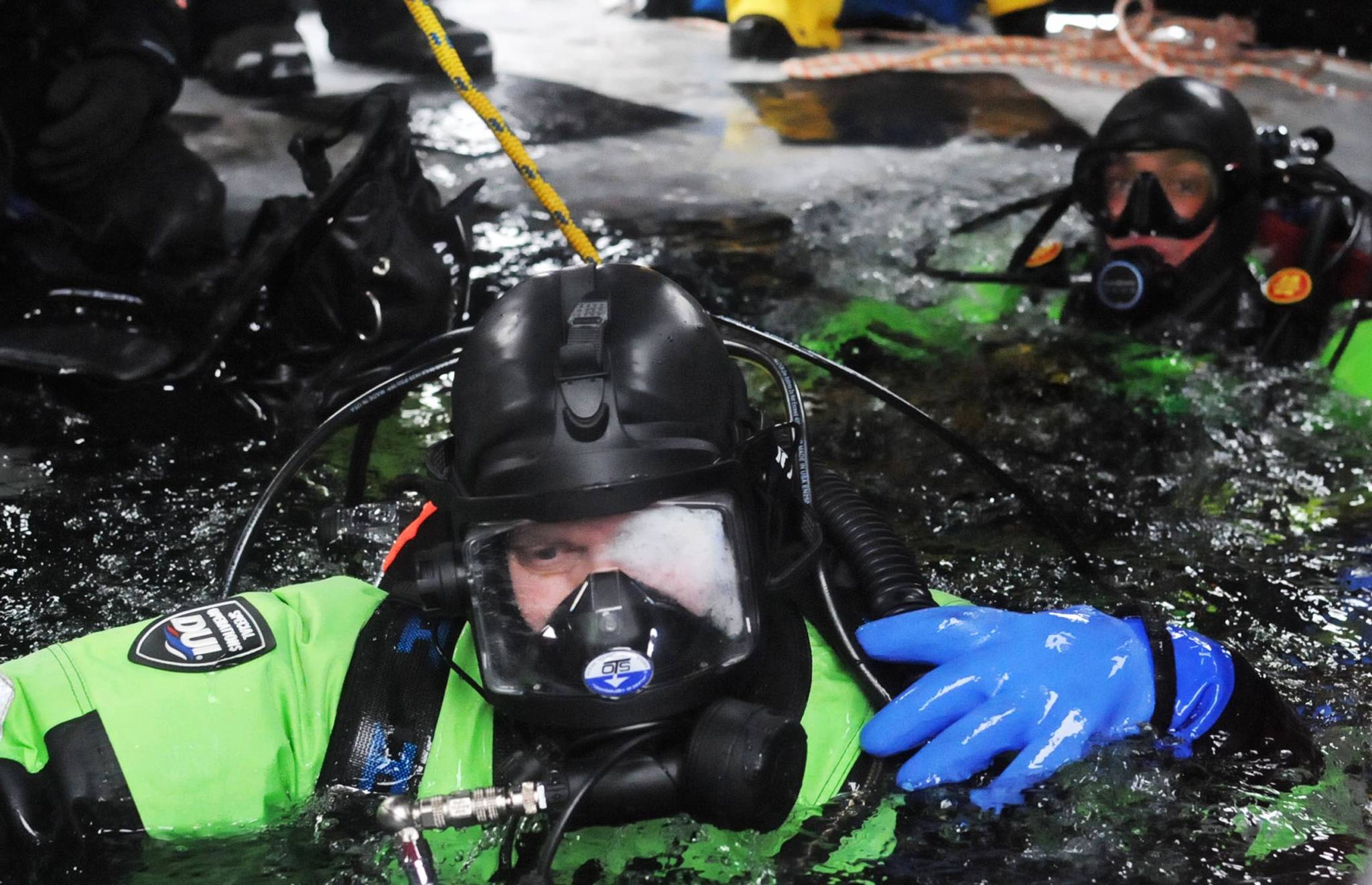
Matt Quiner (left) and Kassidy Stock (right) of the Nikiski Fire Department prepare to dive through a hole in the ice on Island Lake as part of a diving training drill Friday, March 9, 2018 in Nikiski, Alaska. The Nikiski Fire Department is working on getting its ice diving team up to certifications to perform operations on frozen lakes if need be, such as rescuing sunken cars or people or recovering evidence. (Photo by Elizabeth Earl/Peninsula Clarion)
