
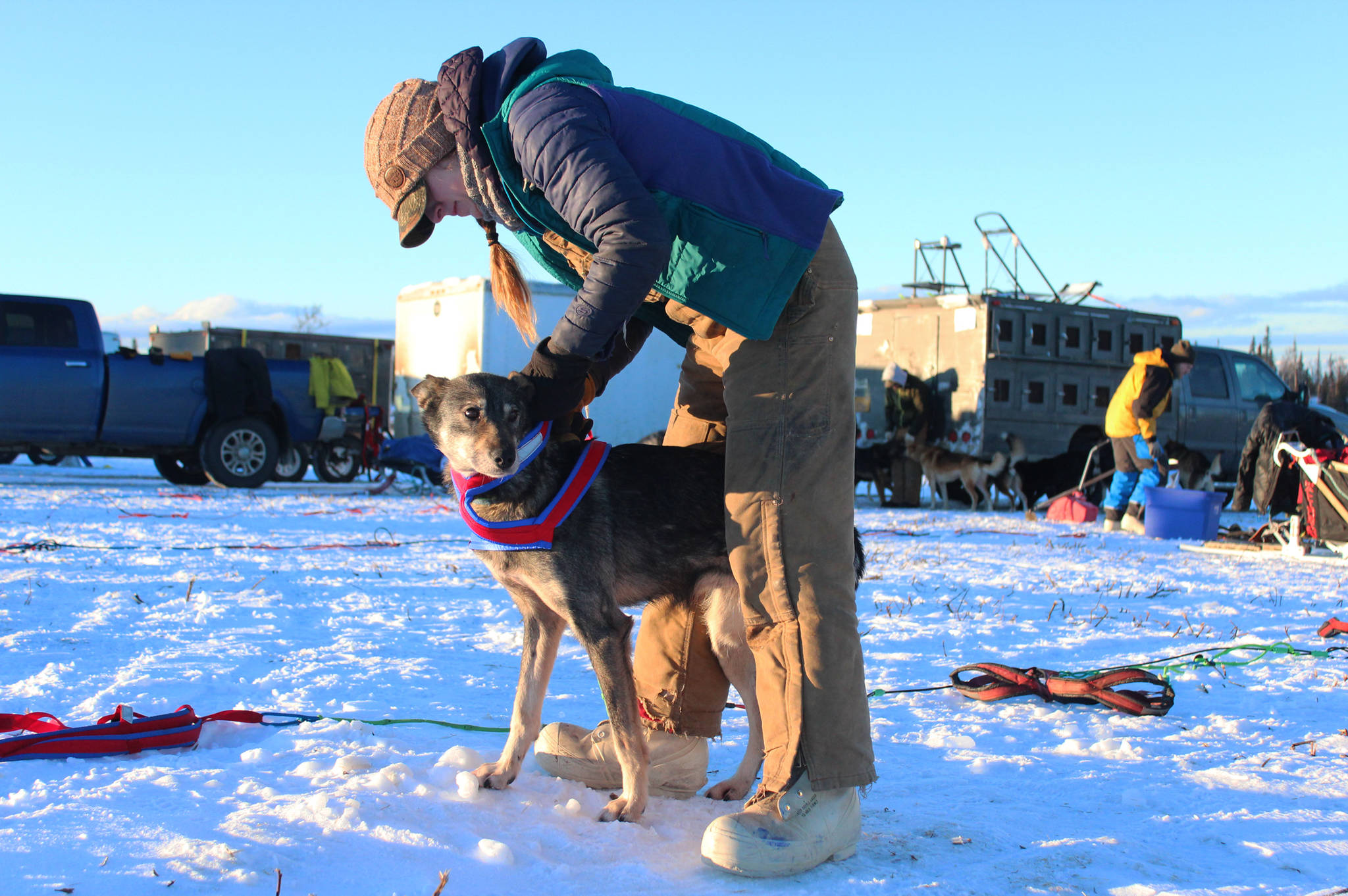
Musher Nicolas Petit can finally say he’s won the Tustumena 200 Sled Dog Race.
By claiming the top spot Sunday in the race that takes teams through the Caribou Hills on the southern Kenai Peninsula with time of 26 hours and 26 minutes, Petit topped his performance last year, when he took second to Cim Smyth. Petit had also run the T200 previously, before its 3-year drought from 2013-2016 due to lack of snow, but had to scratch.
This marks Petit’s third win in a row this season. A transplant from France, he has run in the Iditarod every year since 2011, finishing in third place last year.
“I wasn’t ever really worried,” he said of the win. “Because the outcome should only be, I ran my dogs to their capacity. So I don’t really care who’s coming (behind), but it’s interesting to see.”
Petit said this year’s change in the trail actually boded well for his team.
“We did a loop twice, which is nice because the dogs know what the deal is the second time you’re doing it,” he said. “And my dogs are used to loops — they like that stuff.”
Petit was followed by Travis Beals of Seward in second place and Dave Turner of Fairbanks in third.
“The main goal was to train for (the) Iditarod,” Beals said. “… The main goal was training, but I don’t know, the dogs were performing so I (let them) do what they wanted to do, and they wanted to go.”
Beals will return to the Iditarod this year after having been banned in 2017 when the Iditarod Trail Committee in 2016 discovered he had been charged with fourth-degree assault and fifth-degree criminal mischief in connection with a 2015 domestic violence case. Those two charges were dismissed in 2017 and Beals provided proof to the committee that he had completed all the requirements given to him by the Palmer Coordinated Resources Project, a voluntary therapeutic court, the Anchorage Daily News reported.
Of returning to the Iditarod, Beals said it’s been his dream ever since childhood to win the race, so it’s good to be getting back to it. He said the reduced focus on racing over the last year and a half or so was a good thing, allowing him to focus on personal improvements.
A sign of the times
This year’s race was actually shy of its usual 200 miles — it came in at 167.3 to be exact — due to, you guessed it, lack of adequate snow. The trek usually begins in Kasilof with mushers working their way down to Freddie’s Roadhouse off Oilwell Road in Ninilchik, and then to McNeil Canyon Elementary School near Homer before looping back.
This year, the course had to be changed into a roughly 100-mile loop from Ninilchik to McNeil Canyon and back, which teams completed twice to finish the race.
“They’re going down one way and coming back another way,” said Race Director Tami Murray before the start Saturday.
She said changes and modifications to the trail were being made as late as Friday night, the night before mushers were set to take off. Several signs and some volunteers were posted along the trail in spots with significant turns or where the path might appear confusing in order to direct mushers and their dogs.
Murray said race organizers were glad to be able to bring the race back after the recent history of cancellations.
“We were super excited and realized that we could bring it up here to Freddie’s to start it, because there’s really a sufficient amount of snow up here,” Murray said.
The Caribou Cabin Hoppers along with the Snowmads and Trail Boss Jason Young all worked together to form a new trail that would work, Murray said.
“We had to make up 50 miles that we didn’t have,” she said.
Mushers spread their mandatory 10 rest hours between the three checkpoints — two at McNeil and one at Freddie’s Roadhouse, where the race eventually ended. Murray said that if weather and snow conditions continue to be an issue in the future, starting the race in Ninilchik could possibly become the norm.
Freddie Pollard and his wife, Emily, are the owners of the Roadhouse. They said they wouldn’t hesitate to host the race again if Ninilchik becomes the permanent starting point.
A good race
Children and people holding outstretched cell phones surrounded the dog sled teams assembled at Freddie’s Roadhouse in Ninilchik for the start of the race Saturday morning. Unfazed, mushers and handlers went about snapping their dogs into their lines and cooperating with race officials who stopped by to check their sleds prior to takeoff.
First out of the gate — and first in to the race’s first checkpoint at McNeil Canyon Elementary School — was Petit.
“It’ll be fun,” he said while readying his team near the starting line. “I wouldn’t be surprised if I’m second again.”
Asked what his focus would be for the race, Petit answered, “the scenery,” gesturing to the expansive Caribou Hills the race trail traverses and the crystal clear view of the Kenai Mountains across Cook Inlet.
With the exception of one dog, each of Petit’s sled dogs ran the T200 with him last year. Of the change in location from Kasilof to Ninilchik, Petit said, “If we always did the same thing, we’d be bored mushers.”
Just next door in the line of mushers and their trucks, Emily Maxwell was getting her team ready for their first-ever T200 race Saturday. She and Petit live and train together, and one of her lead dogs, Beemer, was originally his — she was dropped from his Iditarod team and moved over to Maxwell’s.
Maxwell said she expected the race to be enough of a challenge, with several hills and climbs, without being too intense. For her, the race would be about having fun and getting more experience ahead of her rookie run of the Iditarod this year, she said.
“I hear about hills a lot,” said, pausing to shout to a fellow musher that a loose dog was bounding toward his team. “Although I’m kind of wondering what kind of hills, because we did (the) Copper Basin (300), which is very straight up, straight down, forever and ever and ever. So these hills I’m kind of curious to know.”
Down at the other end of the line of teams, Lance Mackey prepared to make his first return to the race since around 2010, he said.
“It’s like coming home,” he said. “Unfortunately all the friends I haven’t seen maybe in that time have aged a little bit like myself, but, I mean, this is where my kennel started. I have a cabin just right over here, and you know, it’s pretty cool to come back and see some of the same people, the vets that helped me out when I was here and are still affiliated with the race.”
Mackey, who took fifth place, had said he was shooting to just have a good time with the T200. While he won’t be running the Iditarod this year, he said some of the dogs on his team might be, as he’s training them to hand off to another musher.
About 43 miles of trail south, volunteers and onlookers paced the grounds behind McNeil Canyon Elementary School waiting for the first mushers to arrive at the race’s first checkpoint. The teams had to complete a 100-mile loop from Ninilchik to McNeil and back twice to finish the race. This puts two checkpoints at McNeil and one at Freddie’s Roadhouse, where the race ended Sunday afternoon.
Turner, who claimed third place in last year’s T200 race the first time he ever ran it, pulled into the checkpoint minutes behind Petit.
“This is almost the same trail as last year for this section,” Turner said of the stretch from Ninilchik to Homer. “And … we had over 5,000 feet of climbing, so there’s a lot of hills. It’s a lot of fun. It’s a lot of work, though.”
Turner said a big focus for him this race was making sure his dogs paced themselves so that they have enough energy to run well on the last leg.
“Convincing the dogs to take it easy in the sun is kind of tough,” he said.
Half of Turner’s dogs ran the T200 with him last year while the other half are yearlings. He said he aimed to win this year, but didn’t want to push his dogs farther than they could go.
“At the same time, I have young dogs,” he said. “So I’m trying to win within their abilities. So, I think that if we run our best, and run a really good race, and finish strong, I think that we’re good enough that we should be able to win. But everything has to go right,”
Several mushers spoke to the friendly atmosphere surrounding the T200 and how fun the volunteers and community make it. Maxwell said, having never done the race before, she’s heard from others that it’s really fun and that everyone is friendly.
“This community is so welcoming to the mushers when we come,” Petit said.
“I thought they did an incredible job,” Beals said. “… Going to the musher’s meeting, the trail description was less than desirable but the actual trail was good.”
A first time for everything
Of the three mushers who scratched in this year’s T200, two of them were in it together from the beginning. Bradley Farquhar also lives with Petit and Maxwell and was set to run the race. His friend from Canada, Chris Snoyer, was set to come down for a visit the same weekend, so Farquhar suggested he lend a hand by helping him run some dogs and hop on a sled himself.
Snoyer had never been on a sled before in his life.
“Brad had told me what he was doing, training for the Iditarod, and suggested that I should come out there,” he said. “And immediately I was thinking like, wow, how many chances in my life will I have the opportunity to come … out and help a friend train for Iditarod?”
When Snoyer booked his trip and Farquhar told him it was the same weekend as the T200, they came up with the idea that Snoyer should just do it with him. Snoyer had next to no time to actually train on a sled, but got lots of advice and tips from both Farquhar and Peiti ahead of the race, he said.
“It was amazing,” Snoyer said of the race. “It was super cool. There’s not a lot of other things that you could compare it to, I don’t think.”
The fun was cut short, however, when the fact that Farquhar had three female dogs in heat running on his team became a problem for the rest.
“One dog, I’ve dealt with before,” he said. “And I think two, almost (could work). But you have three dogs (in heat) and we were trying to stay together because it was Chris’s first race.”
Not only did the three dogs in heat distract the rest of Farquhar’s team, they wreaked havoc on Snoyer’s as well.
“With two teams together and all those dogs in heat, the front team wouldn’t want to run, because … there’s dogs in the back that are in heat,” Farquhar said. “So all the dogs in the front, the back team would chase, but then the girls would turn around and come back to the males.”
He said even when they tried to have Snoyer pass and lead for a while, the two teams would just stick together and get tangled up.
The two teams made it through the first checkpoint in McNeil Canyon and back to the starting point in Ninilchik without any issues. It’s when they started out to make the loop again that things began to unravel.
“It took us close to four hours to get 8 miles,” Farquhar said.
He even took the three dogs in heat off the line and put them in the bag on his sled, but it didn’t stop the male dogs from turning around to try to get to them.
Farquhar said that third leg was when he and Snoyer made the decision to find a good place to turn around and scratch. They could have pushed through to McNeil Canyon, but he said he was worried about what kind of shape the teams would be in by then.
All in all, the pair still view the race as having been worth it.
“It was a success other than not getting the 200 miles,” Farquhar said.
T200 results:
1) Nicolas Petit
2) Travis Beals
3) Dave Turner
4) Crispin Studer
5) Lance Mackey
6) Robert Redington
7) Martine Le Levier
8) Monica Zappa
9) Tim Osmar
10) Anna Berington
11) Sarah Stokey
12) Dennis Kananowicz
13) Kristy Berington
14) Emily Maxwell
15) Emily Thiem
Scratched: Andy Pohl, Bradley Farquhar and Chris Snoyer
T100 results:
1) MyDzung Osmar
2) Edda Jessen
3) Frank Habermann
4) Alexandra Rochat
5) Leah Gifford
6) Talia Martens
7) Jae March
8) Gus Guenther
Reach Megan Pacer at megan.pacer@homernews.com.
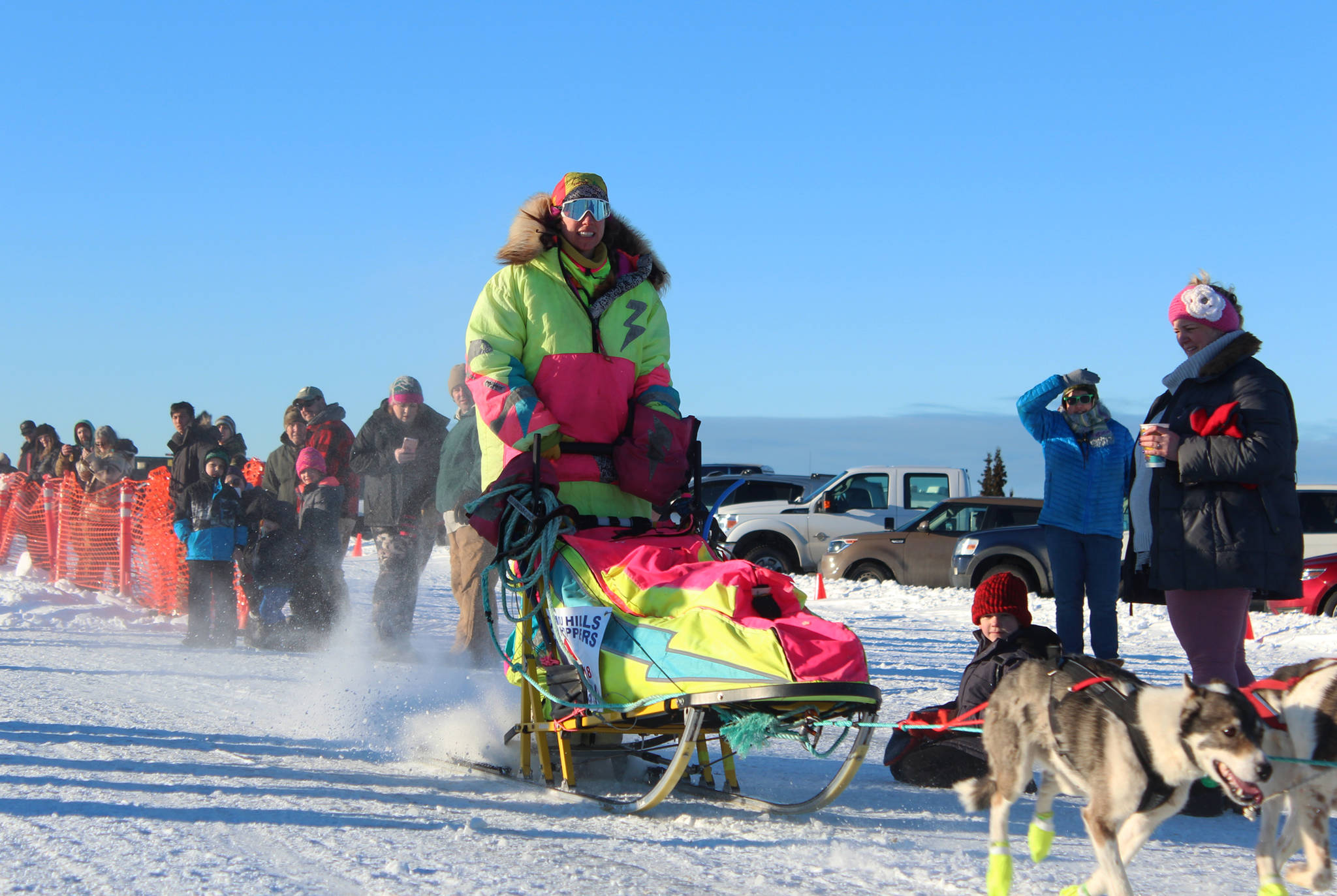
Monica Zappa, in her telltale neon garb, takes off with her team from the starting line of this year’s Tustumena 200 Sled Dog Race on Saturday, Jan. 27, 2018 at Freddie’s Roadhouse in Ninilchik, Alaska. (Photo by Megan Pacer/Homer News)
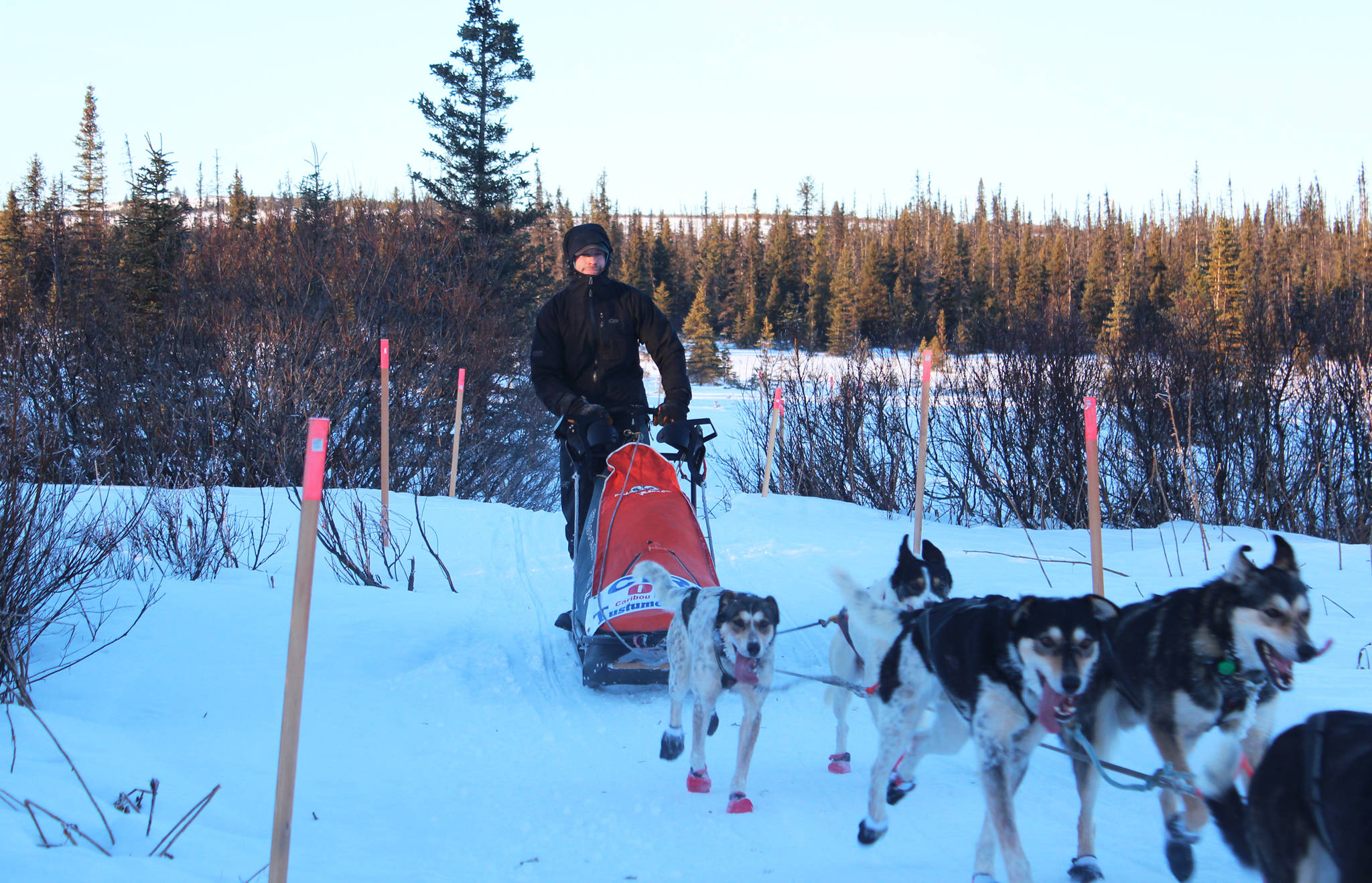
Fairbanks musher Dave Turner brings his team in to the first checkpoint in the Tustumena 200 Sled Dog Race on Saturday, Jan. 27, 2018 at McNeil Canyon Elementary School near Homer, Alaska. Originally from Portland, Oregon, Turner ran the T200 for the first time last year and took third place. This year, he said, he’s going for the win. (Photo by Megan Pacer/Homer News)
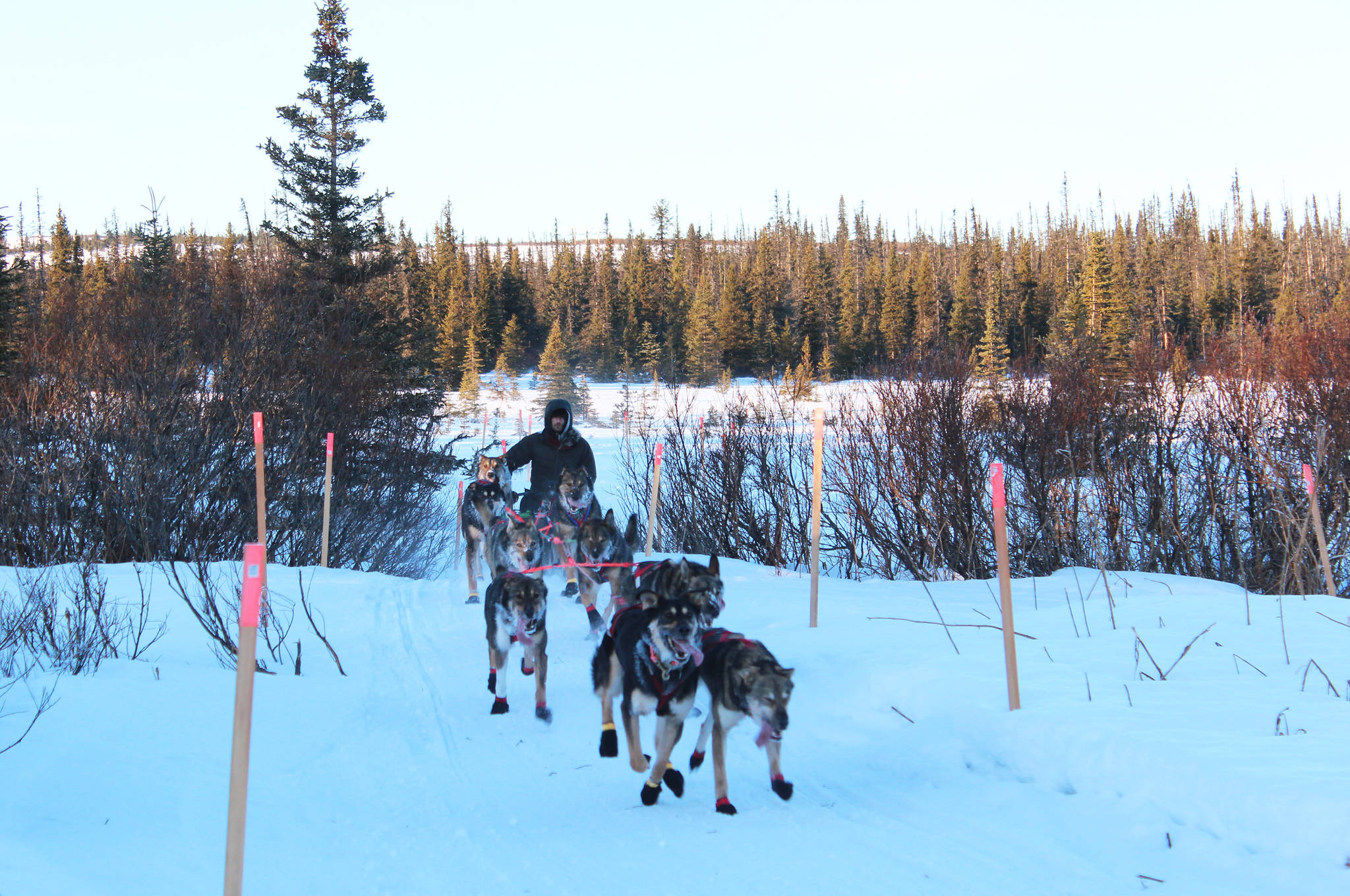
Nicolas Petit and his sled dog team pull in to the first checkpoint of the Tustumena 200 Sled Dog Race on Saturday, Jan. 27, 2018 at McNeil Canyon Elementary School near Homer, Alaska. Petit, who took second place in the T200 last year, was the first to arrive at the checkpoint. (Photo by Megan Pacer/Homer News)
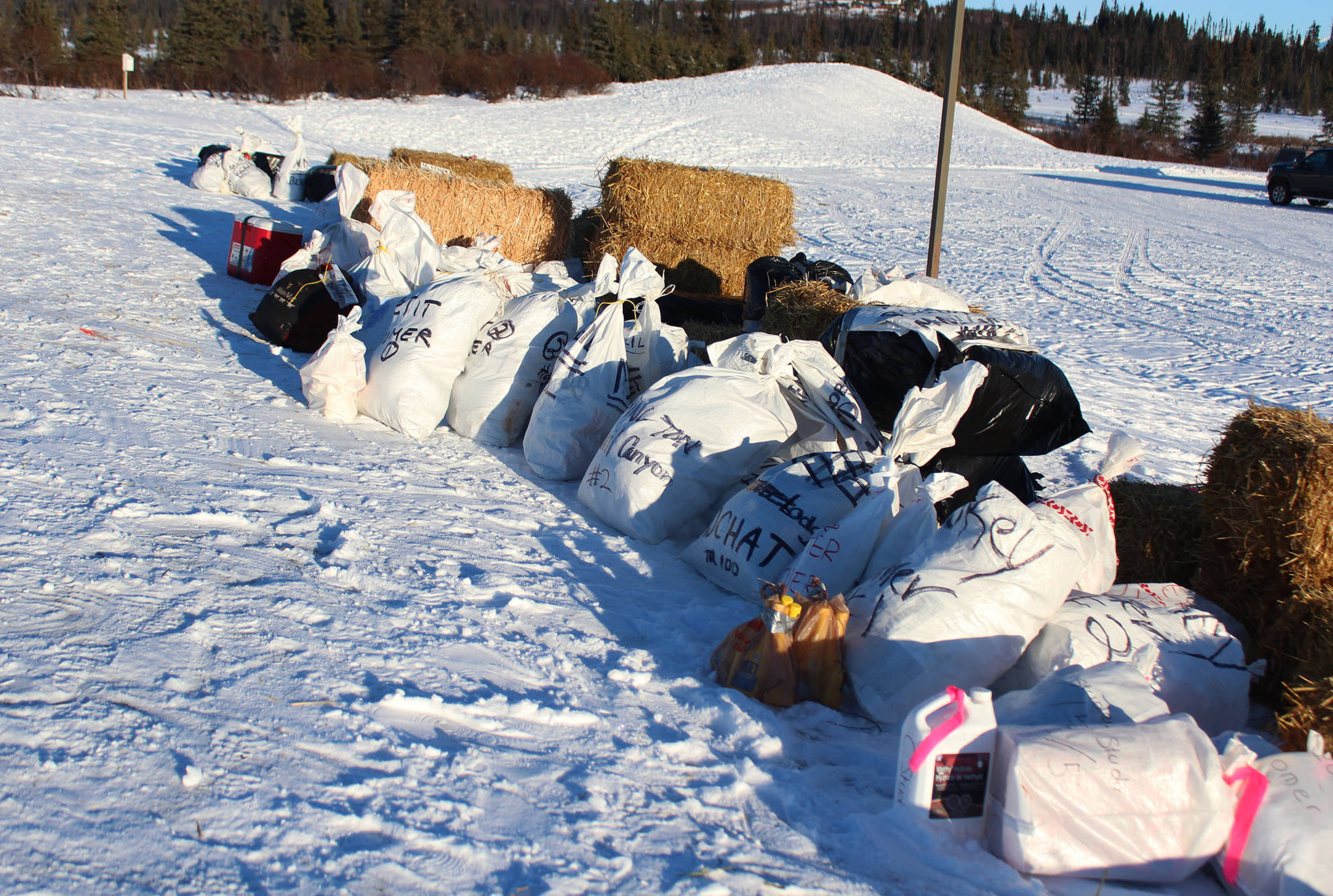
Bags of supplies and bales of hay await their corresponding mushing teams at a race checkpoint Saturday, Jan. 27, 2018 outside McNeil Canyon Elementary School near Homer, Alaska. (Photo by Megan Pacer/Homer News)
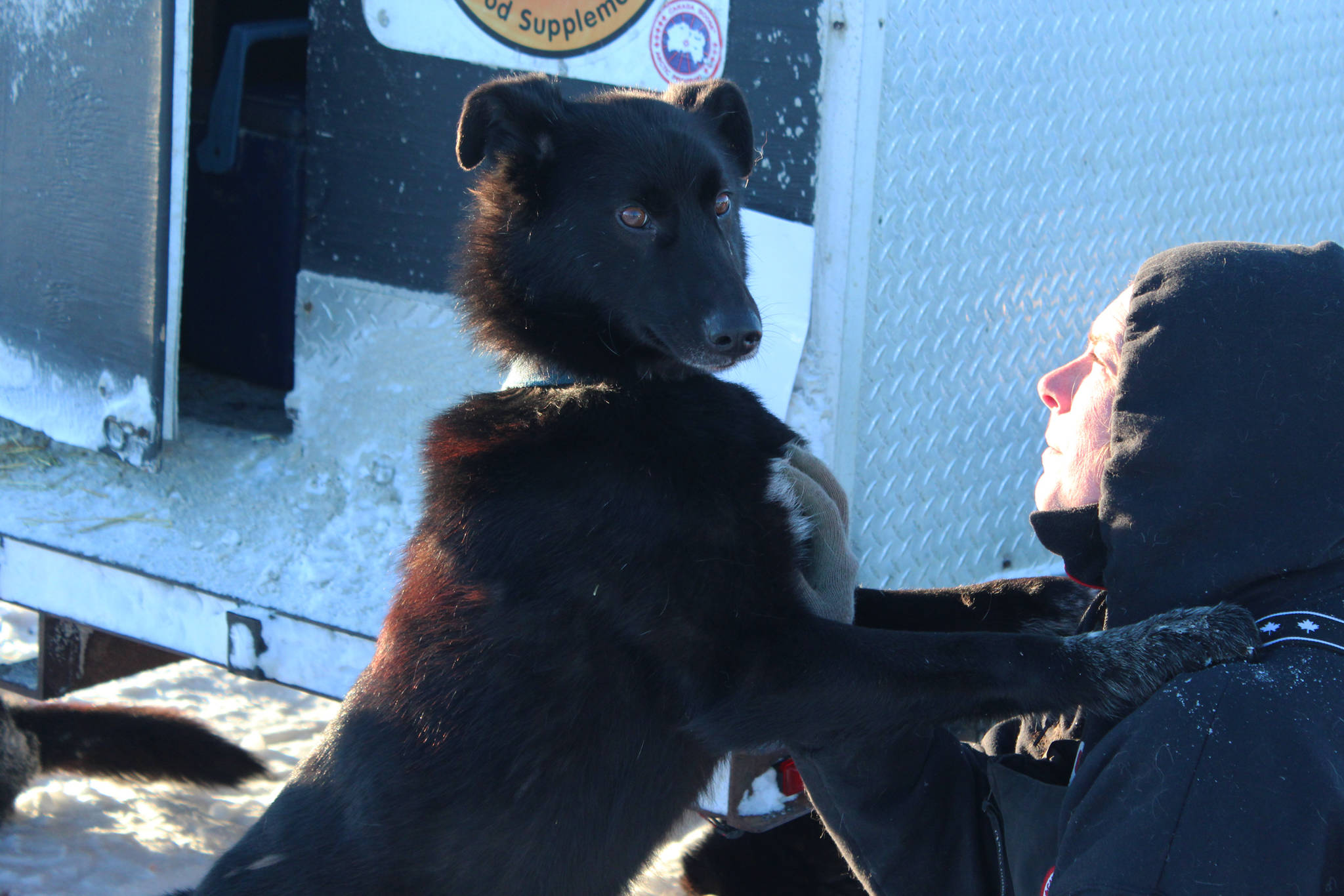
Mohawk, one of musher Lance Mackey’s dogs, takes comfort from handler Brooke Thompson before the start of this year’s Tustumena 200 Sled Dog Race on Saturday, Jan. 27, 2018 at Freddie’s Roadhouse in Ninilchik, Alaska. (Photo by Megan Pacer/Homer News)
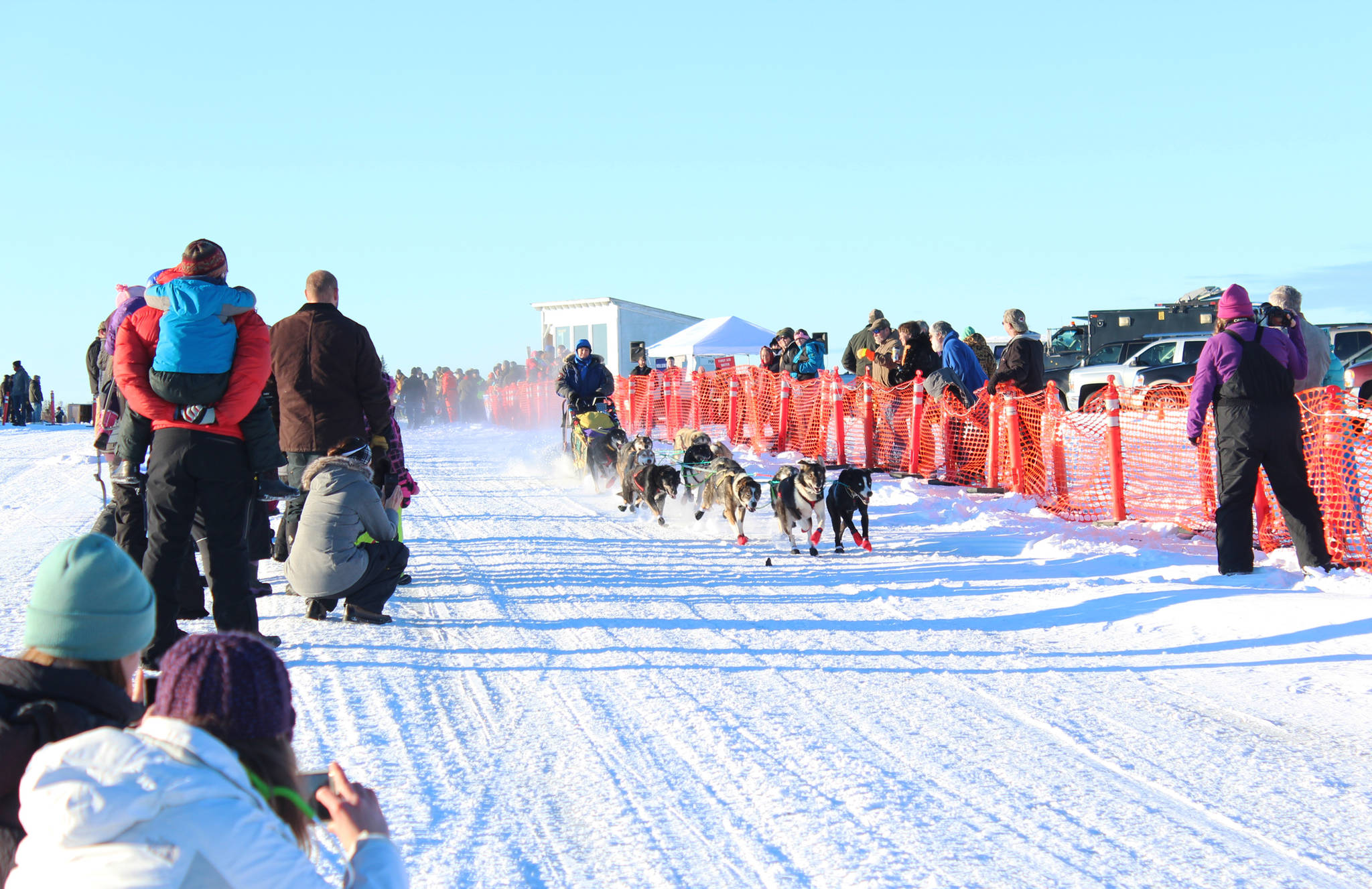
Onlookers line the race trail and snap photos as a sled dog team takes off from the starting line of the Tustumena 200 Sled Dog Race on Saturday, Jan. 27, 2018 at Freddie’s Roadhouse in Ninilchik, Alaska. The race, which returned last year after being canceled in 2014, 2015 and 2016, is a roughly 100-mile loop that mushers will complete twice before finishing back in Ninilchik. (Photo by Megan Pacer/Homer News)
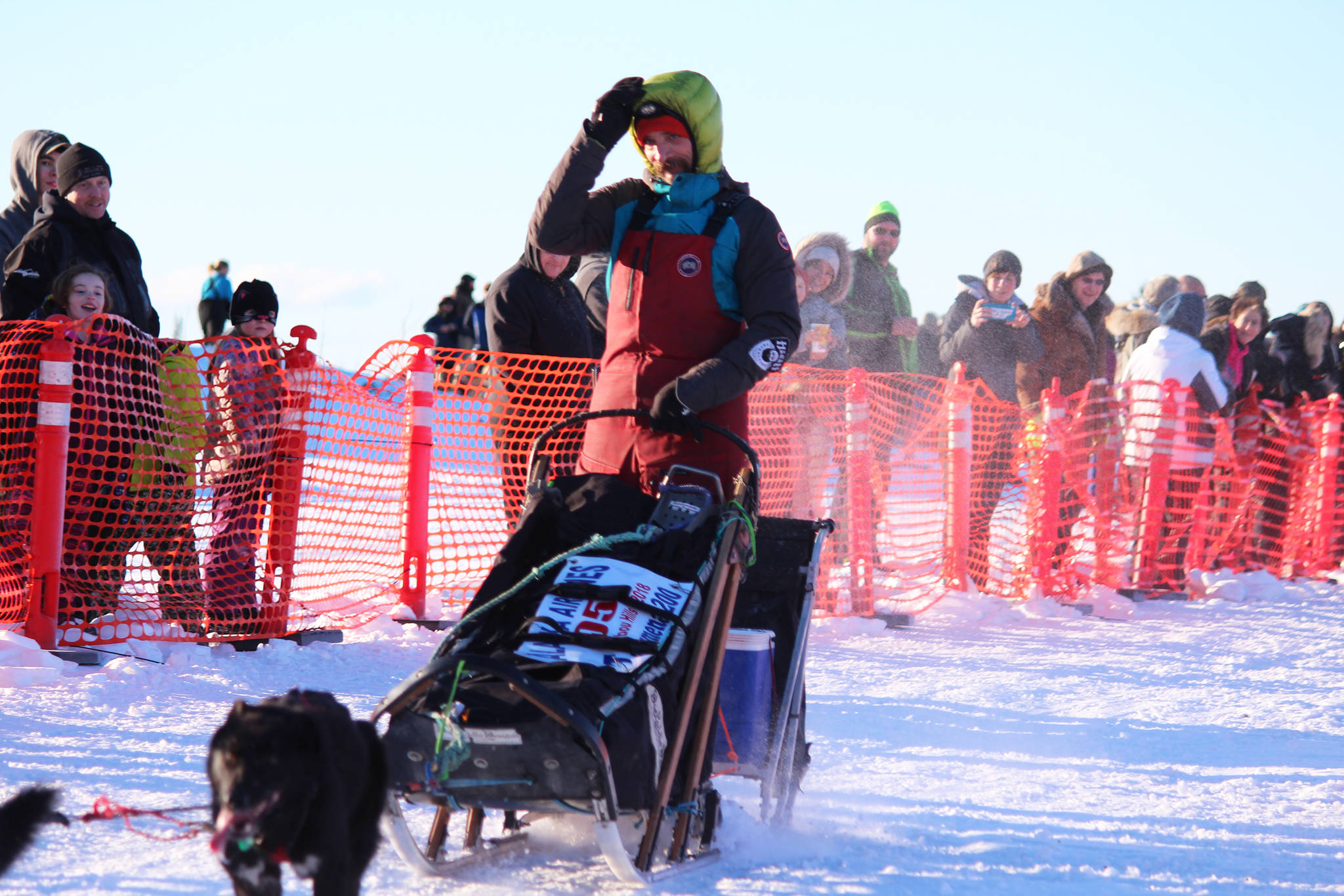
Musher Lance Mackey takes off from the starting line of the Tustumena 200 Sled Dog Race with his team Saturday, Jan. 27, 2018 at Freddie’s Roadhouse in Ninilchik, Alaska. Lance returns to the race this year after being absent since about 2010, he said. The race was also canceled three years in a row from 2014-2016. (Photo by Megan Pacer/Homer News)
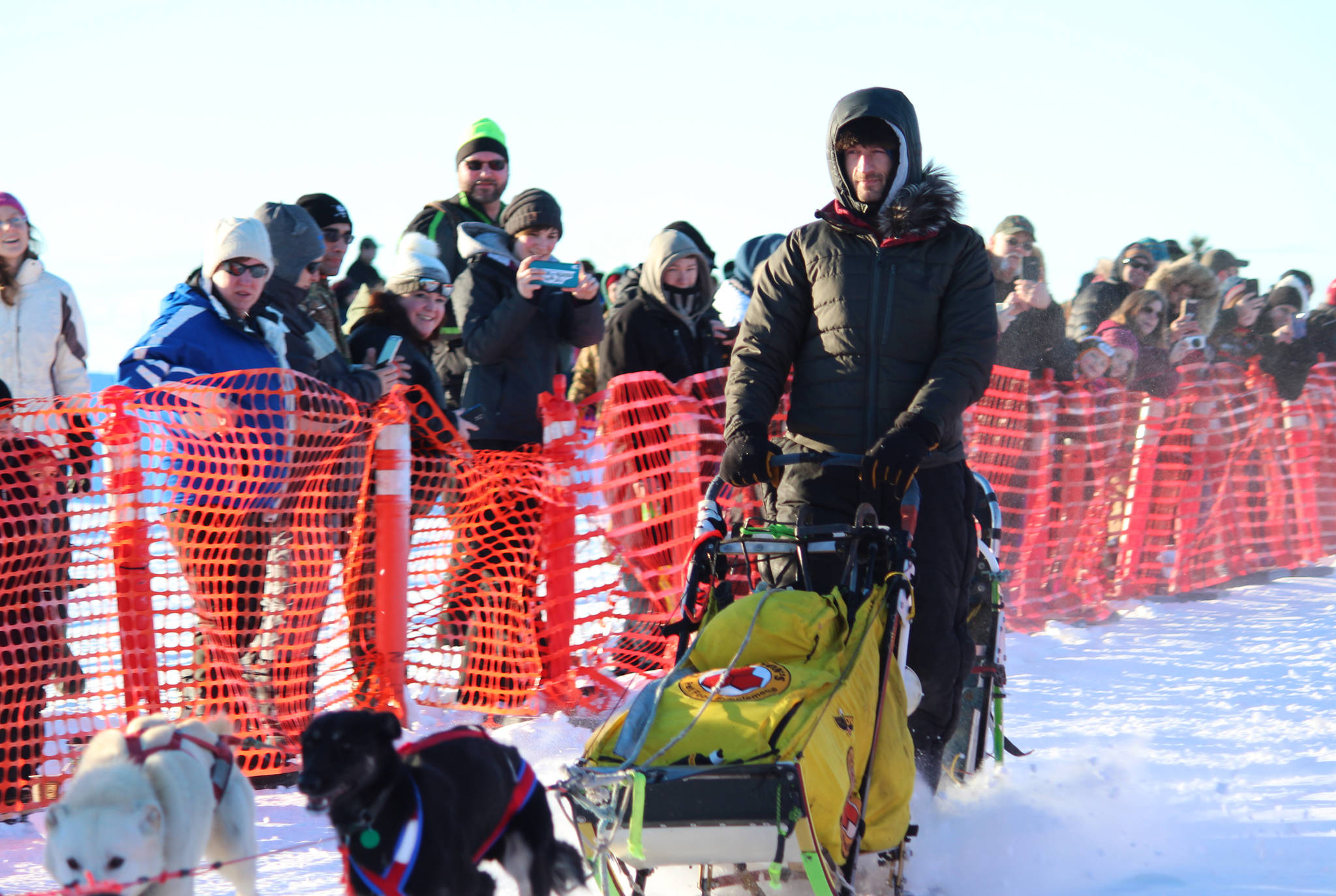
Musher Nicolas Petit takes off with his team from the starting line of this year’s Tustumena 200 Sled Dog Race on Saturday, Jan. 27, 2018 at Freddie’s Roadhouse in Ninilchik, Alaska. Petit, who took second place in last year’s T200, was the first to start this year and also the first to reach the McNeil Canyon checkpoint. (Photo by Megan Pacer/Homer News)
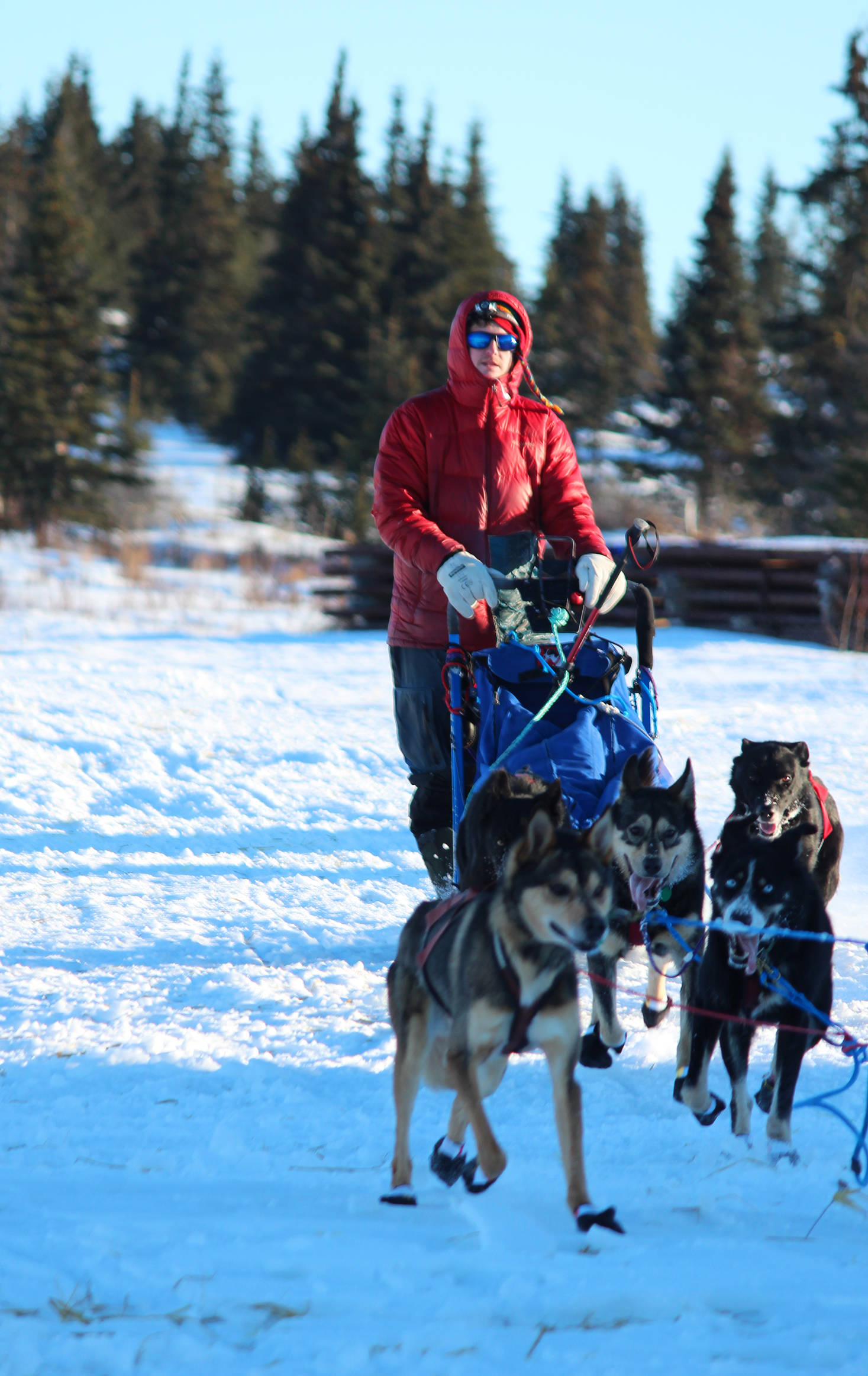
Musher Travis Beals crosses the finish line of the Tustumena 200 Sled Dog Race with his team to take second place Sunday, Jan. 28, 2018 at Freddie’s Roadhouse in Ninilchik, Alaska. Beals came in just after winner Nicolas Petit and said he used the race as training for this year’s Iditarod. (Photo by Megan Pacer/Homer News)
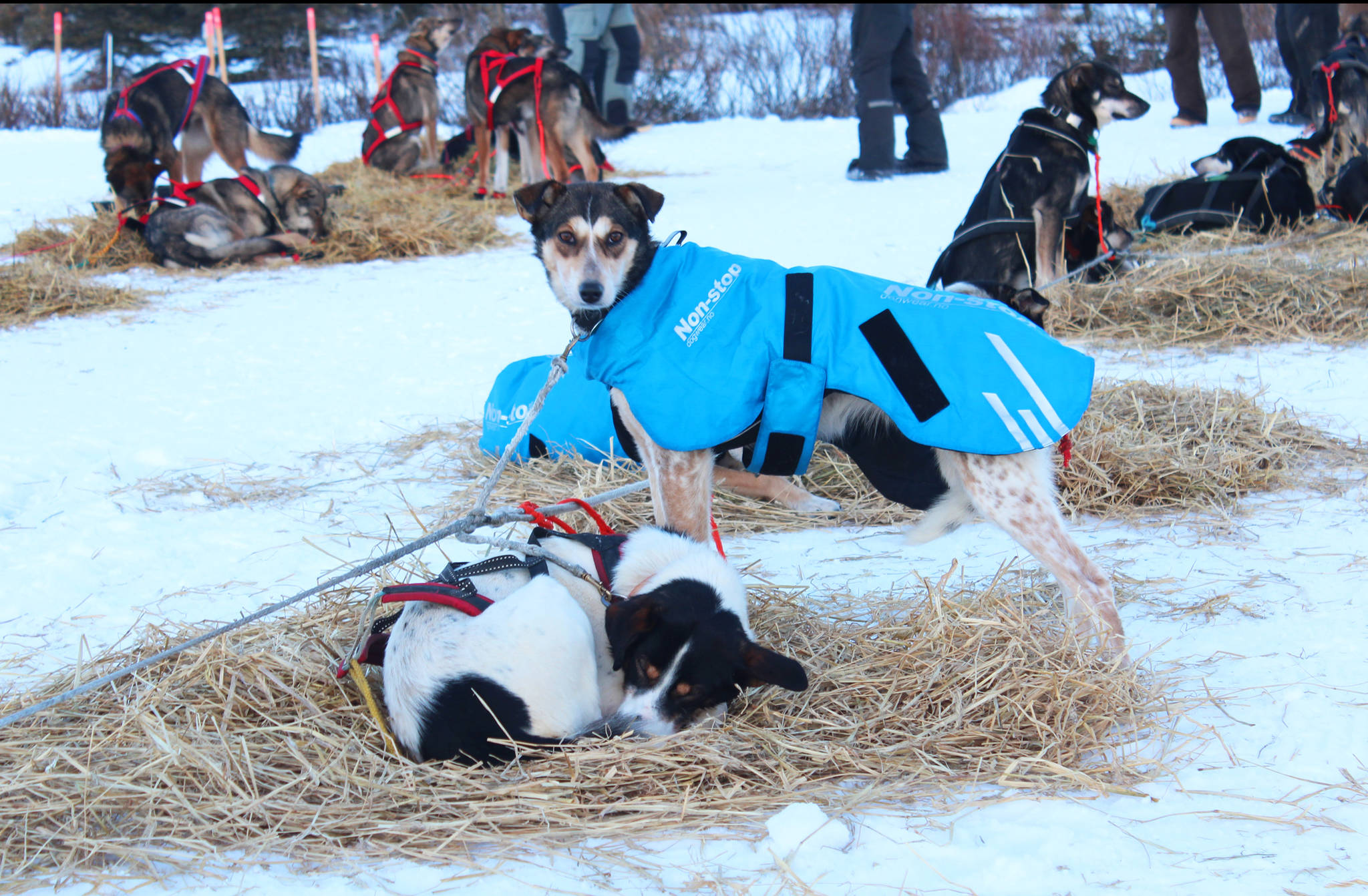
Two of musher Dave Turner’s dogs — Sasquash, foreground, and Delta, background — take a break in some hay during their first checkpoint of this year’s Tustumena 200 Sled Dog Race at McNeil Canyon Elementary School near Homer, Alaska. (Photo by Megan Pacer/Homer News)
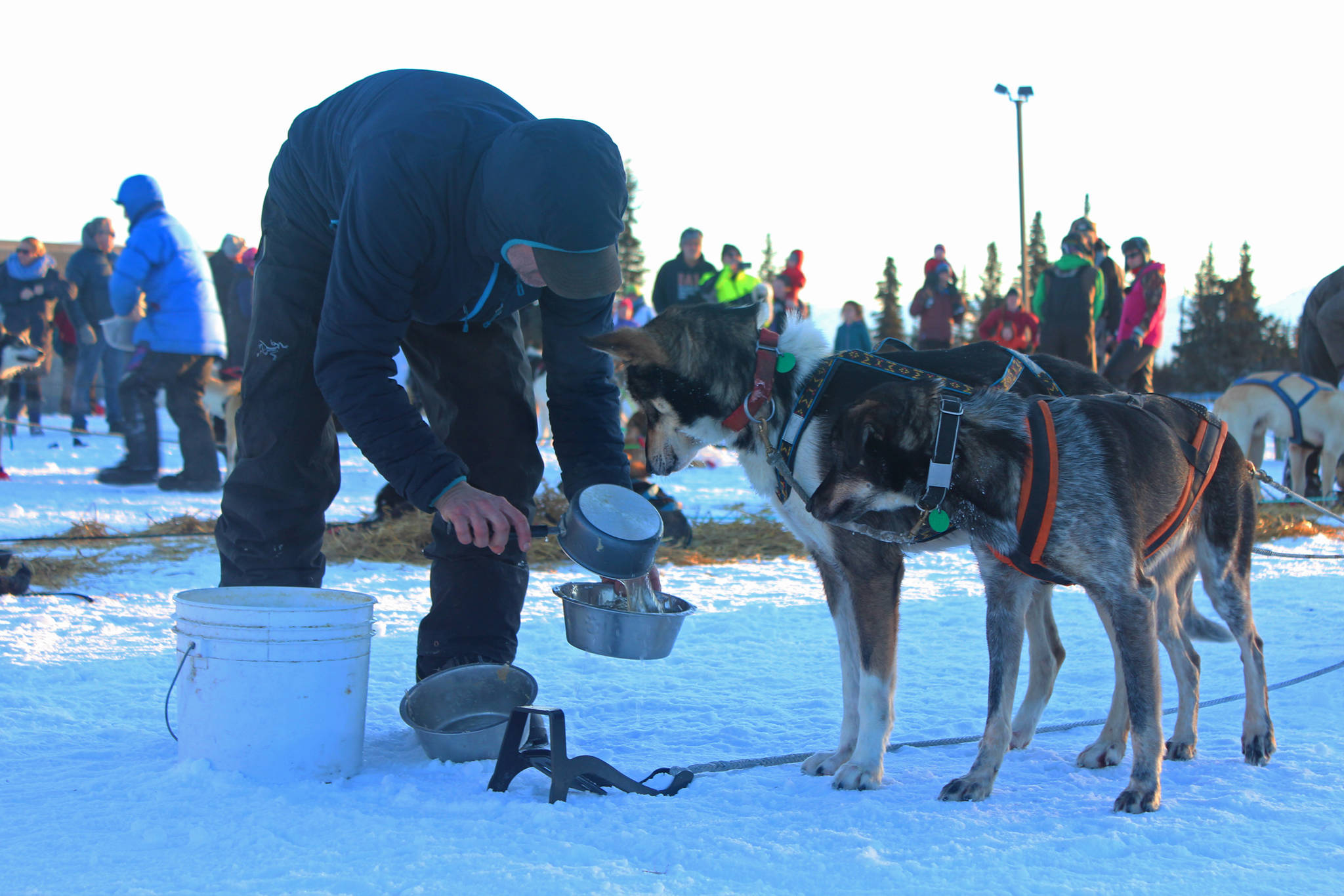
Musher Dave Turner feeds his two lead dogs at the first checkpoint in the Tustumena 200 Sled Dog Race on Saturday, Jan. 27, 2018 at McNeil Canyon Elementary School near Homer, Alaska. (Photo by Megan Pacer/Homer News)
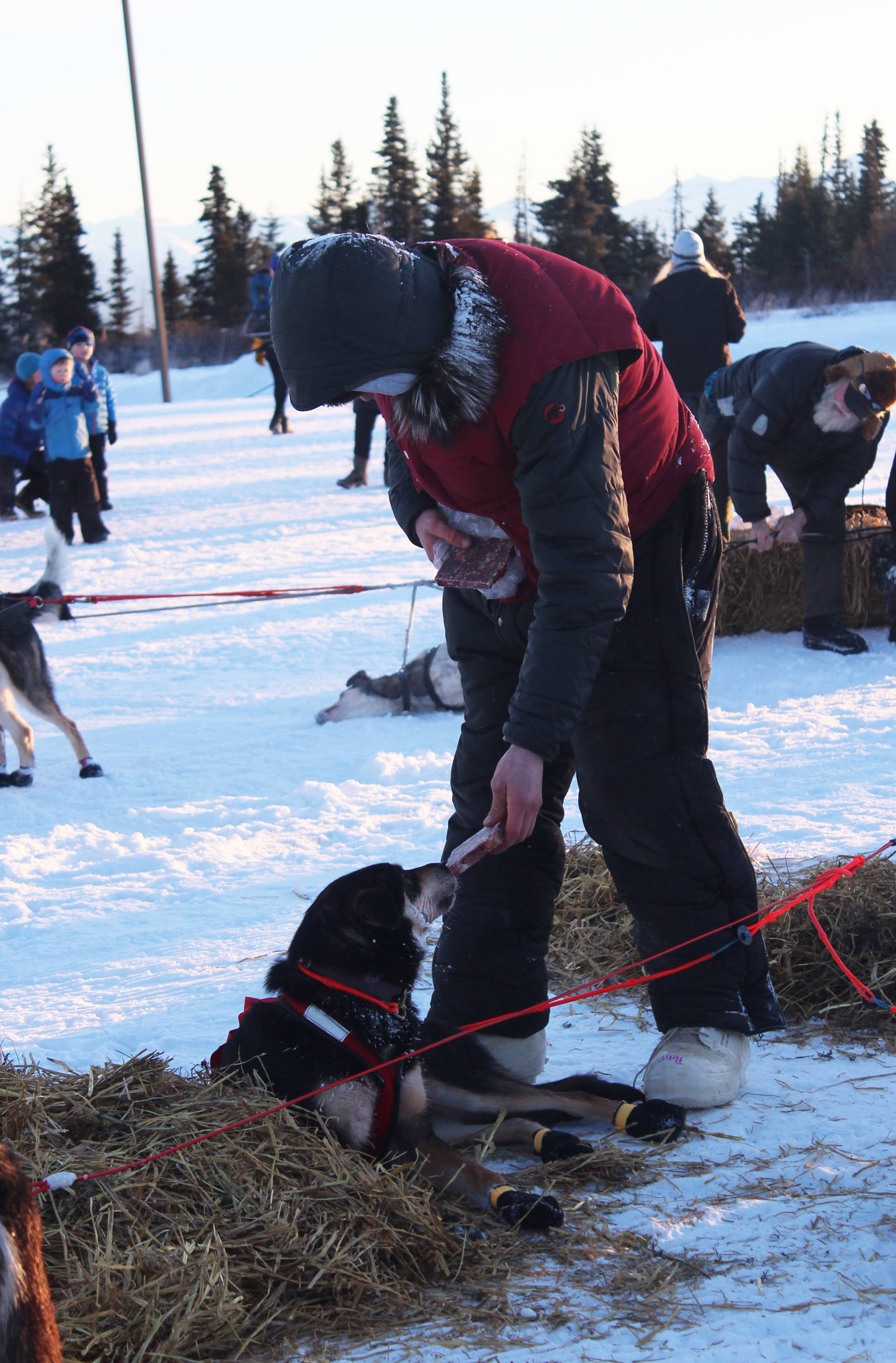
Nicolas Petit feeds a frozen piece of meat to one of his dogs while the rest at a checkpoint in the Tustumena 200 Sled Dog Race on Saturday, Jan. 27, 2018 at McNeil Canyon Elementary School near Homer, Alaska. Each musher must spend a minimum of 10 hours resting throughout the race at any of three checkpoints. (Photo by Megan Pacer/Homer News)
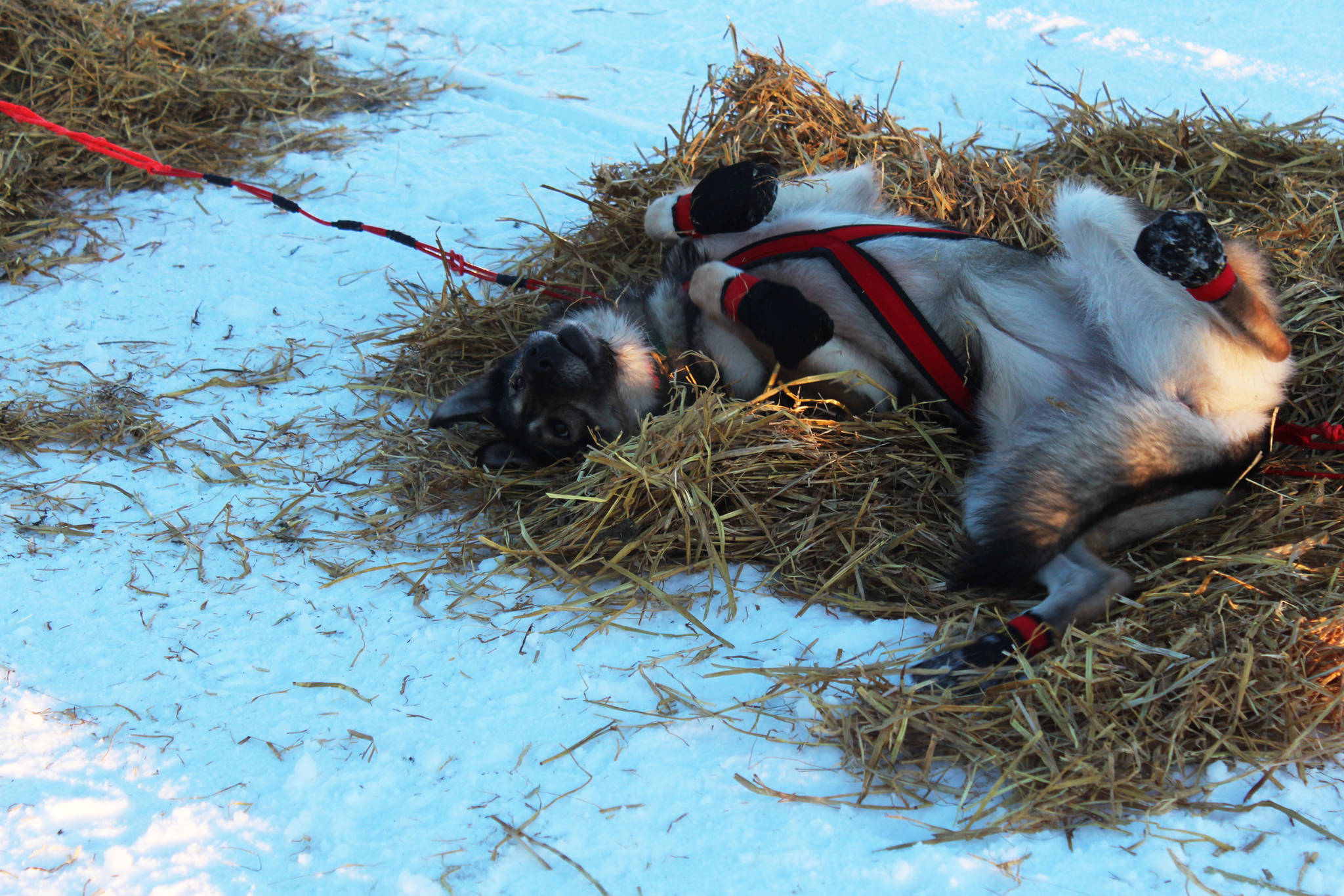
One of musher Nicolas Petit’s dogs enjoys taking a break in some hay at the first checkpoint of the Tustumena 200 Sled Dog Race on Saturday, Jan. 27, 2018 at McNeil Canyon Elementary School near Homer, Alaska. The teams will have three stops along the 100-mile loop that they will run twice to complete the race — two at McNeil Canyon and one at Freddie’s Roadhouse in Ninilchik, where the race will also end. (Photo by Megan Pacer/Homer News)
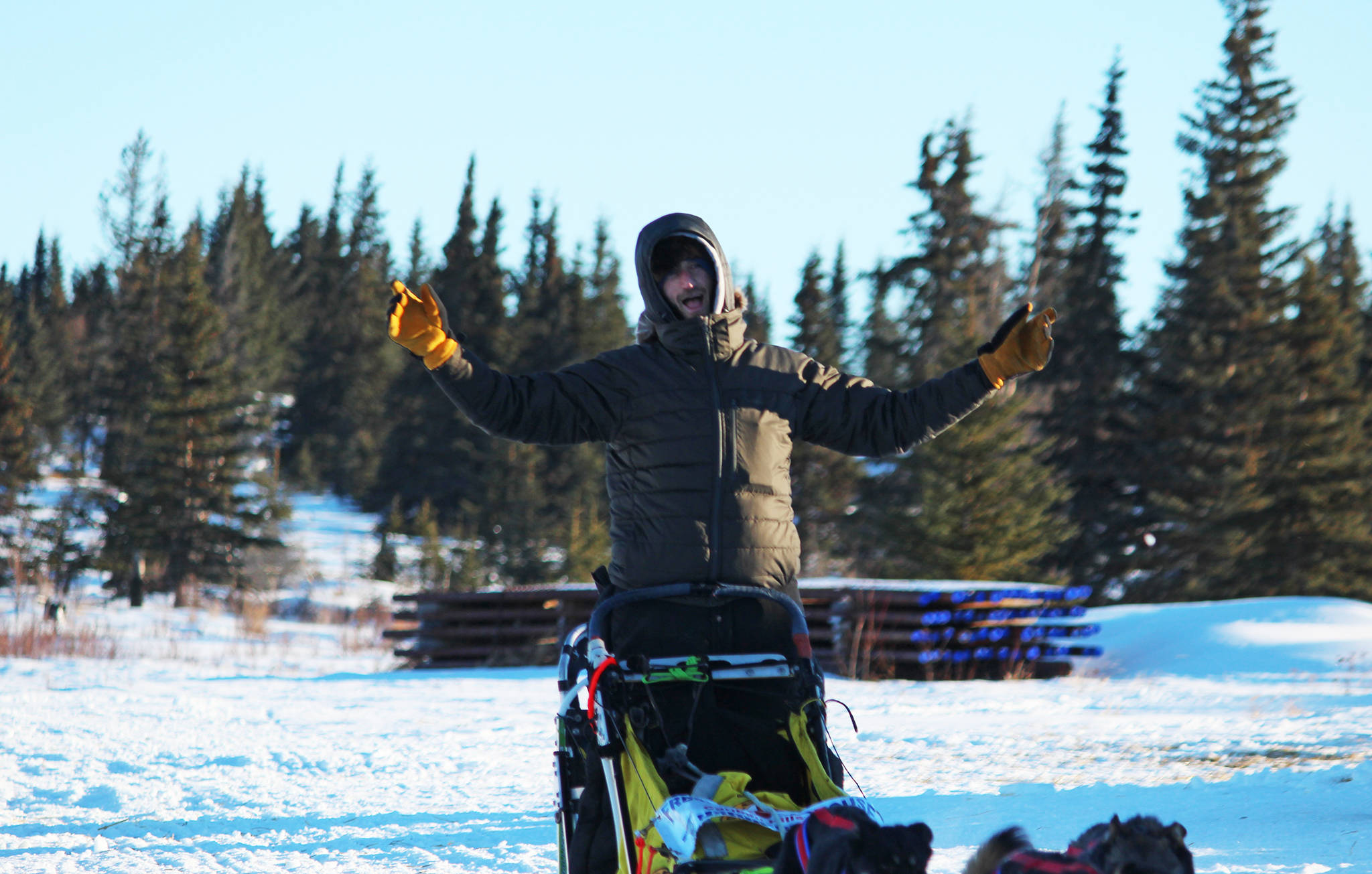
Musher Nicolas Petit raises his arms in celebration as he crosses the finish line of the Tustumena 200 Sled Dog Race in first place Sunday, Jan. 28, 2018 at Freddie’s Roadhouse in Ninilchik, Alaska. The win marked Petit’s third in a row this season, but was his first victory in the T200. (Photo by Megan Pacer/Homer News)
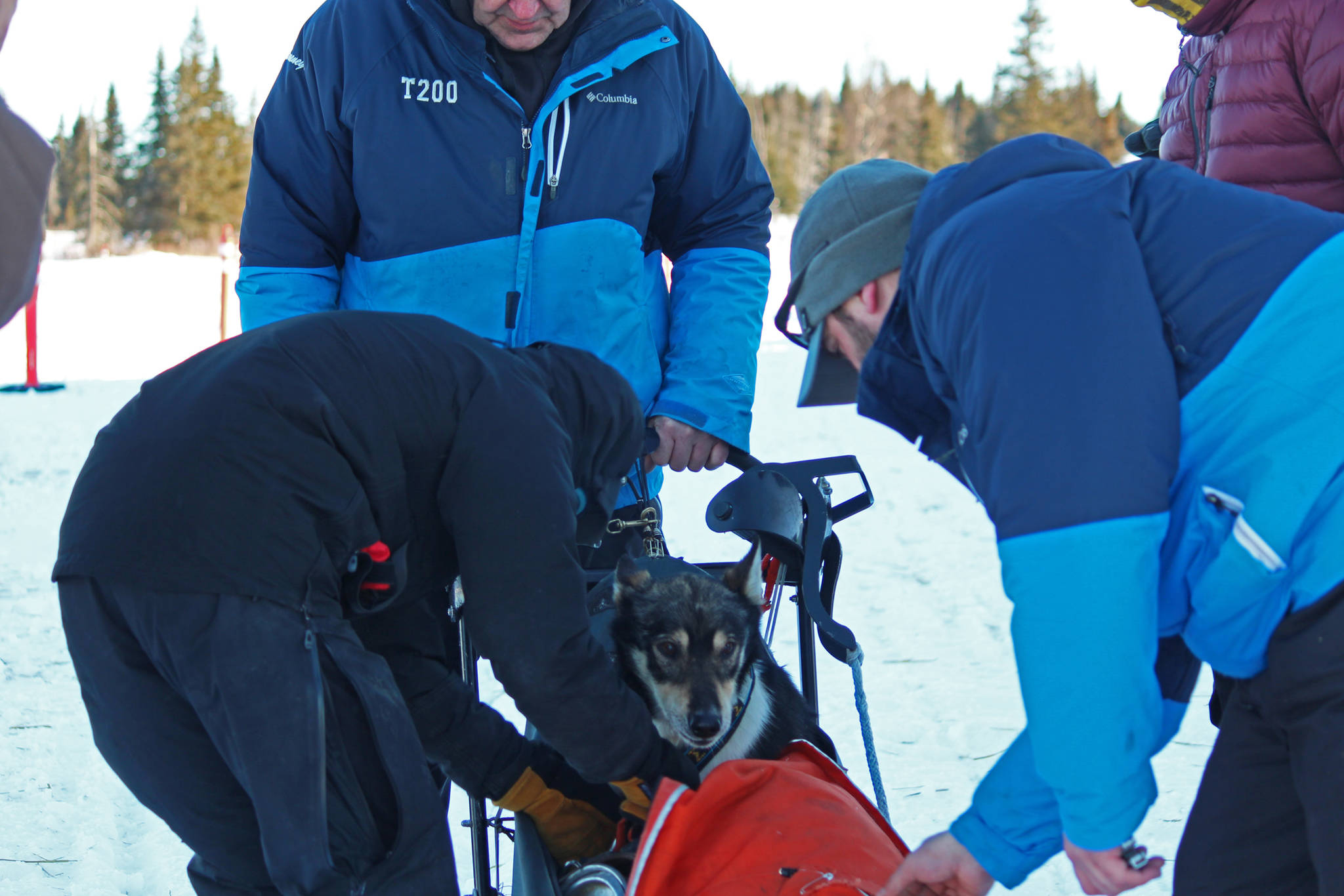
Musher Dave Turner unzips a sled dog from the sack on his sled at the finish line of the Tustumena 200 Sled Dog Race after taking third place Sunday, Jan. 28, 2018 in Ninilchik, Alaska. Turner ran the T200 for the first time in 2017, when he also took third place. (Photo by Megan Pacer/Homer News)
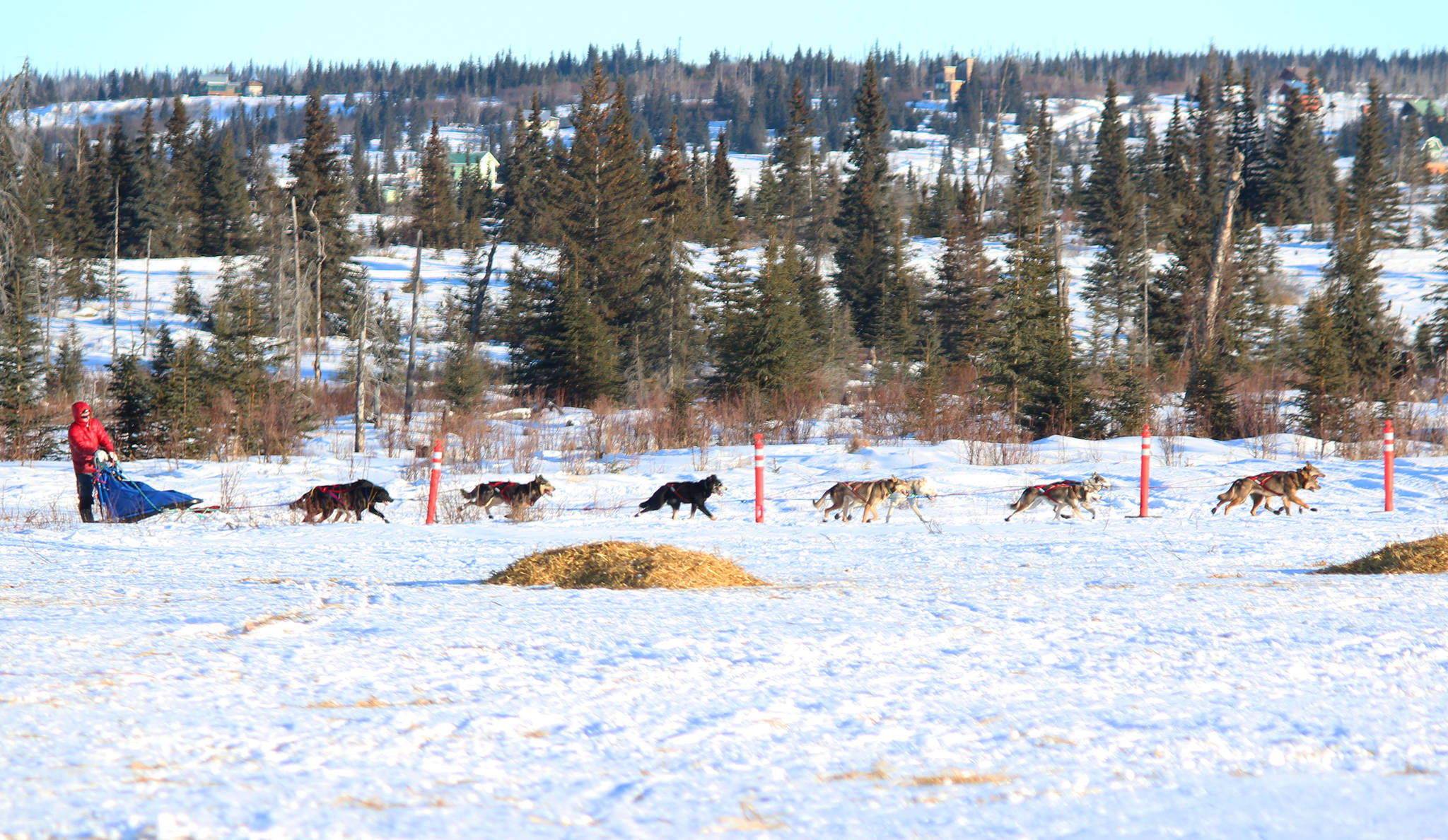
Musher Travis Beals and his team round the last corner of the trail heading toward the finish line of this year’s Tustumena 200 Sled Dog Race on Sunday, Jan. 28, 2018 at Freddie’s Roadhouse in Ninilchik, Alaska. He took second place. (Photo by Megan Pacer/Homer News)
