
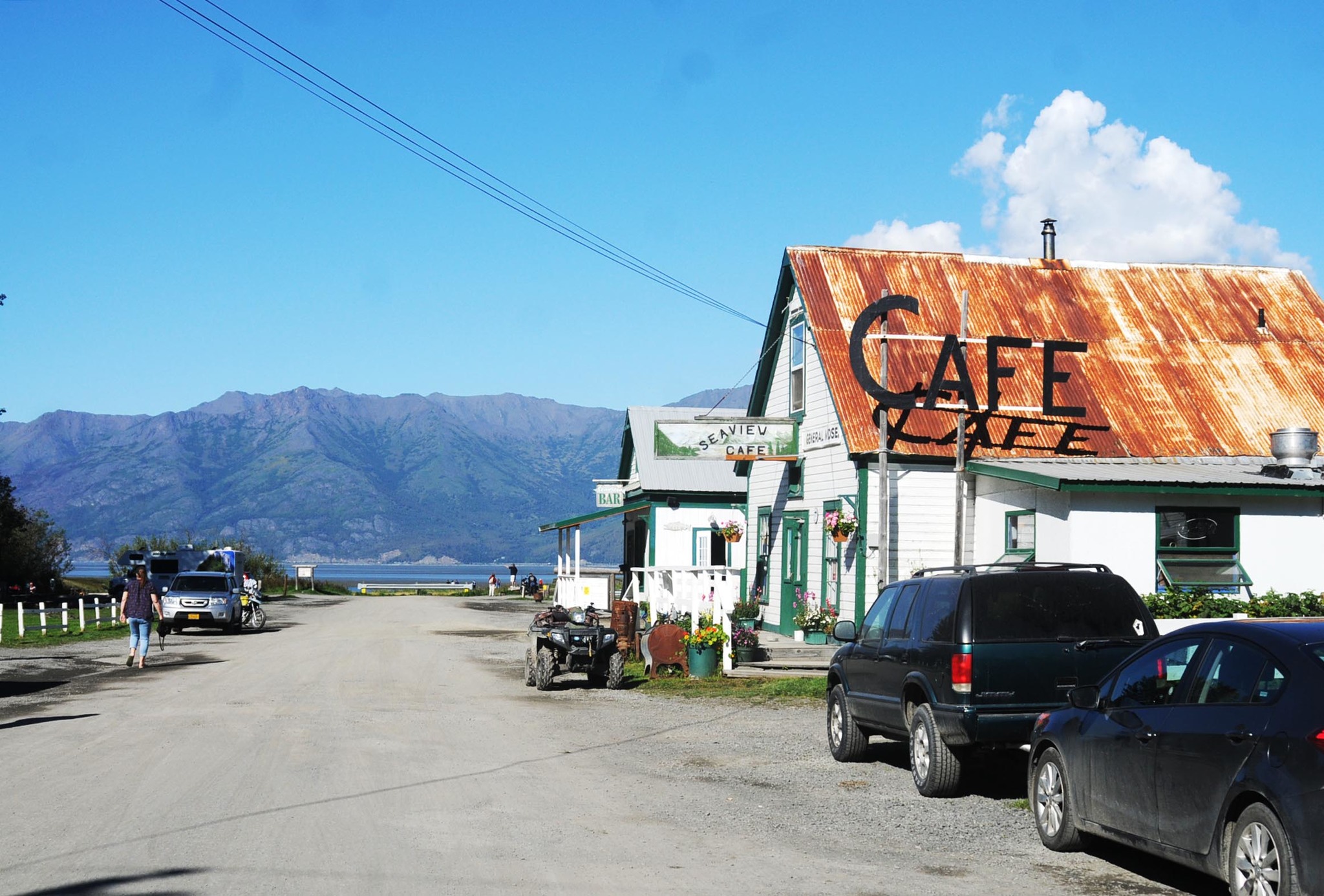
Residents of Hope have wanted a separated trail off their highway for a long time.
The narrow, winding highway, which stretches 18 miles along a scenic route through mountains and alongside Six Mile Creek and Turnagain Arm, can be dangerous for pedestrians and cyclists. Hope, a small unincorporated community with about 189 year-round residents, sees a significant influx of visitors in the summer months driving along the highway, increasing risks of collisions between cars and people using the highway.
The Kenai Mountains-Turnagain Arm National Heritage Area, a federally recognized historical area stretching between Bird Creek and Whittier south to include Hope, Moose Pass and Seward, has been working on partnerships to build a trail alongside the highway since 2012, when the need was identified in a management plan.
It’s intended as a recreational boost and to help promote the history and identity of the region, said Lia Slemons, the program coordinator for trails with the national heritage area.
“The Hope (Highway area) was originally part of the Iditarod mail run, and it seemed a natural fit given its current recreational use,” she said.
The KMTA’s idea is to build a separated trail beginning at the Hope junction with the Seward Highway, where there is an existing paved offroad trail, and trace the path of the Hope Highway on the western side all the way to the village. It would be specifically non-motorized, though the other details are uncertain at the moment — Slemons said the community will have a say in whether the trail is paved or not, for example.
At its Feb. 14 meeting, the Kenai Peninsula Borough Assembly lent its support to the effort through a resolution, but members of the assembly expressly said they didn’t want the group to come back to the borough and ask for funding support or maintenance in the future. Slemons said the group didn’t plan to ask for funding from the borough. The National Heritage Area program, administered by the National Park Service, receives funds from the federal government and requires local match funds, which Slemons said the group is still looking for.
Right now, the plan is for the KMTA to help with planning and provide the funds, but not to build the trail itself, she said. The group also supports the Chugach National Forest’s efforts to improve the Iditarod National Historic Trail’s southern trek between Seward and Girdwood.
“We are totally behind it,” she said. “This links into that. Even though it’s a spur of the southern trek of the Iditarod Trail, it is connected to that trail and has shared history with that trail.”
The KMTA held community meetings in Hope in 2011 and 2012 for its strategic plan and held additional meetings in 2016 specifically about the trail. One theme Slemons said the group heard from residents was increasing concern about safety along the highway, with families and bicyclists contending with visitors’ cars for space along the road, especially near the village.
That’s been an increasing problem for the past decade, said Doug Pope, the vice president of Hope, Inc., a nonprofit providing funds for local community properties, maintaining buildings, and for local volunteer emergency, fire and police crews.
“Hope sort of got discovered,” he said. “Up until about 10 years ago, it was a sleepy community that nobody went to.”
Pope, who said he has lived in the village since 1972, said the recent uptick in tourism traffic has led to residents considering ways to help offset some of the impact, including building and maintaining a public restroom and contemplating another campground. The funds for the restroom have come out of the allocation the community gets from the borough through the Community Revenue Sharing program, taking away from other projects.
The community has been working on a separate trail project since about 2005, with plans for a non-motorized trail between mile 15.5 of the Hope Highway and the Resurrection Creek Bridge. For the past several years, it has been the top priority in the borough’s annual State Capital Improvement Projects list, but with the decline in state revenue, there hasn’t been much hope for funding. Pope said community members have volunteered to help build the trail, but the community needs permits and some funding assistance to make the trail happen.
“Even now, though, the general attitude is … permission and materials is what we need — we can build it ourselves,” he said. “There’s a local contractor that’s volunteered, and there’s at least half a dozen people in Hope that have offered their heavy equipment, their services. That’s sort of the way it goes in Hope — we marshal our resources and get together and do something.”
The KMTA’s trail plan would help provide more safe access for bicyclists and walkers to the area, but Pope said the plan is not without controversy. Some people feel the area doesn’t need more tourism traffic, he said. Overall, the community is trying to be welcoming with the resources it has, he said.
“It’s a small community — we have limited resources, we have limited authority,” he said. “We basically have to get all of our authority from the Department of Transportation (for roads) and the borough. We’re trying to maintain the small community and still make it welcoming.”
The larger vision is for the trail development to be part of a larger recreational infrastructure on the eastern Kenai Peninsula and around Turnagain Arm, Slemons said. Through the existing paved offroad trail, it could connect to the Johnson Pass trailhead, and bicyclists could begin there, take the trail out to Hope and go down the 36-mile Resurrection Pass Trail, which is already popular for mountain biking. The addition of the trail could also relieve some of the parking pressure in the Village of Hope by providing another non-motorized access to the area, according to the KMTA’s 2016 annual report.
“Ultimately, this trail could be the starting point to a trail that could connect other parts of the world-class mountain biking trails in Chugach National Forest, connect the trailhead of Devil’s Pass Trail out to Johnson Pass or even to Crescent Lake, and make an epic loop,” she said. “But then people would stay in Hope overnight and they’d stay in Cooper Landing overnight, and you’d have an economic development component. “
The group is hoping to bring more partners on board to help with building the trail and with maintenance in the future, she said. The KMTA plans to hold more community meetings about the trail as the plans advance.
Reach Elizabeth Earl at elizabeth.earl@peninsulaclarion.com.
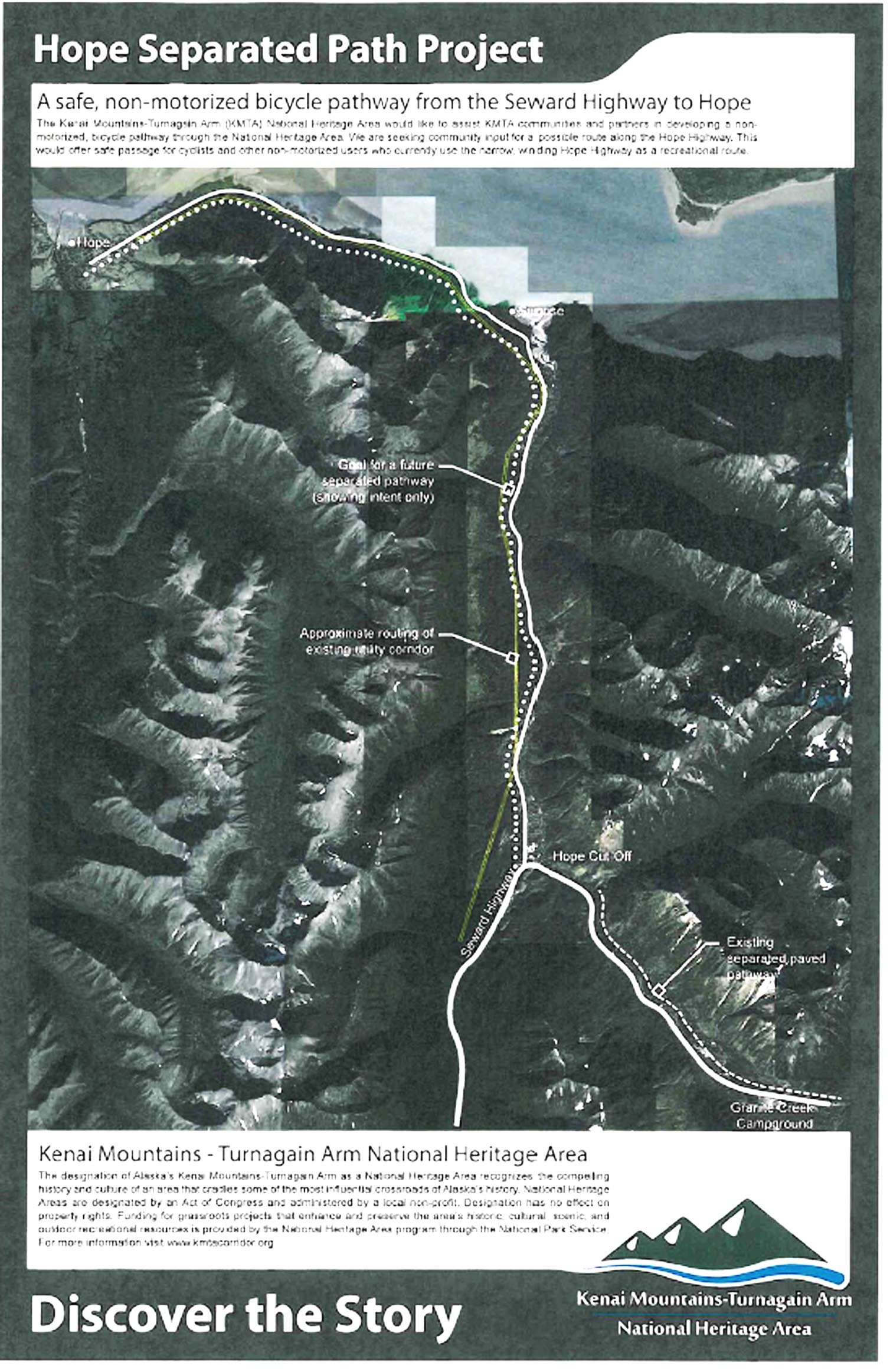
This map, taken from documents provided to the Kenai Peninsula Borough Assembly, shows the proposed route of a nonmotorized trail that would trace the Hope Highway on the eastern Kenai Peninsula, providing bicyclists and hikers access to the community off the winding, two-lane highway. (Courtesy the Kenai Mountains-Turnagain Arm National Heritage Area)
