Micciche reports back on Southcentral Mayors’ Energy Coalition
Published 9:30 pm Thursday, March 20, 2025
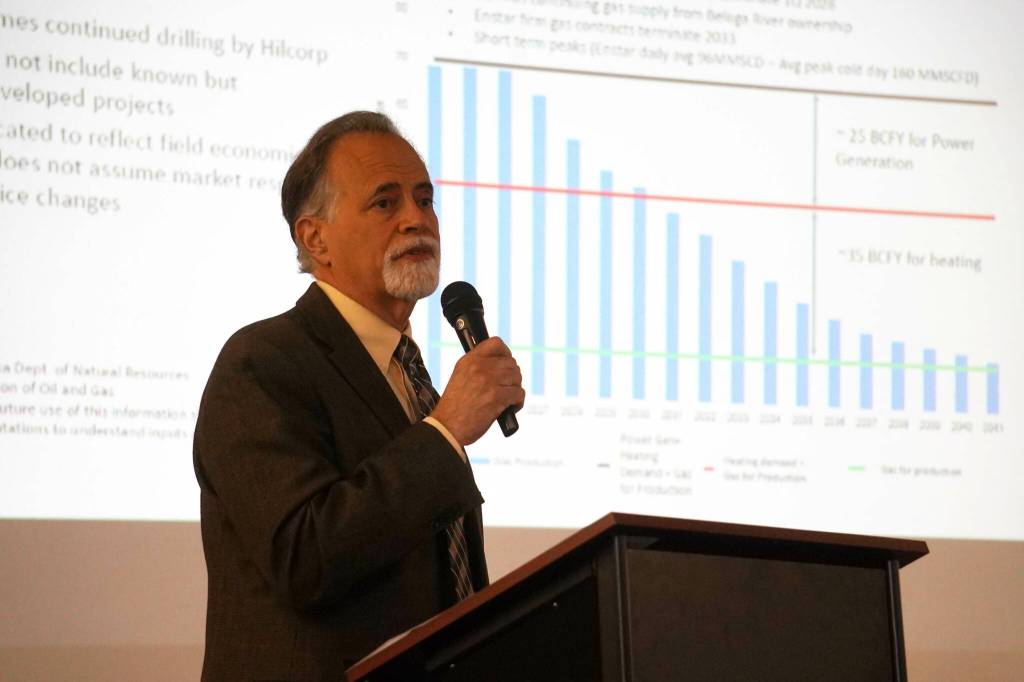
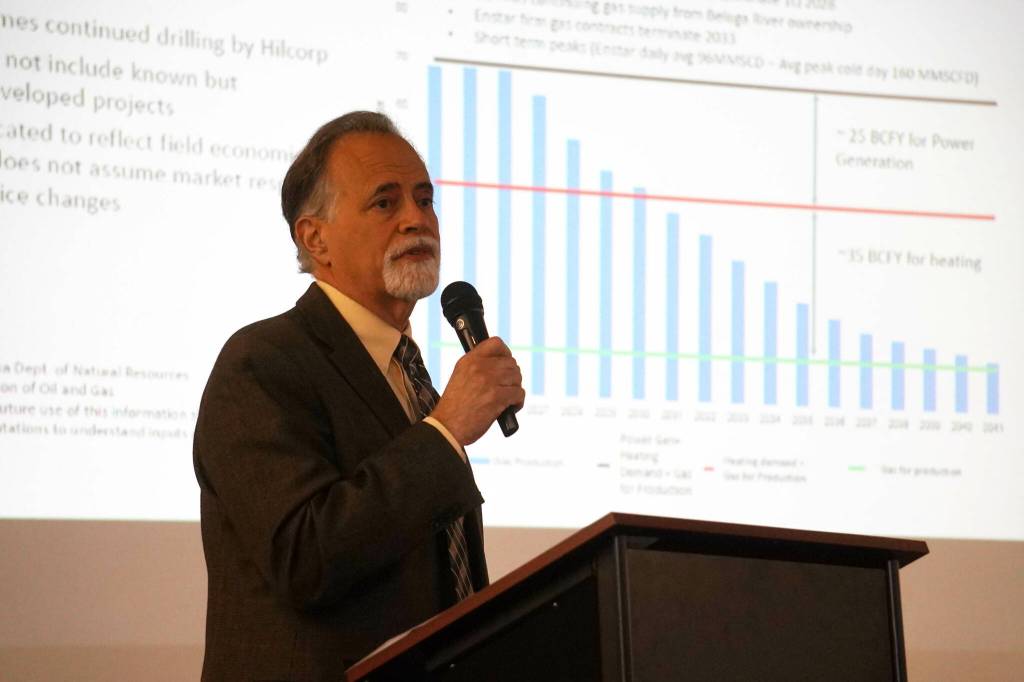


“The time is now for action.” That’s what Kenai Peninsula Borough Mayor Peter Micciche said on Wednesday as he reported on the findings of the Southcentral Mayors’ Energy Coalition. In the face of a looming shortfall of natural gas, “we cannot afford to wait.”
The coalition was formed in late 2023 and operated throughout 2024. It was initially started by former Anchorage Mayor Dave Bronson but has been chaired by Micciche since last fall. The group also includes mayors from Kenai, Soldotna, Homer, Seward and beyond into the Matanuska-Susitna Borough.
A report collated by that group has been presented by Micciche and others multiple times in recent months, around the state — including to the Alaska Legislature. On Wednesday, he delivered the presentation during a joint luncheon of the Kenai and Soldotna chambers of commerce.
The purpose of the group, Micciche said, was to develop an understanding of the current energy situation, explore solutions “that will keep the lights and heat on” and then use advocacy to overcome roadblocks. The mayors, he said, bring an “agnostic” approach to energy — prepared to explore gas, renewables, and any viable solutions.
“Our priority is local production,” he said. But there are challenges with timing that the group says make importation of natural gas necessary in the short-term.
The discussion around importation, Micciche said, was among the roadblocks that the mayors’ coalition tackled.
Federal legislators, he said, formerly stood in staunch opposition to the concept — saying “over my dead body will LNG be imported to Alaska.”
“Over our dead bodies should we allow people to become cold and dark,” he said. “We are going to need an interim solution. Imported LNG, at low volumes, likely temporary — that’s my hope and my priority is Alaska gas as well — is going to be a necessity.”
There’s an estimated 19 trillion cubic feet of natural gas still in Cook Inlet. That gas, Micciche said, is “technically” recoverable, but perhaps not “economically.” Major entities in the oil and gas industry have left — “they’re not coming back.”
The amount of gas being produced is set to fall below the demand for heating and power generation in the coming years. Those reports, since Hilcorp in 2022 told local utilities that they couldn’t rely on production beyond existing contracts, led to the formation of the working group and other moves in recent years to seek a way forward.
“We know that by 2027 — and potentially a very cold winter in 2026 — could start challenging supply.”
There are several solutions in development to both bring more natural gas to the area and diversify the sources of energy, Micciche said. Those are the two levers for countering the shortfall — both bringing in gas to meet demand and seeking other options to reduce the need.
The report he presented on Wednesday was compiled before projects like the Puppy Dog Lake solar project in Nikiski were stymied last month by changes to the renewable tax credits.
Other projects in development, including the proposed “Phase One” Alaska LNG Project, the Dixon Diversion at Bradley Lake and others aren’t projected to coalesce until 2030 or later at the soonest.
If every one of the proposed alternative energy projects were realized — a “best-case scenario” that already has proven unattainable — Micciche said they would only delay the energy shortfall into the late 2030s. More gas is going to be needed.
Much attention has been paid in recent months — including by U.S. President Donald Trump — to the Alaska LNG Project, which would connect the North Slope to Southcentral Alaska and provide natural gas.
“President Trump’s influence and bullishness may result in forward motion, but that’s yet to be seen,” Micciche said. “When it comes down to it, if the economics don’t work, that project is going to remain challenged.”
Even if it is realized, the projected first gas delivery in 2031 might be “rosy,” Micciche said.
So, imports will be necessary in the coming years, he said. There are two proposed projects that would bring imported natural gas to the region. New York-based Glenfarne Group proposed the first, seeking to construct an import terminal that would later be used for the Alaska LNG Project if it were realized. Hilcorp-affiliate Harvest Alaska more recently announced the other to redevelop the Kenai LNG Terminal currently owned by Marathon Petroleum Corporation into an import facility.
The latter, Micciche said, has some unique opportunities for savings by using existing technology and infrastructure, but he said he remains open to either.
He said that discussions about the possible cost of gas are “heavily influenced by competitive interests,” and that he thinks gas could come to the area at a price “competitive to Cook Inlet’s current production costs.”
He also cited gas storage facilities operated already by Cook Inlet Natural Gas Storage Alaska and proposed by Hilcorp as potentially providing some downward pressure on rates.
“We have to bring the cost of energy down,” he said. “We have to use the tools that are available, push the politics aside and do what’s right for our constituents.”
A full recording of the presentation is available at “Kenai Chamber of Commerce and Visitor Center” on Facebook.
Reach reporter Jake Dye at jacob.dye@cmg-northwest2.go-vip.net/peninsulaclarion.