
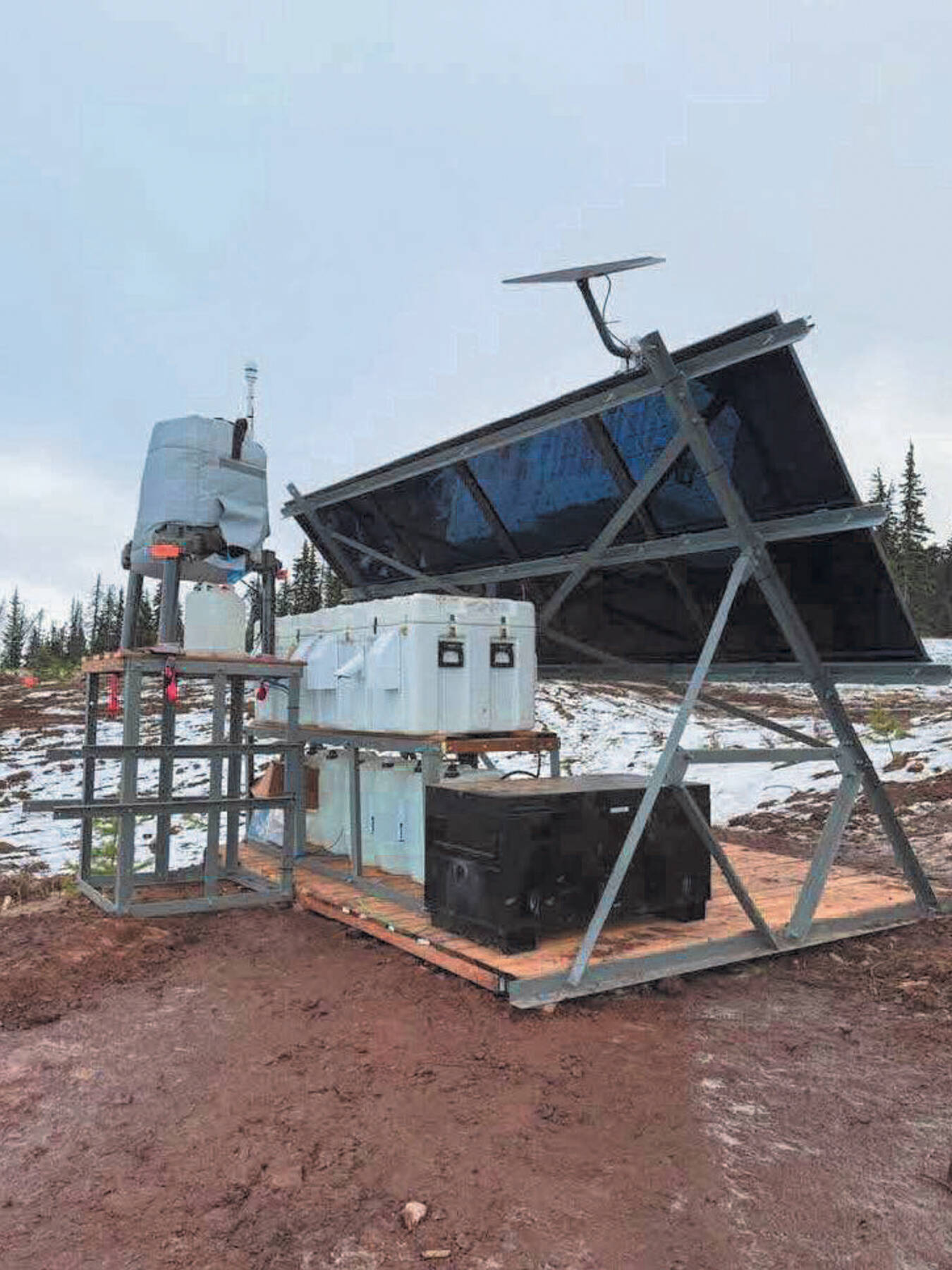
The Palmer-based Matanuska Electric Association is requesting the Alaska Department of Natural Resources to allow the cooperative to install and operate three LiDAR meteorological stations along the Seward Meridian, according to a public notice filed with the state on Jan. 12. The stations and “associated power supplies” would collect data over the course of three years on the feasibility of developing a wind project.
DNV Energy, a classification society headquartered in Norway, applied for the land use permit for MEA. Nathan Greene, Senior Manager of Energy Transformation at MEA, said Alaska Energy Authority is funding the project through a Renewable Energy Grant Fund and financial support from Railbelt, a collection of utility companies.
“The LiDAR installations you referenced are part of a broader Railbelt-wide wind resource assessment effort that is still in the preliminary stages of development,” Greene wrote in a Jan. 29 email to the Clarion. “At this point, the work is focused on early activities such as site evaluation, study related site permitting, and data collection planning.
Natural Resource Manager in the Division of Mining, Land and Water AJ Michels is reviewing the permit with his team at the Northern Region Office in Fairbanks.
“We aim to adjudicate 80% of all permit applications within 30 days of receiving a complete application,” Michels said. “Within that 30 days, we typically do public notice and agency review for 14 days. At the end of the 30 days, we come to a decision, and that decision yields whether or not it’s in the state’s best interest to issue a permit or not.”
DNV Energy declined requests for a comment. Michels said it’s not uncommon for energy outfits to hire out research contractors, and that could be why DNV applied for the permit on behalf of MEA.
“We do a lot of permits for research, so I wouldn’t consider this odd,” he said.
If DNR approves the permit, DNV would install three LiDAR stations on DNR land north of Homer, each roughly 12-by-13-feet and powered primarily by solar power. Each site will utilize up to 127 gallons of methanol fuel at a time as a backup power source.
Michelle Murphy, permitting project manager and team lead for DNV Environmental, Permitting and Sustainability Energy Systems, completed the permit application. She wrote “N/A” under “spill plan and prevention methods.” Murphy did not immediately respond to requests for a comment.
“For security and safety, the fuel tanks are contained underneath the table with the two large white boxes,” the application reads. The cartridges are designed to eliminate direct contact with fuel. To install each cartridge, the on-site user will unscrew the cap and attach a fuel management device.
If the permit is approved, the stations will be delivered and retrieved using helicopters. Data would be uploaded via satellite.
