Legislature considering bill to crack down on derelict vessels
Published 6:22 am Thursday, March 1, 2018
Harbormasters and state officials are looking for a little more authority to regulate junk boats around Alaska.
Junk boats, or derelict vessels, haunt harbors and shores all around Alaska. One area near Bethel, known as Steamboat Slough, has collected about 30 abandoned vessels over the years, with no one directly responsible for cleaning them up. Others slowly age in harbor slips, taking up space and eventually dilapidating enough to be eyesores and unable to move.
It’s an issue for every harbor in the state, but until now, there haven’t been any state regulations on how to deal with derelict vessels. Rep. Paul Seaton (R-Homer) and Sen. Peter Micciche (R-Soldotna) have introduced parallel bills in the Legislature to set up a state-level system for dealing with existing problem boats and the increasing number of aging boats in the state.
“One of our big problems is that if you try to go out and clean up the vessels, right now all you’re doing is leaving space for somebody to leave another junker,” Seaton said during a presentation to the House Fisheries Committee on Tuesday. “So this bill is the attempt to say, ‘No more, we have a way to know who owns the boats, to have accountability so you don’t have more vessels coming in for municipalities or the state to clean up … just anticipating that you’ll just get another junker in its spot.”
Seaton’s bill, House Bill 386, updates the registration system for boats through the Alaska Department of Administration’s Division of Motor Vehicles, the same way other motor vehicles are registered, with an increase in registration fees for vessels. The bill also directs the Alaska Department of Natural Resources to establish a derelict vessel prevention program, subject to appropriation, and increases fines for convictions of illegally abandoning boats but provides due process and notice to an owner before impoundment and disposal.
SB 92, which was introduced during the 2017 session, contains parallel language. Micciche wrote in his sponsor’s statement that one major concern was the number of aged vessels in the state. He cited a report from the McDowell Group from 2014 that stated that by 2025, about 3,100 boats between 28 and 59 feet long would be older than 45 years old.
“While this represents a field of opportunity for shipbuilders, it fails to recognize the absence of a cradle-to-grave plan for thousands of retired vessels,” he wrote. “SB92 is a critical step towards preventing and managing derelict vessels throughout Alaska.”
Homer, which maintains one of the two largest harbors on the Kenai Peninsula — Seward’s harbor is also extensive — has been dealing with abandoned and derelict vessels for a long time. The problem came to a head in 2013, though, when a captain tried to bring two dilapidated vessels into the Homer Harbor after purchasing them in Sand Point.
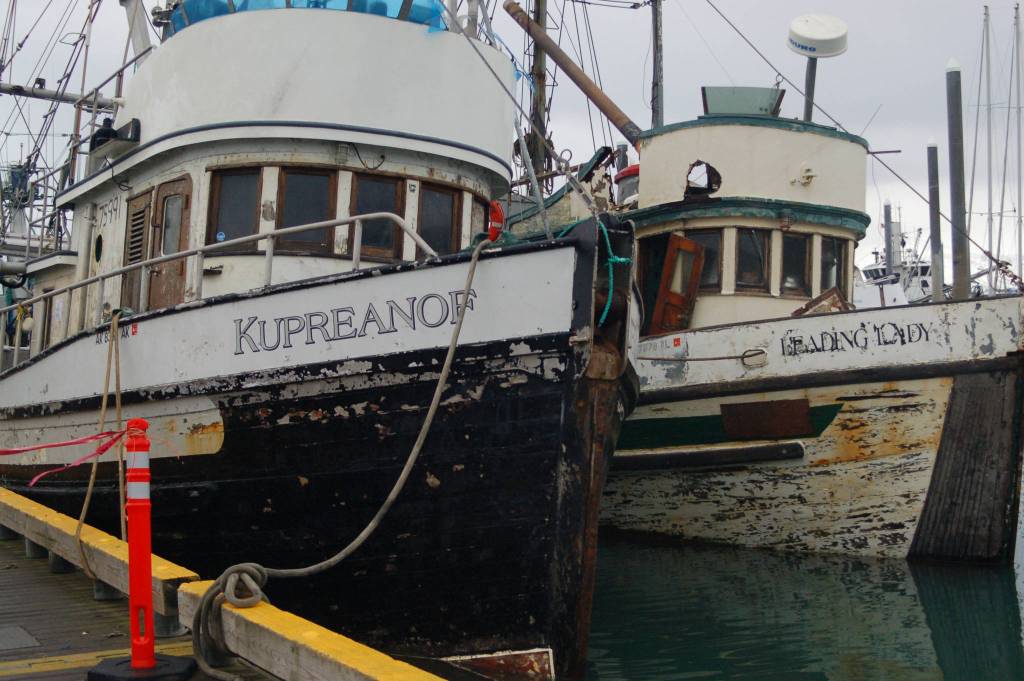
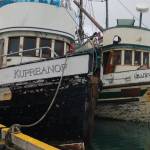
Harbormaster Brian Hawkins said he knew about the issues with the F/V Kupreanof and the F/V Leading Lady before they arrived in Kachemak Bay. While he can’t deny entrance to the harbor based on assumed risk of the owner abandoning them, when boats are in bad condition, it can be a safety issue, he said.
“I knew these boats were coming, and so I met them and went on board,” he said. “I can’t (deny entrance) arbitrarily. It has to be for a good sound reason … So we denied access based on the condition of the vessel. I did give (the owner) time to get supplies and work with him.”
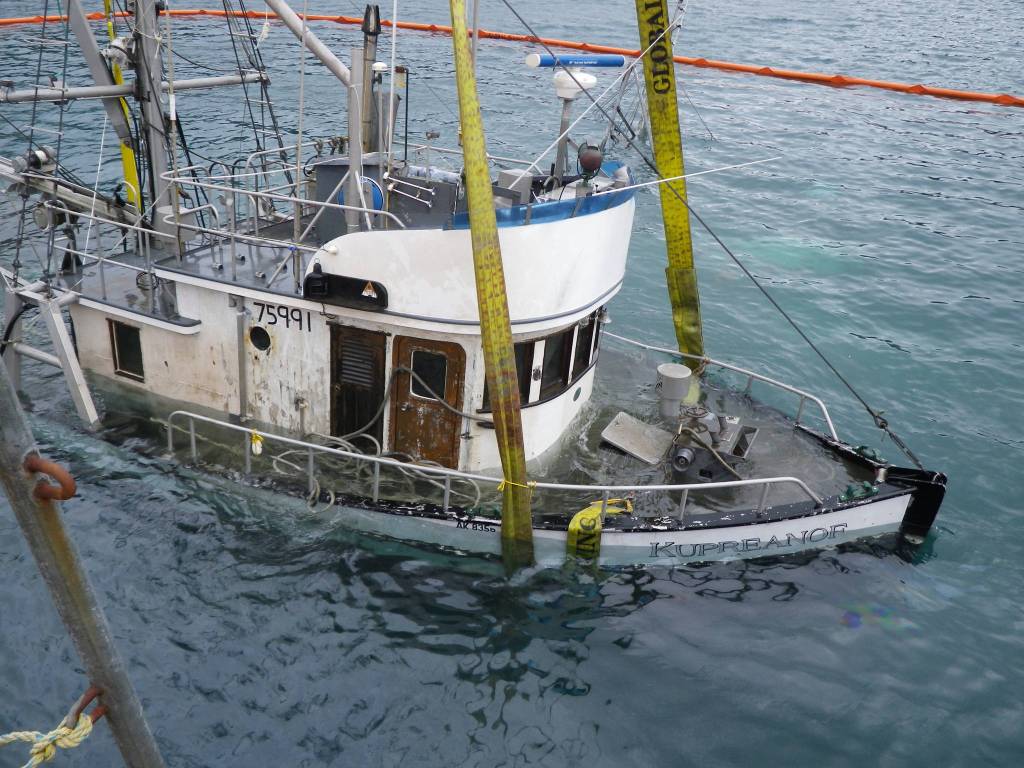
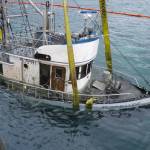
The harbormasters in Kodiak and Seldovia had denied them entrance based on the boats’ condition, and Homer did the same. The owner took them to Jakolof Bay, on the south side of Kachemak Bay, where they sank and became the Department of Natural Resources’ problem. The harbor worked with the state to retrieve the boats and haul them out at that point.
But it was an issue before that, Hawkins said. The Alaska Association of Harbormasters and Port Administrators, an association of municipal harbors throughout the state and the Fisherman’s Terminal in Seattle, met in Homer in 2011, at which point the members began discussing derelict vessels. The size and number of boats vary from harbor to harbor, but it’s a statewide problem, he said.
Boats are expensive to keep up, and generally as they move down the line, they come into the hands of the people least able to care for them, Hawkins said.
“It’s this all of a sudden, you notice that nothing’s going on and the boat is old, showing all the signs of hard use and lack of maintenance,” he said. “Pretty soon you realize that it’s not moving and nobody’s giving it any care, and pretty soon they fall behind in their bills and then maybe it changes hands … I’ve seen these boats change hands two or three times in a year. Sometimes so fast that we can’t even keep track of it here.”
The city of Homer has been able to either impound and sell vessels to a scrap metal contractor or facilitate arrangements for owners to do so themselves, thus getting them out of the harbor and taken care of at no cost to the city, he said.
The city has taken steps to prevent abandoned and broken down vessels from taking up space in the harbor — it’s some of the most valuable real estate in the city, and parked derelict vessels can take up space that would otherwise go to working boats — but it’s time for a statewide approach, he said. While the increase in aged boats will mean more work for boatbuilders and repairing businesses, but the state needs to develop a cradle-to-grave plan for dealing with boats so they do not become a public burden on municipalities and the state, he said.
“If you think about it, Alaska has more coastline than the rest of the U.S. combined — there are lots of little hiding holes out there,” he said. “Municipal harbors are able to network, we’re able to … but the state is vulnerable. You can stop, drop and walk. That’s why we really need to work together to protect the state, to protect the public here in this case, in trying to get ahead of this. There’s no silver bullet. This is not going to be the end-all solution to derelict vessels.”
HB 386 is currently before the House Fisheries Committee, while SB 92 is before the Senate Finance Committee.
Reach Elizabeth Earl at elizabeth.earl@cmg-northwest2.go-vip.net/peninsulaclarion.