
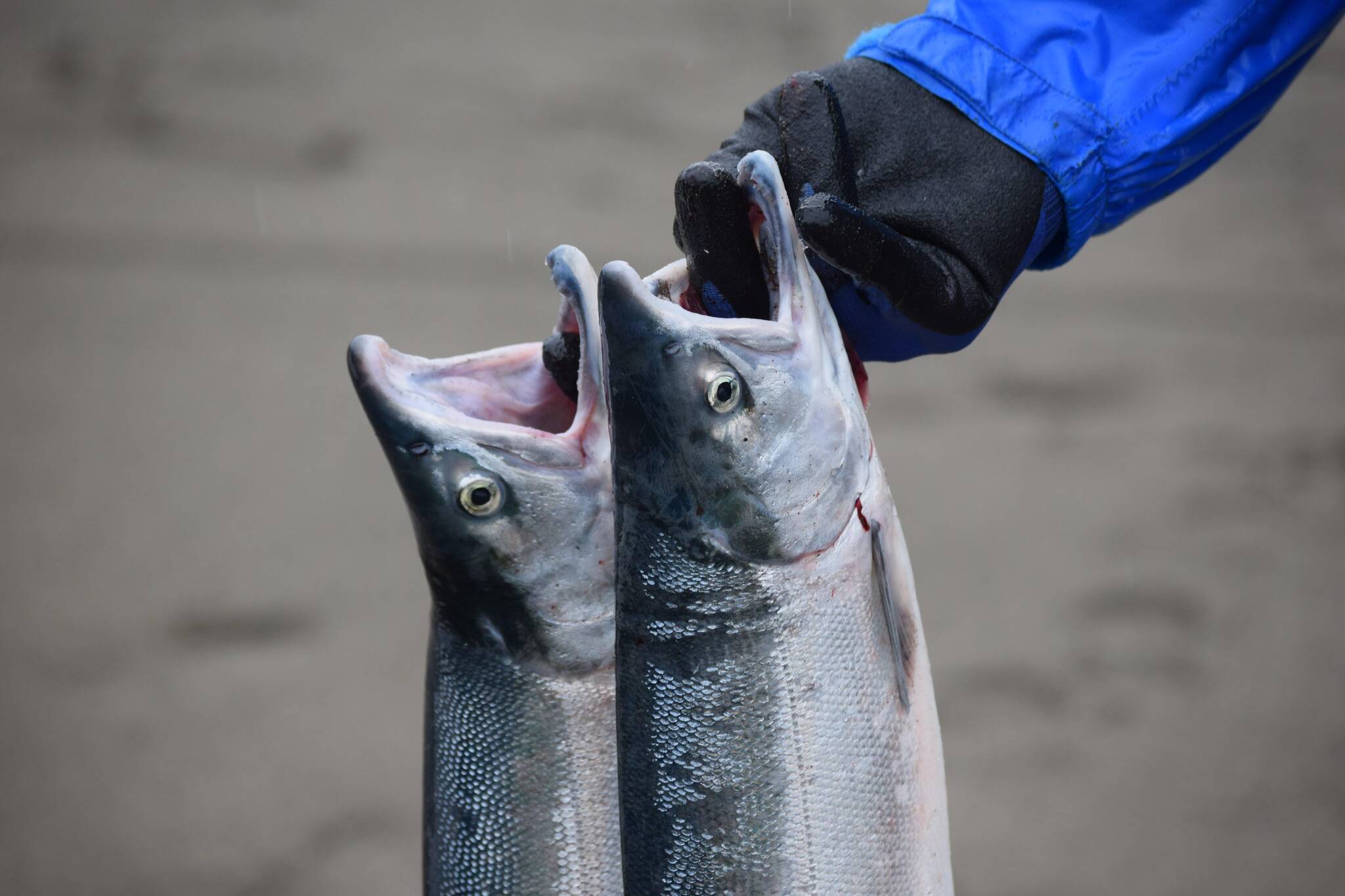
The Kenai River personal use sockeye salmon dipnetting fishery will open at 6 a.m. on Monday, July 10. Dipnetting will be allowed from 6 a.m. to 11 p.m. each day until July 31.
For sockeye salmon, which can be retained by dipnetters, strong runs have been observed in nearby areas like the Russian River and Kasilof River, both of which are expected to surpass their biological escapement goals according to a series of emergency orders issued by the Department of Fish and Game last month.
As of Tuesday, around 14,000 sockeye have been counted by sonar on the Kenai River, falling below the counts in each of the last four years at the same time. In each of those last four years, escapement goals for the Kenai River have been surpassed.
Fishing reports published by the department have said that sockeye fishing on the Kenai River is “slow, but expected to improve.”
Retention of king salmon is prohibited in the Kenai River and its dipnet fishery as part of paired restrictions with the sport fishery. In March, a series of 11 emergency orders were issued by the Department of Fish and Game delivering a full season closure of king salmon fishing in the Kenai River and Cook Inlet for the sport fishery, the dipnet fishery and the east side setnet fishery.
In an advisory announcement released Wednesday, the department made official a restriction on king salmon retention in the river for the duration of the dipnet opening via Emergency Order 2-KS-1-40-23.
“Preseason actions were taken earlier this year closing the Kenai River late-run king salmon fishery,” says Acting Area Management Biologist Jenny Gates in the announcement. “It is necessary and warranted to take additional conservation measures in the personal use dipnet fishery and prohibit the retention of king salmon.”
King salmon closures came in March as a result of low forecasts that suggested the species would fail to meet the optimal escapement goal set by the State Board of Fisheries. Per the final summary for the Kenai River early-run of king salmon, the actual number of kings counted by sonar fell far below even those low predictions.
Only 1,975 kings were counted on the Kenai River between May 16 and June 30, falling short of the last four year’s counts, the projected forecast, and the optimal escapement goal of 3,900 to 6,600.
“The run exhibited generally low abundance across all age classes and is preliminarily the second lowest run in the historical data set,” that summary says.
According to the department’s website, the peak harvest days for sockeye salmon on the Kenai River are between July 16 and 25. It also notes that the fishery is managed by emergency order, meaning that regulations can change and the fishery can be closed “at any time.” Updated information should be acquired before going fishing.
Only Alaska residents can participate in a personal use fishery. Any angler 18 years old or older must possess a valid sport fishing license. A permit, which is effective for an entire household, must also be acquired before fishing. The department says permits can be obtained from private vendors or at their offices — like the Fish and Game office in Soldotna. A list of private vendors can be found on the department website.
Viewed on the department’s online store, a sport fishing license costs $20, while the Upper Cook Inlet Personal Use Salmon Permit is free.
On the permit, the date, location, and harvest by species must be filled in each time an angler fishes — even if no fish are caught. All reporting must be submitted via the department’s harvest reporting webpage by Aug. 15, even if the permit was left unused or if no fish were caught for the season. Failure to report by the deadline will result in the loss of personal use fishing privilege in the next year, the department says.
The bag limit for Upper Cook Inlet personal use salmon fisheries — which include not just the Kenai but also the Kasilof River and Fish Creek — is 25 salmon and 10 flounder for the holder and 10 additional salmon for each additional household member. Each caught salmon must be “marked” by clipping both ends of the tail fin using scissors or shears. Marking must be done “before the salmon is concealed from plain view” or the angler may be subject to fines.
Dipnetting on the Kenai River is allowed from the shore at the mouth of the Kenai River, extending north and south into Cook Inlet to commercial fishing markers and upstream to a line from No Name Creek. Anglers can also dipnet from the shore on the south bank between the Kenai Landing Dock to the downstream edge of the Warren Ames Bridge.
Dipnetting from a boat is also allowed between department markers near the Kenai City Dock upstream to the downstream edge of Warren Ames Bridge, with the same requirements for permitting, limits and marking. The department notes that there are no nearby public boat launches — the closest is upstream of the Sterling Highway bridge.
All caught fish must be recorded on the permit and have clipped tail fins before leaving the area or anglers may be subject to a fine.
More information about fishing regulations and availability can be found at adfg.alaska.gov.
Reach reporter Jake Dye at jacob.dye@peninsulaclarion.com.
