
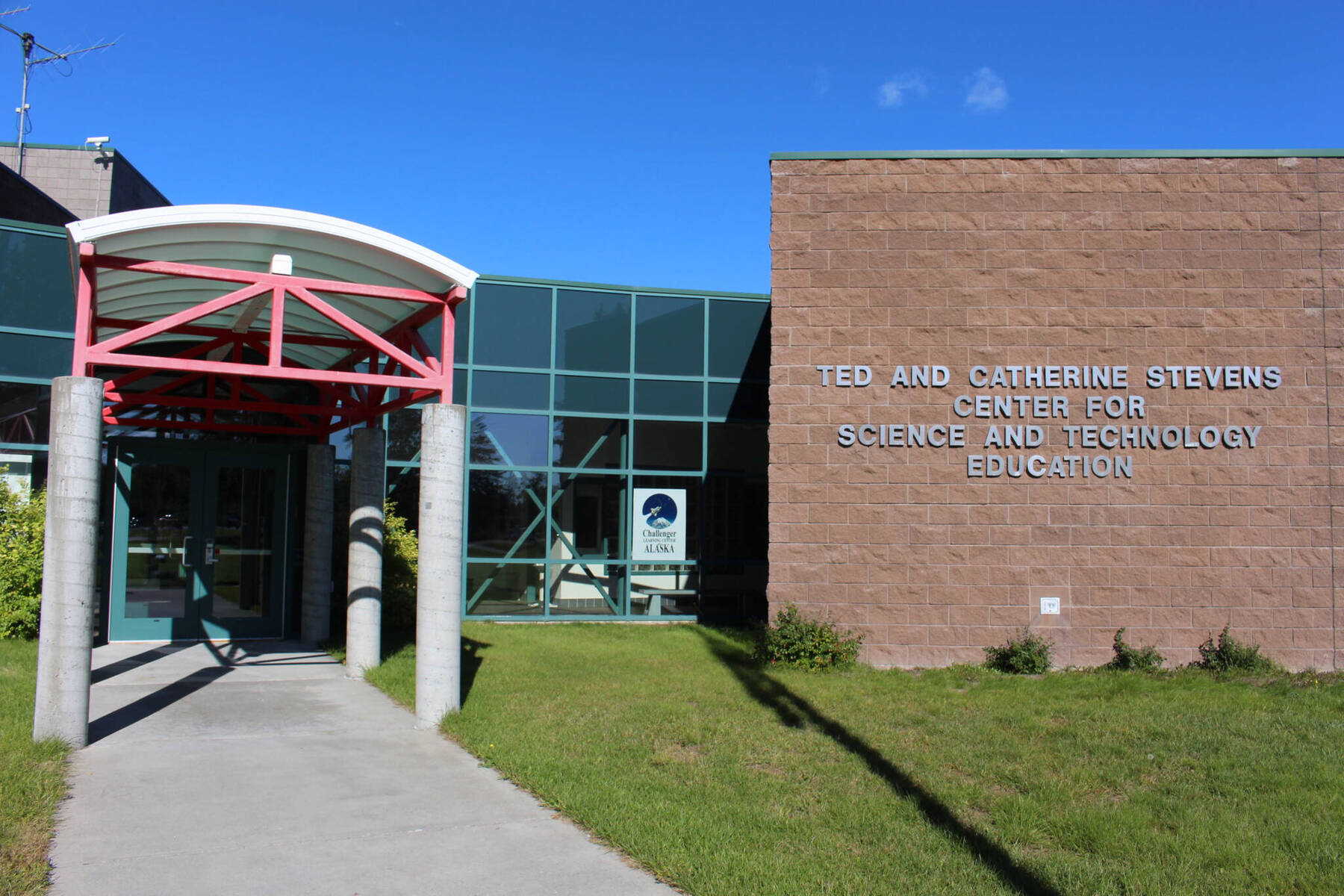
During a meeting on Dec. 17, the Kenai City Council discussed several possible uses for the building that housed the Challenger Learning Center of Alaska until the city terminated the lease in November.
The center was part of a global network created by the families of astronauts involved in the Challenger disaster. Since it opened in 2000, the center offered educational programs, workshops and a STEM-focused curriculum for students throughout the state. In November, Tim Dillon, president of the Challenger’s board of directors, said they had to send a check to NASA every year because the center operated independently of an educational institution. Many of the other Challenger Learning Centers in the country received federal funding by running in conjunction with a museum or school.
In November, Dillon said that he couldn’t tell his staff where their next paychecks would come from.
“When you get to a point where you can’t do that anymore, you’ve got to make changes,” he said during a Nov. 5 city council meeting. That evening, council voted unanimously to terminate the building’s lease, effective Nov. 15.
Upon the lease’s termination, the 19,000-square-foot building’s title was vested to the city. The borough assessed the building to be worth over $8 million, and the city of Kenai is now responsible for the building’s costs, including insurance, maintenance and utilities. City manager Terry Eubank said that although the building is in good shape overall, the estimated operating cost from Nov. 15 until June 30, 2026 is $83,950. The annual estimated cost is $100,650.
The city ran into several roadblocks when discussing possible uses for the building. First, the 2.3 acres the building sits on is zoned for educational purposes only. Additionally, when the Kenai Peninsula Borough donated the land to the city, it placed a deed restriction on the property, saying it must be used for “government purposes.” Eubank said the city will seek to remove the restriction if necessary.
One option presented would use the building primarily for lodging for visiting athletic teams. Operational costs would include utilities, furnishings and custodial services. Another would see the building used in partnerships with schools like AVTEC, UAA, the Aurora Borealis Charter School and Kenai Peninsula College. Another would consider letters of interest from businesses and nonprofit organizations.
The last possibility would assess the facility’s potential as the new public safety building. The current police and fire department facility was built in 1973, and it needs many expensive renovations.
According to Chris Parker, an architect at K + A designstudios, the current public safety building is just over 23,000 square feet. The building needs a new roof in addition to new mechanical and electrical equipment, and the rest of the infrastructure is “really close to the end of life,” he said.
Kenai’s fire department and police force staff have both grown significantly since the facility was constructed. Parker said both departments are in need of gender-specific showering rooms, locker rooms and more sleeping areas. Additionally, the police department is running out of evidence storage space and the fire department needs a larger decontamination bay with exhaust removal equipment.
“On the fire side, there’s not really a clear designation of separating carcinogens from the fire bay into the living area of the building,” Parker said. “Over the last quite a few years, a big emphasis in fire design has been to stop that migration so firefighters aren’t living with those more toxic chemicals and properties throughout the facility.”
Current and future needs would add 22,000 square feet to the facility and cost around $40 million. Parker said building a new combined facility would cost $29 million, about $2 million less than it would cost to construct two new standalone stations. He recommended constructing a new combined facility.
When asked for his opinion on moving one or both facilities to the Challenger Center, Parker said it could be a good fit for the police department.
“It’s a more modern building, which is good,” Parker said. “It has good infrastructure within it. It’s definitely something to consider.”
Further discussion on potential uses for the building will occur during the next city council meeting on Jan. 6. If the council is interested in utilizing the facility as the new public safety building, a design consultant will need to assess the building before further steps are taken.
The work session and meeting were both recorded and are available to watch at the City of Kenai’s meeting page.
