
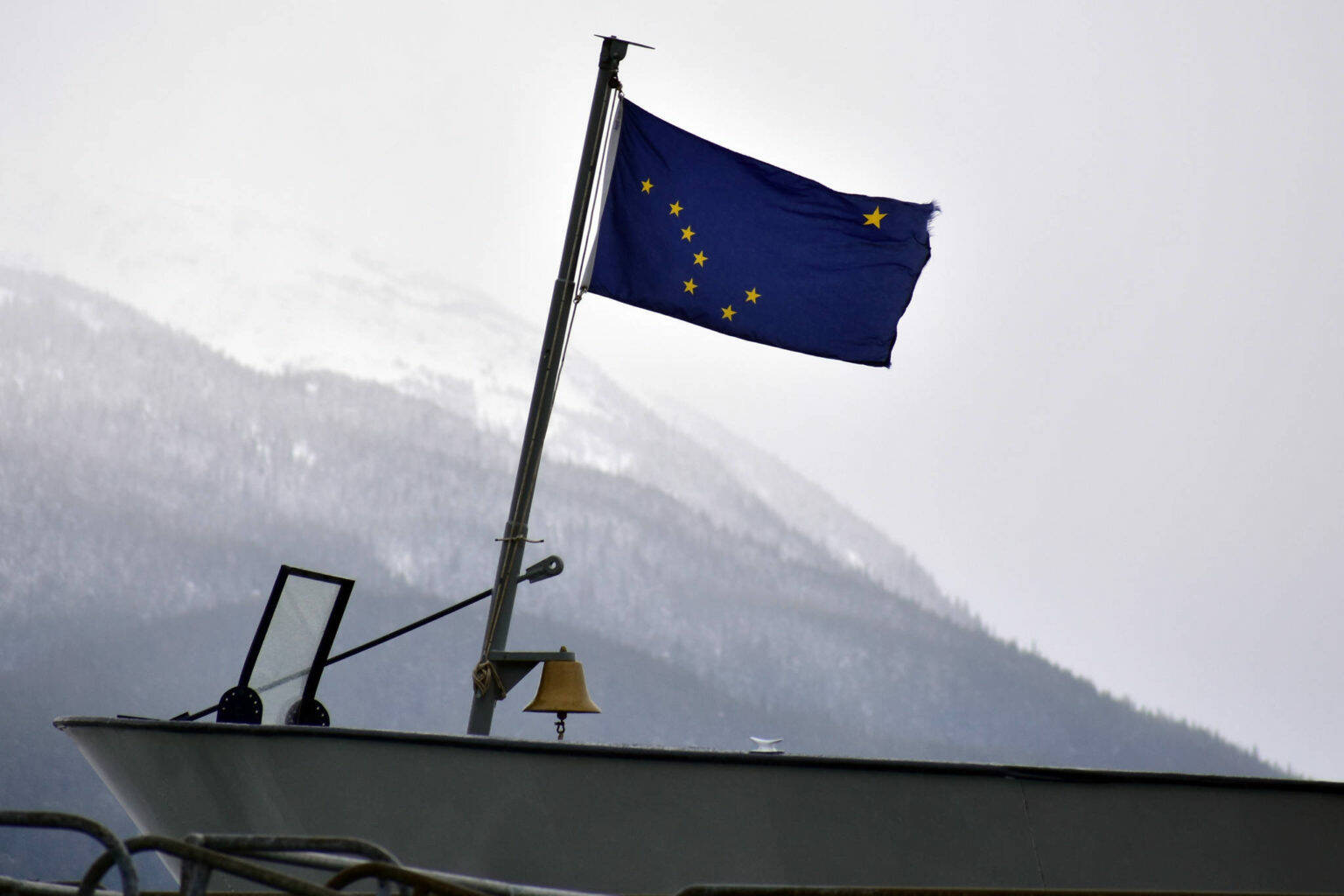
Coastal communities are excited about the prospect of long-term funding for the Alaska Marine Highway System, but many communities’ needs aren’t being met by the current level of service.
On Saturday Gov. Mike Dunleavy announced a plan to repair the MV Tustumena and replace the vessel within five years. For officials in coastal communities, the news was welcome but long overdue.
“Even before COVID in the winter months, we were struggling to get routine service to Juneau,” said Municipality of Skagway Mayor Andrew Cremata.
Ferry scheduling is sparse in the winter months, Cremata said, but that’s when families that live in Alaska year-round often need it the most. Skagway relies on Juneau for a number of services such as doctors and dentists, even more so following the Canadian border closures during the pandemic, Cremata said.
According to Cremata, existing service is often plagued by cancellations, forcing travelers to extend their stay in Juneau or another community, which can be expensive.
Late Monday, the Alaska Department of Transportation and Public Facilities announced the addition of several sailing in early January for the Lower Lynn Canal and said the MV Aurora would be coming out of the shipyard in Seward and put into service Dec. 9. However, DOT also announced a Dec. 10 sailing of the MV LeConte to the upper Lynn Canal has been delayed to accommodate a U.S. Coast Guard inspection.
Community members have told Skagway’s Assembly: “It makes it hard to maintain a permanent residence in Alaska,” Cremata said.
But it’s not just a lack of funding or out-of-service vessels causing issues for AMHS. According to the system’s fleet status page, the MV Tazlina has completed overhaul work and is dockside at Auke Bay but without a crew to staff it.
“AMHS doesn’t have enough crew available to run that ship,” said Sam Dapcevich, regional spokesperson for the state transportation department. “AMHS is facing the same tight labor market that organizations across the nation are facing — and we’re aggressively recruiting,”
Dunleavy said the state would consider multiple incentives to increase recruitment.
“We’re going to have to take a look at what’s causing individuals to not apply,” Dunleavy said Saturday when asked if the state was considering increasing wages to incentivize new workers. “If it’s wages, or working conditions, or some other phenomena, which appears to be across all sectors, across states.”
Ben Goldrich, Alaska representative for the Marine Engineers’ Beneficial Association — the union representing licensed engineers — said there was high demand for mariners worldwide.
Mariners can work anywhere in the world,” Goldrich said, referring to boat workers. “When people come up to work permanently on the system, they’re counting on a schedule and predictability in their lives.”
But disruptions in the system and difficulty with travel reimbursements have given Alaska a bad reputation among mariners, Goldrich said.
A news release from the governor’s office said the state is offering signing bonuses and four months of free housing aboard a vessel in Ketchikan and other incentives to drive recruitment.
Where is the funding coming from?
Sen. Lisa Murkowski, R-Alaska, one of the key negotiators in the Senate of the Infrastructure Investment and Jobs Act recently passed by Congress, was able to secure funding specifically for AMHS. All members of Alaska’s congressional delegation voted for the legislation.
There are several funding sources within the act — including $1 billion to establish essential service to rural communities — the state can try to access, Dapcevich said, but states are still awaiting notification from the Federal Highway Administration regarding funding distribution.
Many of the provisions in the act were crafted with Alaska in mind, said House Speaker Louise Stutes, R-Kodiak, who thanked the state’s congressional delegation — Murkowski specifically — for working for that funding. The ferry system has needed maintenance work for years, Stutes told the Empire in a phone interview Monday, and the act’s funding will provide more stability to the system’s service in Southeast Alaska.
“I’m delighted that this administration has heard the cries of Alaskans,” Stutes said, referring to Dunleavy, who was in Kodiak Saturday to announce plans to repair the Tustumena.
Dunleavy’s cuts to the ferry system in 2019 drew large protests in Southeast Alaska, but Stutes noted the governor changed his approach to funding AMHS. Stutes said she was disappointed the state had let the AMHS fleet deteriorate, but said she was grateful and excited for the funding.
“We’ve been having marine highway meetings for the past four years,” Stutes said. “It appeared at one point there was a will to go the other direction.”
In addition to the rural service funding, the legislation includes $250 million over five years for an electric or low-emitting ferry pilot program for the most Marine Highway System sailing route miles and approximately $110 million for construction of ferry boats and ferry terminal facilities, according to a news release from the governor’s office.
‘An issue of serving Alaskans’
Lack of service in Skagway has led the community to research ways the municipality itself could provide service, Cremata said, and the infrastructure act was an opportunity to develop those plans.
Skagway is already positioning itself to be the recipient of the pilot program for an electric ferry detailed in the infrastructure legislation, Cremata said. It wasn’t yet clear how the money would be disseminated or what the application process will be, Cremata said, but the city has already done its own research on creating a ferry specifically for Haines and Skagway.
According to Cremata, Skagway has looked into designing a vessel and potentially establishing its own ferry authority as a way of ensuring service to the community. But the infrastructure act meant there was money at least for a feasibility study, Cremata said, and he believed Skagway would make a good home for the electric ferry pilot program.
“Skagway is at the forefront of developing electrification in Alaska,” Cremata said.
Stutes said she believed there was support in the Legislature for the ferry system, and that funding for the system wouldn’t become a political issue.
“This isn’t an R or a D or an I issue, this is an issue of serving Alaskans,” Stutes said. “I am supportive of any major roads that need to be addressed and Alaskans spoke out loudly and the Legislature understands that AMHS is coastal Alaska’s road.”
State Sen. Jesse Kiehl, D-Juneau, whose district also covers Haines and Skagway, said he spoke Monday with DOT Commissioner Ryan Anderson who seemed excited about what needed to be done.
The legislation allows federal highway money to be used for ferry service, Kiehl said, which the state could use to add winter ferry service.
“That is an appropriation that will have a political element,” Kiehl said. “The Legislature has added money to operate the ferries for the last three years that the governor has vetoed out. If the governor’s budget shows some steps at restoring ferry service, that’ll be a start.”
Contact reporter Peter Segall at psegall@juneauempire.com. Follow him on Twitter at @SegallJnuEmpire.
