
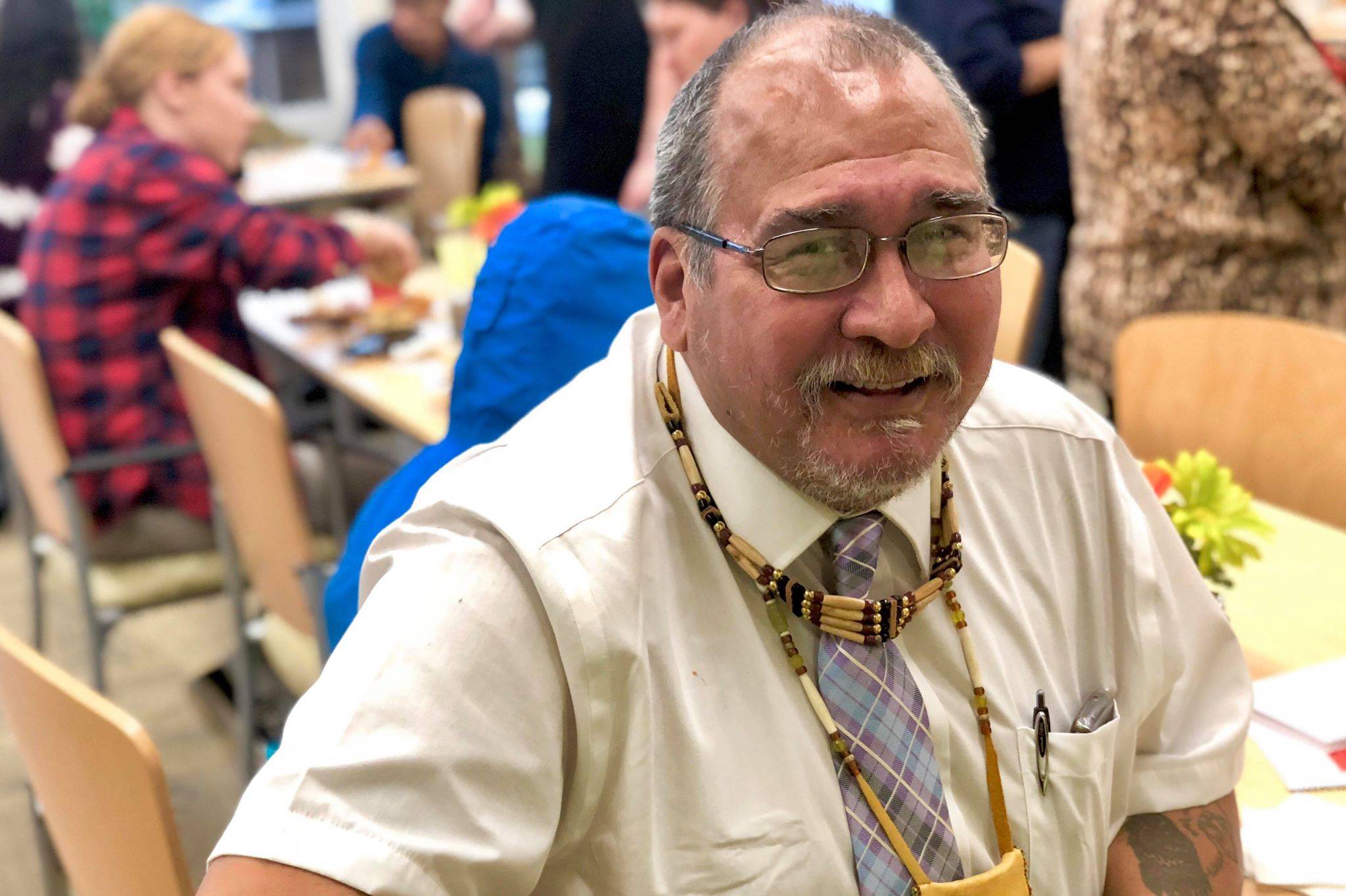
The Kenaitze Indian Tribe Henu’ Community Wellness Court celebrated the program’s first graduates Friday afternoon at the Tyotkas Elder Center.
The Henu’ Community Wellness Court is a joint-jurisdiction therapeutic court, operated by the Kenaitze Indian Tribe and the State of Alaska Court System. The court serves offenders who face legal trouble stemming from substance use.
Kenaitze Tribal Court Chief Judge Susan Wells says the program is about transforming lives.
“When we talk about transforming lives, that’s really what it is,” Wells said. “Most people that come into the program really want to sober up and be clean.”
The program’s first graduates, Dale Vaughn and Eli Darien, were awarded many celebratory tokens, including a piece of Dentalia, which Wells said was historically used as money in the area and shows the participants they have value. Graduates also received Chaga tea, a spruce hen feather and an agate rock, which all hold important cultural significance.
Vaughn said the program has been amazing.
“Eighteen months ago, I had three years hanging over my head,” Vaughn said. “It was either do the three years or get out with no license. I’d probably be in the same boat, in and out of jail, like I was before, but this program came along. I decided to give it a try. Now look at me. It’s all been worth it.”
Darien also said his experience in the program was phenomenal.
“I had some rough spots, but I got over them,” Darien said. “It’s been just a wonderful experience. When I started the program, I pretty much didn’t have anything. Now it seems I have everything at my fingertips.”
Henu’ uses rehabilitation to reduce recidivism rates and improve the lives and the communities of program participants. The program is 18 months long and goes through a series of phases. One phase is the trust phase, where participants and the tribal court learn to trust each other through the process.
“It’s not so much that we learn to trust them to do what they’re supposed to be doing, it’s them trusting us to help them,” Wells said.
To be in the program, people must go through an interview process with tribal probation officers. Wells said they focus on people who are high risk and have high needs. Priority is given to people who have children involved. Members of the program cannot have a distribution charge.
The program is individualized for the needs of each person’s recovery, but it takes at least 18 months to complete, and sometimes even longer if the participant relapses. Wells said the 18 months is necessary to regain complete sobriety.
“They want that clean, sober life, but they can’t because of the chemicals in their brains until they can get them out,” Wells said. “A six-week program just doesn’t work; it’s not enough time. It doesn’t take care of that addictive brain. We realized early on in this program if the person is addicted or just getting out of jail and they’ve been sober for a month or six weeks, their addiction is a lot of work.”
Wells credits part of the program’s success to the Dena’ina Wellness Center and its clinicians, as well as asking the right questions.
“We have to change the questions,” Wells said. “It’s not ‘what’s wrong with you? Why aren’t you stopping? You want to. You say you want to. What’s the matter with you?’ We are asking the wrong question, and what we need to do is look deeper at what happened to you to get you on this path, and what can we do to help you get back. It’s not about us catching them doing something wrong; it’s about catching them do something right and helping them continue on this path of sobriety.”
Wells said she believed the program can help change lives and communities.
“We want to stop the recidivism, and I think we can,” Wells said.
Both Vaughn and Darien said they are excited to see what opportunities the future has in store for them.
“I can get on with my life,” Vaughn said. “I can drive legally without looking over my shoulder, you know.”
“I’m just going to keep on this path on recovery,” Darien said. “So many good things have happened to me already.”
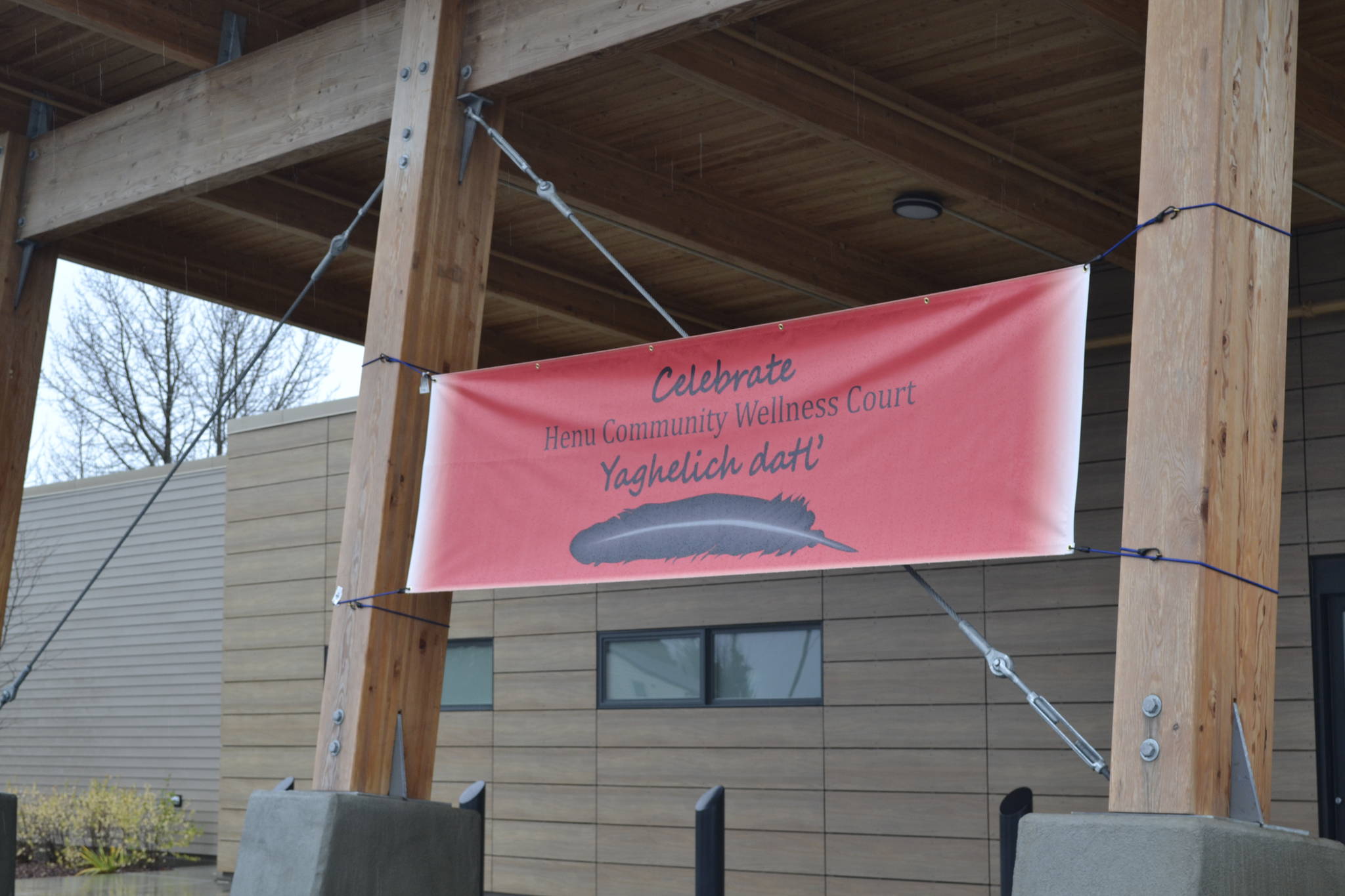
The Kenatize Indian Tribe held their inaugural graduation for the Henu’ Community Wellness Court program on Friday, Oct. 19, 2018, in Kenai, AK. (Photo by Victoria Petersen/Peninsula Clarion)
