
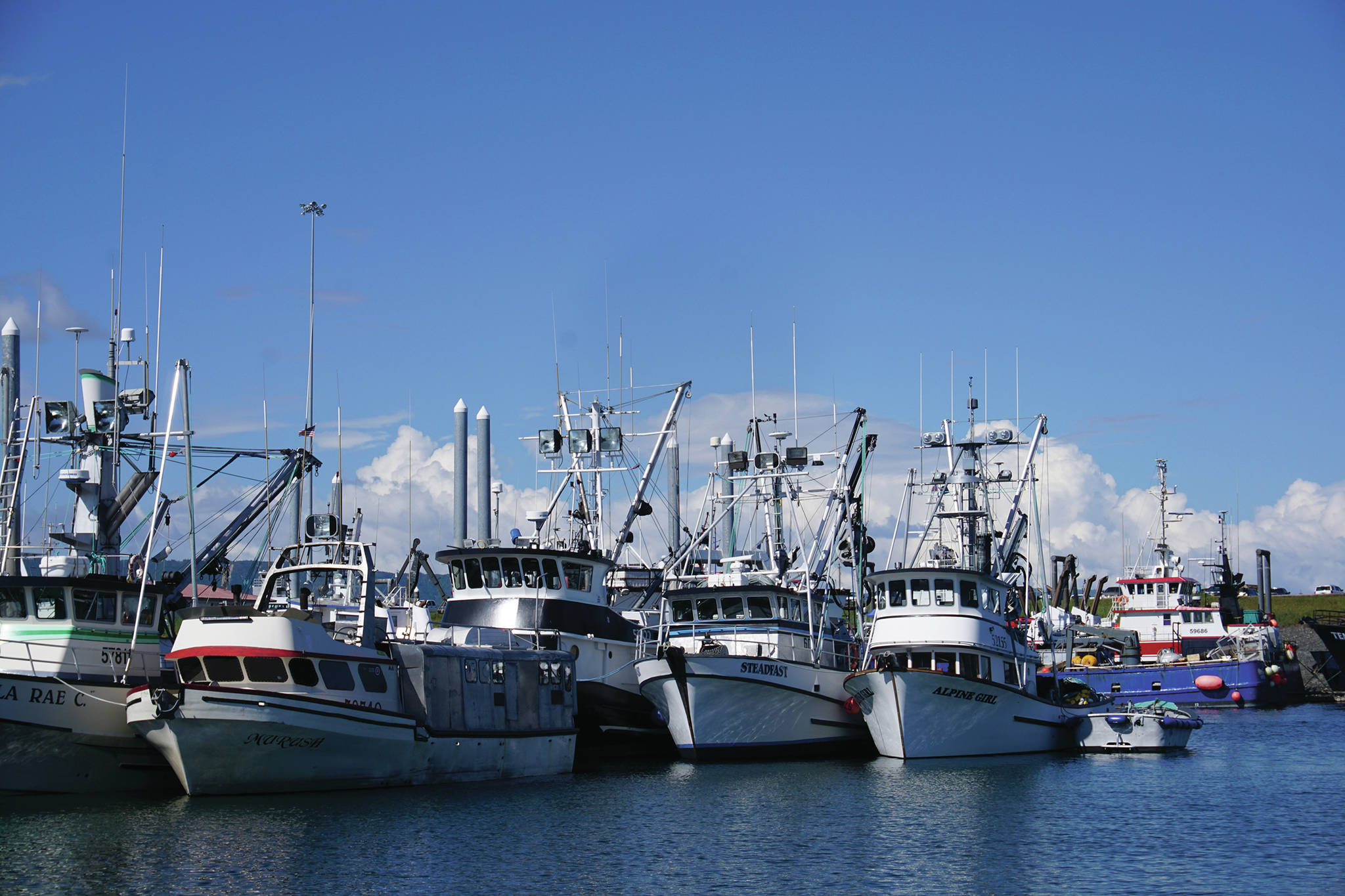
Facing an uncertain future as the COVID-19 pandemic wears on, Alaska’s commercial fishing industry is looking ahead to the upcoming season with determination to salvage something out of a potentially devastating season.
“Right now what I’m hearing is a lot of dedication to planning,” said Jamie O’Connor, a fifth-generation Bristol Bay setnetter and working waterfronts director of the Alaska Marine Conservation Council who now lives in Homer. “Fishermen are working with processors to put together a plan to allow us to responsibly harvest and protect the communities and resources.”
Fishermen face questions about how to get to fishing grounds, how to quarantine and not place a burden on small-town health systems, and how to work and interact with everyone from tender operators to fish cops. O’Connor is part of the Bristol Bay Working Group of fishermen, Alaska Native organizations and health organizations developing a plan.
Malcom Milne, president of the North Pacific Fisheries Association and a longliner and lower Cook Inlet salmon seiner, has been working with the United Fishermen of Alaska to come up with procedures in response to the pandemic. Already, they’ve put together a 36-page draft document.
“The first and foremost concern we have is the health and safety of our crew,” Milne said. “… We’re taking it very seriously. Fishing vessels can be very dangerous because it’s a small confined space, but they’re also isolated so that can be a safe space if we keep it that way.”
Hannah Heimbuch, a Cook Inlet salmon fishermen who owns and operates two drift boats with her brother out of Homer, also emphasized planning — “calm planning,” she wrote in an email. She also is a senior consultant at Ocean Strategies, a Seattle and Homer public affairs firm specializing in fishing and maritime issues.
“The task ahead of us right now is designing prevention steps that protect our crews and communities, and assure our communities that our fisheries will operate safely,” she wrote. “… It won’t be a typical summer, it won’t be business as usual. But fishermen are adaptable and resilient, and take their jobs as food providers very seriously.”
Fishermen are considering options like chartering their own flights to setnet sites so they don’t have to mingle with local communities. Others would take their own boats and isolate and quarantine on them before the season starts.
“We’re discussing how to safely bring workers in from outside the community, distancing and sanitation protocols for things like refueling and delivering, and much, much more,” Heimbuch wrote.
At the state level, the Alaska Department of Health and Social Services is working with communities and fishing groups, DHSS Commissioner Adam Crum said in a press conference with Gov. Mike Dunleavy on Tuesday.
“The fishing aspect (of COVID-19) is high priority for us in the state,” he said. “The state, local communities, harvester, processors — we are working right now with those groups. … We’re going to make sure the local communities understand what the proper response is, what are the mitigation plans.”
Crum made that statement in response to a question regarding the city of Dillingham saying the Bristol Bay fishery should be shut down if the industry doesn’t come up with a comprehensive COVID-19 mitigation plan.
One thing fishermen hope for is a rapid and widely available test for infection by SARS-CoV-2, the novel coronavirus that causes the COVID-19 disease. Currently because of a limited supply of tests, the testing is restricted to those who show symptoms like high fever, coughing, chest pain and other symptoms. Another prospect is an antibody test that would show past exposure to the virus even if someone never got sick.
“There’s a big push and a hope, not just in our sector, for rapid testing,” Milne said. “That would be huge.”
One step in that direction started this week when the Alaska Native Tribal Health Consortium started “rolling out” 40 of its own rapid testing machines from Abbott. Alaska Chief Medical Officer Dr. Anne Zink spoke of that at a press conference on Monday. She said that shipment includes 2,400 tests. ANTHC is working to get tests out to rural parts of the state, Zink said.
Another concern Milne said he has is making sure fisheries managers also get to do the vital work of analyzing fisheries and tracking harvests. The Alaska Department of Fish and Game should be considered a critical infrastructure work force.
“You have to make sure the Fish and Game managers are able to work,” he said.
All the fishermen agreed that commercial fishing is important not just as a way to provide sustainable, protein rich food to the world, but as economic drivers in their communities.
“We need to keep the food supply chains active and open in this whole thing,” Milne said.
Commercial fishing is about more than economics, O’Connor said.
“There’s the cultural aspect. There’s the subsistence importance,” she said. “I eat wild, Bristol Bay salmon all year. … It’s important that our communities are safe and it’s also important our communities maintain their ties to the fisheries that sustain them.”
Also of concern is the effect not harvesting species like salmon could have on streams in terms of overescapement — too many fish up a river.
“It would be unprecedented for us to allow that much of a biomass to go back to those rivers,” O’Connor said. “It’s pretty important we harvest enough that we don’t overescape badly.”
Not harvesting halibut might give the fishery a break, Milne said, “but the other fish that need to be caught — that’s a good question.”
Milne said he understands that commercial fishing isn’t the only maritime industry affected by the pandemic. Restaurants are taking a hit with dining in closed. The marine trades also have been affected.
“It’s not lost on us either — we’re not alone. You look at a restaurant owner and what they’re going through,” he said. “You feel for everybody.”
Some commercial fishermen might weather the pandemic, Milne said. If he makes half of his projected season, he’d count that as a success. Other sectors are in grave trouble.
“The charter guys I was talking to, before they were seeing really good bookings,” he said. “They were excited before this hit, but now they’re terrified.”
At Tuesday’s press conference, Dunleavy said the state also is looking into how sport charters could be done under social distancing rules. That would fall under other mandates allowing activities without close proximity, he said.
“We’ll come out with more guidelines,” Dunleavy said. “…We’ll come out with more details.”
Unguided sport fishing in streams would be allowed, though, provided fishermen keep their distance from each other.
Heimbuch wrote she decided she won’t fish Cook Inlet this season at all. Cook Inlet commercial salmon fishermen have been taking hits before the pandemic from climate change to political battles with sport fishing groups.
Those who will fish see a lot of work ahead to make the season happen.
“People are putting their thinking hats on and making this work,” O’Connor said, “That’s what I’m hearing: a commitment to making this a safe and still a season.”
Reach Michael Armstrong at marmstrong@homernews.com
