
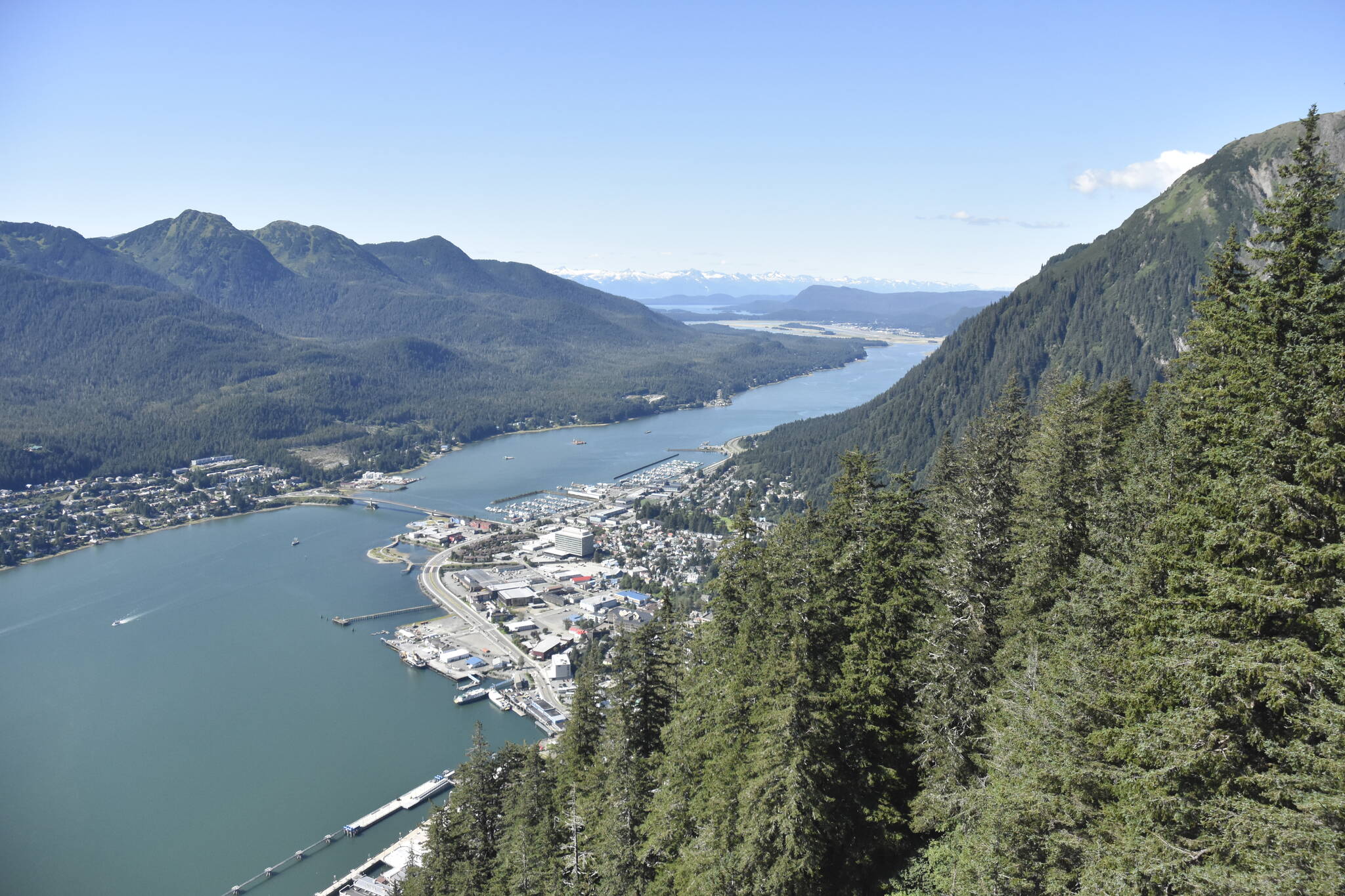
JUNEAU — Proposals for a possible second crossing to Douglas Island are scheduled to be released to the public in May, according to the Department of Transportation and Public Facilities, as Juneau officials take another stab at a long-considered project.
Proposals for a second crossing go back to at least 1984, according to city documents, and this latest attempt began in August 2020 when the City and Borough of Juneau signed a memorandum of agreement with the state transportation department to conduct a preliminary study. That was before a massive federal infrastructure package was signed into law. Now, with the possibility of outside funding opportunities, the CBJ Assembly has put a second crossing high on its list of priority projects.
The current study is called a Planning and Environmental Linkages study, according to DOT spokesperson Sara Brown, which identifies purpose and need while developing possible alternatives and screening out unfeasible options. If a project is started within five years of the PEL, Brown said the information collected can be used for National Environmental Policy Act requirements needed for federal funding.
“This study is not required to apply for federal grants; however, it is expected to be of benefit for the purpose,” Brown said in an email. “Federal highway grants are expected to be necessary to fund any further preliminary design and environmental research of preferred alternative(s) developed from the PEL Study.”
The study costs $2 million, Brown said. and the city put forward $250,000 in 2020, an amount city officials approved in 2018.
“There are expected to be time and cost savings benefits if a project does result,” Brown said, “while also allowing for a robust public involvement before heading into a design/construction project.”
A PEL study is not meant to present a final proposal, said Katie Koester, CBJ Director of Engineering and Public Works, but to explore various options and gauge public input.
[Union reps say Alaska’s losing maritime workers]
“The idea behind a PEL is take a broad look, not to enter the conversation with a preferred alternative,” Koester told the Empire in an interview. “DOT is approaching the PEL with an open mind.”
The city’s 2013 comprehensive plan designates West Douglas Island as a potential area for new growth, but what that growth might look like, Koester couldn’t say.
“The whole point of the PEL is a lot of outreach and stakeholder engagement,” Koester said. “Answering those questions is a good part of the PEL.”
Much of the coastal land on West Douglas is owned by Goldbelt Inc. According to the 2013 comprehensive plan, the city and Goldbelt have expressed interest in developing the area in agreements going back to at least 1997. Koester said any development would likely be a mix of commercial and residential uses and could include port facilities.
Goldbelt did not immediately respond to request seeking comment.
Besides the potential for new development on Douglas Island, Koester said a second crossing would provide quicker access for emergency services and alternative access if the Douglas Bridge were to close.
A virtual public meeting on the PEL study is in the works for early May, according to Brown, and the weekend of May 28-29, DOT will host “pop-up displays” for public outreach at places like supermarkets. Koester called the PEL study a first step and said it was an opportunity for the city to gauge public reaction and vet different possibilities.
A 2018 survey by the McDowell Group — now known as McKinley Research Group — showed over three-quarters of surveyed residents supported a North Douglas crossing, with 37% who strongly support the idea. Only 14% of respondents said they opposed the idea with 4% saying they strongly opposed it. In 2010, Juneau voters rejected extending a 1% tax another 10 years to fund a second crossing. Koester noted voters rejected a specific proposal, not the concept of a second crossing.
“I think that we’re in a really opportune time,” Koester said. “We could be in a good position to move that project forward.”
In addition to the $250,000 from the city, there is a supplemental request for $175,000 to finish the study, Koester said, though that money hasn’t been appropriated yet.
With the potential influx of federal funding, the CBJ Assembly put the second crossing high on their list of legislative priorities, Koester said. According to Koester, the city’s legislative priorities are shared with Juneau’s delegation in the Alaska State Legislature and the congressional delegation.
But applications for grants are still a long way off. Speaking with state lawmakers, Alaska’s congressional delegation noted certain funding from the bipartisan infrastructure law will come over five years, and many of the requirements for the grants have not yet been fully released. City engineers have previously estimated the cost of a second crossing at $90 million.
Brown said continued public involvement and screening of alternatives is scheduled to take place in the summer or fall of 2022, and the final report and study wrap-up is set for winter or spring, 2023.
• Contact reporter Peter Segall at psegall@juneauempire.com. Follow him on Twitter at @SegallJnuEmpire.
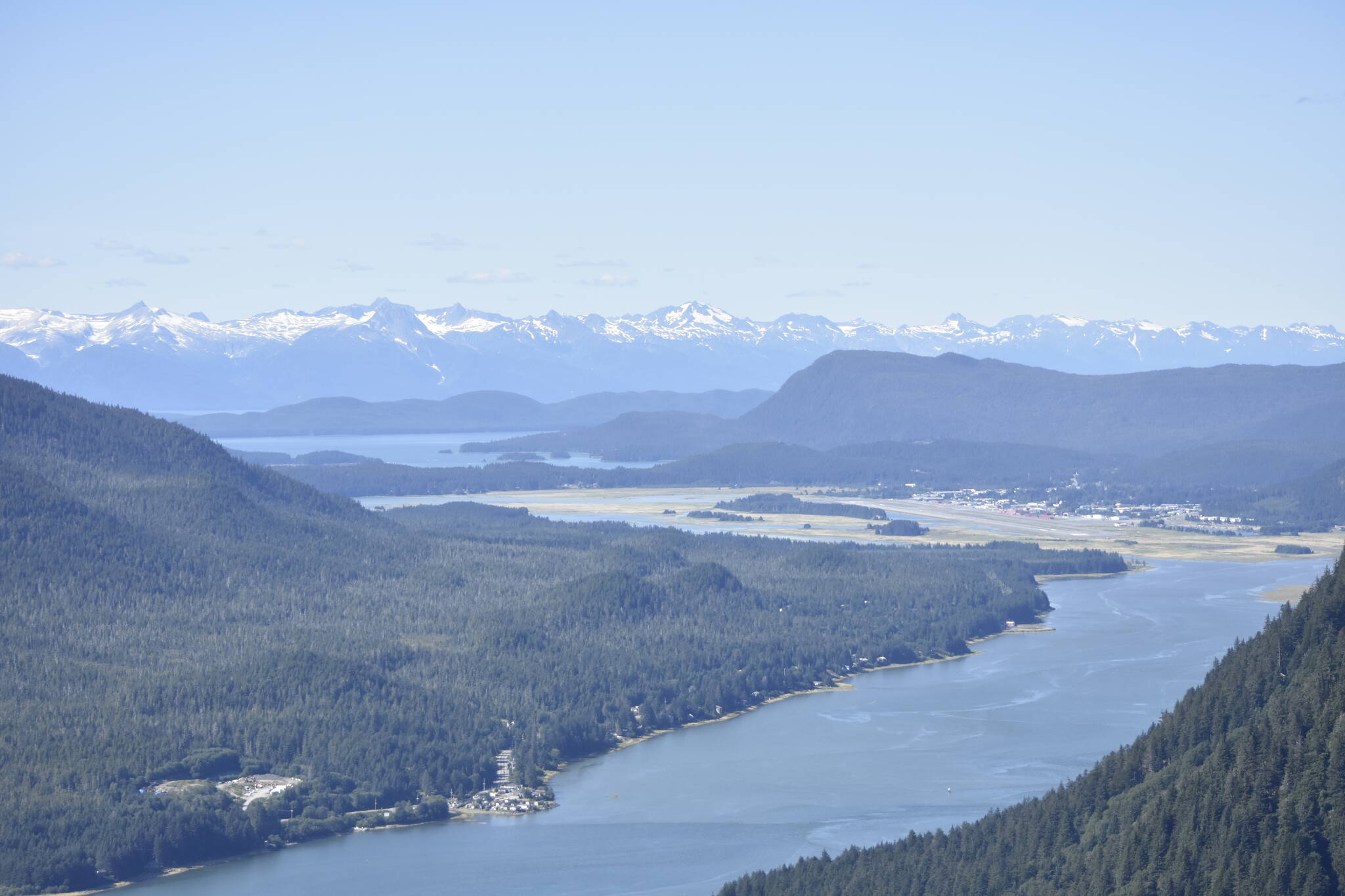
The Alaska Department of Transportation and Public Facilities is currently working on a study for a second crossing across the Gastineau Channel, seen here on Aug. 22, 2021, to North Douglas Island. The public outreach portion of the study is set to begin in May, according to DOT. (Peter Segall/Juneau Empire)
